

Small annoyances can make car ownership more work than it needs to be: sticky cup holders, frozen wipers, an unresponsive key fob, or arriving at a fuel pump on the wrong side. A few inexpensive car hacks can help with those everyday problems.
These seven tips are useful for diesel owners, but none depends on having a diesel engine. They are general car-care and convenience tricks, not shortcuts for engine maintenance. The key is knowing how to use each one and where its limits are.
Key Takeaways
- These seven convenience and car-care tricks apply to gasoline cars as well as diesels.
- The penny test flags severely worn tread but does not replace a complete tire inspection.
- Covered wiper blades and morning sunlight can reduce winter preparation work.
- Alcohol-based sanitizer may remove sap, but treated paint needs rinsing and renewed protection.
Table of Contents
- Start With Safety: Check Tire Tread With a Penny
- Make Parking Lots and Fuel Stops Less Frustrating
- Prepare for Frost Before a Cold Night
- Reduce Cleaning Work Inside and Outside the Car
- Common Mistakes That Undermine These Car Hacks
- A Simple Routine to Put the Tips to Work
Start With Safety: Check Tire Tread With a Penny
A U.S. penny provides a quick way to spot severely worn tire tread without a measuring tool. It is useful as an initial check, especially when you want to understand a tire replacement recommendation.
How to perform the penny test
- Place a U.S. penny into a tire’s tread groove with Lincoln’s head pointing down.
- Look at how much of the top of his head remains visible.
- Repeat in several places across and around the tire.
- Check all four tires rather than assuming they wear equally.
If the entire top of Lincoln’s head is visible, the tire needs replacement. The penny test corresponds to approximately 2/32 inch of tread, or about 1.6 mm. The National Highway Traffic Safety Administration’s tire safety guidance explains this check and provides additional tire-care information.
If the tread hides part of Lincoln’s head, it is deeper than that threshold at the spot tested. That is not the same as proving the whole tire is safe.
What the penny test cannot tell you
A coin is a rough screening tool, not a precise tread-depth gauge or a complete tire inspection. Uneven wear is a particular reason to test several locations: one groove may look acceptable while another is worn much further.
Do not dismiss a tire shop’s recommendation simply because one spot passes the test. Instead, ask for the measured tread depths and the reason for replacement. This makes the discussion more useful than relying on either a sales recommendation or a single coin check alone.
Make Parking Lots and Fuel Stops Less Frustrating
Use the fuel-gauge arrow to find the filler side
Before pulling up to a pump in an unfamiliar car, look beside the fuel-pump symbol on the dashboard. Many cars have a small triangular arrow indicating which side holds the fuel filler.
- Arrow pointing left: the filler is on the vehicle’s left side.
- Arrow pointing right: the filler is on the vehicle’s right side.
Use left and right rather than memorizing “driver side” and “passenger side,” because those descriptions change between left-hand-drive and right-hand-drive vehicles.
This is especially handy with rental cars, borrowed cars, and company vehicles. Check the indicator before choosing your approach to the pump. If there is no arrow, confirm the filler location directly rather than guessing.
The arrow answers only a location question. It does not identify the correct fuel for the vehicle.
Try holding the key fob under your chin at the edge of its range
If your car is just beyond the distance at which its remote normally responds, try holding the key fob beneath your chin while pressing the button.
- Stand where the remote is struggling to reach the car.
- Hold the fob close beneath your chin.
- Press the desired button and check for a response.
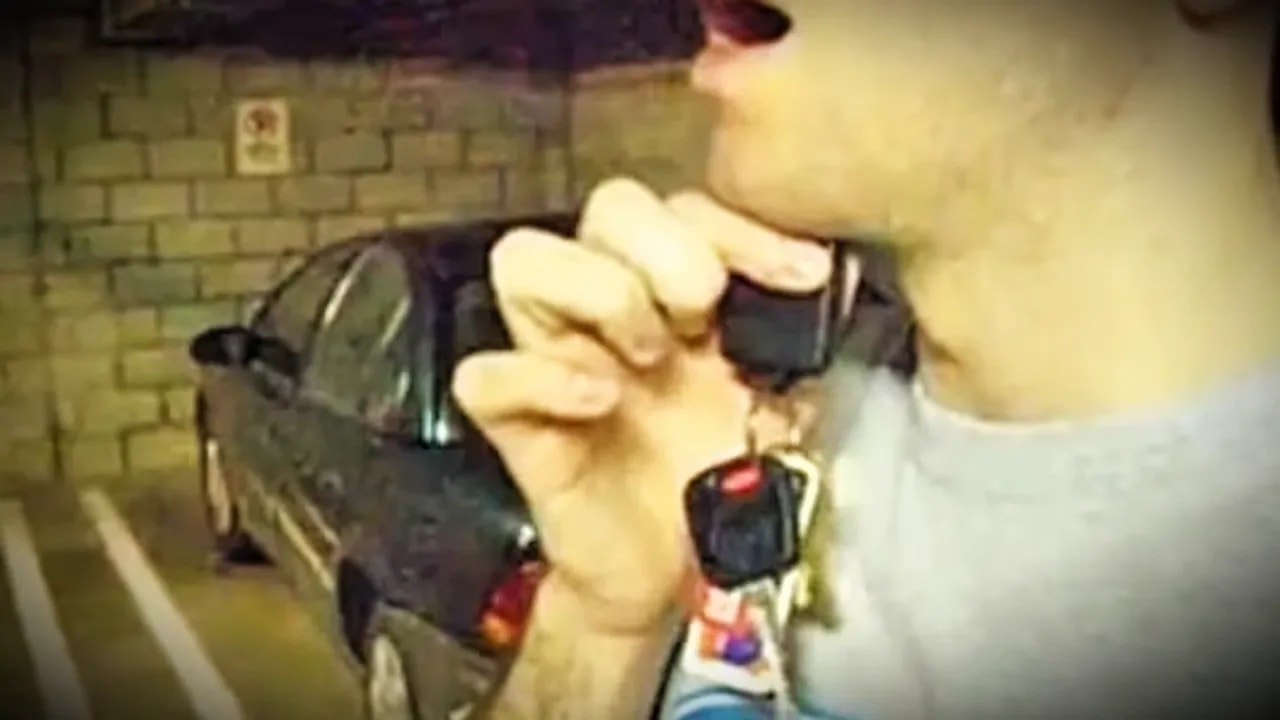
This trick may give a remote a little extra usable range. Treat it as something to try, not a guaranteed distance increase. There is no need to assume it will add a fixed number of feet or work equally well with every fob.
Its practical use is narrow: reaching a car near the remote’s normal range limit or triggering a response that helps you locate it in a parking lot. It is not a repair for a remote that has stopped working.
Prepare for Frost Before a Cold Night
Two no-cost habits can make winter windshield preparation easier: protecting the wiper blades and positioning the car to receive morning sunlight. They address different problems, so they can complement each other.
Cover wiper blades with old socks
Long socks can serve as temporary covers for windshield wiper blades. The idea is to place a barrier around the blades before frost develops, helping reduce direct contact with ice and frost buildup on the rubber.
- Before a cold night, slide a sock over each wiper blade.
- Make sure the blade is covered rather than merely placing fabric nearby.
- Remove both socks in the morning before operating the wipers.
- Check that the blades are free and the windshield is clear before driving.
This protects the blades, not the entire windshield. You may still need to scrape or defrost the glass. Avoid pulling forcefully on a blade that remains frozen in place.
If lifting the wipers is necessary to fit the covers, follow the vehicle’s instructions for accessing them. Do not force a wiper arm into a position it does not readily reach.
Park with the windshield facing the morning sun
Where your parking options allow it, position the car so the windshield faces east toward the sunrise. Direct morning sunlight can help soften or melt frost before you leave.
This works best when:
- The windshield receives direct sunlight.
- Buildings and trees do not shade the parking space.
- The morning is clear enough for sunlight to reach the glass.
- You leave after the sun has had time to warm the windshield.
It is less useful on heavily overcast mornings, in shaded spaces, or when you depart before sunrise. Think of it as reducing the amount of clearing needed, not guaranteeing an ice-free windshield.
Combining an east-facing parking position with covered wiper blades gives you a simple evening routine. In the morning, remove the covers, inspect the glass, and clear anything that remains.
Reduce Cleaning Work Inside and Outside the Car
Line cup holders with silicone cupcake liners
Cup holders collect coffee drips, sticky drink residue, and crumbs in awkward corners. Removable silicone cupcake liners can catch much of that mess before it reaches the cup holder itself.
A set typically costs around $5 to $10, making this one of the few tips that may require a small purchase if you do not already own suitable liners.
- Choose reusable silicone liners that fit your cup holders.
- Place one in the bottom of each holder.
- Check that your usual mug or bottle still sits securely.
- Lift the liners out when dirty, clean them, and put them back once dry.
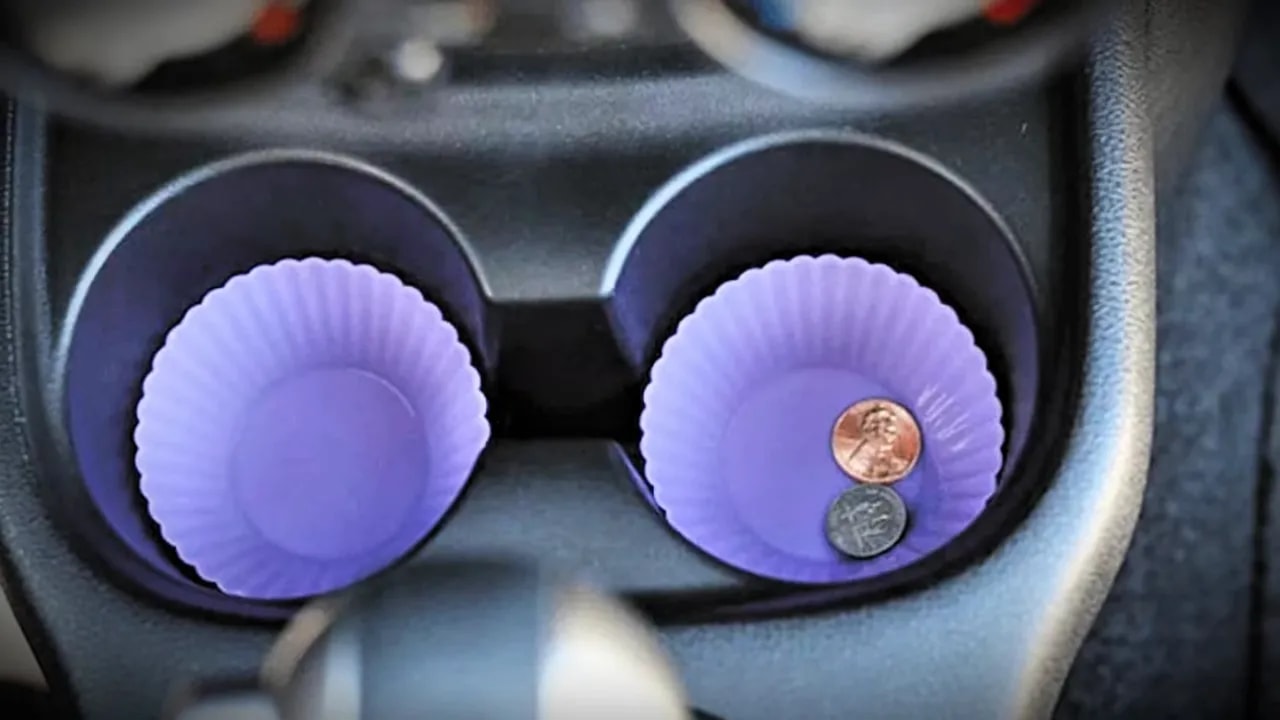
Dishwasher-safe liners can go in the dishwasher according to their care instructions. The benefit is straightforward: washing a removable insert is easier than scrubbing dried residue from a recessed console.
Use silicone, not disposable paper liners. Fit matters, too. A liner that bunches up or makes a drink unstable is not a useful improvement, even if it catches spills.
Use alcohol-based hand sanitizer cautiously on tree sap
Tree sap can resist ordinary soap-and-water cleaning, and forceful scrubbing risks scratching the finish. Alcohol-based hand sanitizer is a household option for treating small sap spots because its alcohol can help dissolve the sticky residue.
Choose an alcohol-based formula rather than a moisturizing product, and do not assume every sanitizer is suitable for every automotive finish.
- Check the vehicle’s paint-care guidance and test a small, inconspicuous area first.
- Put a small amount of sanitizer on a clean microfiber cloth.
- Work gently on the sap spot rather than scrubbing aggressively.
- Rinse the treated area with water and dry it.
- Restore protection with a suitable wax or spray sealant.
Alcohol can remove wax as well as sap. Reprotecting the cleaned spot is part of the process, not an optional finishing touch.
Avoid treating hand sanitizer as an all-purpose paint cleaner or leaving it on the surface unnecessarily. If the finish’s compatibility is uncertain or the sap does not release gently, stop rather than increasing pressure.
Common Mistakes That Undermine These Car Hacks
- Turning a quick tread check into a safety guarantee. Test multiple locations and use proper measurements when making replacement decisions.
- Expecting a fixed key-fob range boost. Try the chin trick near the normal range limit without relying on a promised result.
- Confusing fuel-filler location with fuel type. The dashboard arrow tells you which side to approach, nothing more.
- Assuming winter preparation clears all ice. Socks protect blades, and sunlight depends on conditions.
- Installing liners that destabilize drinks. Confirm the fit with the cups and bottles you actually use.
- Scrubbing sap or skipping paint protection afterward. Use gentle treatment, rinse, and restore wax or sealant.
A Simple Routine to Put the Tips to Work
Start with the habits that need no purchase: locate the fuel-filler arrow, check all four tires with a penny, and try the key-fob position when you are near its range limit. Add silicone cup-holder liners if cleaning the console is a recurring nuisance.
In cold weather, prepare the wipers before bed and choose a sun-facing parking position when practical. For sap, prioritize gentle removal and finish compatibility over speed.
These are modest improvements, not guaranteed large savings. Their value comes from making routine tasks easier while avoiding unnecessary wear, mess, and frustration.

