
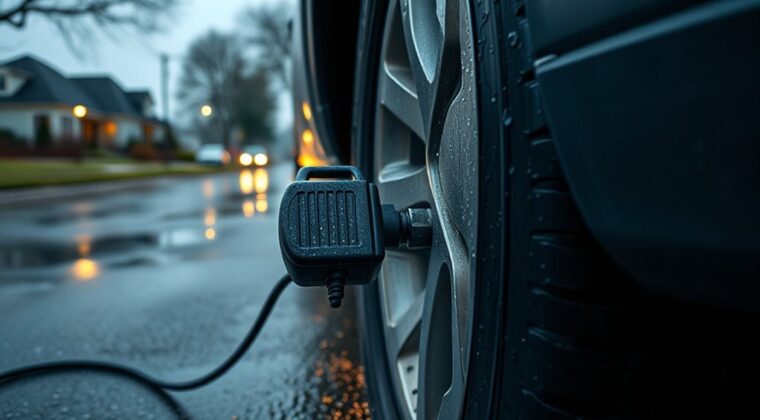
You can use a tire inflator in the rain if it’s rated for outdoor or wet use and you keep the unit, cord, and valve area as dry as possible. Set it on a stable, flat surface, avoid standing water, and don’t use one with exposed electrical parts. Check tire pressure when the tires are cold and inflate to the door-jamb spec, not more. Wet-weather tire care has a few more important details.
Key Takeaways
- Use a tire inflator in rain only if it is rated for outdoor use and has no exposed electrical parts.
- Place the inflator on a flat, dry surface, and keep cords, plugs, and connectors away from standing water.
- Avoid harsh rain or slick ground conditions; wait for drier weather if the setup is unsafe.
- Check tire pressure when tires are cold, using a gauge and the vehicle’s door sticker for correct inflation.
- Wet weather can lower tire pressure and increase hydroplaning risk, so monitor and maintain proper pressure regularly.
Is It Safe to Use a Tire Inflator in the Rain?
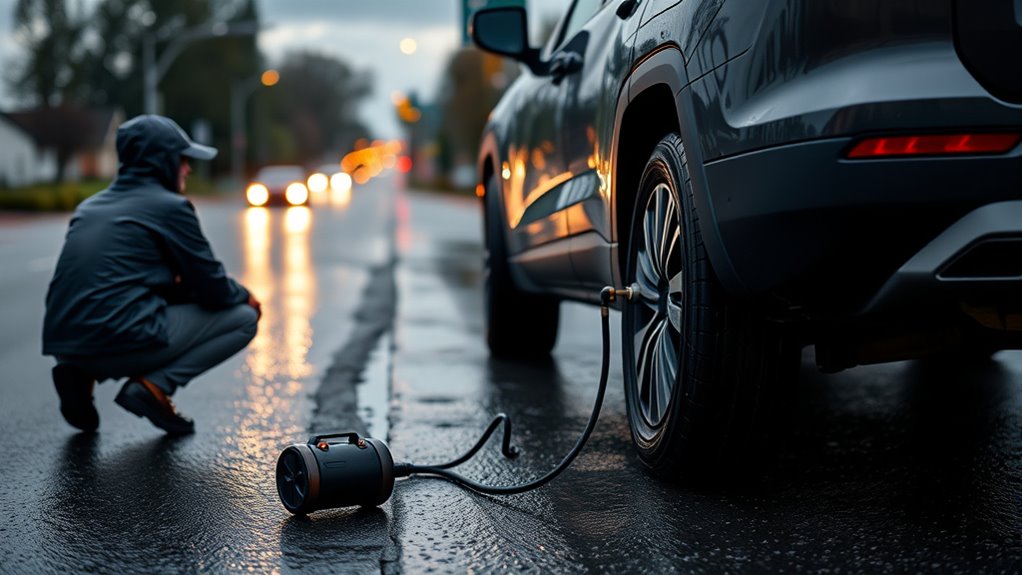
Using a tire inflator in the rain can be risky, so you need to assess the setup before you start. Check that your tire inflator is rated for outdoor use and keep it away from standing water.
If the unit has exposed electrical parts, don’t use it, because moisture can create electrical hazards and damage the tool. Place the inflator on a stable surface that’s flat and dry enough to prevent sliding, tipping, or sudden movement while you work.
Wear shoes with good grip and keep your hands clear of wet connectors. If the ground is slick or the weather is harsh, wait for drier conditions or move to shelter before you inflate.
You deserve safe, controlled work, not a struggle with preventable risks. A cautious setup protects your body, your equipment, and your ability to finish the task without interruption.
How Rain Affects Tire Pressure
Rain can lower tire pressure as temperatures drop, so you should check your tires more often during wet weather.
When rain cools the air and pavement, your tire pressure can fall below the recommended level. That matters because under-inflated tires flex more, build heat, and lose grip on slick roads, which raises hydroplaning risk and weakens steering response.
Rain-cool pavement can drop tire pressure, reducing grip, steering response, and increasing hydroplaning risk.
Always measure cold tire pressure before you drive, since road heat can inflate readings and hide a real pressure drop. Don’t guess—use the vehicle placard or owner’s manual for the correct target, and avoid overinflation too, because too much pressure can cut wet traction.
During rainy seasons, make pressure checks part of your regular maintenance routine so you keep handling sharp, braking stable, and freedom on the road intact.
Protect the Inflator in Wet Weather
When you’re inflating a tire in wet weather, place the inflator on a dry, stable surface and keep it under a waterproof cover or bag to block direct rain. This setup helps your tire inflator stay steady and reduces water intrusion.
Check the power source, cord, and plug for moisture before you start; damp connections can create electrical hazards fast. Don’t let the unit sit in standing water or heavy rain, because that can trigger slip risks and shutdowns.
- Keep it on a dry surface.
- Shield it with a waterproof cover.
- Inspect for moisture before powering up.
After you finish, wipe the inflator dry right away and let it air out fully before storage. That simple habit cuts corrosion and extends service life, so you keep your gear ready and your freedom to move unblocked.
Find a Safe Spot to Inflate
Choose a flat, dry spot away from traffic before you start inflating, and if you can, move under shelter to limit direct rain exposure. This flat area gives your tire inflator stable footing and cuts slip risk.
Keep clear of puddles and standing water; wet ground can reduce safety and create electrical hazards. If you’re near a roadway, turn on hazard lights to improve visibility for other drivers. That small step helps you claim space and stay seen while you work.
A reflective vest adds another layer of safety in low light or heavy rain. Pick a location that lets you reach the tire without standing in traffic or leaning into spray. Shelter, when available, also shields the inflator from unnecessary moisture.
Stay deliberate, stay visible, and use the conditions to your advantage instead of letting them control the job.
Check Tire Pressure the Right Way
Before you add air, check the tires when they’re cold so you get an accurate reading, since driving heat can raise pressure and give you a false number.
Use a tire pressure gauge, not guesswork, and compare each tire to the sticker on the driver’s side door for the recommended pressure. A digital gauge usually gives clearer results, but an analog tool can work if it’s calibrated.
Use a tire pressure gauge, then match each tire to the driver’s door sticker for accurate pressure.
- Inspect each tire first for cuts or bulges; damage can distort performance and pressure checks.
- Read pressure early in the day if possible, because temperature swings can shift readings.
- Verify the tire pressure monitoring system, but don’t rely on it alone; it warns you, it doesn’t replace a gauge.
If you need to correct low pressure, use your Portable Tire Inflator in short bursts, then recheck.
That keeps your setup precise, mobile, and under your control.
Avoid Valve Stem Damage
Keep the valve stem clean and dry before you attach the hose, because dirt or moisture can prevent a tight seal and cause air to leak out.
To inflate your tires safely, align the air hose straight onto the valve stem instead of forcing it at an angle. A straight fit reduces bending stress and lowers the chance of cracking the stem, especially when rain makes everything slick.
Grip the hose firmly, but don’t yank it on or off; excessive force can damage the core or threads. If the surface is wet, gloves can help you keep control and avoid slips.
After you finish, inspect the valve stem for wear, corrosion, or small leaks. Moisture can worsen weak spots fast, so catch damage early.
A quick check keeps your setup reliable and helps you maintain pressure without risking avoidable failure.
Prevent Overinflation on Wet Roads
You should avoid overinflating tires on wet roads, because excess pressure reduces the contact patch and lowers traction.
Check and adjust tire pressure when the tires are cold, since wet conditions can skew readings and push you past the recommended level.
Keep inflation within the manufacturer’s specification so you don’t worsen handling or increase hydroplaning risk.
Wet Road Traction
On wet roads, proper tire pressure matters because overinflation can reduce traction and make your vehicle more likely to skid during sudden maneuvers. You need tire pressure that matches the placard, not guesswork, to preserve wet road traction and safety.
Tire inflators help you fine-tune pressure, but use them carefully so you don’t add too much air.
- Check each tire before driving in rain.
- Inflate only to the recommended value.
- Recheck after adjustments to keep grip stable.
Under-inflated tires also hurt control by enlarging the contact patch and raising hydroplaning risk.
Regular maintenance keeps your vehicle responsive, secure, and free from needless road limitations.
Cold Tire Pressure
Cold tire pressure gives you the most accurate reading before rain, since driving heats the tires and can hide an overinflation problem.
Check your tire pressure early, ideally before you move the car, because cold weather and wet roads demand precise settings. Use the placard spec, then add air with an air compressor for tires only to reach the recommended level.
This simple vehicle maintenance step helps you keep stable contact with the road and lowers hydroplaning risk when water builds up.
Don’t guess by feel; verify each tire with a gauge and adjust as needed.
In rainy weather, correct pressure supports traction, steering, and braking, so you stay in control and keep your ride ready for work, travel, and freedom.
Avoid Overinflation
Even a slight overinflation can cut down tire grip on wet roads by shrinking the contact patch, which raises hydroplaning risk and can make steering feel less stable.
Keep your tire pressure at the recommended tire pressure on the door-jamb sticker, not the maximum on the sidewall. Check when tires are cold, because driving heat can skew readings and push you into overinflation.
- Set pressure with a quality gauge.
- Recheck after rain and temperature swings.
- Watch for uneven wear and reduced wet grip.
Monitoring tire pressure keeps you free from guesswork and helps your vehicle stay planted when the road gets slick.
If you’re using a tire inflator in the rain, make short adjustments, then verify each tire carefully.
Fix Common Tire Inflator Problems
If your tire inflator acts up in the rain, first protect it from moisture and inspect the setup for the problem source. Check the air pump body, hose, and cord for wet spots before you touch the tire pressure display.
If air leaks, reseat the nozzle on the valve stem and clear dirt or grit that blocks a tight seal. If the unit won’t run, test the power source, plugs, and clips; moisture can trigger shorts in electric inflators.
If readings look wrong, wipe water off the gauge, then recheck tire pressure after the needle settles. Keep your hands dry and power off the device before adjusting connections.
After you finish, dry the inflator fully and store it where humidity can’t reach it. That simple routine protects the tool, cuts downtime, and keeps you moving with confidence instead of dependence.
Rainy Season Tire Care Tips
During the rainy season, you should check tire pressure regularly because under-inflated tires can get more slippery and raise hydroplaning risk on wet roads.
Check tire pressure regularly in the rainy season to reduce slipperiness and lower hydroplaning risk on wet roads.
Use portable air in the early morning, when temperatures are cooler, so your reading stays accurate. Open the driver’s door and follow the pressure sticker, not guesswork; it shows the correct tire pressure for your load.
Never inflate past maximum pressure, because overinflation cuts contact patch grip on slick pavement.
- Inspect each tire for cuts, bulges, or uneven wear before you add air.
- Inflate only to the sticker spec, then recheck after driving a short distance.
- Share tire maintenance tips with your community so everyone stays safer in the rain.
Smart tire care protects your freedom on the road.
Frequently Asked Questions
Can You Use a Tire Pump in the Rain?
Yes, you can use a tire pump in the rain if you protect the unit and your connection point.
You should prioritize tire safety, confirm water resistance, and take electrical precautions before powering it on.
Keep the pump dry, inspect the tire for damage, and set the vehicle on level ground.
You’ll also need regular inflator maintenance and close monitoring to prevent overheating or moisture-related failure.
Can Rain Mess With Tire Pressure?
Yes—rain can mess with your tire pressure, like weather shifting a ship’s course.
You’ll see pressure fluctuations mainly from cooler air and moisture, not the rain itself. These water effects can alter readings and reduce tire performance if you ignore them.
Check pressure when tires’re cold, keep them properly inflated, and you’ll cut safety concerns, improve control, and drive with freer, steadier confidence in wet conditions.
What Is the Recommended Tire Pressure for Driving in Rain?
You should keep tire pressure at the factory specification on your driver’s door sticker for driving in rain.
That setting gives you the best balance of traction, control, and driving safety on wet roads.
Check pressure when the tires are cold, ideally early morning, and avoid overinflating more than 10% above spec.
Proper vehicle maintenance helps prevent hydroplaning and keeps your car stable in rain.
What Is the Recommended Tire Pressure for a Car During the Rainy Season?
You should keep your tires at the factory-recommended pressure, like a steady compass guiding you through wet roads.
Check the sticker inside your driver’s door and follow it closely.
Use tire maintenance tips, rainy season precautions, tire pressure monitoring, and safety driving practices to stay safe.
Test pressure when tires are cold, before driving.
Don’t overinflate beyond 10% above spec, or you’ll lose traction and control.
Conclusion
In the rain, you can still use a tire inflator if you stay smart and dry where you can. Treat your inflator like a tool under a raincloud—keep it protected, connect it carefully, and check pressure with a gauge. Wet roads can hide small mistakes, so don’t rush or overinflate. If you handle each step with care, you’ll keep your tires steady, safe, and ready to grip the road.