
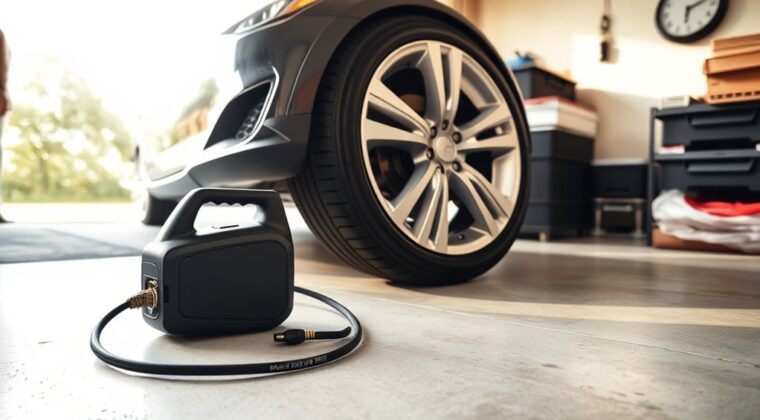
You can usually let a cordless tire inflator sit unused for 3 to 6 months, but you should recharge it every 3 months to prevent battery damage and low-voltage failure. Lithium-ion packs self-discharge about 2-3% per month, and the BMS still draws a small load. Store it at 40-60% charge in a cool, dry place. If you want to keep it reliable, a few simple checks make a big difference.
Key Takeaways
- A cordless tire inflator can usually sit unused for 3 to 6 months before battery issues become likely.
- For battery health, recharge it every 3 months even if you do not use it.
- Store the battery at 40% to 60% charge to reduce chemical stress and self-discharge.
- Lithium-ion batteries lose 2% to 3% charge monthly, and low-voltage conditions can develop after several months.
- If it seems dead, try a 30 to 60 minute wake-up charge and check the charger, cable, and contacts.
How Long Can a Cordless Tire Inflator Sit Unused?
A cordless tire inflator can usually sit unused for about three to six months before its battery starts to lose enough charge to affect readiness. For practical planning, you should treat three months as the safe recharge interval for most units.
Your rechargeable tire inflator relies on battery capacity that slowly declines while idle, even when you don’t use it. A lithium-ion battery typically has a modest self-discharge rate, often around 2-3% each month at room temperature, so it can still drift toward low-voltage conditions.
To keep your gear ready and independent, store the inflator at 40-60% charge, then top it off every three months. That approach reduces chemical stress and helps preserve usable output.
Avoid leaving it in extreme heat or cold, because those conditions can compromise performance and shorten practical standby time.
Why Does the Battery Lose Charge?
The battery loses charge even when you aren’t using the inflator because lithium-ion cells self-discharge at about 2–3% per month at room temperature. You also get battery drain from the Battery Management System, which keeps monitoring cells and protecting them. That parasitic load is small, but it never stops.
| Cause | Effect | Impact |
|---|---|---|
| self-discharge | gradual voltage drop | slow power loss |
| BMS drain | continuous monitoring load | added depletion |
| extreme temperatures | faster chemical loss | reduced battery health |
If you leave the pack at 30% charge, you can hit critical low-voltage in 4–5 months. Heat can nearly double self-discharge, while cold cuts current delivery. To stay free from surprise failure, check and recharge every three months and keep the pack in the 40–60% charge range. That simple routine protects battery health and keeps your inflator ready when you need it.
What Charge Level Is Best for Storage?
For storage, you should keep your cordless tire inflator’s battery at about 40% to 60% charge.
Don’t store it fully empty or fully charged, because both extremes can increase chemical stress and shorten battery life.
Check the charge periodically and top it up as needed so it stays in the safe range.
Optimal Storage Charge
To keep a cordless tire inflator’s battery healthy in storage, maintain it at about 40% to 60% charge, where lithium-ion cells experience less chemical stress and are less likely to suffer from phantom drain. This ideal storage charge protects your lithium battery and preserves battery power without overloading the cells.
- Check status every three months.
- Recharge periodically to offset self-discharge.
- Store between 10°C and 25°C.
- Keep battery health stable for readiness.
At this level, you avoid the damage risk of deep depletion and the stress of constant full charge. Your inflator stays freer, safer, and easier to deploy when you need it.
A brief inspection keeps you in control, and a moderate charge gives you practical independence without wasting battery life.
Avoid Full Or Empty
Keeping a cordless tire inflator at either extreme isn’t ideal, because a 0% battery can suffer irreversible damage while a 100% charge increases long-term wear. For best battery health, store your cordless tire inflator at 40-60% and follow this storage guideline.
Lithium-ion batteries dislike chemical stress, and this mid-range charge also limits phantom drain. Don’t assume a 30% pack is safe for months; it can drop to a critically low voltage in 4-5 months and trigger performance issues.
Since lithium-ion batteries self-discharge about 2-3% per month at room temperature, you should make regular checks part of your routine. That simple habit keeps the tool ready, protects capacity, and lets you stay mobile without being trapped by avoidable battery loss.
How to Store a Cordless Tire Inflator for Months
Store your cordless tire inflator at 40% to 60% charge to reduce chemical stress and phantom drain during long periods of inactivity.
Keep it in a dry indoor space between 10°C and 25°C, since heat raises self-discharge and cold cuts current output.
Check the battery every three months so you can confirm it still holds a usable charge and catch any storage issues early.
Charge Level Storage
If you’re storing a cordless tire inflator for months, keep the battery at about 40% to 60% charge, since that range reduces chemical stress and helps limit phantom drain. For portable tire inflators, this charge level protects battery status and preserves peak performance.
- Avoid full charge.
- Avoid empty storage.
- Check self-discharge every three months.
- Keep it in moderate storage temperatures.
Lithium-ion cells can lose 2% to 3% monthly at room temperature, so a half charge gives you margin. You’re preventing low-voltage damage and keeping the inflator ready when freedom calls.
Don’t park it at either extreme; both can cause irreversible wear. Maintain discipline, and the tool stays usable, responsive, and efficient when you need it.
Temperature And Recheck
Temperature matters just as much as charge level when you stash a cordless tire inflator for months.
Keep portable inflators in a climate-controlled space at 10°C to 25°C, because heat accelerates battery wear and cold weather cuts output. Set the ideal charge level near 40% to 60% before storage, then avoid leaving it in a garage or trunk.
During long storage duration, lithium-ion cells can hold usable power for three to six months, but you shouldn’t trust them blindly. Use quarterly reminders for monitoring battery health, check the charge, and top it off if it drops.
That simple recheck protects readiness, reduces phantom drain, and keeps your battery prepared for the next inflation task without unnecessary dependence.
How to Tell It Needs a Recharge?
How do you tell a cordless tire inflator needs a recharge? You check the signs, not your hopes. A cordless tire inflator can sit unused for three to six months, but a 30% battery may slide to critical voltage in four to five months.
Use regular checks to protect peak battery health and beat phantom drain.
- Watch the charging indicator after you connect power.
- If it stays dark, let the battery management system wake up.
- A 30-60 minute wake-up charge can activate a dormant pack.
- Recharge every three months, even if you haven’t used it.
If the inflator won’t respond, don’t assume it’s dead. It may need a pre-charge phase before the charging indicator appears. That’s normal, and it helps raise voltage safely.
How to Revive a Dead Tire Inflator Battery
Bring a dead tire inflator battery back the safe way: connect it to a high-quality charger or power source for 30 to 60 minutes to start a wake-up charge, then check whether the unit responds.
If your Cordless tire inflator stays dark, don’t force it; lithium-ion batteries need controlled recovery. After the initial charge, do a voltage check with a multimeter. If the internal cells read above 3.0V, you’ve likely got a usable pack. Keep charging until the indicator stabilizes, then test the motor under light load.
If the pack still won’t wake, stop and inspect the contacts, cable, and charger output. Avoid jump-starting the cells; that shortcut can trigger heat, venting, or fire.
To prevent repeat failure, store the inflator at 40% to 60% charge and recharge it every three to six months. That rhythm respects self-discharge and helps you revive a dead tire inflator without sacrificing safety, autonomy, or battery life.
Frequently Asked Questions
What Are the Common Problems With Auto Air Tire Inflators?
You’ll often run into inflator accuracy errors, weak inflation speed, and noisy operation.
Your power source can fail or drain fast, and size portability sometimes sacrifices performance.
You should check brand reliability and user reviews before buying, because cheap units often overheat, misread pressure, or need cooldown breaks.
If you need freedom on the road, pick a model that balances precision, durability, and practical convenience for regular use.
How to Maintain a Cordless Tire Inflator?
You maintain a cordless tire inflator by caring for the battery, not by pampering it endlessly.
Set air pressure correctly, follow charging tips, and store it at 40–60% charge in cool, dry storage solutions.
Check it every three months, recharge before voltage drops, and use a maintenance schedule.
Match usage frequency to cooldown breaks.
If it misbehaves, consult your troubleshooting guide and keep moving freely.
Are Battery-Powered Tire Inflators Any Good?
Yes, battery-powered tire inflators can be very good for you if you value cordless convenience and quick roadside fixes.
You’ll get solid battery efficiency, decent inflation speed, and low noise level, especially for topping off car tires.
Compare weight comparison and portability against corded units, then check brand reliability, safety features, and price range.
They’re practical tools, but you shouldn’t expect heavy-duty performance on fully flat or truck tires.
Is It Safe to Keep a Portable Tire Inflator in the Car?
Yes, you can keep a portable tire inflator in your car, but you should use safety precautions.
Temperature effects in summer and winter can shorten battery lifespan, so you’ll protect it better in a climate-controlled space.
Your portability benefits remain strong, especially with frequent checks and moderate usage frequency.
Compare brand comparisons and user reviews before choosing one, and keep it charged around 40-60% for reliable emergency performance.
Conclusion
So, how long can your cordless tire inflator sit unused? In most cases, you can leave it resting for months if you store it at a partial charge in a cool, dry place. Still, batteries quietly drift down over time, so check it now and then and give it a brief top-off when needed. If it’s been too long, don’t panic—your inflator may just need a gentle wake-up, not a farewell.