
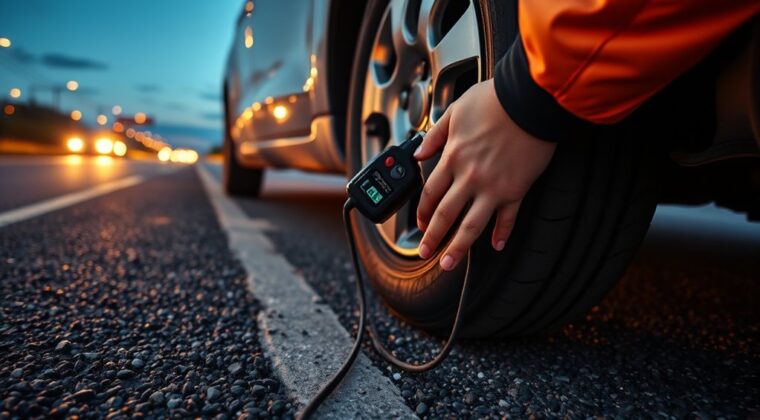
First, park safely away from traffic, turn on your hazards, and check the tire for cuts or bulges. Set your inflator to the recommended PSI, connect it to a 12V outlet or charged battery, then attach the hose firmly to the valve stem. Inflate in short bursts, watching the gauge closely and stopping to recheck pressure. Don’t leave it unattended. With a few more tips, you’ll handle roadside flats more confidently.
Key Takeaways
- Pull over safely, turn on hazard lights, and inspect the tire for visible damage before inflating.
- Use a 12V or battery-powered inflator compatible with your valve stem and attach the hose securely.
- Set the target PSI on the inflator, then start inflation and monitor the digital gauge closely.
- Stop frequently to recheck pressure, and do not inflate if the tire is hot, cut, or bulging.
- Once the correct PSI is reached, remove the hose, replace the valve cap, and store the inflator safely.
What Is a Tire Inflator?
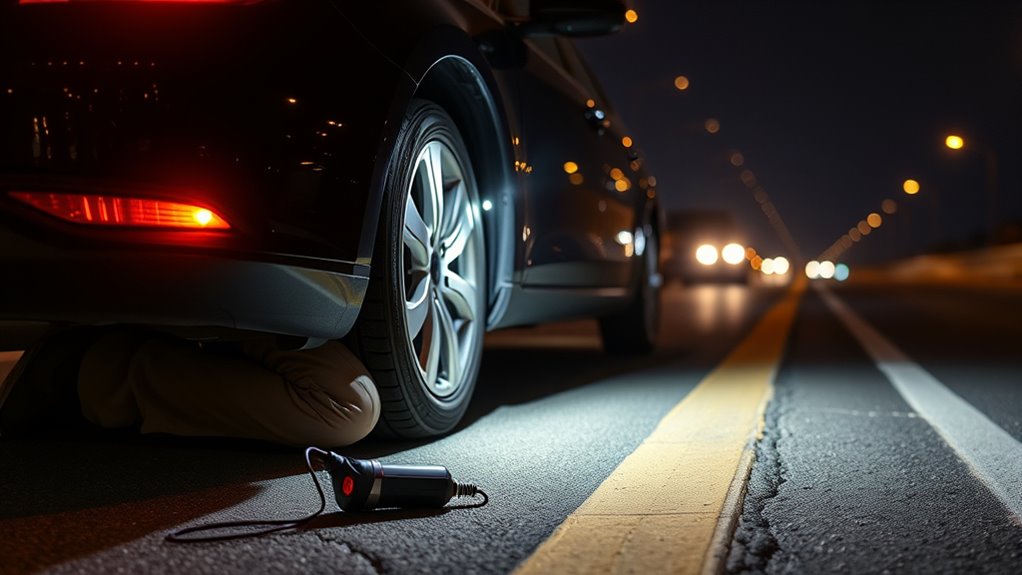
A tire inflator is a compact tool that pumps air into your vehicle tires so they reach the correct PSI for safe driving. You use it to restore tire pressure when a tire looks low or a warning light appears.
A portable tire inflator lets you act fast, since it usually plugs into your car’s 12V outlet or runs from a battery, so you can inflate car tires without hunting for a gas station. Many models include digital displays, so you can check tire pressure accurately, and automatic shut-off features, so you don’t overinflate. That control helps you stay safe and independent on the road.
Some tire inflator units can also handle bike or non-powered tires, and a few include flashlight or power bank functions for emergencies. Before you drive farther, you check the pressure, connect the hose, and let the device do the work.
Which Tire Inflator Fits Your Car?
Which tire inflator fits your car depends on how you plan to use it and what your vehicle needs. For roadside freedom, a 12V tire inflator that plugs into your vehicle’s power outlet gives you reliable emergency access.
If you want a portable option, choose a battery-powered model; some also work as power banks, so you stay independent when outlets aren’t available. Make sure the tire inflator matches your valve type, and prefer one with multiple adapters for broader fit.
A digital gauge with pressure monitoring helps you set air accurately and avoid guesswork. Check the maximum pressure rating too, so the unit can handle your tires safely.
Also review inflation speed and capacity: compact inflators work, but larger tires need more power and time. Pick a model that fits your car, your pace, and your need to stay in control.
Check Your Tire Pressure First
First, find your vehicle’s recommended PSI on the driver’s door pillar or in the owner’s manual.
Then check the tire’s current pressure with a gauge before you inflate it so you don’t overfill it.
Compare the two readings to set the correct pressure safely.
Locate Recommended PSI
Before you inflate a tire, check the recommended PSI so you can set it to the correct pressure for safe, efficient driving.
Find the tire pressure guide on the driver’s door pillar or in your owner’s manual, then use a reliable gauge before you check and adjust at the tire valve.
Don’t use the maximum number on the sidewall; that figure isn’t your target and can cause over-inflation.
You deserve control, not guesswork, so verify the spec first and keep your vehicle ready to roll.
- Read the door sticker
- Check the owner’s manual
- Use a tire pressure gauge
- Note the correct PSI
- Recheck monthly for safety
Compare Current Pressure
How much air is already in the tire? Before you use a portable inflator, check the current pressure with a reliable gauge.
Compare that reading to the recommended PSI on the driver’s door pillar or in your vehicle manual. If the tire’s pressure is below spec, you can inflate safely; if it’s close, add air in short bursts.
Don’t trust the maximum number on the sidewall—that isn’t your target. You’re aiming for the manufacturer’s specification, not the tire’s limit.
Watch the gauge closely, especially if the tire is severely under-inflated, because over-inflation can cause blowouts.
A quick monthly pressure check keeps you ready, prevents roadside trouble, and gives you more control when freedom depends on a safe, steady ride.
Set Up a Tire Inflator Safely
Before you set up the inflator, pull over in a safe spot away from traffic and check the tire for cuts, bulges, or other visible damage.
Power the inflator from your vehicle’s 12V outlet or a fully charged battery, and make sure the connection is secure.
Remove the valve cap, attach the hose firmly to the valve stem, and confirm the tire pressure setting before you start inflating.
Check Tire Condition
Start by inspecting the tire for visible damage like cuts, bulges, or punctures so you know it’s safe to inflate. When you check tire condition, look closely at the sidewall and tread on your flat tire before you inflate your tires.
Find the recommended pressure on the driver’s door pillar, then wipe the valve stem clean so the seal stays tight.
- Scan for cuts, bulges, or punctures
- Confirm the pressure spec before inflating
- Clean the valve stem with a cloth
- Park away from traffic and combustibles
- Keep the inflator in sight at all times
If the tire looks damaged, stop and get help. A careful check protects your safety, preserves your freedom on the road, and keeps a minor roadside problem from becoming a blowout.
Power and Attach Securely
Once you’ve confirmed the tire is safe to inflate, power up the inflator by plugging it into your car’s 12V outlet or making sure the battery is fully charged.
With portable tire inflators, remove the valve cap and keep it where you won’t lose it. Line up the air compressor hose with the valve and press it on firmly until you hear a brief hiss, which signals a secure seal.
Check the recommended PSI on your door pillar or owner’s manual, then set the inflator before pumping air. Turn the unit on and watch the pressure gauge closely. Let the inflator work until it reaches the target pressure, then shut it off if it doesn’t stop automatically.
Reattach the valve cap tightly to keep debris out.
Attach the Hose to the Valve
Remove the valve cap by unscrewing it and setting it aside in a safe place, then check that the tire valve is clean and free of dirt so you get a proper seal.
Now you can attach the hose from the inflator to the tire valve with steady pressure. Keep the nozzle aligned so it seats snugly and doesn’t leak air. A brief hiss as you connect it’s normal, but a loose fit isn’t.
- Hold the hose straight
- Press the nozzle firmly onto the valve
- Confirm the fit feels secure
- Keep dirt away from the opening
- Store the valve cap where you can find it
Once the hose is on, make sure the inflator is powered and ready for the next step. Stay calm, work deliberately, and trust your hands.
When you’re done later, you’ll reattach the valve cap quickly to protect the tire from pressure loss and contamination.
Inflate the Tire to the Right PSI
Check the recommended PSI on the driver’s door pillar or in your vehicle’s manual before you inflate.
Set the inflator’s auto shut-off to that pressure so you don’t overinflate the tire.
Watch the gauge as it fills, and stop if you notice any tire damage or a pressure issue.
Check Recommended PSI
Start by finding the recommended PSI for your tire, which is usually listed on the driver’s door pillar or in the owner’s manual.
Check recommended psi before you do anything else, because the sidewall maximum isn’t your target. Use a tire pressure gauge to measure current pressure, then inflate the tire to the listed value. That keeps you safer, steadier, and in control.
- Read the door placard carefully.
- Ignore the tire’s max sidewall number.
- Measure before adding air.
- Watch for underinflated tires.
- Recheck pressure after inflating and secure the valve cap.
When you match the correct PSI, you reduce wear, protect fuel economy, and move with confidence.
Precise pressure means your tire supports you the way it should.
Set Auto Shut-Off
Set the inflator to the tire’s recommended PSI before you begin, using the digital display or dial so the target pressure is locked in.
Check Recommended PSI on the door pillar or owner’s manual, then set auto shut-off so the unit stops at that number.
Use a Portable Tire inflator that matches your tire type and power source.
Start inflation and monitor during inflation, watching the gauge for any drift or slow leaks. If the pressure rises too fast, pause and reset before it overshoots.
When the inflator clicks off, don’t trust it blindly; verify the reading with a separate gauge.
That final check keeps you safe, prevents over-inflation, and helps you drive away with control and confidence.
When to Stop and Recheck Pressure
After about 30 seconds of inflating, stop and recheck the tire pressure so you don’t overfill it and so you can confirm an accurate reading.
Use your pressure gauge to compare the tire pressure with the desired PSI on the door pillar, not the sidewall maximum. If your inflator has auto shut-off, keep watching the gauge anyway.
- Stop and recheck after each short burst.
- Let the reading settle before judging it.
- Feel the tire; if it’s hot, pause.
- Check for cuts, bulges, or other damage.
- Wait a few minutes, then take a final reading.
This rhythm keeps you in control and helps you avoid wasting time or air. You’re not guessing; you’re reading the tire, adjusting with intention, and moving toward safe, steady travel.
If the tire already matches spec, stop inflating and move on.
Tire Inflator Safety Tips for the Road
Before you keep inflating, make sure the tire and the scene are safe. Park away from traffic, turn on hazards, and move your portable air setup clear of fuel, sparks, and other combustibles.
Check the tire for cuts, bulges, or other visible damage; if you spot them, don’t inflate. Find the recommended tire pressure on the sticker inside the driver’s door pillar, then set your tire inflator accordingly so you don’t overdo it.
Keep one eye on the gauge and one on the tire, and never leave the inflator running unattended. Stay present so you can stop before pressure climbs too high and risks a blowout.
If you’re using a 12-volt unit, connect it firmly to the vehicle’s power outlet or battery before you start.
These safety tips help you use roadside air with confidence, protect your freedom to keep moving, and avoid preventable damage when you need relief fast.
Troubleshoot Common Inflation Problems
When your tire inflator acts up, start with the basics: check that it’s connected properly to the vehicle’s power outlet or that its battery is charged if it’s a standalone unit. If it still won’t start, inspect the cord, plug, and switch for damage.
When you use a tire inflator, listen for steady power and watch the inflator has a digital display for error codes or pressure readings.
- Verify the tire valve is open before you connect the hose.
- Check for debris on the valve stem and nozzle; even small grit can block a seal.
- If the hose feels loose, reseat it and lock it firmly.
- If air flows but pressure doesn’t rise, inspect the hose and fittings for leaks.
- If the unit overheats, let it cool for a few minutes, then resume.
Double-check the PSI setting and don’t exceed the tire’s sidewall limit.
Stay calm, correct the fault, and keep yourself and others safe.
Add a Tire Inflator to Your Emergency Kit
A portable tire inflator belongs in your emergency kit, because it lets you handle a flat quickly without hunting for a gas station.
Choose a tire inflator with a digital pressure gauge and automatic shut-off so you can monitor pressure and avoid overinflating. If you want more freedom, pick a battery-powered model; it works without a vehicle outlet and can help with inflating tires on bikes or other non-powered equipment.
Pack it in a compact spot in your emergency kit, where you can grab it fast during a roadside emergency. Check the unit regularly, charge it as needed, and test it before long trips.
Don’t assume roadside assistance will reach you right away; having your own tire inflator gives you control and keeps you moving safely. When you prepare now, you protect your time, your mobility, and your independence on the road.
Frequently Asked Questions
Can You Use a Tire Inflator in a Car Without the Engine Running?
Yes, you can use a tire inflator without the engine running if it’s a battery-powered model, since it relies on battery power, not your car’s outlet.
With 12-volt tire inflator types, you’ll usually need the engine on, unless you clip it directly to the battery.
Keep emergency kits stocked, check your manual, and follow inflation tips to avoid battery drain and stay safe on the road.
What Are the Safety Precautions When Using a Tire Inflator for a Car?
You should inspect the tire for cuts or bulges, check the door-jamb pressure rating, and inflate only in a safe spot away from traffic.
Match your portable inflator types to the job, watch for common inflator issues, and never leave it running unattended.
Don’t overinflate.
These tire maintenance tips belong in your emergency kit essentials, so you can act fast, protect your freedom, and keep moving safely.
What Is the 4 Psi Rule on Tires?
Here’s the deal: the 4 PSI rule means you inflate your tires to the vehicle’s recommended tire pressure, then add 4 PSI when you’re carrying heavy loads or driving long distances.
You should monitor pressure cold, check it regularly, and adjust inflation frequency for seasonal adjustments.
Don’t overinflate; it can hurt traction and raise blowout risk.
This simple practice helps you keep control, save fuel, and drive safer.
How to Properly Use a Tire Inflator?
You properly use a tire inflator by checking the recommended PSI, then setting the target pressure on the gauge.
Remove the valve cap, attach the hose securely, and turn on the unit.
Watch the gauge as you inflate, using tire inflator features like auto shut-off if available.
If pressure won’t rise, troubleshoot inflator issues.
Recheck each tire regularly; maintaining tire pressure keeps you safer and more independent.
Conclusion
When you’re stranded, a tire inflator can turn panic into control. You check the pressure, connect the hose, and watch the gauge rise like a steady breath returning to a tired tire. Stop at the recommended PSI, recheck for leaks, and pack the inflator back with your emergency kit. With a little practice, you’ll handle a roadside flat safely, quickly, and with confidence—just when the road seems to line up against you.