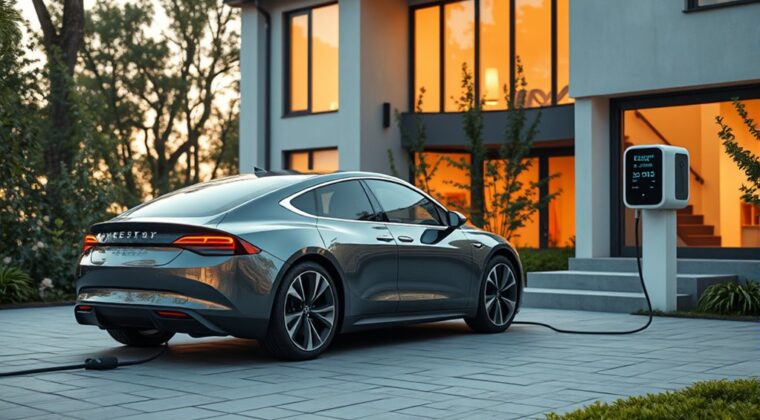
Vehicle-to-Home (V2H) charging lets a compatible electric vehicle send stored battery power back into a properly equipped home. For many homeowners, that means quieter backup power during an outage, better use of solar energy, and more control over peak-hour electricity costs. The key is matching the right EV, bidirectional charging hardware, transfer equipment, permits, and utility rules before you rely on it.
Quick Answer
Vehicle-to-Home charging uses a compatible EV, bidirectional charger, and home isolation equipment to power selected circuits or a whole home during an outage. It can provide far more stored energy than many home batteries, but it requires approved hardware, professional installation, and model-specific compatibility.
Key Takeaways
- V2H is not just plugging your EV into the house. It needs bidirectional hardware and a safe way to isolate your home from the grid.
- Backup runtime depends on battery size, house load, reserve range, inverter limits, and what appliances you choose to run.
- Ford, Tesla, GM, and some older CHAdeMO-based systems support forms of bidirectional power, but exact model year, region, and equipment matter.
- V2H powers your home. V2G sends power to the grid, and that usually needs a utility program and extra approval.
- A licensed electrician should install the transfer switch, gateway, inverter, or critical-load panel. Unsafe backfeeding can endanger utility workers and damage equipment.
What Is Vehicle-to-Home (V2H) Charging?
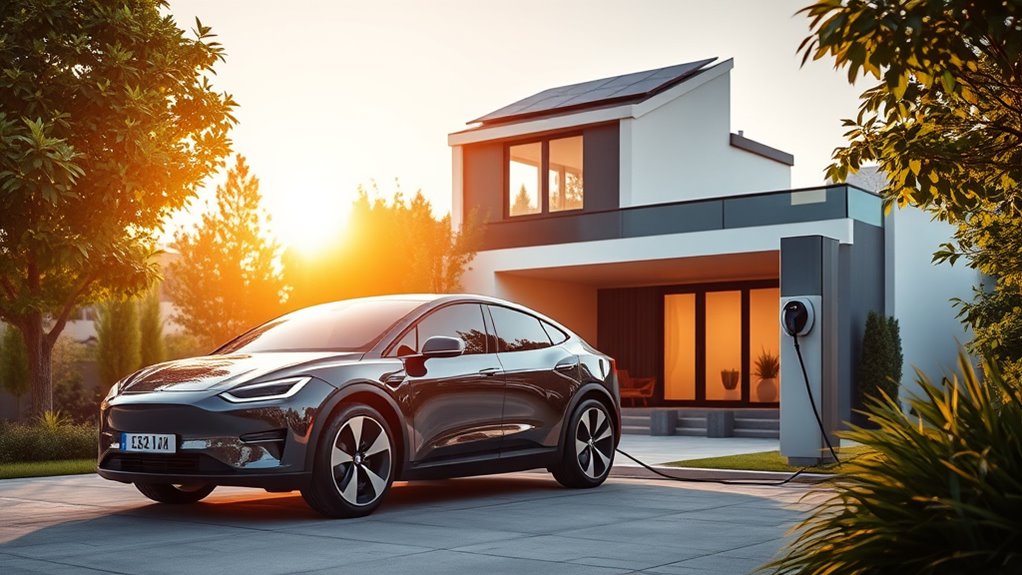
Vehicle-to-Home (V2H) charging is a bidirectional energy setup that allows your EV battery to power your home when the grid is down or when electricity is expensive. Instead of energy flowing only from the wall into the vehicle, the system can also send energy from the vehicle back through approved home backup equipment.
A working V2H system usually includes a compatible EV, a bidirectional charger or inverter, a gateway or transfer switch, software controls, and a home electrical panel that has been prepared for backup power. Some systems power selected critical circuits, while others can support more of the home if the EV, inverter, and panel are sized correctly.
V2H is part of the broader Vehicle-to-Everything (V2X) family. Standards such as ISO 15118-20 support communication for bidirectional power transfer, but real-world compatibility still depends on the automaker, charger, utility, and local electrical code.
V2H vs. V2L vs. V2G
| Term | What It Does | Common Use |
| V2L | Vehicle-to-Load powers small devices from an outlet or adapter. | Camping gear, tools, laptops, small appliances. |
| V2H | Vehicle-to-Home sends EV battery power into a properly isolated home electrical system. | Home backup power and peak-rate energy shifting. |
| V2G | Vehicle-to-Grid exports energy from an EV to the utility grid. | Utility programs, grid support, demand response, and possible export credits. |
At a Glance
| Time Required | Research and quotes may take a few hours. Installation is often completed in a day after equipment, permits, utility requirements, and panel work are approved. |
| Difficulty | Advanced electrical project. Homeowners can compare systems, but installation should be handled by a licensed electrician or approved installer. |
| Tools Needed | Compatible EV, bidirectional charger or inverter, gateway or transfer switch, approved wiring, permits, utility approval where required, and a backup-load plan. |
| Cost | Costs vary widely by vehicle, equipment, panel condition, backup scope, permits, and utility rules. Expect a site-specific quote before choosing V2H over a generator or home battery. |
Warning: Do not connect an EV, generator, or inverter to your home with a homemade cord or unapproved backfeed setup. A V2H system needs listed transfer or gateway equipment that safely isolates your home from the grid.
Why Is V2H Essential for Backup Power?
V2H matters because power outages are not only inconvenient. They can shut down refrigerators, medical devices, sump pumps, heating controls, internet equipment, and well pumps. The U.S. Energy Information Administration reported that customers averaged just over seven hours of power interruptions in 2021 when major events were included, and severe storms can leave some homes without power for much longer.
Compared with a gas generator, a V2H system can be quieter, cleaner at the point of use, and easier to automate. It can also be attractive if your EV battery is large enough to run essential loads overnight or for several days with careful energy use.
The main benefit is control. You can choose which loads matter most, preserve driving range with a battery reserve, and avoid running every appliance at once.
How Does V2H Technology Work in Your Home?
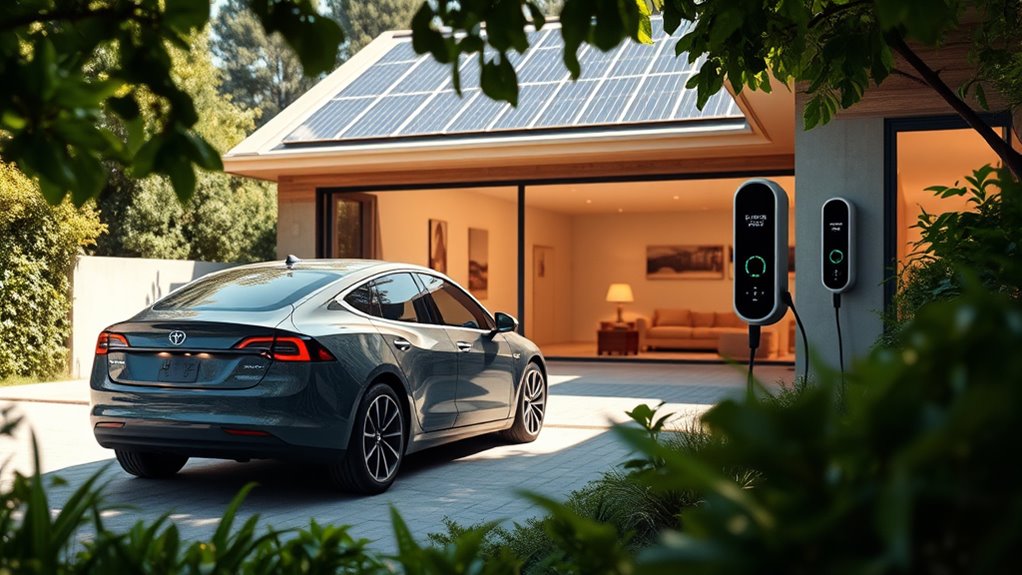
V2H works by controlling energy flow between your EV battery and your home. The EV stores energy as DC power. Depending on the system design, the charger, inverter, or vehicle hardware converts that energy into AC power your home can use.
During an outage, the system must disconnect your home from the utility grid before sending EV power into the panel. This process is called islanding. It protects utility workers, prevents equipment damage, and helps the backup system operate safely.
Key System Components
- Compatible EV: The vehicle must support bidirectional power for the specific system you plan to install. V2L outlets alone do not equal whole-home V2H.
- Bidirectional charger or inverter: This hardware manages energy flow between the EV battery and your home.
- Gateway or transfer switch: This isolates your home from the grid during backup operation.
- Electrical panel or critical-load subpanel: Some homes need panel upgrades or a separate load panel so only essential circuits run on EV backup power.
- Software controls: The app or energy-management system sets backup reserve, charging schedule, load priority, and time-of-use behavior.
- Permits and utility approval: Local rules vary, especially if the system can export energy or interact with solar.
Charging and Power Flow
In normal use, your EV charges from the grid or from solar through your home energy system. With V2H enabled, the power can flow the other way when conditions call for it. During an outage, the gateway or transfer device isolates the home, then the EV supplies power to approved circuits.
For peak-rate savings, the system may charge the vehicle when electricity is cheaper and discharge some energy to the home when rates are high. This only makes sense if your utility rate plan, battery warranty, daily driving needs, and round-trip efficiency support it.
Step-by-Step V2H Setup Checklist
- Confirm your exact EV support: Check the model year, trim, battery, software version, and region. Do not assume every EV from a brand supports V2H.
- Choose the right backup scope: Decide whether you want critical circuits only or broader home backup.
- Get a panel review: Ask a licensed electrician whether your panel needs a transfer switch, gateway, load-management device, or subpanel.
- Check utility and permit rules: Some systems require interconnection paperwork, inspections, or utility-approved equipment.
- Set a driving reserve: Keep enough battery for your next trip. A common approach is to reserve a set percentage for driving and use the rest for home backup.
- Test the system: After installation, run a controlled outage test so you know which circuits work and how much load the EV can handle.
How to Estimate V2H Runtime
A simple estimate is:
Runtime in hours = usable EV battery energy for the home ÷ average home load in kilowatts.
For example, if you allow 60 kWh of EV battery energy for home backup and your essential loads average 2 kW, the rough runtime is 30 hours before accounting for inverter losses, temperature, battery reserve, and high-startup appliances. If you cut the average load to 1 kW, the same energy can last much longer.
Pro Tip: A critical-load panel often makes V2H more useful. Running a refrigerator, lights, modem, outlets, and a furnace blower is easier than trying to run every high-draw appliance in the house.
Top Advantages of V2H for Emergency Power Supply
V2H can be a strong backup option if you already own, or plan to buy, a compatible EV. The biggest advantages are battery capacity, automation, and comfort during outages.
- Large energy reserve: Many EV batteries store far more energy than a single wall-mounted home battery. That can stretch backup time if you manage loads carefully.
- Cleaner and quieter operation: V2H avoids the noise, exhaust, fuel storage, and maintenance needs of a portable gas generator.
- Automatic outage response: Some systems can detect an outage and switch into backup mode without manual setup.
- Flexible energy use: A V2H setup can work with time-of-use rates, solar charging, and backup reserve settings.
- Less duplicate hardware: If you already own a large EV battery, V2H may reduce the need for a separate large stationary battery system.
V2H is not the best fit for every home. If your EV is often away during the day, if you need backup when the vehicle is not parked at home, or if your utility rules are restrictive, a dedicated home battery or generator may still make more sense.
Comparing V2H With Home Battery Systems
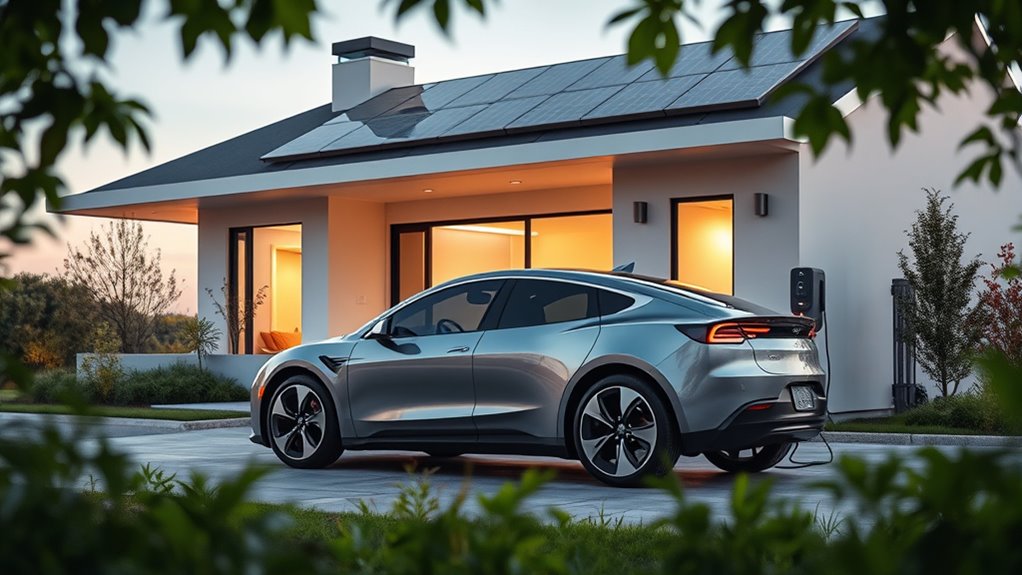
V2H and home batteries both store energy for later use, but they solve the problem in different ways. A home battery such as the Tesla Powerwall 3 is always installed at the house and has 13.5 kWh of nominal battery energy per unit. An EV battery is usually much larger, but it only helps the home when the vehicle is parked, charged, and connected.
| Feature | V2H System | Home Battery System |
| Storage capacity | Often large because it uses the EV battery, but usable energy depends on reserve settings and system limits. | Usually smaller per unit, but expandable with multiple batteries. |
| Availability | Only works when the EV is home, connected, and charged. | Always connected to the home. |
| Best use | Backup power for EV owners who can keep the vehicle plugged in during outages. | Daily solar storage, backup power, and homes where the EV is often away. |
| Main drawback | Compatibility and installation are model-specific and still developing. | More stationary battery capacity can become expensive. |
What EVs Can Use V2H?
The safest answer is: only EVs that your automaker, charger maker, installer, and utility confirm for your exact home setup. Bidirectional claims can change by model year, software version, trim, battery pack, connector type, and country.
| EV or System | Required Hardware | Backup Output / Note | Important Caveat |
| Ford F-150 Lightning | Ford-supported home backup equipment or Ford-described GenerLink transfer-switch setup, depending on system and model year. | Ford lists up to 9.6 kW available power with Pro Power Onboard, with backup duration depending on battery and load. | Confirm current Ford equipment path before buying because Ford’s supported backup configurations have evolved. |
| Tesla Cybertruck Powershare | Tesla Powershare equipment, such as Universal Wall Connector and Powershare Gateway for homes without Powerwall. | Tesla states Cybertruck can provide up to 11.5 kW of backup power for over three days under its Powershare guidance. | Hardware requirements depend on whether the home has Powerwall and on Tesla’s current compatibility rules. |
| GM Energy V2H-capable EVs | GM Energy PowerShift Charger and GM Energy V2H Enablement Kit. | GM lists a 9.6 kW inverter backup output for the V2H Enablement Kit. | Only specific GM EVs and home setups are compatible. Confirm vehicle eligibility and installer requirements. |
| Nissan Leaf with CHAdeMO | CHAdeMO-compatible bidirectional charger where certified and available. | Older CHAdeMO-based systems have supported bidirectional power in some markets and pilot programs. | U.S. residential options can be limited. Verify charger certification, utility approval, and battery-warranty terms. |
| Kia, Hyundai, Rivian, and other newer EVs | Varies by vehicle, software, connector, charger, market, and utility program. | Some models offer V2L or announced bidirectional features, but not all support whole-home V2H today. | Do not treat a portable V2L adapter as a code-compliant whole-home backup system. |
Note: Always verify compatibility with the automaker and the charger manufacturer before purchase. A sales listing that says “bidirectional ready” does not always mean your local utility will approve whole-home V2H.
How Can V2H Lower Your Energy Bills?
V2H can lower energy bills when your utility rates make stored energy valuable. The basic idea is simple: charge the EV when electricity is cheaper, then use some of that stored energy when electricity is expensive. The real savings depend on your rate plan, charging losses, battery reserve, driving needs, and whether your warranty allows routine home-energy cycling.
Time-of-Use Rates
With time-of-use rates, electricity costs more during peak hours and less during off-peak hours. V2H can shift some home energy use from expensive hours to cheaper hours if the price difference is large enough.
Use this quick formula before assuming big savings:
Estimated daily savings = kWh shifted × difference between peak and off-peak rates − efficiency losses.
If the rate difference is small, the savings may not justify the equipment cost. If the rate difference is large and your EV is home during peak hours, V2H can become more useful.
Renewable Energy Utilization
V2H can pair well with solar if the system allows solar charging and home backup coordination. During the day, solar may charge your EV. In the evening, your EV can help power the home when solar production drops.
This can improve self-consumption, but it is not automatic. Your inverter, charger, gateway, utility rules, and solar equipment must be designed to work together. Some systems also limit solar operation during an outage unless the backup gateway supports it.
Peak Demand Management
Some utility bills include demand charges or high peak-period pricing. A V2H system may reduce those costs by covering part of the home load from the EV battery during expensive periods.
Be careful with grid-export claims. Using your EV to power your home is V2H. Selling power back to the grid is V2G, and it usually requires an approved utility program, interconnection agreement, meter setup, and tariff.
Challenges and Future Prospects for V2H Technology
V2H is promising, but it is still not as simple as buying any EV and plugging it into a house. The biggest challenges are vehicle availability, hardware cost, utility approval, installation complexity, and fast-changing compatibility rules.
Another challenge is interoperability. ISO 15118-20:2022 supports communication requirements for bidirectional power transfer, but published standards do not instantly make every EV, charger, and utility system work together. Automaker software, charger certification, connector standards, and local electrical rules still matter.
Battery warranty questions also deserve attention. Occasional backup use is different from cycling the EV battery every day to offset utility rates. Before using V2H for daily savings, read your EV warranty, charger warranty, and utility program rules.
The future is still encouraging. More automakers are designing EVs with bidirectional hardware, more utilities are testing managed charging and V2G programs, and homeowners are looking for cleaner alternatives to gas generators. As equipment becomes easier to install and standards mature, V2H should become more practical for a wider range of homes.
Frequently Asked Questions
What is Vehicle-to-Home V2H charging?
Vehicle-to-Home charging lets a compatible EV send battery power into a properly equipped home. It usually requires a bidirectional charger or inverter, transfer or gateway equipment, approved wiring, and software that controls backup reserve and power flow.
What is the downside of a plug-in hybrid for V2H?
Most plug-in hybrids have much smaller batteries than full EVs, and many do not support whole-home bidirectional charging. Even when they have useful outlet power, that is often V2L, not code-compliant V2H backup for an electrical panel.
Is V2H worth it?
V2H can be worth it if you own a compatible EV, experience outages, have high peak electricity rates, or want quieter backup power. It may not be worth it if your EV is rarely home, your utility rules are restrictive, or installation costs exceed the value of backup and bill savings.
What is the difference between V2G and V2H?
V2H sends EV battery power to your home. V2G sends EV battery power to the utility grid. V2G usually requires a utility program, approved equipment, interconnection rules, and a payment or credit structure.
Can V2H power my whole house?
Sometimes, but it depends on your EV output, inverter rating, panel design, and the loads you run. Large appliances such as central air conditioning, electric heat, ovens, dryers, and well pumps may exceed the system limit unless your setup is designed for them.
Will V2H damage my EV battery?
Occasional outage backup should not be treated the same as heavy daily cycling, but every automaker handles battery warranty terms differently. Check your EV warranty and keep a driving reserve so home backup does not leave you without enough range.
Can I install a V2H system myself?
No. V2H installation should be handled by a licensed electrician or approved installer. The system must safely isolate your home from the grid, meet local electrical code, and pass any required permit or utility inspections.
Conclusion
V2H charging can turn a compatible EV into a serious home backup resource, but it is not a one-size-fits-all upgrade. The best results come from matching the right vehicle, bidirectional hardware, transfer equipment, utility approval, and load plan. If your EV is usually parked at home and you want cleaner, quieter backup power, V2H may be one of the most useful energy features your next vehicle can offer.
Sources
- U.S. Energy Information Administration — outage-duration context and grid reliability background.
- Ford F-150 Lightning Intelligent Backup Power — Ford backup-power output and duration guidance.
- Tesla Powershare Support — Cybertruck Powershare capability and required equipment.
- GM Energy V2H Bundle — GM PowerShift Charger, V2H Enablement Kit, and inverter backup output.
- Tesla Powerwall 3 Datasheet — home-battery capacity and output comparison benchmark.
- ISO 15118-20:2022 — bidirectional power-transfer communication standard.