
EV charging cost depends on where you plug in, what your utility charges, how efficient your EV is, and whether you use home charging or public fast charging. For most drivers, home charging is still the cheapest option. Public charging can be convenient on road trips, but the final price can change by station, network, plan, time of day, and extra fees.
Quick Answer
To estimate EV charging cost, multiply the kWh you add by the price per kWh, then add about 10% for charging losses. At the April 2026 U.S. residential average of $0.188/kWh, adding 60 kWh costs about $12.43 with losses. Public fast charging is usually higher and varies by station.
Key Takeaways
- Home EV charging is usually based on your residential electricity rate, which averaged 18.83 cents per kWh in the U.S. in April 2026.
- Public charging prices are not one fixed national rate. Networks often price by location, plan, energy delivered, time of use, and added fees.
- A 60 kWh charge at the U.S. residential average costs about $12.43 after a 10% charging-loss allowance.
- Fast charging can reduce EV fuel savings if you rely on it often, especially when session fees, idle fees, or credit card transaction fees apply.
- The federal home EV charger credit window for individuals ended for qualifying property placed in service after June 30, 2026, but state and utility incentives may still be available.
Understanding EV Charging Costs
The easiest way to understand EV charging cost is to think in kilowatt-hours, or kWh. A kWh is the unit your utility uses to bill electricity. Your EV battery also stores energy in kWh, so the math is straightforward.
Formula: EV charging cost = kWh added × price per kWh. For a more realistic home estimate, multiply the result by about 1.10 to allow for charging losses.
For example, if you add 60 kWh at $0.188 per kWh, the energy alone costs $11.28. After a 10% charging-loss allowance, the wall-to-car cost is about $12.43. Your real number may be higher or lower because rates vary by state, utility plan, season, time of day, and taxes.
The U.S. Energy Information Administration listed the April 2026 U.S. residential electricity average at 18.83 cents per kWh. That is a useful home-charging baseline, not a guaranteed public charging price.
At the April 2026 U.S. residential average, an EV that gets 3.3 miles per kWh costs about 6.3 cents per mile after a 10% charging-loss allowance.
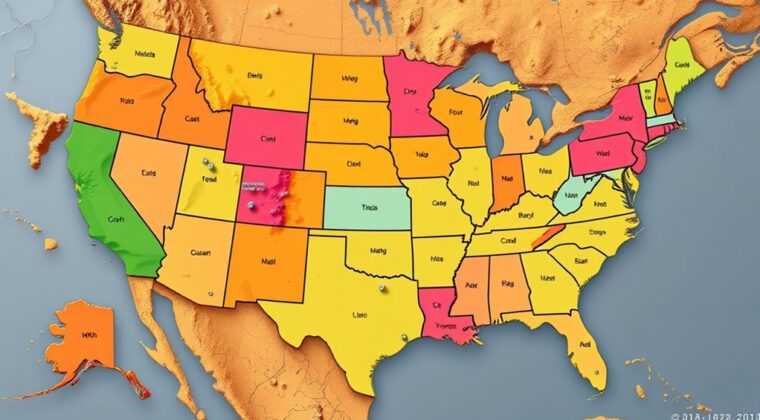
State-by-State EV Charging Costs at Home
The table below uses April 2026 residential electricity prices from the EIA. It estimates the cost to add 60 kWh to an EV while allowing for about 10% charging loss, so the calculation uses 66 kWh from the wall. The cost per mile estimate assumes 3.3 miles per kWh and the same 10% loss allowance.
Warning: This table is a home-charging baseline. Public chargers can cost more because the station operator must cover equipment, maintenance, rent, software, utility demand charges, payment processing, and profit.
| State | Residential Rate per kWh | Estimated 60 kWh Charge | Estimated Cost per Mile |
|---|---|---|---|
| Alabama | $0.174 | $11.49 | 5.8¢ |
| Alaska | $0.274 | $18.05 | 9.1¢ |
| Arizona | $0.155 | $10.22 | 5.2¢ |
| Arkansas | $0.142 | $9.35 | 4.7¢ |
| California | $0.352 | $23.26 | 11.8¢ |
| Colorado | $0.165 | $10.92 | 5.5¢ |
| Connecticut | $0.322 | $21.28 | 10.7¢ |
| Delaware | $0.188 | $12.40 | 6.3¢ |
| District of Columbia | $0.254 | $16.77 | 8.5¢ |
| Florida | $0.154 | $10.15 | 5.1¢ |
| Georgia | $0.154 | $10.14 | 5.1¢ |
| Hawaii | $0.466 | $30.77 | 15.5¢ |
| Idaho | $0.127 | $8.38 | 4.2¢ |
| Illinois | $0.205 | $13.51 | 6.8¢ |
| Indiana | $0.179 | $11.81 | 6.0¢ |
| Iowa | $0.139 | $9.15 | 4.6¢ |
| Kansas | $0.158 | $10.41 | 5.3¢ |
| Kentucky | $0.150 | $9.91 | 5.0¢ |
| Louisiana | $0.144 | $9.53 | 4.8¢ |
| Maine | $0.284 | $18.76 | 9.5¢ |
| Maryland | $0.221 | $14.57 | 7.4¢ |
| Massachusetts | $0.294 | $19.44 | 9.8¢ |
| Michigan | $0.214 | $14.12 | 7.1¢ |
| Minnesota | $0.164 | $10.82 | 5.5¢ |
| Mississippi | $0.168 | $11.06 | 5.6¢ |
| Missouri | $0.140 | $9.25 | 4.7¢ |
| Montana | $0.139 | $9.17 | 4.6¢ |
| Nebraska | $0.133 | $8.76 | 4.4¢ |
| Nevada | $0.143 | $9.43 | 4.8¢ |
| New Hampshire | $0.272 | $17.98 | 9.1¢ |
| New Jersey | $0.235 | $15.53 | 7.8¢ |
| New Mexico | $0.151 | $10.00 | 5.1¢ |
| New York | $0.294 | $19.44 | 9.8¢ |
| North Carolina | $0.163 | $10.72 | 5.4¢ |
| North Dakota | $0.123 | $8.15 | 4.1¢ |
| Ohio | $0.195 | $12.86 | 6.5¢ |
| Oklahoma | $0.133 | $8.78 | 4.4¢ |
| Oregon | $0.158 | $10.41 | 5.3¢ |
| Pennsylvania | $0.215 | $14.17 | 7.2¢ |
| Rhode Island | $0.283 | $18.68 | 9.4¢ |
| South Carolina | $0.171 | $11.26 | 5.7¢ |
| South Dakota | $0.145 | $9.58 | 4.8¢ |
| Tennessee | $0.149 | $9.86 | 5.0¢ |
| Texas | $0.170 | $11.21 | 5.7¢ |
| Utah | $0.133 | $8.77 | 4.4¢ |
| Vermont | $0.246 | $16.21 | 8.2¢ |
| Virginia | $0.174 | $11.47 | 5.8¢ |
| Washington | $0.144 | $9.48 | 4.8¢ |
| West Virginia | $0.161 | $10.60 | 5.4¢ |
| Wisconsin | $0.192 | $12.68 | 6.4¢ |
| Wyoming | $0.147 | $9.69 | 4.9¢ |
Hawaii is the most expensive state in this residential-rate snapshot, while North Dakota is the lowest. California is also high compared with the national average. Texas, Kansas, West Virginia, and many Southern and Mountain states sit closer to or below the national residential average.
Home vs. Public Charging: Cost Comparison
Home charging is usually cheaper because you pay your household electricity rate instead of a station operator’s full public-charging price. The U.S. Department of Energy’s Alternative Fuels Data Center notes that many EV drivers charge overnight at home with Level 1 or Level 2 equipment. Level 2 home charging is faster, but it may require a dedicated 240-volt circuit and a code-compliant installation.
Public charging is different. The AFDC public charging guidance explains that public charging commonly uses Level 2 or DC fast charging. Public Level 2 works well when you park for a while, such as at a hotel, office, airport, shopping center, or garage. DC fast charging is built for shorter stops and road trips, but it usually carries a premium.
| Charging Type | Typical Use | Cost Pattern |
|---|---|---|
| Home Level 1 | Overnight charging from a standard outlet when daily mileage is modest. | Usually based on your residential electricity rate. |
| Home Level 2 | Faster home charging for longer commutes or larger batteries. | Usually cheap per kWh, but installation can add upfront cost. |
| Public Level 2 | Work, hotels, parking garages, shopping centers, and longer stops. | Can be free, paid per kWh, paid by time, or priced by the site owner. |
| DC Fast Charging | Road trips, quick top-ups, and drivers without reliable home charging. | Often the highest-cost option, with pricing based on station, plan, time, and possible extra fees. |
Large charging networks make this clear. Electrify America says DC fast charging pricing is determined by charger location, plan, and the energy delivered, with real-time prices shown in the app or at the charger. Idle fees may also apply after a session ends.
Pro Tip: Before starting a public charging session, check the charger screen or app for the per-kWh rate, session fee, idle fee, membership discount, and any time-of-use pricing.
Key Factors That Affect EV Charging Prices
EV charging prices can change more than many new EV owners expect. These are the biggest factors to check before you compare one charging option with another.
Local Electricity Rates
Your home charging cost starts with your utility rate. In April 2026, the U.S. residential average was 18.83 cents per kWh, but Hawaii was 46.62 cents and North Dakota was 12.35 cents. That spread can more than triple your cost per mile.
Time-of-Use Plans
Some utilities offer lower overnight prices and higher peak-hour prices. If your utility offers an EV plan, charging after peak evening demand can lower your monthly cost. Public networks may also use time-of-use pricing at select stations.
Charging Losses
Not every kWh from the wall reaches the battery. Heat, onboard charging equipment, cable resistance, battery temperature, and preconditioning can cause losses. A 10% allowance is a practical estimate for simple budgeting, though your actual loss can vary.
Vehicle Efficiency
A small, efficient EV may travel more than 4 miles per kWh. A large electric truck or SUV may travel closer to 2 miles per kWh in real use. The same electricity rate can feel cheap in one EV and expensive in another.
Battery Size and How Much You Add
A “full charge” is not the same for every EV. Adding 30 kWh to a commuter car costs half as much as adding 60 kWh at the same rate. For daily use, most drivers pay for the energy they used that day, not for a full battery from empty.
Public Charging Fees
Public charging can include per-kWh pricing, per-minute pricing in some places, session fees, transaction fees, idle fees, parking fees, or subscription plans. A charger that looks cheap per kWh may not be the cheapest if extra fees apply.
Comparing EV Charging to Gasoline: Is It Worth It?
EV charging is usually cheaper than gasoline when you can charge at home. The comparison gets closer if you rely heavily on paid DC fast charging.
The EIA Gasoline and Diesel Fuel Update listed the U.S. regular gasoline average at $3.777 per gallon for July 6, 2026. At that price, a 30 mpg gasoline car costs about 12.6 cents per mile for fuel.
| Scenario | Assumption | Estimated Cost per Mile |
|---|---|---|
| EV, U.S. average home rate | $0.188/kWh, 3.3 miles/kWh, 10% loss | 6.3¢ |
| EV, California home rate | $0.352/kWh, 3.3 miles/kWh, 10% loss | 11.8¢ |
| EV, example public fast rate | $0.45/kWh, 3.3 miles/kWh, 10% loss | 15.0¢ |
| Gasoline car | $3.777/gallon, 30 mpg | 12.6¢ |
This is why home charging access matters so much. If most of your charging happens at home, an EV can be much cheaper to fuel. If most of your charging happens at paid DC fast chargers, your cost per mile may match or exceed a fuel-efficient gasoline car.
How to Lower Your EV Charging Costs
- Charge at home when possible. Home charging is usually the lowest-cost option, especially overnight.
- Ask your utility about EV or time-of-use plans. A lower off-peak rate can make a large difference over a year.
- Check public prices before plugging in. Use the network app or charger screen to confirm the real-time rate and fees.
- Avoid idle fees. Move your car after charging finishes, especially at busy fast chargers.
- Precondition while plugged in. Heating or cooling the cabin from grid power can preserve battery range.
- Drive efficiently. High speeds, cold weather, underinflated tires, roof racks, and aggressive acceleration all raise energy use.
- Use workplace or hotel charging when it is free or fairly priced. Slower charging can be a good deal when your car is parked anyway.
Charging Costs for Apartment Renters
If you rent or live in a condo, your charging cost depends on your access. Some buildings offer shared Level 2 chargers with a set price per kWh. Others bill by session, by time, or through a third-party network. If you have no home or workplace charging, public charging may become your main cost.
Before buying an EV, check three things: where you will charge during a normal week, what each location charges, and how often you will need DC fast charging. A renter with cheap workplace charging may spend little. A renter who depends on fast charging may spend much more.
Home Charger Installation, Safety, and Incentives
A Level 1 cord can work for low-mileage drivers if a suitable dedicated outlet is available. A Level 2 charger is faster, but it may require a new 240-volt circuit, panel capacity review, permits, and a qualified electrician. The AFDC recommends safety-certified equipment and notes that charging equipment installations must comply with local and state codes.
Warning: Do not treat a home EV charger as a simple appliance upgrade. Use properly rated equipment, follow local code, and hire a qualified electrician when adding or modifying a circuit.
The federal Alternative Fuel Vehicle Refueling Property Credit had a limited window for individuals. The IRS says qualifying property bought and placed in service at a main home from January 1, 2023, to June 30, 2026, could qualify for a 30% credit up to $1,000 per item, subject to eligible-location rules. As of July 8, 2026, that federal window has passed for new home installations placed in service after June 30, 2026.
State, local, and utility incentives may still be available. Check your utility, state energy office, and local air-quality or transportation agency before installing equipment.
Future Trends in EV Charging Costs
EV charging costs will keep changing as utilities update rate plans, public networks expand, and more drivers use fast chargers. The biggest changes to watch are time-of-use pricing, charger reliability, local grid costs, and renewable energy contracts.
Time-of-Use and Smart Charging
Smart chargers and vehicle apps can help shift charging to cheaper hours. This matters because utilities often want EVs to charge when demand is low and power is easier to supply.
Public Network Competition
More fast chargers may improve convenience, but price competition is local. A busy highway site with high utility costs may remain expensive, while a workplace or retail location may offer lower prices to attract customers.
Renewable Energy and Grid Costs
Renewable energy can help stabilize some long-term energy costs, but it does not automatically make every public charger cheap. Station prices still reflect equipment, land, maintenance, demand charges, software, payment processing, and utilization.
Frequently Asked Questions
What is a good price per kWh for EV charging?
For home charging, anything below your local residential average is a good price. The U.S. residential average was $0.188/kWh in April 2026. For public charging, a good price depends on your area and charger speed. Always check the app or charger screen before starting.
How do I calculate my monthly EV charging cost?
Divide your monthly miles by your EV’s miles per kWh, multiply by your electricity price, then add about 10% for charging losses. For example, 1,000 miles at 3.3 miles/kWh uses about 303 kWh in the battery, or about 333 kWh from the wall after losses.
Does public charging cost more than home charging?
Usually, yes. Public stations must cover equipment, maintenance, software, payment processing, site costs, and utility charges. Some public Level 2 chargers are free or subsidized, but DC fast charging is often more expensive than home charging.
What stops someone from unplugging your electric car?
Many EVs lock the charging connector while the vehicle is locked. Some public chargers also require user authentication, app access, or payment authorization. At shared chargers, good charging etiquette still matters: move your car when the session is done.
Is it worth buying an electric car in 2026?
It can be worth it if you can charge at home or at work, drive enough miles to benefit from lower energy and maintenance costs, and choose an EV that fits your range needs. The math is less favorable if you depend mainly on paid DC fast charging.
What drains an electric car battery the most?
High speeds, cold weather, cabin heat, heavy air conditioning, underinflated tires, roof racks, towing, steep climbs, and aggressive acceleration can all raise energy use. Smooth driving and proper tire pressure help lower cost per mile.
Conclusion
EV charging costs are easiest to understand when you separate home electricity rates from public station prices. At the current U.S. residential average, home charging is usually much cheaper than gasoline on a cost-per-mile basis. Public fast charging is different because rates and fees vary by station, plan, time of day, and network.
For the best estimate, use your own numbers: your utility rate, your EV’s miles per kWh, your monthly mileage, and how often you use public chargers. If you can charge mostly at home or at work, an EV can still be very affordable to run in 2026. If you rely on DC fast charging, check station prices carefully before assuming big fuel savings.
Sources
- U.S. Energy Information Administration, Electric Power Monthly Table 5.6.A — April 2026 residential electricity prices by state.
- U.S. Department of Energy Alternative Fuels Data Center, Charging Electric Vehicles at Home — home charging equipment, safety, and cost basics.
- U.S. Department of Energy Alternative Fuels Data Center, Charging Electric Vehicles in Public — public Level 2 and DC fast charging context.
- Internal Revenue Service, Alternative Fuel Vehicle Refueling Property Credit — eligibility period and credit limits for EV charging property.
- U.S. Energy Information Administration, Gasoline and Diesel Fuel Update — current U.S. gasoline price comparison.
- Electrify America Pricing and Plans — example of station-specific DC fast charging pricing, plans, time-of-use pricing, and idle-fee information.