
Last Updated: July 8, 2026 · This roundup is reader-supported. When you click through links, we may earn a referral commission on qualifying purchases.
When you’re planning new construction, choosing an EV charger early can save you time, money, and electrical rework later. Installing the right charger during the build lets you pre-wire the right 240V circuit, choose a clean garage or driveway location, and avoid cutting into finished walls after move-in.
For most new homes, a hardwired Level 2 charger is the cleanest long-term choice. Plug-in portable units can still make sense if you want flexibility, travel backup, or a NEMA 14-50 outlet ready for future use.
Quick Verdict
Best overall: Tesla Universal Wall Connector is the strongest all-around pick if you want one clean wall unit that supports both NACS and J1772 charging.
Best smart energy pick: Emporia is the better choice if you want app-based scheduling, energy tracking, and future integration with home energy monitoring.
Best hardwired power: ChargePoint HomeFlex and Autel 50A make the most sense when your electrician can plan a higher-capacity circuit during construction.
Best portable backup: Apex Mach 3, Aimiler, Raylix, and EVDANCE are better for flexibility than for a fully finished permanent install.
Top Picks
|
Category |
Product |
Best For |
|---|---|---|
|
🏆 Best Overall |
Future-ready NACS + J1772 homes |
|
|
🎯 Best Smart Integration |
Energy tracking and app scheduling |
|
|
🏗️ Best Hardwired Power |
Permanent high-output garage installs |
|
|
🔰 Best Outdoor Plug-In |
Weather-ready NEMA 14-50 setups |
|
|
🚀 Best Power Customization |
Adjustable hardwired power |
|
|
⭐ Best Dual-Connector Portable |
NACS and J1772 flexibility |
|
|
💰 Best Budget Portable |
Affordable Level 2 backup |
|
|
🔌 Best Simple Backup |
Level 1 and light Level 2 use |
|
|
🧰 Best 32A No-Frills Portable |
Simple NEMA 14-50 charging |
|
|
⚡ Best 40A Portable Power |
Higher-output plug-in charging |
How We Chose
We focused on what matters most during new construction: connector compatibility, hardwired versus plug-in installation, amperage range, cable length, outdoor rating, smart scheduling, energy monitoring, warranty support, and electrician-friendly wiring. We also gave extra weight to chargers that can fit a permanent garage or driveway setup without looking like an afterthought.
We favored certified, well-documented Level 2 chargers and avoided relying on prices, discounts, or temporary availability. For plug-in models, we treated them as flexible options that still need the right outlet, breaker, wiring, and load calculation.
Before You Rough In Wiring
- Ask for a dedicated 240V circuit: Your electrician should size the breaker, wire, conduit, and charger output for continuous EV charging.
- Plan for hardwired if possible: Hardwired units usually look cleaner and can support higher output than many plug-in setups.
- Use the right outlet if going plug-in: A NEMA 14-50 outlet for EV charging should be industrial-grade and installed for continuous load.
- Think about connector changes: J1772 works for many non-Tesla EVs, while NACS support is becoming more important for future vehicles.
- Measure parking reach: Check whether the cable can reach both sides of the garage, driveway, or a second EV parking spot.
- Consider load management: New homes with heat pumps, electric ranges, solar, or batteries may benefit from smart load planning.
Best EV Chargers For New Construction
This is the best fit if your goal is a clean, future-ready charging station that looks built into the home from day one. The Universal Wall Connector handles the two connector standards most buyers care about, so you do not have to build your garage around only one vehicle brand.
During new construction, you can place the charger where the cable reaches the main parking spot and ask your electrician to size the circuit properly. That gives you a neater installation than adding conduit after drywall, paint, or exterior finishes are complete.
Why You’ll Like It
- Supports both NACS and J1772 charging needs
- Up to 48A output when installed on a suitable circuit
- Clean wall-mounted design for finished garages
- Strong fit for future resale because it works with more EVs
- Good choice for households that may own different EV brands over time
Keep In Mind
It should be treated as a permanent electrical installation. Ask a licensed electrician to confirm breaker size, wiring, load capacity, and local code requirements before installation.
Buyer Feedback Snapshot
Buyer notes for this type of charger usually focus on the convenience of broad connector support, faster Level 2 charging, and a cleaner wall-mounted setup. Always read the most recent Amazon reviews before buying because installation experience can vary by home wiring.
Overall Sentiment: Positive

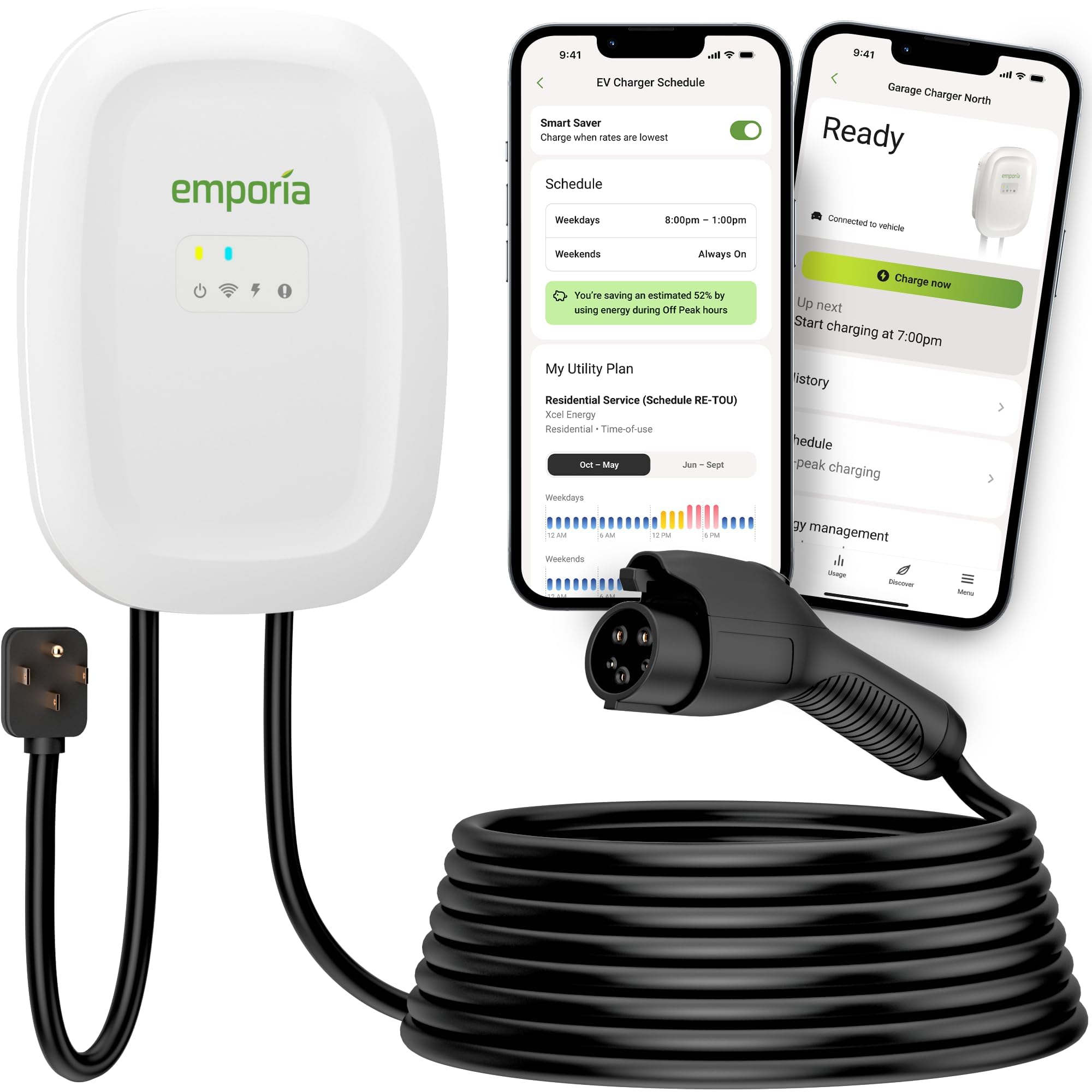
The Emporia charger is a strong choice when your new build includes solar, time-of-use billing, or a bigger smart-home energy plan. Its app can help you schedule sessions, track charging costs, and understand how much energy your EV uses over time.
For new construction, decide early whether you want the charger hardwired or connected through a NEMA 14-50 outlet. Hardwiring is the better long-term choice if you want the highest output this unit can support.
Why You’ll Like It
- App-based scheduling and energy monitoring
- 25 ft cable gives flexible mounting options
- Hardwired installation can support up to 48A
- Useful for homes with solar, batteries, or time-of-use rates
- Good balance of smart features and practical home charging
Keep In Mind
If you use a NEMA 14-50 plug, do not assume you can charge at the same output as a hardwired setup. Ask your electrician to confirm outlet quality, breaker size, wiring, GFCI requirements, and safe continuous-load limits.
Buyer Feedback Snapshot
Buyers often value the monitoring features, long cable, and scheduling options. The main thing to check before buying is whether your home setup is better suited to the plug-in or hardwired version.
Overall Sentiment: Positive

ChargePoint HomeFlex makes sense if you want a permanent charger that feels like part of the home rather than an accessory added later. It is a strong fit for new construction because the electrician can plan conduit, breaker space, and placement before the garage is finished.
This model is especially useful if you expect daily charging and want a polished smart-charging experience. It is not the simplest DIY-style option, but that is also why it fits a new-build electrical plan well.
Why You’ll Like It
- Hardwired design works well for permanent installations
- Adjustable power output up to 50A when properly installed
- Smart app features for scheduling and session tracking
- Clean wall-mounted look for finished garages
- Good fit for daily EV owners who want a familiar charging brand
Keep In Mind
Plan for professional installation. Tesla vehicles may require the right adapter or a NACS version, depending on your vehicle and the exact product configuration you choose.
Buyer Feedback Snapshot
Buyers tend to value the permanent feel, reliable charging routine, and app features. The main hesitation is installation cost, so it is best to include it in the construction budget instead of treating it as an afterthought.
Overall Sentiment: Positive

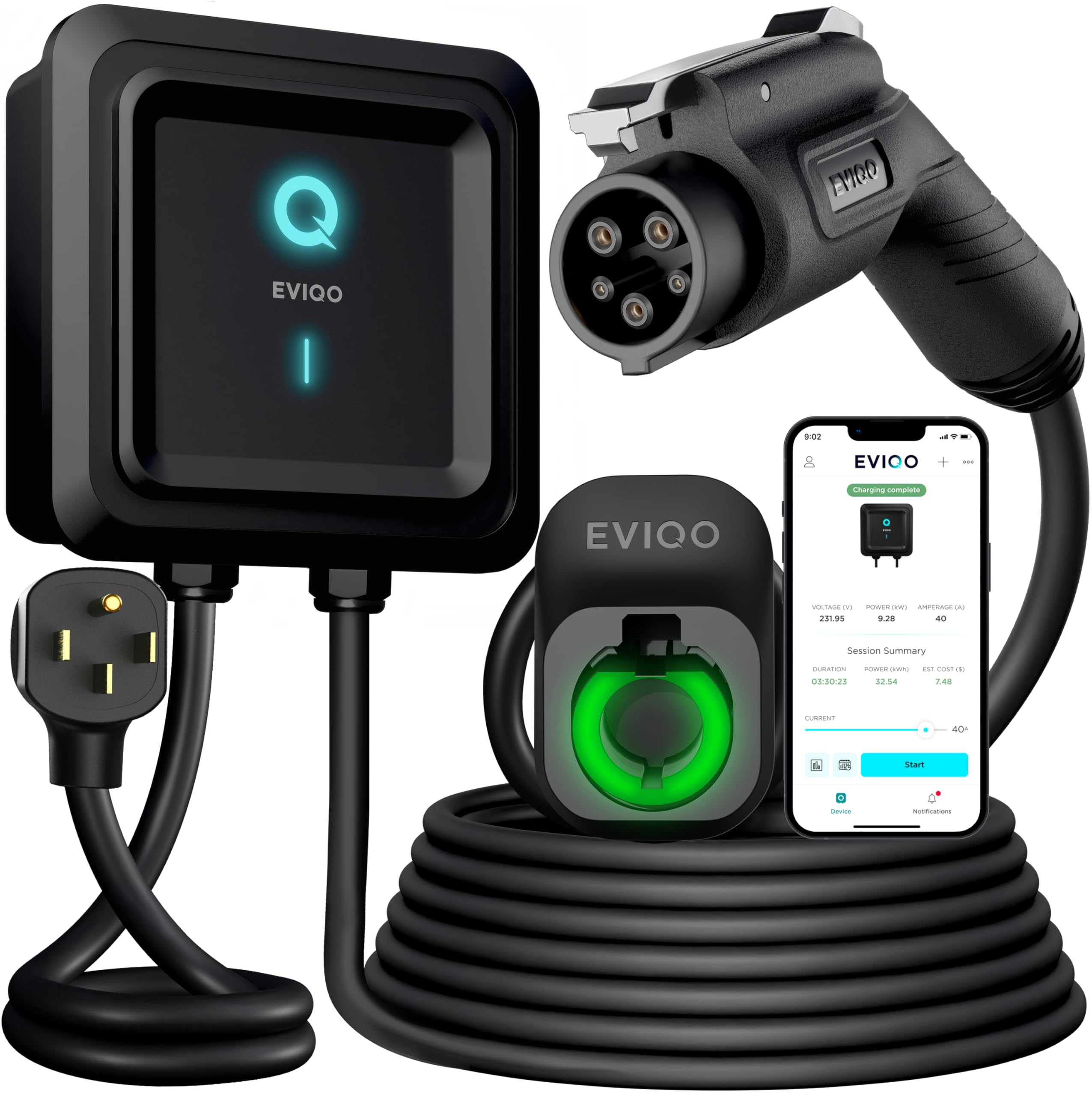
The Eviqo 40A is a practical choice when your new construction plan includes outdoor parking, a carport, or a garage spot where a plug-in charger makes more sense than a hardwired station. The 25 ft cable gives you useful reach, especially if the vehicle’s charge port changes from one car to the next.
It is also a good pick if you want smart features without committing to a fully hardwired installation. Just make sure the NEMA 14-50 outlet is installed for EV charging, not only for occasional appliance-style loads.
Why You’ll Like It
- 40A Level 2 output for overnight charging
- 25 ft cable helps with driveway and garage reach
- Weather-resistant design suits indoor or outdoor placement
- WiFi app features help with scheduling and usage tracking
- Good option when a plug-in setup is part of the building plan
Keep In Mind
It is still a continuous high-load electrical device. Use a quality outlet, correct breaker, proper wire gauge, and professional installation for the circuit.
Buyer Feedback Snapshot
Buyers tend to like the balance of power, cable length, weather readiness, and app control. Before buying, confirm whether your vehicle needs J1772 directly or a NACS adapter.
Overall Sentiment: Positive

This Autel charger fits new construction because adjustable amperage gives you room to match today’s electrical capacity while leaving a path for later upgrades. That matters if your panel is already balancing HVAC, an electric range, solar equipment, or a future second EV.
Hardwiring it during the build also helps the installation look finished. You can hide conduit, place the cable holster where it works naturally, and avoid awkward surface wiring later.
Why You’ll Like It
- Adjustable 6–50A output helps match the circuit
- Hardwired design suits permanent new-build installs
- Wi-Fi and Bluetooth support scheduling and monitoring
- 25 ft cable helps with flexible parking positions
- Good choice for homes where electrical capacity may change later
Keep In Mind
The highest output requires the right circuit and professional installation. Confirm your vehicle’s onboard charger can use the extra amperage before paying for a larger electrical setup.
Buyer Feedback Snapshot
Buyers often value the solid build, adjustable output, and long cable. The biggest planning factor is whether the home panel can support the amperage you want.
Overall Sentiment: Positive

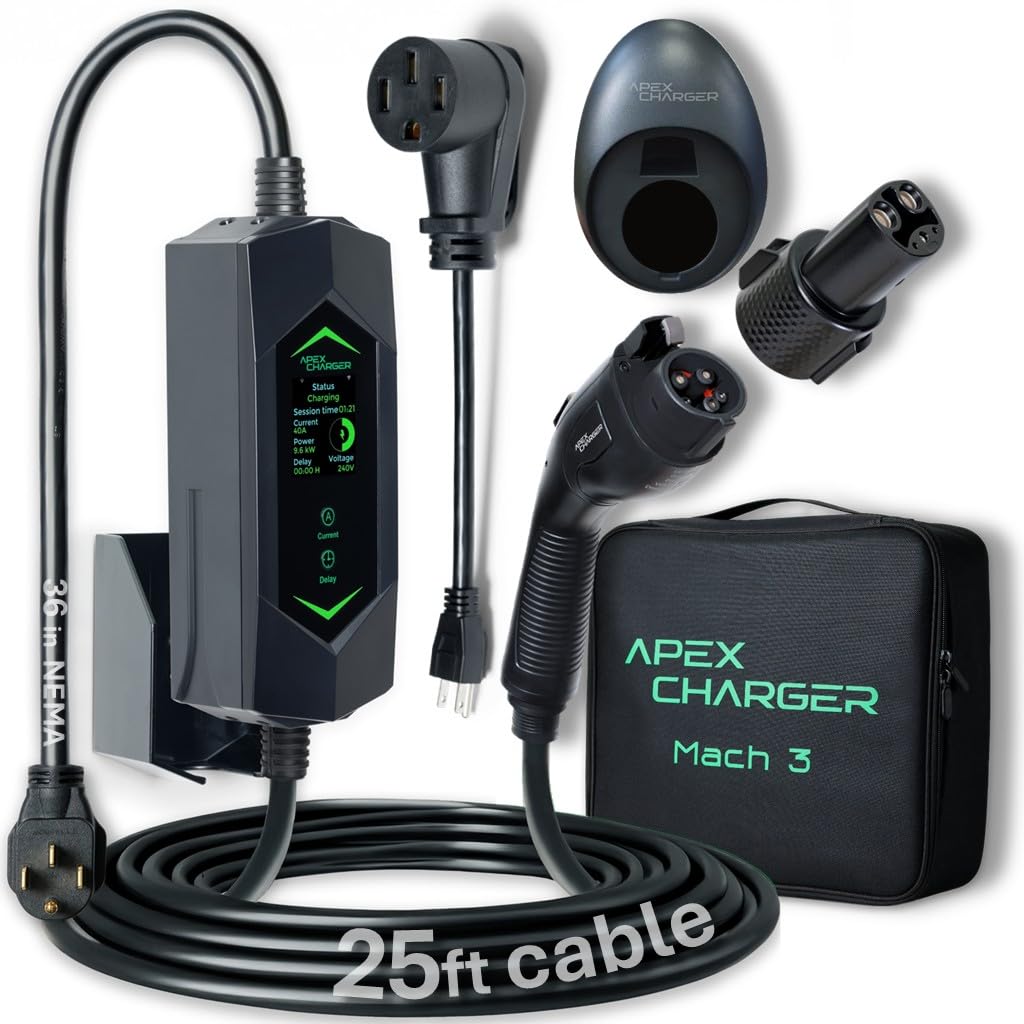
The Apex Mach 3 is not the cleanest permanent choice, but it is one of the more flexible portable options in this lineup. It can work as a move-in charger while your final wall station is delayed, or as a backup you keep for trips, rentals, RV parks, and temporary charging spots.
For new construction, it pairs best with a properly installed NEMA 14-50 outlet. That gives you useful Level 2 performance while keeping the charger removable.
Why You’ll Like It
- Works with J1772 vehicles and includes NACS adapter support
- Adjustable current helps match different outlets
- 25 ft cable helps with awkward parking positions
- Portable format works for travel or temporary use
- Wall-mount option keeps the garage tidier than loose-cord storage
Keep In Mind
A portable charger still depends on the quality of the outlet and circuit. It is best as a flexible solution, not as the most seamless new-construction centerpiece.
Buyer Feedback Snapshot
Buyers often point to the adapter flexibility, long cable, and adjustable current as the main advantages. Before buying, confirm the included plug and adapters match your planned outlet.
Overall Sentiment: Positive

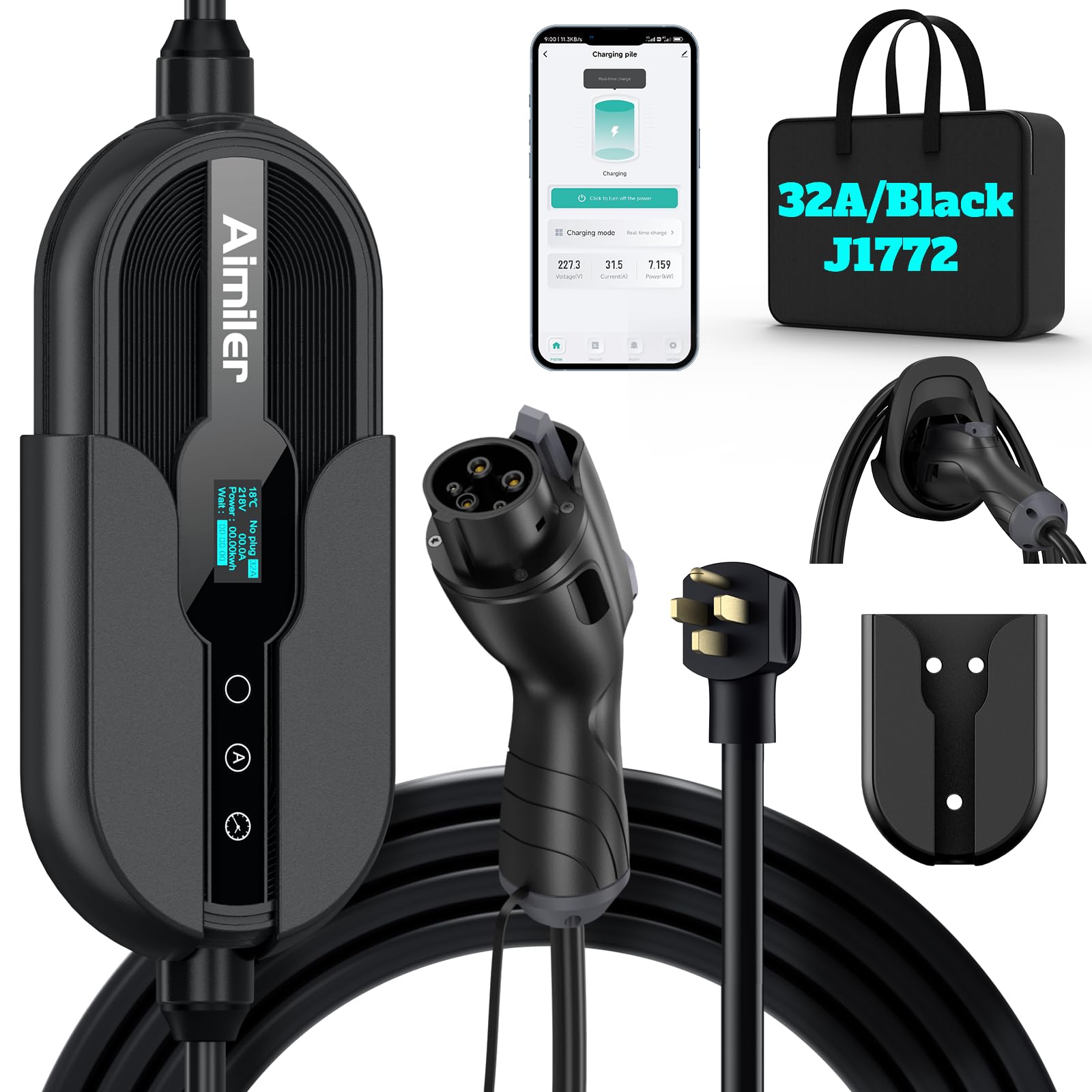
Aimiler 32A is a practical lower-cost Level 2 option if your new home plan includes a NEMA 14-50 outlet but you do not want to commit to a larger hardwired charger yet. It can handle daily charging for many drivers, especially if the car sits overnight.
The portable format also helps during move-in, renovations, or multi-car households where charging locations may change. It is less polished than a hardwired wall charger, but it gives you useful flexibility.
Why You’ll Like It
- 32A Level 2 output is enough for many overnight charging routines
- 25 ft cable reduces parking constraints
- WiFi app features help with basic scheduling
- Portable format works at home or on trips with the right outlet
- Good starter option before upgrading to a permanent wall station
Keep In Mind
It is a plug-in portable charger, so outlet quality matters. Ask your electrician to install an EV-rated NEMA 14-50 outlet if this will be used every night.
Buyer Feedback Snapshot
Buyers usually focus on the cable length, portability, and simple setup. The main limitation is that it does not look as integrated as a hardwired charger in a finished garage.
Overall Sentiment: Positive

The Raylix Portable is not the fastest option here, but it is useful if your construction plan includes a secondary charging spot or you want a simple backup cable. Its 8–16A range works better for lower-demand charging than for fast daily refills.
It is a sensible match for plug-in hybrids, shorter commutes, guest charging, or emergency use. If you drive a long-range EV every day, choose a stronger Level 2 charger instead.
Why You’ll Like It
- Works from common 110V and 240V outlet types when properly matched
- Adjustable 8–16A current helps avoid overloading small circuits
- Built-in timer and display reduce app dependence
- Portable design is easy to store or move
- Useful as a backup even if you install a main wall charger
Keep In Mind
This is a slower option. It should not be your first choice if you want high-speed daily charging in a new garage.
Buyer Feedback Snapshot
Buyers tend to like the simple display, timer, and portability. The main tradeoff is slower charging compared with 32A, 40A, or 50A Level 2 units.
Overall Sentiment: Positive

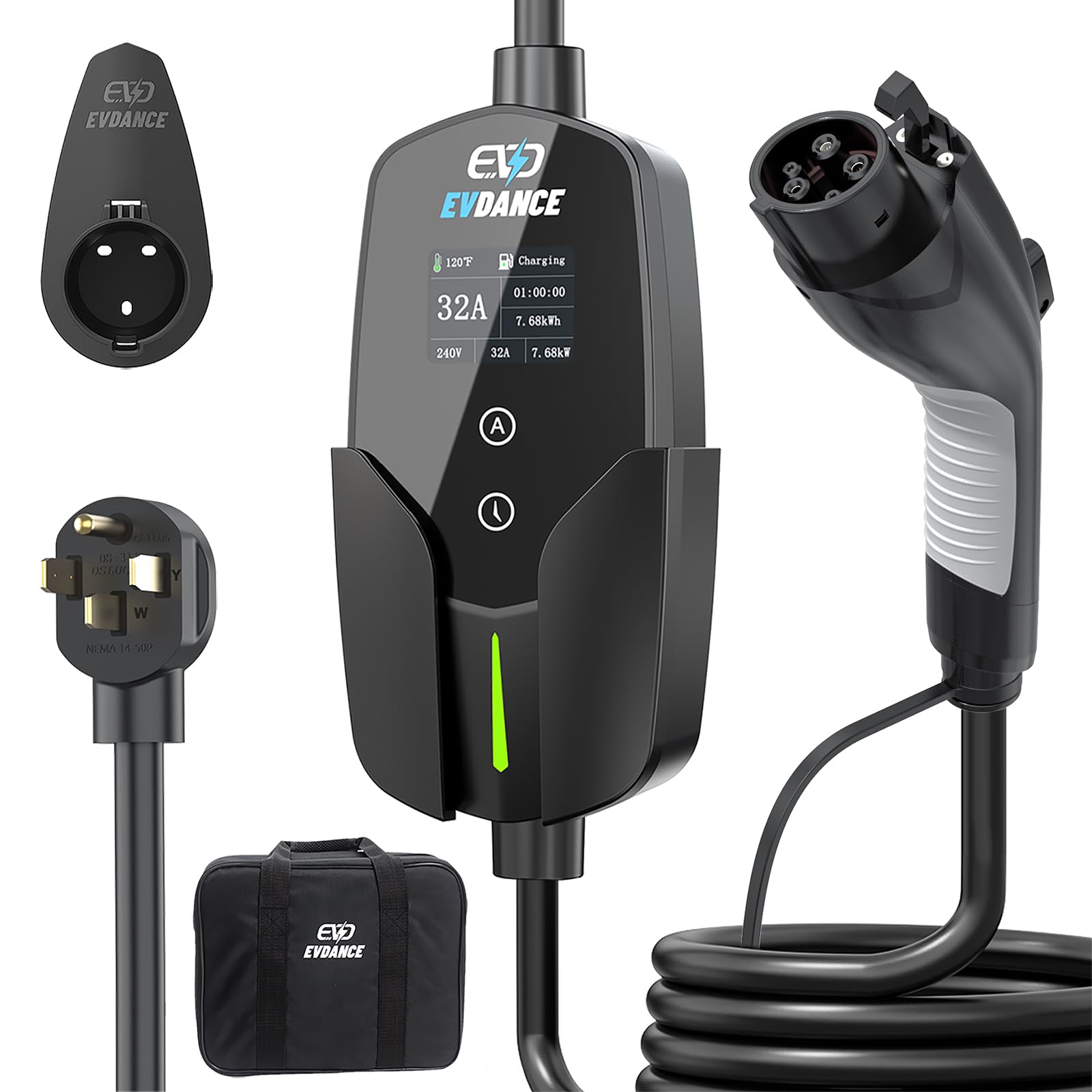
The Evdance 32A gives you a straightforward Level 2 charging option if your new garage will have a properly installed NEMA 14-50 outlet. It is easy to move, easy to store, and useful as a backup even if you later install a hardwired charger.
It works best for drivers who want practical overnight charging without a complex app-based setup. The adjustable current and delay timer help you match the charger to the available circuit and charging schedule.
Why You’ll Like It
- 32A output suits many daily overnight charging routines
- Adjustable current helps match different circuits
- Delay charging supports off-peak scheduling
- 25 ft cable reduces parking limitations
- Portable format works for temporary or travel use
Keep In Mind
This is a plug-in portable charger, so it does not look as integrated as a hardwired wall unit. Confirm compatibility with your vehicle connector before buying.
Buyer Feedback Snapshot
Buyer interest usually centers on simple controls, portability, adjustable current, and the long cable. Check current product details to confirm the exact included plug and connector.
Overall Sentiment: Positive

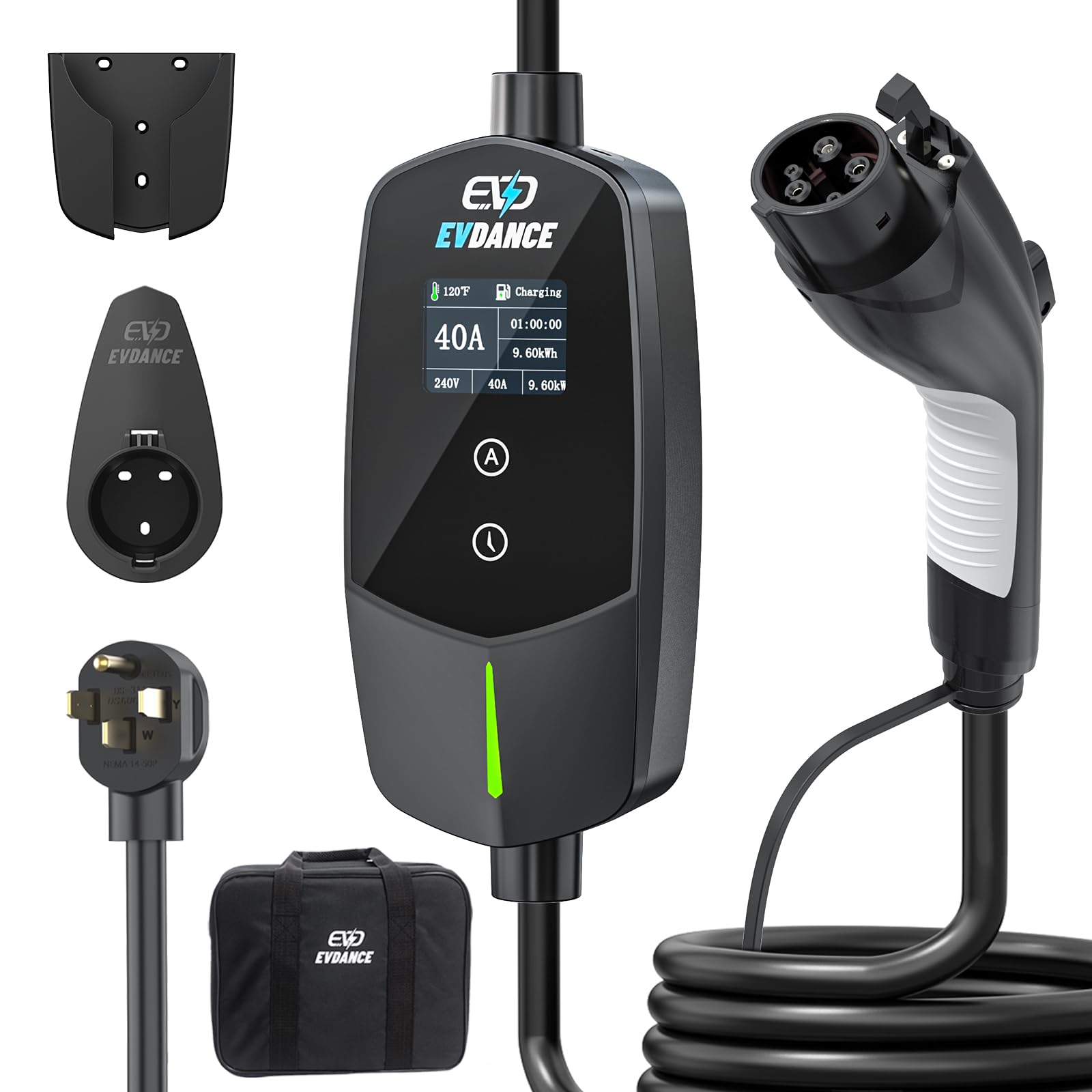
The Evdance 40A is the stronger choice over the 32A version if your planned outlet and circuit can safely support the higher load. It is still portable, but it can deliver a faster overnight refill for larger batteries or longer commutes.
For new construction, this makes sense when you want the flexibility of a plug-in charger but still want stronger Level 2 performance. It is not as seamless as a hardwired wall unit, but it can be a useful bridge between temporary charging and a future permanent charger.
Why You’ll Like It
- 40A output provides stronger Level 2 charging than 32A units
- Adjustable current helps match circuit limits
- Timing delay supports scheduled charging
- 25 ft cable helps with flexible parking
- Portable format can move between compatible outlets
Keep In Mind
Do not use a high-output plug-in charger on a weak outlet or undersized circuit. Ask your electrician whether your NEMA 14-50 outlet and breaker are suitable for continuous EV charging.
Buyer Feedback Snapshot
Buyers usually compare this model against lower-output portable chargers. The main appeal is stronger Level 2 power without committing to a hardwired station.
Overall Sentiment: Positive

Hardwired vs Plug-In For New Construction
Choose hardwired if you want the cleanest look, higher output potential, fewer outlet wear concerns, and a charger that feels built into the home. This is usually the best approach when walls are open and the electrician can plan the circuit from the start.
Choose plug-in if you want portability, rental flexibility, easier replacement, or a backup charger you can take with you. Just remember that a plug-in charger still needs a properly installed EV-rated outlet and a circuit sized for continuous charging.
FAQ
Hardwired Or Plug-In?
If you’re building new, plan for a hardwired Level 2 where possible because it gives a cleaner installation, supports strong charging performance, and reduces the need for surface-mounted conduit later. A plug-in portable unit can still be useful as a temporary or backup solution, especially if you ask your electrician to install a proper NEMA 14-50 outlet.
Which Connector Should I Install?
Think about the vehicles you and future owners might drive. J1772 works with many non-Tesla EVs, while NACS is becoming more common across newer North American models. A charger that supports both connector standards, or a wiring plan that lets you swap charger heads later, gives you more flexibility.
How Do I Future-Proof The Wiring?
Talk to your electrician about pre-wiring for higher amperage, leaving room in the panel, adding conduit that can handle future cable upgrades, and placing the charger where a 23 to 25 ft cable can reach both parking positions. Also discuss solar, battery storage, load management, and time-of-use billing if those are part of your home plan.
Can I Use A Standard Dryer Outlet For EV Charging?
Do not assume a standard household outlet is safe for nightly EV charging. EV charging is a long continuous load, so the outlet, breaker, wire, GFCI protection, and installation quality matter. Ask for an industrial-grade outlet rated for EV use if you choose a plug-in charger.
How Many Amps Do I Need?
Many drivers do well with 32A or 40A Level 2 charging overnight. Higher-output 48A or 50A setups can be useful for larger batteries, long commutes, or quick turnarounds, but only if your vehicle and electrical service can use that extra power safely.
Wrapping Up
If you’re building new, plan the EV charger before drywall, exterior finishes, and landscaping are complete. A hardwired Level 2 unit such as Tesla Universal Wall Connector, ChargePoint HomeFlex, Emporia, or Autel gives you the cleanest long-term setup. A weather-ready plug-in model such as Eviqo can work well for outdoor parking, while portable units from Apex, Aimiler, Raylix, and EVDANCE are better for backup or flexible use.
Match the charger to your vehicle connector, daily mileage, panel capacity, parking layout, and future resale goals. Then have a licensed electrician size the circuit correctly so your home is ready for safe, convenient EV charging from day one.
| Product Name | Image | Current Rating | Compatible Devices | Best Use | Check Price |
|---|---|---|---|---|---|
| Tesla Universal Wall Connector |
 |
Up to 48 Amps | NACS and J1772 compatible North American EVs | Best overall permanent install | Check Price |
| EMPORIA Level 2 EV Charger |
 |
Up to 48 Amps hardwired; lower when plug-in | J1772 or NACS options depending on selected model | Smart energy monitoring | Check Price |
| ChargePoint HomeFlex Level 2 EV Charger |
 |
Up to 50 Amps | J1772 EVs; Tesla vehicles may need adapter or NACS version | Hardwired power | Check Price |
| EVIQO Level 2 EV Charger |
 |
40 Amps | J1772 EVs; Tesla vehicles may need adapter | Outdoor plug-in setup | Check Price |
| Autel Level 2 EV Charger |
 |
Adjustable 6–50 Amps | J1772 EVs; Tesla vehicles may need adapter | Adjustable hardwired output | Check Price |
| MACH 3 Fast 40 Amp Level 1&2 Portable EV Charger |
 |
Up to 40 Amps on 240V | NACS and J1772 compatible with included adapter setup | Dual-connector portable backup | Check Price |
| AIMILER Level 2 Electric Vehicle Charger |
 |
32 Amps | J1772 EVs; Tesla vehicles may need adapter | Budget portable Level 2 | Check Price |
| 2026 Upgraded Level 1&2 Portable EV Charger |
 |
8–16 Amps | J1772 EVs and PHEVs | Light backup charging | Check Price |
| EVDANCE Level 2 EV Charger (32Amp) |
 |
32 Amps | J1772 EVs; Tesla vehicles may need adapter | No-frills plug-in Level 2 | Check Price |
| EVDANCE Level 2 EV Charger 40Amp |
 |
40 Amps | J1772 BEVs and PHEVs | Higher-output portable Level 2 | Check Price |
This roundup is reader-supported. When you click through links, we may earn a referral commission on qualifying purchases.
