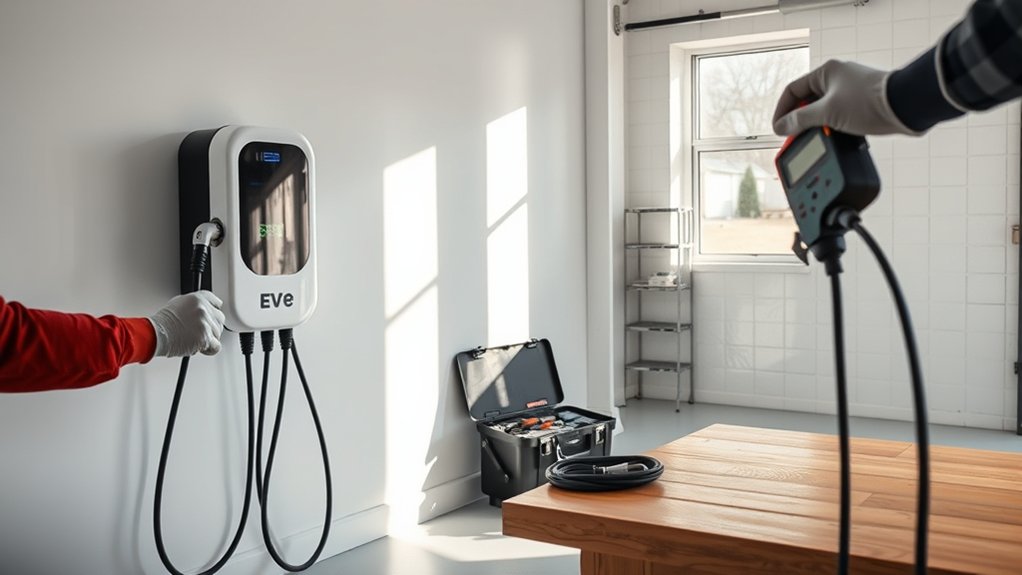
Your home EV charger is usually low-maintenance, but it still deserves a regular checkup. The cable, connector, enclosure, wall mount, plug, breaker, and app settings all affect how safely and reliably your EV charges. Use this guide for safe external inspections, simple cleaning, warning signs, annual checks, and when to call a licensed electrician instead of trying to repair the charger yourself.
Quick Answer
Maintain a home EV charger by inspecting the cable, connector, wall mount, enclosure, status lights, and charging behavior every month. Clean only the outside with a damp microfiber cloth, keep the cable stored off the floor, install firmware updates, and call a licensed electrician for heat, corrosion, damage, tripping, or wiring concerns.
Key Takeaways
- Check the cable, connector, holster, enclosure, plug, and wall mount monthly for cracks, heat damage, corrosion, looseness, or moisture.
- Never open the charger, outlet, hardwired junction box, breaker panel, or internal wiring unless you are qualified to do electrical work.
- Smart chargers also need app checks, firmware updates, Wi-Fi review, and charging-history checks for repeated faults or slowdowns.
- Most homeowner maintenance is free, but repairs, electrician visits, extended warranties, and networked charger plans can add cost.
At a Glance
| Time Required | 10 to 20 minutes monthly; 30 to 60 minutes for a deeper annual homeowner check |
| Difficulty | Easy for visual checks; electrician-only for wiring, outlet, breaker, or internal charger problems |
| Tools Needed | Microfiber cloth, clean water, flashlight, charger app, owner’s manual, cable holster or hook |
| Cost | Usually $0 for homeowner checks; electrician service and repair costs vary by issue, warranty, and local rates |
Warning: Do not remove charger covers, open a breaker panel, tighten live terminals, repair a damaged cable, or inspect internal wiring yourself. Stop using the charger and call a licensed electrician if you see heat damage, melting, corrosion inside the plug area, repeated breaker trips, burning smells, buzzing, smoke, or exposed conductors.
Step-By-Step Annual Maintenance Tasks for Your Home EV Charger
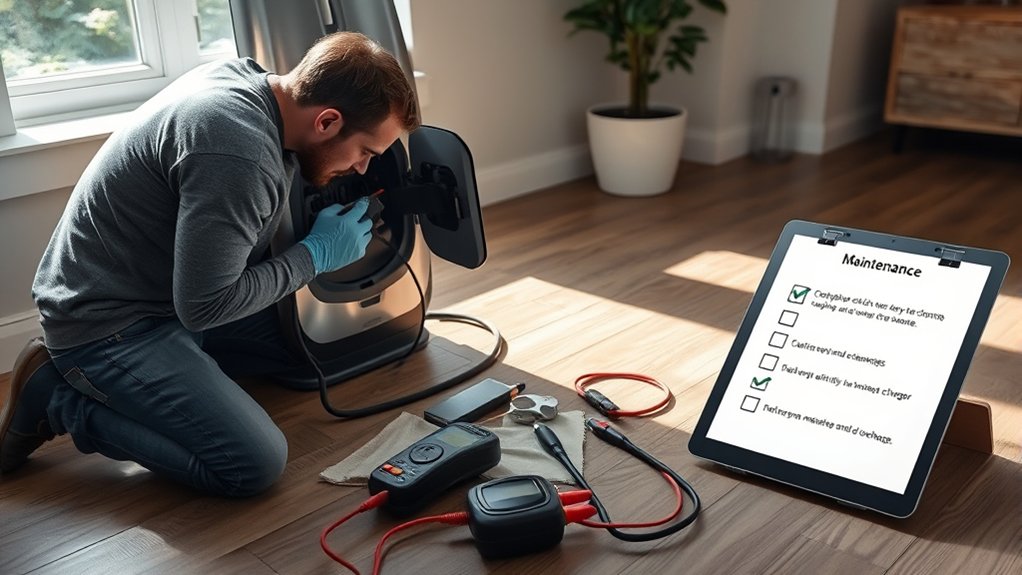
Start your annual home EV charger maintenance with the safe checks you can do from the outside. Most home charging is done with AC Level 1 or AC Level 2 equipment, and the U.S. Department of Energy’s Alternative Fuels Data Center notes that outdoor installations can be safe when outdoor-rated equipment is used.
- Turn charging off before cleaning. Unplug the vehicle, stop the session in the app if needed, and let the connector cool before handling it.
- Inspect the charger body. Look for cracks, dents, loose mounting screws, warped plastic, faded seals, missing covers, water marks, insect nests, or signs the unit has shifted on the wall.
- Check the cable. Run your eyes along the full cable length. Look for cuts, flattened spots, bulges, exposed insulation, fraying, kinks, chew marks, or areas that feel unusually stiff.
- Inspect the connector. Check for bent pins, cracked plastic, dirt, moisture, corrosion, melted spots, or a latch that no longer clicks securely into the vehicle inlet.
- Review the plug or hardwired area from the outside. For plug-in Level 2 units, look for discoloration, looseness, heat marks, or a plug that does not sit firmly in the receptacle. For hardwired chargers, inspect only the outside of the junction area and call an electrician if anything looks loose or damaged.
- Clean the exterior. Wipe the charger body, cable, and connector handle with a damp microfiber cloth. Do not spray water into the connector, use solvents, apply abrasive cleaners, or pressure-wash the charger.
- Test a normal charging session. Plug in, confirm the connector locks or seats correctly, check the status light, and watch the first few minutes for errors, unusual clicking, buzzing, heat, or repeated start-stop behavior.
- Check smart features. Open the charger app, confirm Wi-Fi or cellular connection, review error history, install firmware updates, and verify schedules or utility time-of-use settings.
- Review the manual and warranty. Follow the manufacturer’s maintenance instructions, warranty terms, and service intervals for your exact model.
Pro Tip: Keep a simple maintenance note in your phone. Record the inspection date, any fault codes, charging interruptions, breaker trips, firmware updates, and repair visits. A short log helps you spot patterns before they become expensive failures.
How to Spot Signs of Wear and Tear on Your Charger
Wear usually shows up first on the parts you touch most: the charging cable, connector, plug, holster, and wall mount. Check these areas monthly, especially if the charger is outdoors, shared by multiple drivers, or used every day.
- Cable damage: cracks, flattened sections, cuts, exposed insulation, deep kinks, or a cable that gets driven over.
- Connector problems: bent pins, a loose latch, dirt buildup, moisture, corrosion, melted plastic, or a connector that feels hot after charging.
- Enclosure damage: cracks, gaps, missing screws, discoloration, deformation, water marks, or signs of insects inside vents or seams.
- Mounting issues: a charger that wiggles on the wall, a loose holster, cable strain at the entry point, or conduit that has pulled away.
- Charging behavior changes: slower charging than normal, repeated pauses, unexplained app errors, fault lights, charger derating, or sessions that fail to start.
- Electrical warning signs: repeated breaker trips, GFCI trips, buzzing, burning smells, scorch marks, warm outlets, smoke, or sparking.
If a charging session seems slower than usual, compare it with your normal charging schedule, battery state of charge, outside temperature, and vehicle settings. Cold weather, battery preconditioning, utility load management, and vehicle limits can all affect charging speed. Repeated faults, heat, or tripping are different and should be inspected by a professional.
Why Schedule Professional Inspections for Your Charger?
A professional inspection is worth scheduling if your charger is hardwired, installed outdoors, more than a few years old, used heavily, or showing warning signs. Homeowners can inspect the outside, but a licensed electrician can safely check the circuit, breaker sizing, receptacle condition, torque, grounding, weather protection, and code-related concerns.
EV charging equipment installations must comply with local and state rules, and AFDC guidance points homeowners to qualified electrical contractors and NEC Article 625 for safe, code-compliant installation. A professional can also confirm whether your charger is still installed according to its listing, manual, and warranty terms.
The most important maintenance rule is simple: inspect the parts you can see, but leave wiring, terminals, breakers, receptacles, and internal repairs to a qualified electrician.
Book a professional inspection sooner if you notice repeated trips, heat marks, cracked equipment, corrosion, water intrusion, a loose receptacle, a damaged plug, or charging faults that return after a reset. Do not keep using the charger just because it still works.
Understanding Annual Costs for EV Charger Maintenance
For a typical home EV charger, routine maintenance is often free because most tasks are visual checks, cleaning, cable storage, app review, and software updates. Costs rise when you need an electrician, a replacement connector, a new receptacle, a warranty visit, or repair work after weather, heat, or physical damage.
The broader charging-station industry uses higher planning numbers. AFDC operation and maintenance guidance says routine maintenance can be minimal, but station owners may estimate average maintenance costs of up to $400 annually per charger. That figure is more useful for site hosts, networked chargers, shared stations, and commercial planning than for a single well-installed home unit.
DC fast chargers are a different category. AFDC notes that extended warranties for DC fast chargers can cost more than $800 per charger per year. That does not mean a normal home Level 2 charger should cost that much to maintain. Most homes use AC Level 1 or AC Level 2 charging, while DC fast charging is usually used at public, fleet, corridor, or commercial sites.
Note: ENERGY STAR says EV chargers may need periodic inspection, testing, and preventive maintenance by a qualified electrical contractor, but annual costs are generally low. Choosing a safety-certified charger and keeping it clean, dry, supported, and updated helps reduce avoidable repair risk.
How to Prolong the Lifespan of Your EV Charger
You can extend the useful life of your home EV charger by reducing heat, moisture, cable strain, dirt, and software problems. The best routine is simple: inspect monthly, clean gently, store the cable correctly, and respond quickly to warning signs.
Store the Cable Correctly
Loop the cable loosely on a holster or hook after each session. Avoid tight coils, sharp bends, door pinches, dragging, and leaving the connector on the floor. A cable that gets stepped on, driven over, or pulled tight against the vehicle can fail early.
Protect Outdoor Chargers From Weather
Outdoor-rated chargers are built for exposure, but they still need care. Keep the connector capped or holstered, check seals after storms, clear snow without striking the unit, and make sure water does not pool around the charger, receptacle, or conduit.
Keep Smart Chargers Updated
For a connected charger, check the app for firmware updates, error logs, connectivity problems, and schedule settings. ENERGY STAR says connected EV charger models may offer remote monitoring and control, which can help you catch charging issues sooner.
Use Safety-Certified Equipment
When replacing or upgrading a charger, choose safety-certified equipment. ENERGY STAR-certified EV chargers are tested for safety by a nationally recognized testing laboratory, and ENERGY STAR says certified chargers use less standby energy than non-certified models. Safety certification does not replace maintenance, but it gives you a better starting point.
Know When to Replace Instead of Repair
Consider replacement if the charger has a damaged cable that cannot be replaced safely, recurring faults after professional service, water intrusion, unavailable parts, expired support, outdated smart features, or repair costs that approach the price of a new certified unit. Lifespan varies by installation quality, weather exposure, usage, warranty support, and how quickly small problems are fixed.
Frequently Asked Questions
What are the maintenance requirements for EV chargers?
For a home EV charger, maintenance usually means inspecting the cable, connector, enclosure, plug or hardwired area, wall mount, status lights, and app history. Clean the exterior with a damp microfiber cloth, store the cable properly, install firmware updates, and follow the manufacturer’s manual. Electrical testing, wiring checks, breaker work, and internal repairs should be handled by a licensed electrician.
Do EV chargers need maintenance?
Yes. Home EV chargers do not need oil, filters, or frequent mechanical service, but they still need regular inspection because they carry high current and are exposed to handling, heat, dust, moisture, and cable strain. A quick monthly visual check can catch cracked insulation, loose mounts, connector damage, error lights, and other problems early.
What are common EV charger maintenance items?
Common items include cable inspection, connector cleaning, enclosure checks, wall-mount checks, plug or receptacle inspection from the outside, firmware updates, app error review, cable storage, and a normal charging test. Also watch for repeated breaker trips, GFCI trips, charging interruptions, heat, discoloration, buzzing, or burning smells.
What is the lifespan of a home EV charger?
A home EV charger can last for many years, but there is no single guaranteed lifespan for every model. Installation quality, safety certification, indoor or outdoor exposure, charging frequency, cable handling, parts availability, firmware support, and repair history all matter. Replace or professionally inspect the unit if it shows damage, water intrusion, heat marks, recurring faults, or unsupported software.
Can I wash my EV charger with a hose?
No. Do not hose down or pressure-wash the charger. Even outdoor-rated equipment should be cleaned gently. Unplug the vehicle, let the connector cool, then wipe the charger body and cable with a damp microfiber cloth. Keep water, solvents, and sprays away from connector pins, vents, plugs, and seams.
When should I stop using my home EV charger?
Stop using it if you notice exposed wires, cracked connectors, melted plastic, scorch marks, burning smells, smoke, buzzing, repeated breaker trips, repeated GFCI trips, water inside the unit, or a plug that feels hot or loose. Disconnect only if it is safe to do so, then call a licensed electrician or the charger manufacturer.
Conclusion
Regular home EV charger maintenance is mostly about prevention. Inspect the cable, connector, enclosure, mount, plug area, status lights, and app logs before small problems turn into unsafe or expensive repairs. Clean the outside gently, store the cable correctly, keep smart features updated, and take heat, tripping, corrosion, moisture, and charging faults seriously. For anything beyond external visual checks, bring in a licensed electrician so your charger stays safe, reliable, and ready for daily use.
Sources
- U.S. Department of Energy AFDC: Charging Electric Vehicles at Home — backs home charging types, outdoor-rated equipment, safety-certified equipment, permits, and code guidance.
- U.S. Department of Energy AFDC: Operation and Maintenance for EV Charging Infrastructure — backs maintenance, warranty, networking, and annual cost context.
- U.S. Department of Energy AFDC: Electric Vehicle Charging Stations — backs Level 1, Level 2, DC fast charging, charging terminology, and connector context.
- ENERGY STAR: Electric Vehicle Chargers — backs safety-certified charger guidance, standby energy savings, Level 1 and Level 2 comparison, and qualified maintenance guidance.
- U.S. Department of Energy AFDC: Procurement and Installation for EV Charging Infrastructure — backs planning, permits, inspection requirements, utility coordination, and maintenance cost planning.