
Yes, EV chargers can get wet when they are designed, installed, and used for outdoor conditions. Rain alone does not usually make EV charging unsafe, but damaged cords, exposed household outlets, standing water, flooding, or the wrong extension setup can create real shock and fire risks. Before you plug in, inspect the charger, cable, connector, vehicle port, outlet, and the ground around the station.
Quick Answer
Outdoor-rated EV chargers can get wet from rain and still operate safely if the equipment is undamaged, properly grounded, protected by GFCI or RCD protection where required, and installed according to the manufacturer’s instructions. Do not charge if the plug, outlet, cable, port, or ground area is flooded, cracked, corroded, or holding standing water.
Key Takeaways
- Rain is usually safe for outdoor-rated EV charging equipment, but “wet” does not mean submerged, damaged, or flooded.
- Check the charger’s actual IP, NEMA, or manufacturer rating instead of assuming every charger is waterproof.
- Inspect the cable, connector, outlet, and vehicle port before charging in rain.
- Avoid extension cords, loose adapters, exposed household sockets, and any setup not approved by the vehicle or charger maker.
- If a breaker, GFCI, RCD, or charger fault warning trips, stop and find the cause before trying again.
At a Glance
| Time Required | 1 to 2 minutes before each wet-weather charging session |
| Difficulty | Easy inspection; call a qualified electrician for wiring, breaker, outlet, or repeated trip issues |
| Tools Needed | Clean dry cloth, flashlight, charger manual, and access to the charger’s rating label or app |
| Cost | Usually $0 for inspection; repair, outlet replacement, or electrician service varies by location |
Is It Safe to Charge EVs in the Rain?
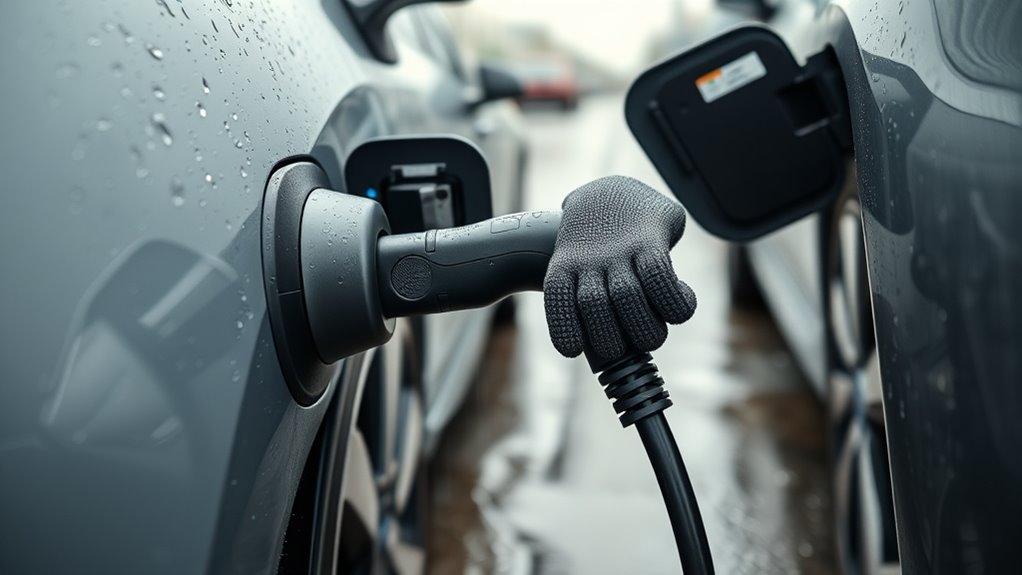
Yes, it is usually safe to charge an EV in rain when you use outdoor-rated charging equipment that is intact, properly installed, and used according to the manufacturer’s instructions. Modern EV charging equipment is designed with sealed connectors, protective grounding, fault detection, and communication between the vehicle and charger before power flows.
That does not mean you should ignore water. Rain on a rated charger is different from water inside a plug, a flooded outlet, a cracked cable, or a connector lying in a puddle. If any part of the system looks damaged, loose, corroded, or full of moisture, stop before connecting.
Rain is normally manageable. Standing water, damaged insulation, exposed outlets, and submerged equipment are not.
You can treat wet-weather charging as a simple inspection routine: check the charger rating, inspect the cable and plug, look at the vehicle charge port, and make sure the area is not flooded. If all of those checks pass, rain by itself is not a reason to cancel a charge.
How EV Chargers Stay Safe in Wet Weather
EV charging equipment stays safe in wet weather by using several layers of protection. The enclosure helps keep water away from internal parts. The connector shape and seals help protect the electrical contacts. Grounding and GFCI or RCD protection help reduce shock risk if a fault occurs. The vehicle and charger also communicate before charging starts, so power is controlled rather than simply “live” the moment you touch the plug.
For home charging, use equipment that is listed for EV charging and rated for its location. For example, Tesla says its Wall Connector can be mounted indoors or outdoors, and installers should follow the installation manual. Tesla Wall Connector support also notes that the unit is intended for home, hospitality, and workplace charging.
Weatherproof Charger Design
Outdoor EV chargers are built with weather-resistant enclosures, protected wiring paths, and connector designs that limit water exposure. A rating such as IP44, IP54, IP65, IP66, NEMA 3R, NEMA 4, or NEMA 4X tells you what kind of exposure the enclosure was tested to handle.
The IEC 60529 IP Code classifies degrees of protection provided by enclosures for electrical equipment. In plain language, the first IP digit relates to solids such as dust, and the second relates to water. A higher rating can mean stronger water protection, but it still has limits set by the test method.
| Rating Term | What It Means for Rain Charging |
|---|---|
| IP rating | Shows tested protection against dust and water ingress. Check your charger’s exact rating. |
| NEMA enclosure rating | Common in North America. Outdoor types may cover rain, sleet, snow, hose-directed water, or corrosion depending on the rating. |
| Weather-resistant outlet | Needed for outdoor household receptacle setups, usually with an in-use cover and proper GFCI protection. |
Safety Features in Rain
Rain safety depends on more than the plastic shell around the charger. The most important safety layers are:
- Grounding: Helps create a safe fault path if something goes wrong.
- GFCI or RCD protection: Helps shut off power when leakage current is detected.
- Sealed connector design: Helps keep rain away from live contacts.
- Vehicle-to-charger communication: Helps control when charging starts and stops.
- Proper installation: Ensures the breaker, wiring, grounding, and mounting location match the equipment.
Warning: Never rely on a safety device to make damaged equipment safe. If the charger, plug, pins, cable jacket, outlet, or vehicle port looks damaged, stop using it until it is inspected or repaired.
Can an EV Charger Get Wet?
Yes, an outdoor-rated EV charger can get wet from normal rain. That is part of what the rating and installation are meant to handle. The key is that the charger must be designed for that exposure, installed correctly, and kept in good condition.
A charger should not be treated as waterproof in every situation. Heavy flooding, submersion, pressure washing, cracked housings, damaged seals, loose conduit, and exposed wiring are outside normal rain use. A portable charging cord also has different limits from a hardwired wall unit.
Charger Rating Labels to Check
Before you assume a charger is safe in rain, check the label, manual, or app for these details:
- Indoor/outdoor use rating
- IP rating or NEMA enclosure type
- Operating temperature range
- Required breaker and circuit size
- GFCI, RCD, or personnel protection requirements
- Approved plug, adapter, or hardwired installation method
If you cannot find a rating, do not guess. Use the manufacturer’s manual or contact the installer before outdoor use.
Safe Rain Charging
Safe rain charging means the charger is rated for the location, the connector is clean, the cable is not damaged, and water is not pooling around the outlet or pedestal. Light and moderate rain are usually acceptable for properly installed outdoor equipment.
Before plugging in, look into the connector and vehicle charge port. A few raindrops on the outside of the handle are usually not a problem, but visible water inside the contact area is a reason to stop, dry the exterior, and wait.
Wet Weather Precautions
Use this simple checklist before charging in rain:
| Check | Why It Matters | What to Do |
|---|---|---|
| Charging connector | Moisture or debris can affect the connection. | Inspect it and wipe the outside with a clean dry cloth. |
| Cable jacket | Cuts or cracks can expose conductors. | Do not use damaged cables. |
| Outlet or pedestal | Standing water can raise shock risk. | Choose another charger if the area is flooded. |
| Vehicle port | Water inside the port can cause faults or poor contact. | Wait until the port is clean and dry enough to connect. |
What to Check Before Charging in Rain
Before charging in rain, inspect the charging gun, plug, cable, vehicle port, outlet, and the ground around the charger. This takes less than two minutes and catches most obvious hazards.
- Look at the ground first. Do not stand in pooled water while handling charging equipment.
- Check the cable jacket. Look for cuts, flattening, exposed wire, burn marks, or deep abrasion.
- Check the connector. Look for water inside the contact area, bent pins, corrosion, dirt, mud, or salt.
- Check the vehicle port. Make sure the port is clear and the cover or door works correctly.
- Check the charger screen or indicator. Do not use a public charger that shows a fault, error, or damage warning.
- Connect with the handle angled downward when possible. This helps keep rain from running into the plug or port.
Pro Tip: Keep a small clean microfiber cloth in the car. Use it to wipe the outside of the connector handle and charge-port door, but do not push cloth fibers into the electrical contacts.
If anything looks compromised, pause and reassess rather than forcing the connection. That one choice protects the charger, the vehicle, and you.
How to Charge Safely at Home and in Public
Safe wet-weather charging starts with the right equipment for the setting. A hardwired outdoor wall unit, a public charging pedestal, and a portable household charging cord all have different limits. Treat each one according to its rating and manual.
Home Charging Safety
At home, use a professionally installed EV charging station or a vehicle-approved portable EVSE plugged into a suitable outlet. For a hardwired unit, the circuit should match the charger, breaker, wiring, grounding, and local code requirements. For a plug-in unit, the outlet should be in good condition, properly protected, and rated for the load.
Use manufacturer-approved cables and adapters only. Do not use a multi-plug adapter, power strip, household extension cord, or loose travel adapter unless the EV or EVSE manufacturer specifically allows that exact setup.
OSHA’s electrical safety guidance identifies lack of ground-fault protection, missing or discontinuous grounding paths, improper equipment use, and improper extension or flexible cord use as common electrical hazards. OSHA electrical safety guidance is workplace-focused, but the same basic risk pattern matters around home charging: wet conditions make poor wiring and damaged cords less forgiving.
Public Charging Precautions
Public chargers are built for outdoor use, but you should still inspect them before connecting. Look for cracked screens, exposed wiring, damaged connector handles, missing pins, loose pedestal panels, or a cable lying in standing water.
If a public charger looks unsafe, do not use it. Report the issue in the charging app or to the station operator, then move to another charger. If storms are severe, wait in the vehicle or a safe sheltered area until the weather improves.
Wet Weather Charging Tips
Wet weather does not have to interrupt EV charging when the system is intact and rated for the conditions. Use these practical habits:
- Keep the connector off the ground.
- Do not let the plug sit in a puddle.
- Do not force a wet or dirty connector into the vehicle port.
- Keep the charge-port door closed when not in use.
- Do not pressure-wash a charger unless the manufacturer says it is allowed.
- Stop charging if the charger reports a fault or the breaker trips.
Note: A weather-rated charger is not the same as a submerged charger. If flooding reaches the outlet, pedestal base, wall unit, connector, or vehicle charge port, do not charge.
Is 3-Pin EV Charging Safe in the Rain?
3-pin EV charging, or charging from a standard household-style outlet, needs more caution in rain than a dedicated outdoor wall charger. It can be safe only when you use the vehicle-approved portable EVSE, a dry and weather-rated outlet, proper GFCI or RCD protection, and an in-use weather cover where required.
Do not plug a portable EV charging cord into an exposed outdoor socket during rain. Do not run the cord through standing water. Do not add a household extension cord to “reach” the car. The outlet, plug, control box, and cable all need to stay within the conditions allowed by the manual.
If the outlet feels loose, warm, cracked, corroded, or unprotected from rain, stop using it for EV charging. A standard outlet can carry a continuous load for hours, so small defects can become serious over time.
What to Do If Your EV Charging Cable Gets Wet
If the outside of an outdoor-rated EV charging cable gets wet from normal rain, inspect it before use. If water is inside the connector, inside the plug, inside the control box, or around the outlet, stop and let the equipment dry before charging.
Follow these steps:
- Disconnect safely if you can do so without standing in water. Use the normal stop-charging process first.
- Inspect the cable jacket. Look for cracks, cuts, burn marks, swelling, or flattened sections.
- Check the connector pins and contact area. Look for moisture, corrosion, mud, salt, or debris.
- Dry only the exterior surfaces. Use a clean dry cloth and let the equipment air-dry.
- Do not use heat guns, hair dryers, or open flames. Heat can damage seals and insulation.
- Replace damaged parts. Do not tape over a damaged EV charging cable and keep using it.
If a cable fell into water, was submerged, or was used during flooding, do not reuse it until the manufacturer or a qualified service professional confirms it is safe.
Which Safety Rules Apply to Wet Charging?
Wet-weather EV charging should follow four layers of rules: the charger manual, the vehicle manual, the product rating or listing, and local electrical code. In the United States, EV charging installations are commonly handled under the National Electrical Code, including rules for EV power transfer systems. NFPA maintains NFPA 70, the National Electrical Code.
For consumer use, the safest practical rules are simple:
- Use outdoor-rated equipment outdoors.
- Use only listed EVSE and approved adapters.
- Keep household outlets dry and covered.
- Do not use damaged cords, plugs, or pins.
- Do not use extension cords unless the manufacturer clearly permits one.
- Use GFCI or RCD protection where required.
- Call a qualified electrician for repeated trips, heat, buzzing, water intrusion, or outlet damage.
OSHA’s wiring design and protection standard for construction sites requires ground-fault circuit interrupters for certain 120-volt receptacle outlets and requires visual inspection of cord sets and plugs in covered contexts. OSHA 1926.404 is not a home EV installation manual, but it reinforces the same safety principle: cords, plugs, grounding, and fault protection matter when electricity and moisture are present.
When Is Rain Too Dangerous for EV Charging?
Rain becomes too dangerous for EV charging when water affects the equipment, the ground, or your ability to connect safely. Light and moderate rain are usually manageable. Flooding, lightning, high wind, and visible equipment damage are not.
Stop or delay charging when you see any of these conditions:
- Standing water around the charger, outlet, or vehicle
- Floodwater touching the pedestal, wall unit, cable, connector, or charge port
- Water inside the plug, connector, outlet, or vehicle port
- Cracked cable insulation or exposed wiring
- Burn marks, melted plastic, buzzing, or heat at the outlet
- A tripped GFCI, RCD, breaker, or charger fault warning that returns after reset
- Lightning, high winds, flying debris, or storm conditions that make handling the plug unsafe
If a charger has been flooded, treat it as unsafe until inspected. Water can enter places you cannot see, and corrosion can appear later.
What If the GFCI or Breaker Trips in the Rain?
If the GFCI, RCD, breaker, or charger fault protection trips during wet weather, do not keep resetting it. A trip can happen because of moisture, damaged insulation, a faulty outlet, a charger fault, or a circuit problem.
Use this order:
- Stop charging through the vehicle or charger app if possible.
- Disconnect only if you can do it safely and are not standing in water.
- Inspect the plug, cable, outlet, and vehicle port.
- Let wet exterior surfaces dry.
- Try again only if the equipment is clean, dry, and undamaged.
- If it trips again, stop and call a qualified electrician or the charger manufacturer.
Warning: Repeatedly resetting a breaker or GFCI without finding the cause can hide a real electrical fault. Do not bypass, tape, or disable a safety device.
Simple EV Charging Tips for Rainy Weather
Rainy-weather EV charging is easy when you slow down and inspect the setup first. You do not need to overthink every drizzle, but you should never ignore water where it does not belong.
| Tip | Why It Helps |
|---|---|
| Plug in before the heaviest rain if you can do so safely. | It reduces the time you handle the connector during a storm. |
| Keep the connector pointed downward when disconnecting. | It helps prevent water from dripping toward the contact area. |
| Use the holster after charging. | It keeps the connector cleaner and off the wet ground. |
| Close the vehicle charge-port door promptly. | It limits water, dust, and debris buildup. |
| Check your charger manual after any flood exposure. | Floodwater can damage seals, wiring, electronics, and contacts. |
When in doubt, do not charge. A delayed charging session is better than using damaged electrical equipment in wet conditions.
Frequently Asked Questions
Is it okay if an EV charger gets wet?
Yes, it is usually okay if an outdoor-rated EV charger gets wet from rain. The charger still needs to be undamaged, properly installed, grounded, and used within its rating. Do not use it if the connector, outlet, or cable is flooded, cracked, corroded, or holding water.
Can you leave an EV charger in the rain?
You can leave a fixed outdoor-rated charger in the rain if the manual allows outdoor use and the installation is correct. For portable charging cords, follow the manual closely and keep the plug, outlet, and control box within their rated conditions.
Are EV chargers ruined if they get wet?
Usually, no. Rain should not ruin an outdoor-rated charger in good condition. Submersion, floodwater, damaged seals, cracked housings, corrosion, and water inside the connector are different. Stop using questionable equipment until it is inspected.
What do I do if my charger fell in water?
Do not keep using it. Stop charging, disconnect only if safe, keep it out of service, and follow the manufacturer’s inspection or replacement guidance. If it was submerged or exposed to floodwater, have it checked by the manufacturer, installer, or a qualified electrician.
Can I use an extension cord to charge an EV in the rain?
No, not unless your EV or EVSE manufacturer specifically approves that exact extension setup. Most household extension cords are not suitable for long EV charging loads, and wet weather increases the risk from poor connections, overheating, and ground faults.
Should I charge during lightning or flooding?
Avoid handling charging equipment during lightning, flooding, high winds, or any storm that makes the area unsafe. If water is pooling around the charger, outlet, vehicle, or cable, wait until the site is dry enough to inspect safely.
Conclusion
So, can EV chargers get wet? Yes, outdoor-rated EV chargers can handle normal rain when the equipment is intact, installed correctly, and used within its rating. The real danger comes from damaged cables, exposed outlets, loose plugs, water inside connectors, standing water, flooding, and repeated fault trips. Check the charger, cable, connector, port, and ground area before charging in wet weather. If anything looks unsafe, stop and get the equipment inspected before you charge again.
Sources
- Tesla Wall Connector Support — indoor/outdoor mounting, home charging, and Wall Connector specifications.
- Tesla Installing a Wall Connector — manufacturer installation guidance and manual review reminder.
- OSHA Electrical Safety Overview — electrical hazards, grounding, protective devices, and safe work practices.
- OSHA 1926.404 Wiring Design and Protection — ground-fault protection and cord/plug inspection principles in covered construction contexts.
- IEC 60529 IP Code — official IP Code standard for degrees of enclosure protection.
- NFPA 70 National Electrical Code — NEC source for electrical code development, including EV charging installation context.