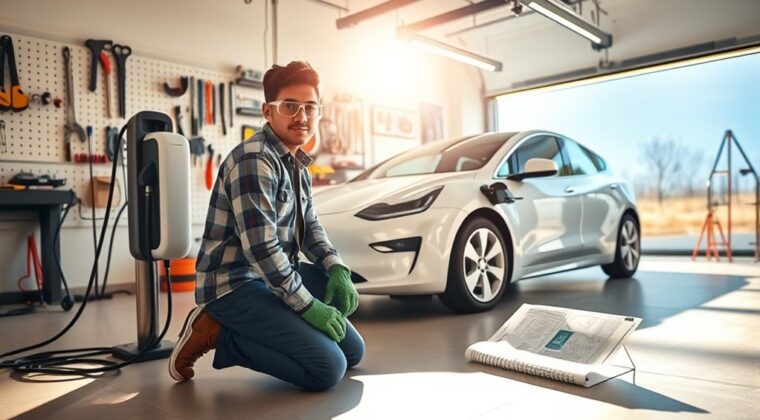
Installing an EV charger yourself can be risky. Compliance with local electrical codes is vital, and improper installations can lead to safety hazards like electrical shocks and fires. Level 2 chargers require a dedicated circuit and may need professional assessment of your electrical panel. The right permits and inspections are necessary to avoid fines and voided insurance. Hiring a licensed electrician guarantees safety and efficiency, while protecting your investment. Learn more about the installation process and potential pitfalls.
Understanding the Risks of DIY EV Charger Installation
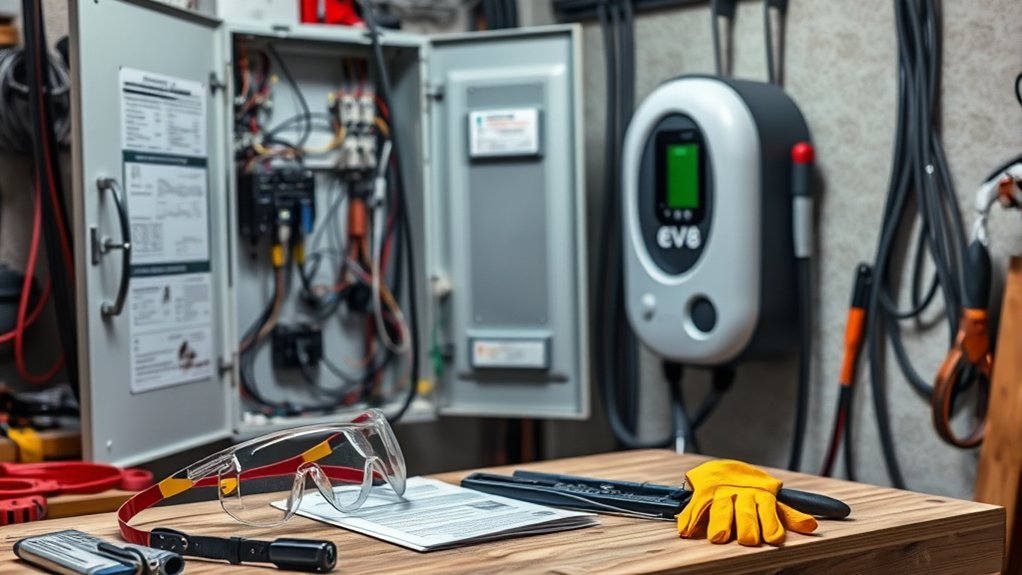
When considering a DIY installation of an EV charger, it’s vital to recognize the inherent risks involved. Compliance with local electrical codes isn’t optional; failure to adhere can lead to fines and unsafe conditions.
Improperly installed chargers can expose you to severe risks, such as electrical shocks or fires, particularly with the high voltage of Level 2 chargers. Additionally, many chargers require a 200 amp electrical panel for peak performance, which might need professional assessment—something a DIYer could easily overlook.
Improper installation of EV chargers can lead to serious risks, including electrical shocks and fire hazards, especially with high-voltage Level 2 units.
Without engaging a licensed electrician, you also risk voiding warranties on both your EV and the charger due to non-compliance with safety standards.
Moreover, inspections are often mandated before powering up; DIY installations could complicate future home inspections, especially during resale.
Weighing these installation risks is vital for ensuring safety and compliance.
What You Need to Know About Level 2 Charger Requirements
Level 2 chargers, operating at 240V, require specific conditions for safe and effective installation.
To verify compliance with local codes and safety regulations, consider these key factors:
- Dedicated Circuit: A Level 2 charger must be on its own circuit to handle the load.
- Licensed Electrician: Always hire a licensed electrician to assess your electrical system’s capacity and safety.
- Installation Costs: Expect costs to range from $800 to over $2,500, including the charger and labor.
- Permits and Inspections: Many localities require permits and inspections to validate adherence to electrical standards.
Why You Should Hire a Pro Electrician for Installation
Hiring a professional electrician for your EV charger installation is critical for ensuring code compliance and safety.
They possess the expertise to assess your electrical system accurately, identifying necessary upgrades to prevent hazards.
Safety Risks Involved
Installing an EV charger presents considerable safety risks, primarily due to the high-voltage electrical work involved. Without proper expertise, you could face significant hazards, including electrical shocks and fires.
Here are key reasons to hire a certified electrician:
- Safety Measures: Professionals implement critical safety protocols to mitigate risks.
- Compliance: Guarantees adherence to local codes and regulations, avoiding legal complications.
- Panel Upgrades: Experts evaluate and enhance your electrical system, addressing complexities beyond DIY capabilities.
- Warranties: Professional installations protect your investment, maintaining warranty coverage on both the charger and your EV.
Code Compliance Necessity
While you might feel confident tackling DIY projects, maneuvering the complexities of code compliance when installing an EV charger requires specialized knowledge.
Obtaining the necessary local permits and guaranteeing adherence to electrical codes can be intricate. Professional electricians evaluate your existing electrical systems for safety, determining if upgrades to your circuit breaker or wiring are essential.
Many regions mandate inspections before activating any 240V charger, a step often overlooked in DIY efforts. Non-compliance can lead to fines, voided insurance, and complications during home resale.
By hiring a certified electrician, you guarantee all safety standards are met, protecting both your investment in EV charging infrastructure and your home’s integrity.
Prioritize code compliance; it’s an essential step toward safety and reliability.
Expertise in Electrical Systems
Electrical expertise is essential when installing an EV charger, as the intricacies of your home’s electrical system can considerably impact safety and efficiency. By hiring professional electricians, you guarantee a compliant and secure installation.
They can assess:
- Your home’s electrical capacity for a Level 2 charger
- Necessary upgrades, such as a higher amperage panel
- Compliance with local electrical codes and permits
- Implementation of safety measures to prevent hazards
Relying on their expertise minimizes risks like electrical fires or shocks and helps you avoid fines associated with non-compliance during inspections.
Additionally, certified electricians streamline the process, handling inspections and permits, while protecting warranties on your charging equipment.
Prioritize safety and efficiency by hiring a professional.
Top 5 Common Mistakes in EV Charger Installation
When installing an EV charger, it’s essential to avoid common pitfalls that can compromise safety and functionality.
Ignoring electrical requirements, skipping permits and inspections, and choosing the incorrect charger type can lead to costly mistakes.
Ignoring Electrical Requirements
Ignoring electrical requirements during EV charger installation can lead to significant safety and compliance issues. You must consider several critical factors to guarantee a safe and effective setup:
- Underestimating electrical load can overload circuits, increasing fire hazards.
- Ignoring local codes may compromise safety and reliability, risking equipment malfunctions.
- Improper wiring or connectors can damage your charger, as installing a Level 2 charger requires precise 240V outlets.
- DIY installation risks can expose you to electric shock or fire due to a lack of knowledge about electrical service.
Always consult professionals and acquire necessary permits to avoid costly mistakes and confirm your installation meets all safety standards.
Prioritizing these aspects will liberate you from potential hazards and compliance issues.
Skipping Permits and Inspections
Skipping permits and inspections during EV charger installation can lead to grave consequences that extend beyond mere compliance. Without the necessary permits, you risk fines, voided insurance, and safety hazards. Many jurisdictions mandate electrical permits for 240V installations, making unpermitted work not only illegal but potentially dangerous. Additionally, improper DIY installations may void warranties on chargers and electrical systems, resulting in costly repairs.
| Consequence | Impact |
|---|---|
| Fines | Financial penalties for non-compliance |
| Voided Insurance | Increased liability and costs |
| Property Value | Reduced resale value |
| Safety Risks | Potential electrical failures |
| Warranty Issues | Costly repairs and replacements |
Always guarantee compliance through proper permits and inspections for safe, long-term functionality.
Choosing Incorrect Charger Type
Choosing the wrong type of EV charger can severely impact your charging efficiency and convenience. To guarantee a seamless installation, consider the following factors:
- Charger Type: Opting for a Level 1 charger for daily use can lead to impractical charging times of 12-24 hours, while a Level 2 charger can restore your battery in just 4-10 hours.
- Amperage Requirements: Confirm your chosen charger matches your vehicle’s amperage needs, typically requiring a 200 amp panel.
- Connector Compatibility: Different EVs use various connector types (e.g., J1772 vs. NACS); compatibility is vital.
- Location Considerations: The charger’s cord length and access to your home’s electrical system must be adequate for effective installation.
Neglecting these aspects can complicate your EV charging experience.
What to Expect During the EV Charger Installation Process?
When you decide to install an EV charger, you can expect a structured process that begins with a thorough evaluation of your home’s electrical system by a licensed electrician. This assessment determines if your breaker panel or wiring needs upgrades to safely support the Level 2 charger, which operates at 240V.
Installation typically takes 2 to 4 hours, depending on the complexity of your electrical setup. You should also be prepared for installation costs, which average around $1,700 nationally but can vary based on wiring length and circuit requirements.
Before the installation, you’ll need to obtain necessary permits, ensuring compliance with local codes. Inspections are often required post-installation to confirm safety standards are met before powering up the charger.
This structured approach not only guarantees a safe installation but also enhances the efficiency of your electric vehicle charging experience.
Assess Your Home’s Electrical Capacity for EV Charging
After the installation process overview, evaluating your home’s electrical capacity becomes an important step.
To guarantee your system can support an EV charger, consider the following:
- Assess if your home has a dedicated 240V circuit.
- Verify that your electrical panel has a minimum capacity of 200 amps.
- Conduct a load calculation to determine if your existing system can handle the additional load.
- Consult a licensed electrician for a thorough evaluation of your wiring and breaker panel.
If your electrical panel or wiring needs upgrades, installation costs can soar, ranging from $800 to over $2,500.
Compliance with local electrical codes and obtaining necessary permits is vital for a safe and legal EV charging setup.
Taking these steps won’t only enhance safety but also empower you to make informed decisions about your EV charger installation.
Financial Incentives for Installing an EV Charger Professionally
While installing an EV charger can seem like a significant expense, several financial incentives can substantially reduce your out-of-pocket costs. You can benefit from a federal tax credit of 30% for EVSE installation, available until June 30, 2026. Additionally, qualifying individuals can receive up to $1,000 for home charging stations, while businesses may access incentives up to $100,000 per port.
Many states and local utilities offer further rebates, enhancing these financial incentives.
Opting for professional installation not only guarantees compliance with local codes but also safeguards against fines and potential voided insurance. A certified installer can help you navigate these financial incentives, maximizing your savings and effectively reducing installation costs.
Final Thoughts: The Benefits of Professional Installation
Opting for professional installation of your EV charger not only enhances safety but also guarantees compliance with essential local codes and standards.
Here are some key benefits of choosing certified electricians for this task:
- Safety Assurance: Reduces the risk of electrical fires and hazards.
- System Assessment: Professionals accurately evaluate your home’s electrical system for necessary upgrades, ensuring peak performance.
- Streamlined Process: They handle required permits and inspections, protecting you from potential fines and complications.
- Warranty Protection: Professional installation safeguards warranties on both your charger and vehicle, ensuring long-term reliability.
Frequently Asked Questions
Can I Install an EV Charger at Home Myself?
You can’t install an EV charger at home yourself without violating safety regulations and local permits. Consider the electrical requirements, cost considerations, and potential troubleshooting issues—professional installation guarantees compliance and minimizes risks.
What Is the 80/20 Rule for EV Charging?
The 80/20 rule for EV charging states that 80% of your charging occurs at home, optimizing charging efficiency. This balance eases cost considerations, simplifies maintenance tips, and adheres to safety regulations and electrical requirements.
What Charger Does Equinox EV Use?
The Equinox EV uses a J1772 connector for Level 2 charging, ensuring compatibility with most stations. Consider safety guidelines, cost factors, and installation options to optimize your electric vehicle charging experience at home.
What Type of Charger Cable Does a Nissan Leaf Use?
The Nissan Leaf uses a J1772 connector for Level 1 and Level 2 charging, and a CHAdeMO connector for DC fast charging. Guarantee compatibility, follow installation requirements, and adhere to local regulations for safe usage.
Conclusion
In summary, while DIY installation of an EV charger might seem tempting, the risks often outweigh the benefits. Did you know that nearly 70% of electrical fires stem from improper wiring? Hiring a professional guarantees compliance with safety standards and peak performance. By investing in expert installation, you not only safeguard your home but also enhance your EV charging experience. Ultimately, prioritizing safety and efficiency will pay off in the long run.