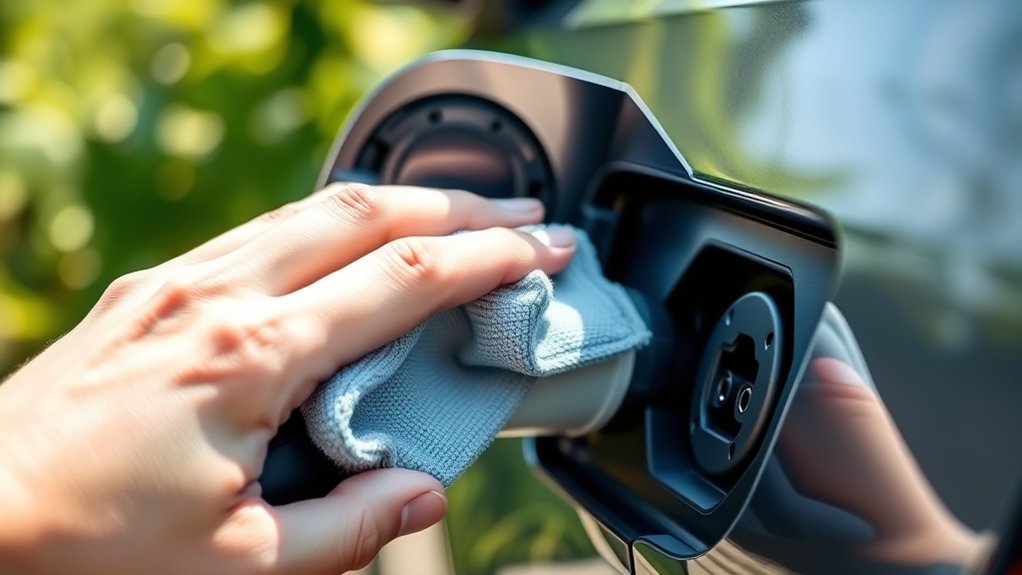
EV charging port maintenance is mostly inspection and gentle exterior cleaning, not electrical-contact repair. End the charging session, unplug by the handle, inspect the vehicle inlet and charger connector, wipe the charge flap and surrounding trim, and remove only loose debris you can reach without entering the contact cavities. Keep liquids, grease, metal tools, and aggressive air away from electrical contacts unless your vehicle or charging-equipment manufacturer specifically instructs otherwise. If you see pooled moisture, bent or corroded pins, melting, burn marks, unusual heat, or repeated charging faults, stop using the equipment and get qualified help.
Last updated: September 8, 2026 — safety guidance, maintenance scope, citations, and schema reviewed.
Quick Answer
To clean an EV charging port safely, stop the charging session, unplug the connector by its handle, inspect the inlet, and wipe only the charge flap, outer rim, and surrounding trim with a clean microfiber cloth. Use a soft dry brush only for loose debris around accessible exterior areas. Do not scrub the electrical contacts, spray cleaner into the inlet, apply grease, or force a connector. If the inlet or connector has pooled moisture, corrosion, bent pins, heat damage, or melting, do not charge until the problem is resolved according to the manufacturer’s guidance.
Key Takeaways
- Treat EV charging port maintenance as exterior cleaning and visual inspection, not pin or terminal repair.
- Keep liquids, metal tools, grease, harsh chemicals, and high-pressure air away from electrical contacts unless the manufacturer specifically permits a method.
- Inspect the vehicle inlet, connector handle, cable, port door, latch, and visible seals before charging.
- Stop charging and get help for bent or corroded pins, melting, burn marks, pooled moisture, damaged cables, repeated faults, or abnormal heat, odor, smoke, or sparking.
At a Glance
| Dirt on flap or outer trim | Wipe the accessible exterior area with a clean microfiber cloth. Keep cleaner away from the electrical inlet. |
| Loose dry debris near outer rim | Use a soft dry detailing brush around accessible exterior edges without pushing debris toward the contacts. |
| Visible or pooled moisture in inlet or connector | Do not connect until the moisture has dried as your vehicle or EVSE manual directs. Do not use high heat or metal tools. |
| Bent, corroded, burned, or melted parts | Stop using the affected port, connector, adapter, or cable and arrange qualified inspection or service. |
What Does EV Charging Port Maintenance Actually Cover?
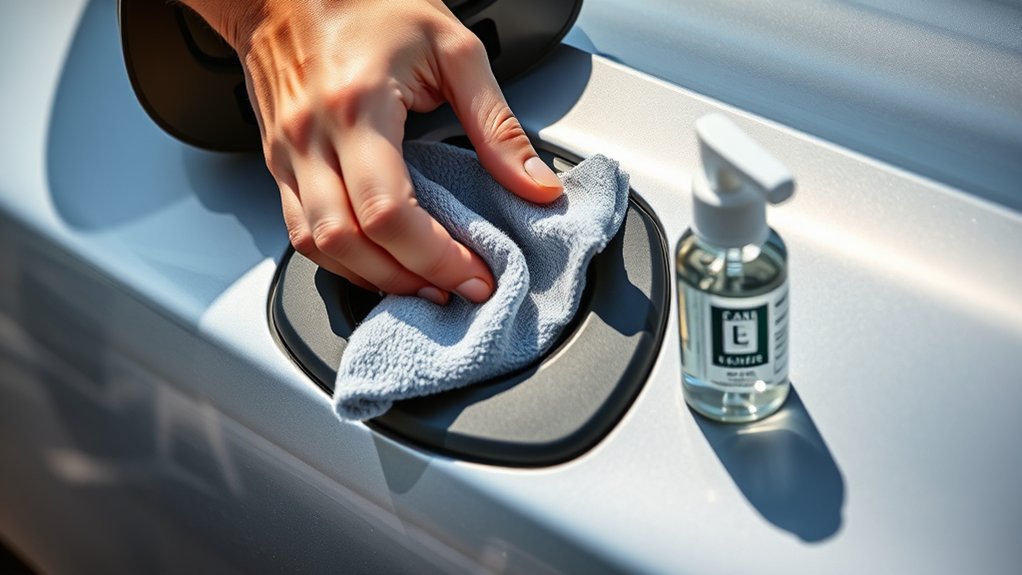
Regular EV charging port maintenance helps you notice dirt, moisture, damaged plastic, connector wear, and other visible problems before you start a charging session. For most owners, maintenance should stay at the inspection-and-exterior-cleaning level.
The terminology matters. The vehicle inlet is the socket assembly mounted on the EV. The connector is the mating plug and handle on the charging cable. The broader charging equipment is commonly called EVSE. The Alternative Fuels Data Center explains the charging-equipment and connector landscape, including J1772, CCS, and J3400/NACS.
- Vehicle inlet: Inspect visually for moisture, debris, damaged plastic, corrosion, or bent contacts. Do not make routine contact cleaning a DIY task unless the vehicle manual specifically provides a procedure.
- Connector: Check the handle, latch, cable entry point, visible contacts, and housing for damage or contamination before plugging in.
- EVSE and cable: Look for damaged insulation, loose plugs, fault indicators, physical damage, or repeated charging errors.
Owner-maintenance boundary: Clean what you can reach without entering the electrical contact cavities. If a problem requires touching pins, opening a housing, scraping corrosion, or applying chemicals to contacts, follow manufacturer or qualified-service guidance instead.
The goal is simple: keep accessible areas clean, inspect before use, avoid damaging the connector or inlet, and recognize when a charging problem has moved beyond routine maintenance.
What Tools Are Safe for EV Charging Port Care?
For routine maintenance, use simple tools that clean accessible exterior surfaces without scratching trim, damaging seals, or pushing debris into the inlet.
- Microfiber cloth: Use it on the charge flap, surrounding painted area, outer trim, and connector handle.
- Soft detailing brush: Use a dry brush around accessible flap hinges, latch areas, visible seals, and the outer rim.
- Flashlight: Inspect for moisture, debris, corrosion, bent contacts, discoloration, cracked plastic, or heat damage before charging.
- Manufacturer-approved exterior cleaner: If needed, apply it to the cloth and use it only on exterior trim or the outer charge flap. Never spray cleaner into the inlet.
Warning: Do not insert metal picks, paper clips, screwdrivers, wet swabs, or other improvised tools into charge-port contacts. Do not apply grease, solvent, or spray cleaner to the contacts unless the vehicle or charging-equipment manufacturer gives a specific procedure. If contacts appear bent, burned, wet, corroded, or damaged, stop using the equipment and arrange qualified service.
How Do You Clean an EV Charging Port Safely?
Cleaning an EV charging port should be a light owner-maintenance task. The steps below focus on the visible exterior area and inspection; they do not involve servicing the electrical terminals.
Step 1: Stop Charging and Unplug
End the charging session using the vehicle, charger, app, or station controls. Wait for the vehicle or charger to release the connector, then remove it by the handle. Never pull on the cable itself.
Step 2: Check Before You Clean
Use a flashlight to inspect the vehicle inlet, charge flap, latch, connector, and accessible surrounding area. Look for pooled moisture, packed debris, cracked plastic, bent contacts, corrosion, unusual discoloration, melted areas, or a burning smell.
A field study of public DC fast chargers evaluated 657 EVSE connectors and found 72.5% functional at the time of testing. The nonfunctioning group included several causes, including station, payment, network, initiation, and broken-connector problems. The finding does not mean vehicle-port dirt causes most charging failures, but it does support inspecting shared public hardware before you plug in.
Step 3: Wipe the Outer Flap and Surrounding Area
Wipe the charge door, surrounding body panel, and accessible outer rim with a clean microfiber cloth. If the exterior trim needs more cleaning, use only a product allowed by your vehicle manufacturer and apply it to the cloth rather than spraying toward the inlet.
Step 4: Remove Loose Dry Debris
Use a soft dry detailing brush around the flap hinge, accessible seal, latch, and outer edge. Work outward so you do not push dirt toward the electrical contacts. Do not insert the brush into contact cavities. Do not assume compressed air is safe; use it only if your specific vehicle or charging-equipment instructions permit it.
Step 5: Handle Moisture Before Reconnecting
If only the exterior flap or bodywork is wet, wipe the accessible surface as needed. If you see pooled or unusual moisture in the vehicle inlet or charger connector, do not connect until it has dried as the vehicle or EVSE manual directs. Never use high heat, metal tools, or an aggressive air blast to force-dry electrical contacts.
Pro Tip: Keep a clean microfiber towel in the vehicle for wiping the charge flap, outer trim, and connector handle after dusty, snowy, or wet charging stops.
What Should You Never Use on an EV Charging Port?
The safest default is to avoid any cleaning method that introduces liquid, pressure, abrasion, residue, or a tool into the electrical contact area.
- Do not direct high-pressure water at the inlet. Never aim a pressure washer or concentrated hose stream into an open charge port.
- Do not use abrasive tools. Steel wool, scouring pads, stiff brushes, and scraping tools can damage surfaces and seals.
- Do not apply dielectric grease by default. Use grease or contact protectants only when the vehicle or EVSE manufacturer specifically instructs you to do so.
- Do not spray electrical cleaner into the port. A model-agnostic maintenance guide should not assume a solvent is compatible with every inlet, seal, sensor, or connector.
- Do not use high-pressure compressed air by default. It can move grit or moisture deeper into areas you cannot inspect. Follow the manufacturer if it provides an approved air-cleaning method.
- Do not force a connector. If it does not seat smoothly, stop and check alignment, debris, ice, the latch, and vehicle-specific instructions.
Excessive Water Usage
Outdoor-capable charging equipment still needs to be used according to its manufacturer instructions. Normal exterior weather exposure is different from directing high-pressure water at an open inlet or connecting a plug when pooled or unusual moisture is present around the electrical interface.
Before washing your EV, close the charge flap and follow the washing precautions in the vehicle manual. Do not direct high-pressure water into the port seam or an open inlet. After washing, inspect the area before reconnecting charging equipment.
Abrasive Cleaning Tools
Abrasive tools can scratch the charge flap, damage visible seals, and push grit into small gaps. Use microfiber, a soft exterior brush, and light pressure. If contamination cannot be removed without reaching into the electrical contact area, stop and consult the owner’s manual or a qualified technician.
How Often Should You Inspect and Clean an EV Charging Port?
There is no single universal cleaning interval for every EV. A condition-based routine is safer than inventing a fixed schedule:
- Before connecting: Give the connector and vehicle inlet a quick visual check for obvious moisture, debris, or damage.
- When visibly dirty: Wipe the charge flap and accessible exterior area.
- After contamination exposure: Inspect more carefully after mud, heavy dust, road salt, snow, ice, or a dirty public-charger stop.
- Periodically: Check the charge-port door, hinge, latch, visible seals, cable, connector handle, wall unit, and any adapter you use.
- After a charging fault: Inspect the connector and inlet before repeatedly retrying the same session.
The AFDC guidance on EV charging infrastructure maintenance says general charger care includes storing cables securely, checking parts periodically, and keeping equipment clean. For a home charger, keep the cable stored so it is not repeatedly driven over, sharply kinked, or left where the connector can be damaged.
Note: Weather-capable charging equipment is not maintenance-free. Dirt, ice, road salt, physical damage, and worn connectors can still interfere with normal use.
How Do You Inspect EV Charging Equipment for Damage?
Inspect the entire charging path rather than focusing only on the vehicle inlet. That includes the wall unit or portable EVSE, cable, connector, any adapter, and the vehicle charge port.
- Cable: Look for cuts, cracks, crushed areas, exposed conductors, or other visible deterioration.
- Connector handle: Check for cracked plastic, missing pieces, loose parts, contamination, corrosion, or a damaged latch.
- Adapter: Inspect both ends before use. Stop using an adapter that is damaged, contaminated, or showing abnormal heat or discoloration.
- Wall unit or portable EVSE: Watch for repeated fault indicators, damaged plugs, loose receptacles, discoloration, or physical damage.
- Vehicle inlet: Inspect for pooled moisture, bent contacts, damaged plastic, corrosion, melting, or burn marks.
Stop charging for abnormal conditions such as a burning odor, visible smoke, sparking, melting, repeated electrical trips, or unusual heat at a connector, plug, adapter, or outlet. Do not open an EVSE housing or attempt internal electrical repair unless you are qualified and the manufacturer’s service procedure allows it.
How Do You Protect an EV Charging Port From Rain, Snow, Dirt, and Ice?
Good storage and handling reduce the amount of contamination and mechanical strain the charging system sees.
- Close the charge flap fully after use. This helps keep dirt and road contamination away from the inlet when the vehicle is not charging.
- Use the connector holster. Do not leave a home-charger plug lying on the ground where it can collect water, grit, or impact damage.
- Avoid cable strain. Do not stretch the charging cable tight or let its weight pull sideways on the vehicle inlet.
- Check after winter driving. Remove accessible dirt or road-salt residue from the surrounding flap and trim without scraping the contacts.
- Handle ice according to the vehicle manual. Do not chip around the inlet or latch with metal tools. Use the vehicle’s recommended defrost method if it has one.
- Keep protective caps and covers in place. If the charger or adapter includes a manufacturer-supplied cap or holster, use it during storage.
At a public charger, inspect the connector before plugging in. If it is cracked, has damaged contacts, contains pooled water or packed debris, has missing pieces, or shows melting or severe discoloration, choose another connector and report the problem to the charging network if possible.
When Should You Stop Charging and Get Professional Help?
Do not keep charging if you notice any of these warning signs:
- The connector will not seat or release normally after you follow the vehicle’s normal procedure.
- The port, plug, adapter, outlet, or cable becomes abnormally hot.
- You smell burning material or see smoke, sparking, melting, or burn marks.
- The vehicle repeatedly shows charging errors with more than one known-good charger.
- You see bent contacts, obvious corrosion, or damaged insulating plastic.
- Pooled water, cleaner, grease, or another substance has entered the electrical contact area.
- The wall outlet, breaker, or charging unit trips repeatedly.
For vehicle-side inlet problems, contact the vehicle manufacturer or a qualified EV service facility. For a home wall unit, receptacle, breaker, or premises-wiring problem, use a qualified electrician familiar with EV charging equipment. The SAE J1772 conductive charge coupler standard covers physical, electrical, functional, and performance requirements for conductive EV charging, while J3400/NACS is now part of the current North American connector landscape. These are specialized electrical interfaces, so internal contact repair is not routine DIY maintenance.
Frequently Asked Questions
How do I prevent EV charging port damage?
Keep the charge flap closed when it is not in use, inspect the inlet and connector before charging, avoid cable strain, and never force a plug. Stop charging if you see corrosion, bent contacts, melted plastic, abnormal heat, pooled moisture, or repeated charging errors.
Can I use dielectric grease on an EV charging port?
Do not apply dielectric grease to EV charge-port contacts or charger connectors unless the vehicle or charging-equipment manufacturer specifically instructs you to do so. If corrosion or moisture is present, have the area inspected instead of coating the contacts.
What should I do if my EV charging port gets wet?
If only the exterior flap or surrounding trim is wet, wipe the accessible surface as needed. If you see pooled or unusual moisture in the electrical contact area or charger connector, do not connect until it has dried as the vehicle or EVSE manual directs. Do not use high heat, metal tools, or aggressive high-pressure air to dry the inlet.
Can I use compressed air to clean an EV charging port?
Do not assume compressed air is safe for every EV charging port. High-pressure air can move grit or moisture deeper into areas you cannot inspect. Use air only if your vehicle or charging-equipment manufacturer specifically permits it, and follow its pressure, distance, and handling instructions. For routine owner care, use a microfiber cloth and a soft dry brush on accessible exterior areas.
Should I clean the metal contacts inside an EV charging port?
Not as routine DIY maintenance. Inspect the contacts visually, but do not scrub, scrape, solvent-swab, or grease them unless the vehicle manufacturer provides a specific procedure. Bent, burned, heavily contaminated, or corroded contacts should be inspected by qualified service personnel.
How often should I clean an EV charging port?
There is no universal cleaning interval for every EV. Inspect the inlet and connector before connecting, wipe accessible exterior areas when they are visibly dirty, and check more carefully after mud, road salt, heavy dust, snow, ice, or a charging fault. Follow any maintenance interval in your vehicle or EVSE manual.
Can I charge an EV in the rain?
Many EV charging systems are designed for outdoor use when properly installed, rated, and used according to their instructions, but manufacturer requirements vary. Do not connect equipment that is damaged or contaminated, and do not use a connector or inlet with pooled or unusual moisture around the electrical interface. Keep outlets, plugs, adapters, and other connection points within the conditions allowed by the vehicle and EVSE manuals.
Conclusion
Safe EV charging port maintenance is simple because the owner-level job should stay simple: inspect the inlet and connector, clean accessible exterior surfaces, store the cable correctly, and never force the plug. Do not turn routine care into electrical-contact repair with solvents, grease, scraping tools, or aggressive air. If you find pooled moisture, corrosion, bent contacts, damaged insulation, melting, burn marks, abnormal heat, smoke, odor, or repeated charging faults, stop charging and follow manufacturer or qualified-service guidance before using the equipment again.
Sources
- U.S. Department of Energy Alternative Fuels Data Center — Electric Vehicle Charging Stations — supports EV charging terminology, charging-equipment context, and J1772/J3400 connector information.
- U.S. Department of Energy Alternative Fuels Data Center — Operation and Maintenance for EV Charging Infrastructure — supports secure cable storage, periodic part checks, and keeping charging equipment clean.
- National Fire Protection Association — Electric Vehicle Safety Information — provides broader electrical-safety context for electric vehicles and charging systems.
- SAE International — SAE J1772 Electric Vehicle Conductive Charge Coupler — supports the specialized physical, electrical, functional, and performance requirements of conductive EV charging interfaces.
- Reliability of Open Public Electric Vehicle Direct Current Fast Chargers — reports field testing of public DC fast-charging equipment and identifies broken connectors among multiple causes of nonfunctioning equipment.