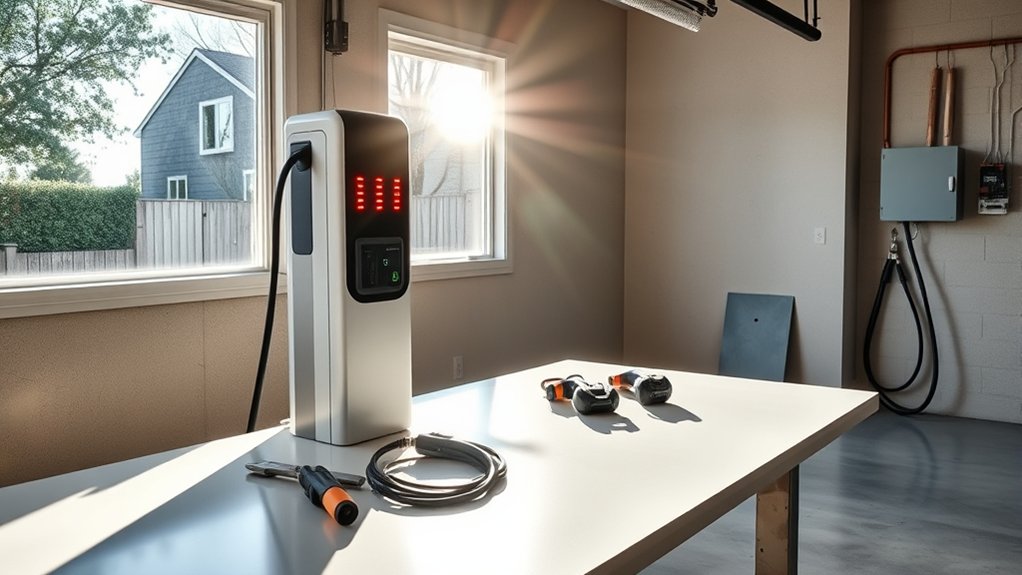
Yes, you may need a permit to install an EV charger at home, especially if you are adding a new 240-volt circuit, installing a hardwired Level 2 charger, upgrading your electrical panel, or changing existing wiring. A simple Level 1 cord plugged into an existing safe 120-volt outlet usually does not require a new permit, but local rules control the final answer.
Quick Answer
A permit is usually required for a Level 2 EV charger when the work adds a new 240V circuit, new outlet, hardwired charger, panel upgrade, or outdoor wiring. If you only use a portable Level 1 charger in an existing outlet, a permit is usually not needed. Always confirm with your local building department before work begins.
Key Takeaways
- Most Level 2 EV charger installations need an electrical permit because they involve 240V wiring, a dedicated circuit, or a hardwired charger.
- Level 1 charging through an existing 120V outlet is simpler, but adding or repairing wiring can still trigger a permit.
- Your local authority having jurisdiction, often called the AHJ, makes the final permit and inspection decision.
- A licensed electrician can check panel capacity, prepare load calculations, pull permits, and help the installation pass inspection.
- The federal residential EV charger tax credit applied to qualifying property placed in service from January 1, 2023, through June 30, 2026, so check current federal, state, local, and utility programs before budgeting.
At a Glance
| Time Required | Permit review may take a few days to a few weeks, depending on your city or county. Installation may take a few hours for a simple circuit or longer if a panel upgrade is needed. |
| Difficulty | Moderate to advanced electrical work. Most homeowners should hire a licensed electrician for Level 2 installation. |
| Tools Needed | Permit application, charger specifications, panel information, site plan if requested, load calculation if requested, and inspection access. |
| Cost | Permit fees vary by jurisdiction. The larger costs are usually the charger, wiring, labor, trenching if needed, and any electrical panel upgrade. |
Is a Permit Required for Level 2 EV Charger Installation?
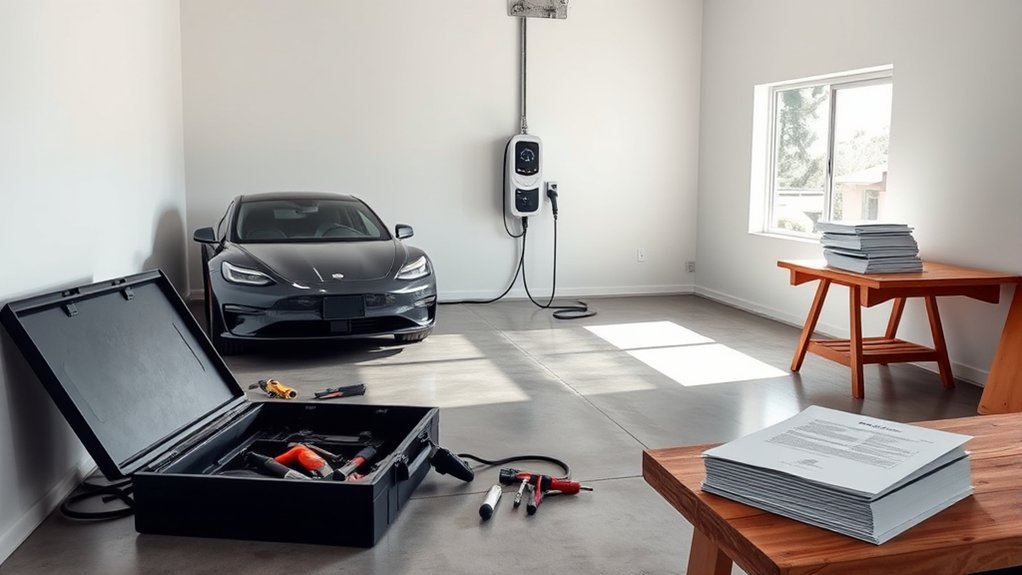
In many areas, a Level 2 EV charger permit is required because Level 2 charging usually uses 240V residential electrical service. That often means a dedicated circuit, a new breaker, new wiring, a new receptacle, a hardwired EVSE unit, or a panel-capacity review.
The U.S. Department of Energy’s Alternative Fuels Data Center explains that charging equipment installations must comply with local and state codes, that appropriate permits may be required from local building and permitting authorities, and that NEC Article 625 contains much of the code information that applies to EV charging equipment.
Your local building department, electrical inspection office, or authority having jurisdiction, often called the AHJ, decides whether your specific installation needs a permit. A licensed electrician can usually confirm this before giving you a final quote.
Warning: Do not treat EV charger wiring like a normal appliance hookup. EV charging is a continuous electrical load, so the circuit, breaker, wire size, GFCI protection, outdoor rating, and panel capacity must be correct. Unsafe work can overheat wiring, fail inspection, void equipment warranties, or create insurance and resale problems.
When Do You Need an EV Charger Permit?
Permit rules vary by city, county, and state, but the table below shows the common triggers homeowners should check before installing a charger.
| Installation Type | Permit Usually Needed? | Why |
| Portable Level 1 charger plugged into an existing 120V outlet | Usually no | No new wiring is being installed, but the outlet should be grounded, safe, and in good condition. |
| Adding a new 120V outlet for Level 1 charging | Often yes | New electrical wiring or a new branch circuit commonly requires an electrical permit. |
| Plug-in Level 2 charger using an existing compatible 240V outlet | Maybe | Using an existing outlet may not need a new permit, but the outlet, breaker, wire size, and duty rating should be checked. |
| New 240V receptacle for a plug-in Level 2 charger | Usually yes | A new 240V circuit, breaker, receptacle, and wiring are electrical work subject to inspection in many areas. |
| Hardwired Level 2 wall charger | Usually yes | Hardwired EVSE installation normally requires a dedicated circuit and code-compliant electrical work. |
| Electrical panel upgrade or service upgrade | Yes | Panel and service work almost always needs a permit, utility coordination, and inspection. |
| Outdoor charger installation | Often yes | Outdoor equipment must be rated for the location and may involve weatherproofing, conduit, trenching, or GFCI rules. |
What Are the Differences Between Level 1 and Level 2 Chargers?
Level 1 and Level 2 chargers both charge an EV at home, but they differ in voltage, speed, installation complexity, and permit risk. The permit question usually becomes more important when you move from a portable Level 1 cord to a dedicated Level 2 setup.
Charging Speed Comparison
Level 1 charging uses a standard 120V outlet and adds about 5 miles of range per hour under typical assumptions. The Alternative Fuels Data Center notes that 8 hours of Level 1 charging can add about 40 miles of range for a midsize EV, depending on the vehicle and charging conditions.
Level 2 charging uses 240V service in most residential settings and adds about 25 miles of range per hour under typical assumptions. Level 2 equipment can vary widely in power, from lower-output units to high-output units, so actual charging speed depends on the charger, vehicle, battery state of charge, and onboard charger capacity.
Installation Requirements
Level 1 charging is usually the simplest option if you already have a safe grounded outlet near your parking spot. Still, the outlet should not be loose, damaged, overloaded, or shared with high-demand appliances.
Level 2 charging is more involved. Many residential Level 2 chargers need a dedicated branch circuit, and a common 30-amp Level 2 unit may require a 40-amp circuit under NEC Article 625 guidance. A higher-output charger may need a larger circuit, a panel-capacity review, or a load management solution.
- Level 1: Best for short commutes, plug-in hybrids, low daily mileage, and homes where adding a 240V circuit is not practical.
- Level 2: Best for faster overnight charging, longer commutes, larger EV batteries, and households that rely on the EV daily.
Cost Differences
Level 1 often costs little or nothing if you use the cordset that came with the vehicle and an existing suitable outlet. Costs rise if you need a new outlet, a dedicated circuit, or repairs.
Level 2 costs more because you may need the wall charger, breaker, wire, conduit, labor, permit fees, inspection, and possibly a panel or service upgrade. The AFDC infrastructure guidance notes that installation costs vary by location, wiring distance, trenching, electrical upgrades, labor, permitting, and site conditions.
Note: Do not choose the highest-amperage charger only because it sounds faster. Your vehicle may not accept the full output, and your panel may not have enough spare capacity. A right-sized charger can be safer and less expensive.
How to Check Permit Requirements Before Installation
Before you buy a charger or schedule installation, confirm what your local building department requires. This avoids failed inspections, surprise costs, and rework.
- Identify the charger type. Write down whether you plan to use Level 1, a plug-in Level 2 charger, or a hardwired Level 2 charger.
- Check the charger amperage. Look at the charger label or installation manual for the maximum output amperage and circuit requirements.
- Review your electrical panel. A licensed electrician can check available capacity, breaker space, existing loads, and whether a load calculation is needed.
- Contact the local AHJ. Ask your building department whether the work requires an electrical permit, site plan, load calculation, contractor license number, or inspection.
- Ask about online permits. Many cities allow online electrical permit applications for residential EV chargers.
- Confirm inspection timing. Ask whether the inspection happens before the charger is energized, after installation, or both.
- Keep records. Save the permit, approved plans, inspection approval, charger manual, and electrician invoice for future warranty, resale, insurance, or rebate needs.
Pro Tip: Call your utility before installing a high-output charger. Some utilities offer EV rates, managed charging programs, meter guidance, panel upgrade advice, or rebate programs that require pre-approval.
Navigating the EV Charger Permit Application
The EV charger permit process is usually handled through your local building department or electrical inspection office. In many cases, your electrician pulls the permit for you. If your area allows owner-builder permits, you may be able to apply yourself, but you are still responsible for code compliance and inspection.
A typical permit process looks like this:
- Choose the charger location. Keep the charger close to the parking space and electrical panel when possible to reduce wiring length and cost.
- Select safety-certified equipment. Use EVSE that is listed by a nationally recognized testing laboratory. ENERGY STAR certified EV chargers are a helpful starting point.
- Prepare electrical details. Include charger amperage, breaker size, wire type, mounting location, and whether the unit is plug-in or hardwired.
- Submit the permit application. Your AHJ may ask for a simple electrical permit form, charger spec sheet, site plan, panel schedule, or load calculation.
- Install after approval if required. Some jurisdictions allow over-the-counter or instant permits. Others require plan review before work starts.
- Schedule inspection. The inspector checks whether the installation matches the approved permit and code requirements.
- Keep the signed approval. Store the final inspection record with your home documents.
Required Documents for EV Charger Permit Applications
Permit requirements vary, but the following documents are commonly requested for a residential EV charger installation:
- Permit application: Basic property, owner, contractor, and project information.
- Charger installation manual: Manufacturer instructions for mounting, wiring, breaker size, and safety requirements.
- Charger specification sheet: Output amperage, voltage, plug type or hardwired connection, indoor/outdoor rating, and listing information.
- Electrical load calculation: A calculation showing whether your existing electrical service can support the charger load.
- Panel schedule or panel photo: Helpful for showing breaker space and existing loads.
- Site plan or floor plan: A simple drawing showing the panel, charger location, parking space, and wiring path if requested.
- Contractor information: License number and contact details if a licensed electrician is doing the work.
- HOA, condo, or landlord approval: Required in some shared or rented properties before electrical work begins.
If your charger is more than a low-output unit, expect the building department or electrician to pay close attention to the load calculation. This helps confirm that the charger will not overload your service when combined with air conditioning, electric ranges, dryers, water heaters, heat pumps, and other household loads.
Why Hire a Licensed Electrician for Your Installation?
Hiring a licensed electrician is the safest route for most Level 2 EV charger installations. A qualified electrician can determine whether your panel has enough capacity, whether the charger needs a dedicated circuit, what breaker and wire size are required, and whether your local AHJ requires a permit.
A licensed electrician can also help with:
- Code compliance: EV charging must follow local code, state code, and applicable NEC rules.
- Load calculations: The electrician can check whether your existing service can safely support the charger.
- Permit handling: Many electricians can submit the permit and schedule the inspection for you.
- Outdoor safety: Outdoor chargers need equipment, enclosures, conduit, and protection rated for the location.
- Rebate documentation: Some utility programs require a licensed installation, permit approval, or proof of inspection.
If you want to do the work yourself, call your local building department first. Some jurisdictions allow homeowners to perform certain electrical work on a home they own and occupy, but they may still require a permit, inspection, and strict code compliance. Rental, commercial, multifamily, and condo properties usually have stricter rules.
How Much Do EV Charger Permits Cost?
EV charger permit fees vary by jurisdiction. Some areas charge a flat electrical permit fee, some base the fee on project value, and some add inspection or technology fees. Because fee schedules change, the most reliable answer comes from your local building department’s current permit fee page.
Permit Fee Ranges
The permit fee itself is often only one part of the budget. For many homeowners, the larger cost is the electrical work, especially if the charger is far from the panel or the home needs extra capacity.
Potential cost items include:
- EV charger or wall connector
- Breaker, wire, conduit, receptacle, or disconnect equipment
- Labor for electrical installation
- Permit and inspection fees
- Drywall repair, trenching, or exterior conduit work
- Panel upgrade, service upgrade, or load management equipment
Additional Cost Considerations
A charger installed near the electrical panel is usually cheaper than one installed across a garage, outside on a detached structure, or near a driveway that requires trenching. A plug-in Level 2 unit can be convenient, but the outlet and circuit must still be suitable for continuous EV charging.
A hardwired charger may cost more to install upfront, but it can be cleaner, more secure, and better suited for outdoor locations. Some jurisdictions or manufacturers also prefer hardwired installation for higher-amperage chargers.
What to Expect During EV Charger Installation Inspections
The inspection confirms that the EV charger installation matches the approved permit and is safe to use. The inspector may check the panel, breaker, wire size, grounding, GFCI protection where required, receptacle type, charger mounting, outdoor rating, labeling, and whether the installation follows the manufacturer instructions.
Before the inspection, make sure:
- The permit is available at the job site if your AHJ requires it.
- The charger manual and approved documents are available.
- The electrical panel is accessible.
- The charger, conduit, receptacle, and wiring are visible enough for inspection.
- The work was not covered or concealed before inspection if your AHJ needs to see it.
- The electrician or homeowner knows whether the inspector needs access to the garage, basement, exterior wall, or utility area.
Common inspection problems include using the wrong breaker size, installing a receptacle not rated for the load, missing required GFCI protection, poor outdoor weatherproofing, unsupported conduit, incomplete labeling, or using charger settings that exceed the circuit rating.
Passing inspection is not just paperwork. It confirms the charger is installed for the electrical load it will carry night after night.
Ensuring Compliance With Local Building Codes
EV charger installations must comply with local and state codes, and the local AHJ decides what documents, permits, and inspections are required. The AFDC permitting guidance explains that local governments often use checklists, online submittals, transparent timelines, and inspection requirements to streamline EV charger approvals.
For a homeowner, code compliance usually comes down to four questions:
- Can the electrical service handle the charger? A load calculation may be needed.
- Is the circuit sized correctly? EV charging is a continuous load, so breaker, wire, and charger settings must match.
- Is the equipment listed and installed correctly? The charger should be safety-certified and installed according to manufacturer instructions.
- Was the work permitted and inspected if required? Keep the final approval for your records.
If you install without a required permit, you may face correction orders, fines, failed resale inspections, insurance questions, or the cost of reopening walls or conduit so the work can be inspected. The cheaper path is usually to ask first and permit the work correctly.
Are There Incentives for Installing EV Chargers?
Incentives can reduce the cost of a home EV charger, but they change often and may depend on where you live, your utility, your charger type, your permit status, and when the charger is placed in service.
Federal Tax Credit Status
The federal Alternative Fuel Vehicle Refueling Property Credit under Section 30C applied to qualifying residential charging property installed at a main home in an eligible location and placed in service from January 1, 2023, through June 30, 2026. For individuals, the IRS listed the credit as 30% of the cost, up to a maximum credit of $1,000 per item, during that window.
Because June 30, 2026 has passed, do not assume the federal residential charger credit is available for a new installation placed in service after that date. Check the current IRS Alternative Fuel Vehicle Refueling Property Credit page or a qualified tax professional before counting on a federal credit.
Utility Company Rebates
State, local, and utility incentives may still be available even when a federal credit is not. Some programs offer rebates for Level 2 chargers, panel upgrades, time-of-use charging, income-qualified customers, or managed charging programs.
Before you buy equipment, ask your utility these questions:
- Do you offer a residential EV charger rebate?
- Does the charger need to be ENERGY STAR certified or on an approved list?
- Do I need pre-approval before installation?
- Do you require a permit, inspection, or licensed electrician invoice?
- Do you offer a lower overnight EV charging rate?
- Do you require a separate meter or managed charging enrollment?
Long-Term Benefits of Home EV Charger Installation
A properly installed home EV charger makes daily charging easier, especially if you drive often or have a larger battery EV. Level 2 charging can usually restore enough range overnight for typical daily use, which reduces dependence on public charging.
The long-term benefits include:
- Convenience: You can plug in at home instead of planning regular public charging stops.
- Better charging routine: Many EVs and smart chargers let you schedule charging during lower-cost hours if your utility offers time-of-use rates.
- Cleaner installation records: A permitted and inspected charger gives you documentation for future buyers, insurers, and rebate programs.
- Potential home appeal: EV-ready wiring or an installed charger can make a home more attractive to EV owners.
- Safer high-load charging: A correct circuit is safer than relying on extension cords, worn outlets, or undersized wiring.
Frequently Asked Questions
What happens if you install an EV charger without a permit?
If a permit was required and you skipped it, your local building department may require you to stop using the charger, pay fines, open the work for inspection, correct code violations, or apply for an after-the-fact permit. It can also create issues with insurance claims, equipment warranties, and future home sales.
Am I allowed to install my own EV charger?
Maybe. Some jurisdictions allow a homeowner to do certain electrical work on a home they own and occupy, but a permit and inspection may still be required. Other areas require a licensed electrician. Always check with your local AHJ before starting, especially for Level 2 charging.
What electrical work requires a permit in North Carolina?
North Carolina permit requirements are enforced locally, so check with your city or county inspection department. New circuits, panel changes, new 240V receptacles, and hardwired EV charger installations commonly require an electrical permit and inspection. Do not rely on a general online answer for a specific county or city.
Can a homeowner do their own electrical work in Oregon?
Oregon rules can depend on the property type, occupancy, and scope of work. A homeowner may be allowed to perform some electrical work on their own residence in certain cases, but permits and inspections can still apply. Contact the local building department or Oregon electrical program before installing a Level 2 EV charger yourself.
Do I need a permit if I already have a 240V outlet?
You may not need a new permit just to plug in a portable Level 2 charger, but the existing outlet must be suitable for continuous EV charging. Have an electrician confirm the receptacle type, breaker size, wire size, grounding, GFCI protection, and overall condition before using it for regular EV charging.
Do renters, condos, or HOAs need extra approval?
Often yes. Renters need landlord approval before electrical work. Condo owners may need association approval because wiring, parking spaces, exterior walls, or shared electrical systems may be involved. Some states have right-to-charge laws, but the details vary, so check local rules before buying equipment.
Conclusion
You usually need a permit to install a Level 2 EV charger when the project adds a new 240V circuit, hardwired charger, new receptacle, outdoor wiring, or panel upgrade. You usually do not need a new permit just to use a Level 1 cord with an existing safe outlet, but local rules still matter. The safest path is simple: check with your local building department, hire a qualified electrician for Level 2 work, use safety-certified equipment, keep your permit records, and schedule the required inspection before relying on the charger every day.
Sources
- Alternative Fuels Data Center: Charging Electric Vehicles at Home — home charging options, local code compliance, permits, NEC Article 625, safety-certified equipment, and electrician guidance.
- Alternative Fuels Data Center: Electric Vehicle Charging Stations — Level 1 and Level 2 charging speeds, voltage, connector information, and residential Level 2 circuit context.
- Alternative Fuels Data Center: Procurement and Installation for EV Charging Infrastructure — installation planning, permits, inspections, electrical contractors, costs, and utility coordination.
- Alternative Fuels Data Center: Permitting Processes for EV Charging Infrastructure — AHJ permit process examples, checklists, transparent review, and inspection best practices.
- IRS: Alternative Fuel Vehicle Refueling Property Credit — federal 30C credit eligibility, qualifying location rules, and June 30, 2026 placed-in-service cutoff for individual residential property.
- ENERGY STAR Certified AC EV Chargers — safety-certified EV charger product finder for Level 1 and Level 2 equipment.