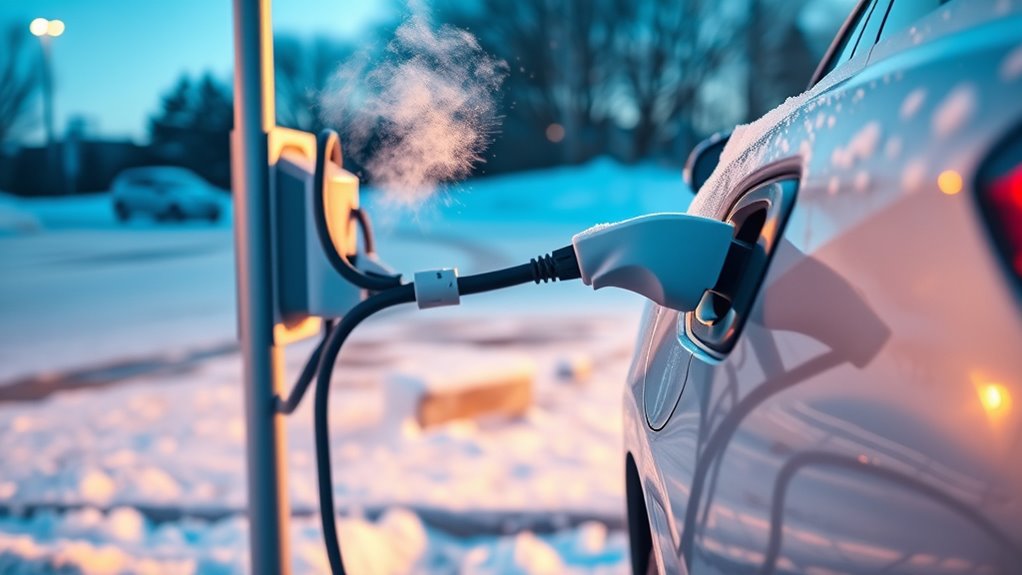
Yes, cold weather can affect EV charging. A cold battery accepts power more slowly, uses energy to warm itself, and usually delivers less driving range between charges. The biggest delays happen when the battery is below freezing, the car has not been preconditioned, or you rely on Level 1 charging in deep winter.
Quick Answer
Cold weather slows EV charging because lithium-ion batteries move energy less efficiently when they are cold. Range can also drop, especially when cabin heat is running. For the best winter results, precondition the battery while plugged in, use Level 2 charging overnight, and expect DC fast charging to be slower until the pack warms up.
Key Takeaways
- Cold weather affects both charging speed and driving range, but the exact loss depends on the EV, battery temperature, state of charge, heater use, and charger type.
- Level 2 charging is usually the most predictable winter setup for home charging because it can add useful range overnight and help the car manage battery temperature.
- DC fast charging still works in winter, but it is most effective when the battery has been warmed through navigation-based or app-based preconditioning.
- Preheating the cabin while plugged in saves battery energy for driving instead of using stored range to warm the car after departure.
At a Glance
| Best Winter Charging Setup | Level 2 home charging with scheduled departure or battery preconditioning |
| Difficulty | Easy if your EV supports app scheduling or route-based preconditioning |
| Tools Needed | Your EV app, navigation system, charging cable, and a properly installed charging station |
| Cost | No extra cost if you already have home charging; public fast charging costs vary by network |
Why EV Charging Slows in Cold Weather
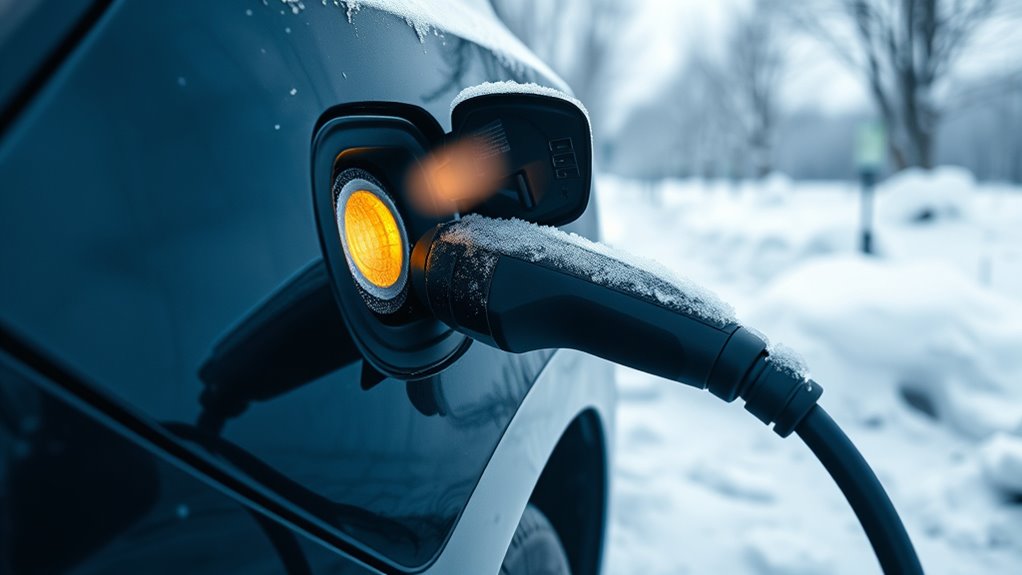
Cold weather slows EV charging because the battery has to stay within a safe operating temperature before it can accept high power. When the battery pack is cold, the chemical reactions inside the cells slow down, internal resistance rises, and the battery management system may limit charging power to protect the pack.
This is most noticeable at public DC fast chargers. The charger may be capable of high output, but your EV decides how much power the battery can safely accept. If the battery is too cold, the car may first spend time warming the pack before charging speed rises.
Cold also affects range. According to FuelEconomy.gov, EV range can drop sharply in cold conditions, partly because cabin heat uses battery energy. The same source notes that preheating the cabin while plugged in can help extend range.
Cold does not mean your EV cannot charge. It means the car may slow charging until the battery is warm enough to accept power safely and efficiently.
Charging Speed vs. Range Loss
Winter EV problems often get grouped together, but charging speed and range loss are different issues.
- Charging speed loss means the battery accepts power more slowly, especially during DC fast charging.
- Range loss means the car uses more energy per mile or has less usable energy available in cold weather.
- Displayed range changes may happen because the car estimates range from recent driving, outside temperature, climate use, and other conditions.
Real-world winter range loss varies by model, trip length, temperature, wind, tires, heater use, and whether the car has a heat pump. Some drivers may see a small drop in mild cold, while severe winter conditions can cause much larger losses.
Note: A slow winter charging session does not always mean the charger is broken. The vehicle may be limiting power because the battery is cold, nearly full, or outside its ideal charging window.
How Much Slower EV Charging Gets in Winter
There is no single winter charging penalty that applies to every EV. Charging can slow slightly in cool weather or dramatically in deep cold, depending on how cold the battery is before you plug in.
As a practical rule, expect the biggest delays when:
- the battery has been parked outside in freezing temperatures for hours,
- you arrive at a DC fast charger without preconditioning,
- the battery is at a high state of charge, usually above 70% to 80%,
- you are using Level 1 charging in freezing weather, or
- the car is using part of the incoming energy to warm the battery or cabin.
Cold-weather range loss can also be significant. FuelEconomy.gov reports that EV fuel economy can drop roughly 39% in cold mixed driving, with range dropping by about 41% in the conditions it describes. Other real-world reports show smaller or larger losses depending on model and weather.
Level 1 vs. Level 2 vs. DC Fast Charging in the Cold
The charger type matters in winter because each level provides a different amount of power. The U.S. Department of Energy Alternative Fuels Data Center explains that Level 1, Level 2, and DC fast charging differ by power level, typical charging time, and use case.
| Charging Type | Winter Strength | Winter Limitation |
| Level 1 | Useful for slow top-offs when you drive very little. | Can be too slow in freezing weather because limited power may be used for battery warming. |
| Level 2 | Best all-around choice for home winter charging and overnight recovery. | Still slower if the battery is very cold, but usually remains predictable. |
| DC Fast Charging | Fastest option for road trips when the battery is warm and preconditioned. | Can be heavily limited until the battery reaches a better temperature. |
Level 1 Cold Limitations
Level 1 charging uses a standard 120-volt outlet. It is convenient, but it adds range slowly even in mild weather. In cold conditions, some of that limited power may go toward battery temperature management instead of adding usable range.
Level 1 can still work if your daily driving is short and the car stays plugged in for long periods. It becomes frustrating when you need to recover a lot of range overnight, especially in freezing weather.
Level 2 Winter Efficiency
Level 2 charging is usually the best winter home-charging option. It gives the car more power to charge the battery, run scheduled cabin preheating, and manage pack temperature before departure.
If you park outside, Level 2 charging can make winter ownership much easier because you start each day with a warmer cabin, a better-prepared battery, and more predictable range.
DC Fast Charging in Winter
DC fast charging can still be very useful in winter, but it depends heavily on battery temperature. If you arrive with a cold battery, the car may pull low power at first. As the pack warms, charging speed may rise.
This is why route-based preconditioning matters. Many EVs can warm the battery automatically when you use the navigation system to route to a fast charger. Tesla also advises drivers to precondition the battery and plug in when possible to improve cold-weather efficiency.
Battery State of Charge Matters Too
Cold temperature is not the only reason an EV charges slowly. State of charge also matters. Most EVs charge fastest when the battery is warm and in a lower-to-middle charge range. Charging often slows as the battery gets closer to full.
That means a winter DC fast charging session from 15% to 60% may be much faster than a session from 70% to 95%. On road trips, it is often quicker to charge in shorter stops and leave once the charging curve slows, unless you need the extra range for the next leg.
Pro Tip: For winter road trips, enter the fast charger as your navigation destination before you arrive. If your EV supports battery preconditioning, this gives the car time to warm the pack before charging starts.
How to Precondition Your EV Battery
Preconditioning means warming the battery, cabin, or both before driving or charging. It helps because the battery can accept power more efficiently when it is closer to its preferred temperature range.
Battery Warm-Up Timing
Start battery warm-up before you need the car or before you reach a fast charger. The exact timing depends on your EV and the temperature, but in deep cold, the battery may need extra time to warm.
- Plug in when possible. This lets the car use grid power instead of battery range for warming.
- Set a scheduled departure. Many EVs can warm the cabin and battery before your planned drive.
- Use the app. If your EV app has climate or battery preconditioning, turn it on before leaving.
- Use navigation for fast charging. Route to a DC fast charger so the car can prepare the battery on the way, if supported.
- Give the system time. In very cold weather, battery warm-up may take longer than expected.
Preconditioning Before Charging
If your EV supports it, preconditioning before DC fast charging is one of the best ways to reduce winter charging delays. The car may warm the battery before arrival so it can accept higher power sooner.
Preconditioning is especially helpful when the car has been parked outside, the battery is below freezing, or you are starting a road trip with a cold pack. It may use some energy, but it can save time at the charger and improve charging consistency.
Warning: Do not try to force faster charging by bypassing your EV’s limits, using damaged cables, running unsafe extension cords, or heating a charge port with an open flame. Follow your owner’s manual and use properly rated charging equipment.
What to Do If Public Charging Is Slow in Cold Weather
If a public charger feels unusually slow in winter, work through the likely causes before assuming the station has failed.
- Check battery temperature. If the car says the battery is warming, wait a few minutes and watch whether charging speed rises.
- Check state of charge. If the battery is already high, charging may slow because the pack is near the top of its charge curve.
- Try another stall. A charger, cable, or shared power cabinet may be limiting output.
- Clear snow and ice carefully. Make sure the connector seats fully and the charge port door is not frozen in place.
- Use the car’s route planner. If you must stop again, route to the next charger early so preconditioning can start.
- Do not wait until empty. Keep more winter range in reserve because delays, detours, heater use, and charger congestion can all add risk.
Slow winter DC charging is often a mix of battery temperature, charger output, and battery state of charge. The easiest fix is planning ahead, not waiting until the battery is very low, and using preconditioning before arrival.
Winter EV Charging Tips to Preserve Range
Winter EV charging works best when you manage temperature before the battery gets too cold. These habits can help you preserve range and reduce charging delays.
- Preheat while plugged in. Warm the cabin before departure so the car does not use as much battery energy after you leave.
- Use seat and steering-wheel heaters. They usually use less energy than heating the entire cabin.
- Park in a garage or sheltered spot. Even an unheated garage can reduce overnight battery cooling.
- Use Level 2 charging when possible. It is the most practical daily winter charging setup for many EV owners.
- Keep the car plugged in during extreme cold. Many EVs manage battery temperature better when connected to power.
- Check tire pressure. Cold weather lowers tire pressure, which increases rolling resistance and can reduce range.
- Clear snow from the car. Snow adds weight and drag, and ice can interfere with doors, sensors, and charging hardware.
- Follow your vehicle’s charge-limit guidance. Use the daily limit your manufacturer recommends, and charge higher only when you need extra trip margin.
Heat pumps can also help in cold weather because they reduce the energy needed for cabin heating. They do not eliminate winter range loss, but they can make cold-weather driving more efficient than a purely resistive heating setup.
Is Cold Weather Bad for Your EV Battery?
Charging in cold weather is not automatically bad for your EV battery. Modern EVs use battery management systems that limit charging power when needed. That protection is why a cold battery may charge slowly at first.
The safest approach is to let the car manage battery temperature, avoid repeated unnecessary fast charging in extreme cold, and follow the charging guidance in your owner’s manual. Do not override warnings or keep trying to charge if the vehicle reports a fault.
Cold-weather charging may feel inconvenient, but the slow-down is usually the car protecting the pack. Once the battery warms, charging performance often improves.
Frequently Asked Questions
Is it bad to charge an EV in cold weather?
No. You can charge an EV in cold weather, but it may charge more slowly until the battery warms up. Modern EVs manage battery temperature and charging power to protect the pack. For best results, plug in when parked and precondition before driving or fast charging.
Is life with an electric car in winter really a nightmare?
No. Winter requires more planning, but most EV owners can manage it with home charging, preconditioning, route planning, and a little extra range buffer. The hardest situations are long trips in extreme cold, outdoor parking, and arriving at fast chargers with a cold battery.
What drains EV batteries the most in winter?
Cabin heat is one of the biggest winter energy drains. Cold tires, dense air, snow, slush, high speeds, and reduced regenerative braking can also lower range. Preheating while plugged in and using seat heaters can reduce the load on the main battery.
What temperature is too cold for electric cars?
There is no single cutoff for all EVs. Many electric cars can operate well below freezing, but range and charging speed usually drop as temperatures fall. Around 20°F and below, you should expect more noticeable range loss, slower charging, and more benefit from preconditioning.
Should I use Level 1 charging in winter?
Level 1 can work if you drive only a short distance each day and can leave the car plugged in for a long time. In freezing weather, it may be too slow because the car has limited power available for both charging and battery warming. Level 2 is usually better for winter home charging.
Should I charge to 100% before winter driving?
For daily driving, follow your automaker’s recommended charge limit. Before a long winter trip, it may make sense to charge higher if your vehicle allows it, but avoid letting the battery sit at 100% for long periods unless your owner’s manual says that is acceptable for your battery type.
Conclusion
Cold weather can slow EV charging and reduce range, but it does not make electric cars unusable. The main issue is battery temperature. A cold pack accepts power more slowly, and the car may use energy to warm the battery and cabin before it can charge or drive efficiently.
You will get the best winter results by using Level 2 home charging when possible, preconditioning before departure or DC fast charging, keeping extra range in reserve, and following your EV’s charging guidance. With those habits, winter charging becomes much more predictable.
Sources
- FuelEconomy.gov: Fuel Economy in Cold Weather — supports cold-weather EV range loss, cabin heating impact, and plugged-in preheating tips.
- U.S. Department of Energy Alternative Fuels Data Center: Electric Vehicle Charging Stations — supports Level 1, Level 2, and DC fast charging definitions and typical charging rates.
- Tesla Support: Range Tips — supports preconditioning, cold-weather range factors, heat pump notes, and charging-limit guidance for Tesla vehicles.
- Associated Press: Frigid Weather Can Cut Electric Vehicle Range and Make Charging Tough — supports expert explanation of slower battery chemistry and reduced charging in extreme cold.
- Computationally Efficient Approach for Preheating of Battery Electric Vehicles Before Fast Charging in Cold Climates — supports the value of battery preheating before fast charging in cold climates.