
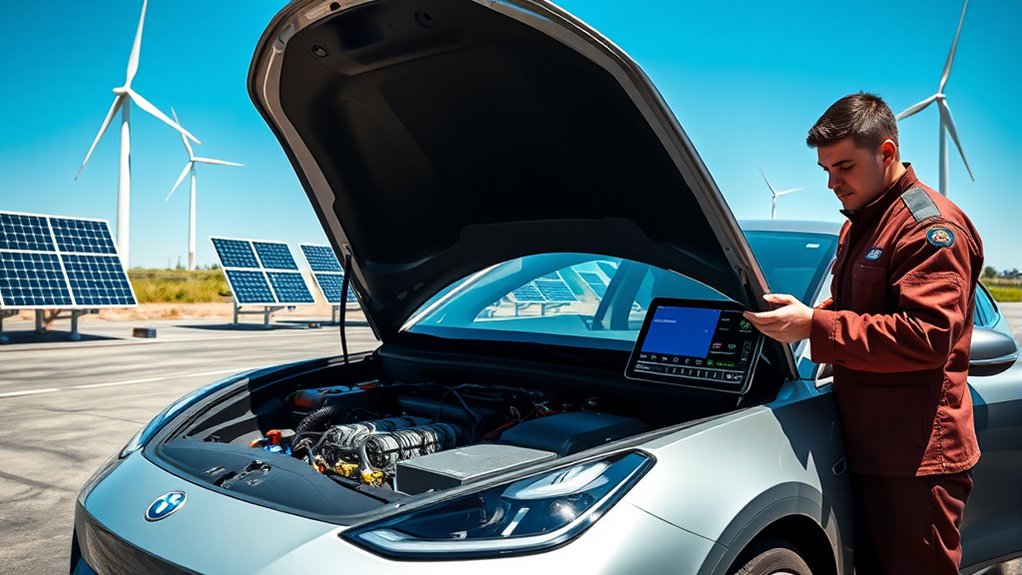
Your EV battery lifespan depends most on heat, charging habits, battery chemistry, software management, and how often the pack sits near full or empty. Most modern electric vehicle batteries are designed for long service life, but they still lose capacity slowly over time. The goal is not to avoid every fast charge or every full charge. It is to avoid making high heat, high charge levels, and deep discharge your everyday routine.
Quick Answer
The biggest factors that affect EV battery lifespan are high heat, frequent high-power DC fast charging, long storage at 100% or near 0%, deep discharge cycles, and poor thermal management. For daily use, keep the battery near 20% to 80%, use Level 2 charging when practical, and follow your owner’s manual.
Key Takeaways
- Most EV batteries degrade gradually, so you usually notice reduced range before you ever need a replacement.
- Daily charging to 80% is a good default for many EVs, but LFP-equipped models may have different manufacturer guidance.
- DC fast charging is useful for road trips, but constant high-power fast charging can add more heat and battery stress.
- Cold weather often causes temporary range loss, while long exposure to high heat can speed up permanent capacity loss.
- Battery warranties vary, so check the years, mileage, capacity threshold, and transfer rules for your exact EV.
What Key Factors Impact Your EV Battery’s Lifespan?
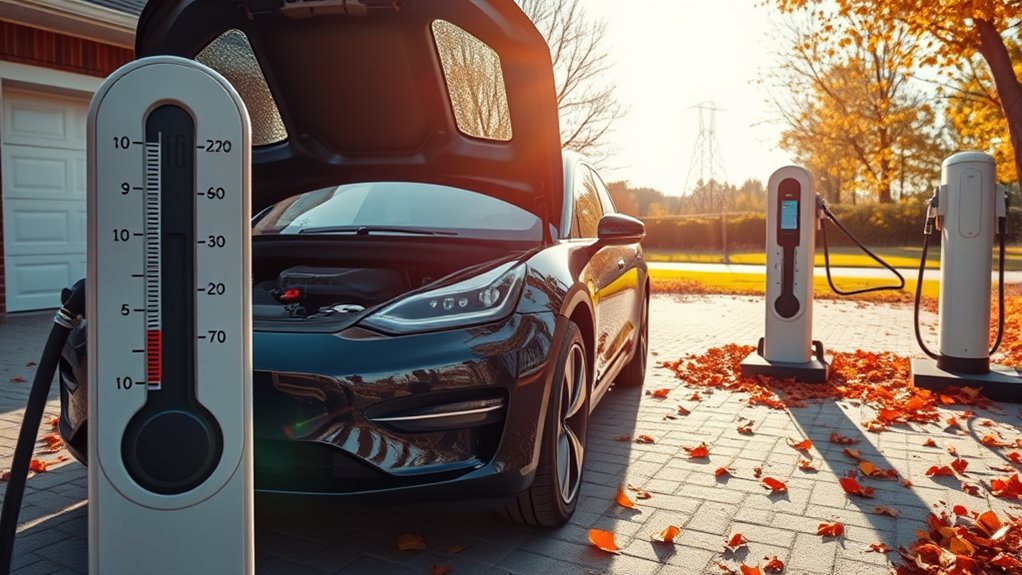
The main factors that affect your EV battery lifespan are temperature, charging speed, state of charge, depth of discharge, battery chemistry, mileage, and the vehicle’s battery management system. Most modern EVs use lithium-ion batteries, but the exact chemistry and cooling design vary by model. The U.S. Department of Energy’s Alternative Fuels Data Center notes that lithium-ion batteries are common in EVs because they offer high energy density, high efficiency, long life, and good high-temperature performance.
A battery does not usually fail all at once. It slowly loses usable capacity. That means your car may still drive normally, but the maximum range after a full charge becomes lower than it was when new.
EV battery aging is usually gradual. The clearest sign is reduced driving range, not sudden failure.
For broad lifespan expectations, be careful with one-size-fits-all numbers. FuelEconomy.gov, which is administered by the U.S. Department of Energy and EPA, says EV batteries are designed for extended life and cites DOE estimates of about 12 to 15 years in moderate climates and 8 to 12 years in severe climates. Many modern packs may last longer, but heat, use, and model design make a major difference.
How Do Charging Habits Affect EV Battery Longevity?
Your charging routine affects battery health because lithium-ion cells experience more stress at very high charge levels, very low charge levels, high current, and high temperature. You do not need to treat the battery as fragile, but small daily habits can reduce long-term wear.
- Use a daily charge limit. For many EVs, a daily limit around 80% is a smart default. Charge higher when you need the range for a trip.
- Avoid sitting at 100% for long periods. Charging to full right before a long drive is different from leaving the car full for days.
- Avoid deep discharge. Try not to let the battery sit near 0%. If the car is parked for a long time, store it with a moderate charge.
- Use DC fast charging when it helps. Fast charging is fine for travel, but constant high-power charging can create more heat and stress than Level 1 or Level 2 charging.
- Follow your owner’s manual. The best charge limit can vary by chemistry and model. FuelEconomy.gov recommends checking the owner’s manual because advanced vehicles manage energy differently.
Pro Tip: Set your normal charge limit before you need it. A daily 70% to 80% limit works well for many commuters, while a full charge is best saved for days when you actually need the extra range.
What’s the Impact of Temperature on Battery Health?
Temperature affects both short-term range and long-term battery health. Cold weather can temporarily reduce range and charging speed. Heat is more concerning for permanent degradation, especially when the battery is parked hot and nearly full.
Extreme Heat Effects
High heat speeds up the chemical reactions that age lithium-ion batteries. The risk is higher when the battery is also at a high state of charge. This is why parking a fully charged EV in direct summer sun for long periods is harder on the pack than parking it partly charged in a cooler space.
Hot weather can also reduce driving efficiency because climate control uses energy. FuelEconomy.gov recommends parking in the shade, using a sunshade, and pre-cooling a plug-in vehicle while it is still connected to the charger to help preserve driving range.
Cold Weather Performance
Cold weather usually affects range more than permanent battery life. Low temperatures slow the chemical reactions inside the battery, and cabin heat can use a lot of energy. In cold-weather testing summarized by FuelEconomy.gov, EV fuel economy dropped roughly 39% and range dropped by about 41% in mixed city and highway driving under cold conditions.
That cold-weather range loss is often temporary. As the battery warms up, performance improves. To reduce winter range loss, preheat the cabin while plugged in, use seat heaters when practical, and use the vehicle’s battery preconditioning feature before fast charging if your EV offers it.
Best Temperature Range
EV batteries generally perform best in moderate conditions. You cannot control the weather, but you can reduce stress by parking in a garage or shade, avoiding long storage at 100%, and letting the car manage battery temperature before charging. Modern EVs with liquid-cooled packs usually handle temperature better than older or simpler designs.
Note: Temporary range loss in winter is not the same as permanent degradation. Heat, high state of charge, and time are usually bigger long-term aging concerns.
How Does EV Battery Degradation Occur Over Time?
EV battery degradation happens as the cells age chemically and physically. Each charge cycle, temperature swing, and high-voltage storage period can cause small changes inside the cell. Over time, the battery stores less energy and may deliver less peak power.
Calendar Aging vs. Cycle Aging
Calendar aging happens while the battery sits, especially at high temperature or high state of charge. Cycle aging happens as the battery charges and discharges. Both matter, but their impact depends on the vehicle, battery chemistry, climate, and daily use pattern.
State of Charge Stress
Keeping the battery in the middle of its range reduces stress for many lithium-ion chemistries. That is why the 20% to 80% rule is popular. It is not a law, and you can safely go outside that range when needed. The main point is to avoid letting the pack sit very full or very empty for a long time.
Fast Charging and Heat
DC fast charging pushes a lot of power into the battery in a short time. Your EV’s software limits that power to protect the pack, but frequent high-power fast charging can still add more heat than slower charging. Use it confidently for road trips, but use Level 2 home or workplace charging for routine charging when it fits your schedule.
How Battery Management Systems Extend Lifespan
Your EV’s battery management system, or BMS, is the software and hardware that monitors the pack. It tracks temperature, voltage, current, and state of charge. It also balances cells, limits charging power when needed, and protects the battery from unsafe operating conditions.
A good BMS helps slow degradation by:
- Controlling charge and discharge limits so the cells stay within safe voltage ranges.
- Managing temperature through cooling, heating, and charging limits.
- Balancing cells so one weak cell does not reduce the whole pack’s usable capacity.
- Updating behavior through software when the automaker improves charging or thermal strategies.
This is also why two EVs with similar battery sizes can age differently. Chemistry matters, but pack cooling, buffers, software, and owner use matter too.
How EV Battery Lifespan Compares Across Models
EV battery lifespan varies across models because automakers use different cell chemistries, cooling systems, usable battery buffers, and charging software. A large liquid-cooled pack with a conservative usable range may age differently from a smaller pack that is charged to high levels often.
Battery chemistry also matters:
- LFP batteries are often valued for durability, lower cost, and reduced reliance on nickel and cobalt. Some automakers recommend periodic 100% charging for LFP packs to help the car calibrate range estimates.
- NMC and NCA batteries usually offer high energy density, which helps range and performance. These packs often benefit from an 80% daily charge limit unless the owner’s manual says otherwise.
- Older air-cooled packs may be more sensitive to hot climates than newer liquid-cooled packs.
The best advice is model-specific. Check your manual or in-car charging screen before applying generic rules.
What Warranties Say About Your Battery’s Performance
EV battery warranties help you understand the minimum protection the automaker offers, but they are not the same as a promise that your battery will stay like new. The Alternative Fuels Data Center notes that many manufacturers offer 8-year/100,000-mile warranties for EV batteries.
When you compare warranty terms, look for four details:
- Years and mileage: Common terms are 8 years/100,000 miles, but some brands and markets differ.
- Capacity threshold: Many warranties define coverage around a minimum remaining capacity, often near 70%, but the exact wording varies.
- Transfer rules: If you buy used, confirm whether the battery warranty transfers to the next owner.
- Exclusions: Damage from flooding, collision, improper repair, or ignored warnings may not be covered.
Warning: Do not inspect, open, or repair a high-voltage battery pack yourself. If an EV has been flooded, crashed, burned, or shows battery warnings, have it checked by the manufacturer, dealer, or a qualified EV technician.
How to Extend Your EV Battery Lifespan
You can slow EV battery degradation with simple habits that reduce heat, high-voltage storage, and deep discharge.
- Set a daily charge limit around 70% to 80% for many non-LFP EVs, unless your manual recommends something else.
- Charge to 100% only when useful and try to start driving soon after reaching full.
- Do not let the battery sit near 0% for long periods.
- Use Level 2 charging for daily charging when possible.
- Use DC fast charging for travel, not as your only routine if you have another practical option.
- Park in shade or a garage during heat waves.
- Precondition before fast charging if your vehicle supports it.
- Install software updates because charging and thermal-management improvements can arrive through vehicle updates.
- For long storage, leave the battery at a moderate charge level and check the owner’s manual for storage guidance.
What to Check Before Buying a Used EV
If you are shopping for a used EV, battery health matters more than age alone. A newer car that was always stored full in extreme heat may not be better than an older car with gentle use and good thermal management.
Before buying, check:
- Battery warranty status, including expiration date, mileage limit, and transfer rules.
- Displayed range at a known state of charge, while remembering that range estimates depend on recent driving.
- Service and recall history, especially for battery-related campaigns.
- Fast-charging history if the seller or diagnostic report can provide it.
- Independent battery health report where available.
- Warning lights or charging problems during a test drive and charging session.
Future Trends in EV Battery Technology
EV battery technology continues to improve. The biggest trends are not only longer range. Automakers and battery makers are also working on lower cost, better safety, faster charging, easier recycling, and improved state-of-health reporting.
- LFP growth: LFP batteries are becoming more common in lower-cost and standard-range EVs because they can offer strong cycle life and lower material cost.
- Solid-state development: Solid-state batteries may improve safety, energy density, and charging performance, but mass-market adoption still depends on cost and manufacturing scale.
- Sodium-ion development: Sodium-ion batteries could help reduce reliance on lithium for some lower-cost or short-range applications.
- Better battery diagnostics: Used EV buyers need clearer, standardized battery health reports.
- Battery recycling and second use: The AFDC notes that many end-of-life EV batteries may still have enough remaining capacity for stationary energy-storage applications, and recycling processes continue to develop.
Frequently Asked Questions
What affects the lifespan of EV batteries the most?
The biggest factors are heat, charging habits, state of charge, deep discharge, battery chemistry, thermal management, and time. Long storage at 100% or near 0% is harder on many EV batteries than normal daily driving.
What is the 20/80 rule for EV batteries?
The 20/80 rule means keeping the battery between about 20% and 80% for routine use. It reduces time spent at very low or very high charge levels. You can still charge to 100% when you need the range, especially if you drive soon afterward.
Is 90% battery health normal after one year?
It can be normal for some vehicles, but it depends on how battery health is measured. Some EVs show early range-estimate changes because of calibration, driving style, weather, or software, not only true capacity loss. If the drop is sudden, check warranty coverage and ask for a diagnostic test.
What happens to an EV battery after 8 years?
After 8 years, many EV batteries still work, but they may have less usable capacity than when new. Warranty coverage may also expire around this point, depending on mileage and manufacturer terms. The car can remain useful if the remaining range still fits your driving needs.
Does DC fast charging ruin an EV battery?
No. DC fast charging does not automatically ruin an EV battery. It is useful and expected on road trips. The bigger concern is frequent high-power fast charging combined with heat and high charge levels. For daily charging, Level 2 charging is gentler when it is practical.
Should I charge my EV to 100% every night?
For many EVs, no. A daily limit around 80% is usually better unless you need the full range. Some LFP-battery vehicles may recommend occasional or regular 100% charging for calibration, so follow the guidance for your exact model.
Conclusion
Your EV battery lifespan depends on how the pack is used, charged, cooled, and stored. For most owners, the best routine is simple: use a moderate daily charge limit, avoid long storage at 100% or near 0%, park away from extreme heat when possible, and save repeated high-power fast charging for times when it is actually useful. With good habits and modern battery management, an EV battery can often remain useful long after the basic warranty period.
Sources
- FuelEconomy.gov — All-Electric Vehicles — EV battery extended-life expectations and DOE lifespan estimates.
- Alternative Fuels Data Center — Batteries for Electric Vehicles — lithium-ion battery use, battery types, second-use potential, and recycling overview.
- Alternative Fuels Data Center — Maintenance and Safety of Electric Vehicles — EV battery maintenance, warranties, and high-voltage safety context.
- FuelEconomy.gov — Fuel Economy in Cold Weather — cold-weather range loss and winter efficiency tips.
- FuelEconomy.gov — Fuel Economy in Hot Weather — hot-weather efficiency tips, shade, and pre-cooling guidance.
- FuelEconomy.gov — Tips for Hybrids, Plug-in Hybrids, and EVs — owner’s manual guidance, range tips, regenerative braking, and accessory use.