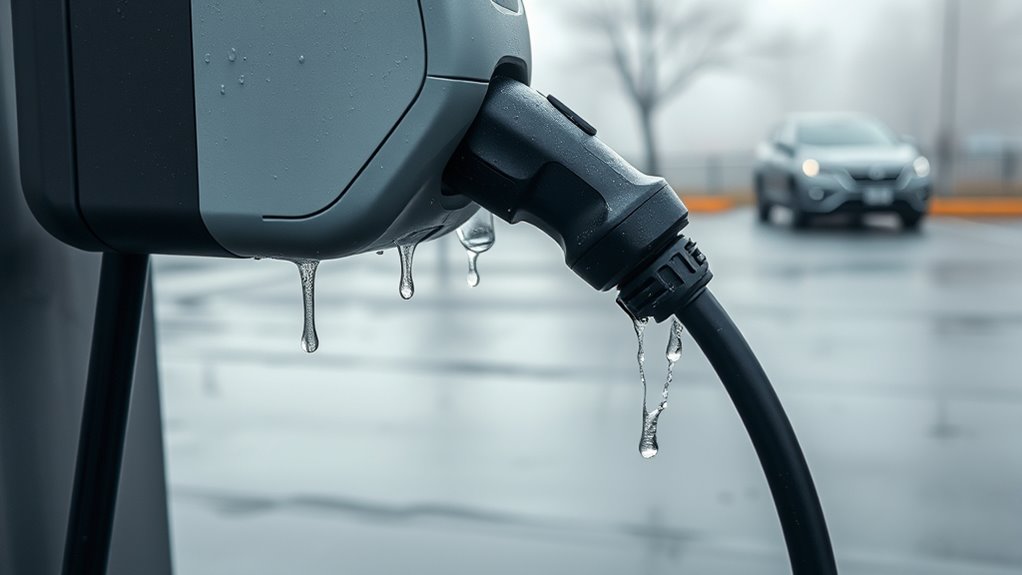
Yes. Humidity can affect EV chargers mainly when damp air becomes condensation or contributes to water intrusion. High relative humidity by itself is not automatically a charger fault. The bigger risks are moisture on electrical contacts, corrosion, damaged seals, wet receptacles, and water inside equipment. A listed EVSE that is rated for its location, installed correctly, and kept in good condition can handle normal environmental exposure within its rating. Stop charging if you see water inside electrical parts, corrosion, melting, repeated faults, or other damage.
Quick Answer
Humidity affects EV chargers most when it causes condensation or water intrusion in the enclosure, outlet, cable, or connector. Moisture can promote corrosion, poor electrical contact, heat, fault detection, and charging shutdowns. Check three things: the charger must be rated for the location, installed correctly, and still be physically intact. An outdoor rating cannot make a cracked connector, wet receptacle, failed gasket, or flooded charger safe.
Last updated: September 8, 2026 — sources and moisture-safety guidance reviewed.
Key Takeaways
- Humidity is most harmful when it creates condensation, corrosion, or water ingress inside the EVSE, outlet, plug, cable, or connector.
- There is no single relative-humidity percentage that defines safety for every charger. Follow the manufacturer’s operating limits, especially any non-condensing requirement.
- Outdoor charging can be safe only when the equipment and the complete installation are suitable for that location and remain undamaged.
- Rust, green or blue deposits, fogging, repeated ground-fault trips, hot plugs, melting, or weather-related charging faults need attention.
- Do not open or modify a charger enclosure unless you are qualified and the work is allowed by the manufacturer.
Humidity Risk at a Glance
| High humidity, surfaces stay dry | Not automatically unsafe. Check the charger’s operating-humidity specification and watch for condensation during temperature swings. |
| Fogging or condensation appears | Inspect the setup before charging. Stop using it if moisture is inside electrical equipment, a receptacle, or a damaged connector. |
| Normal rain on correctly installed outdoor-rated EVSE | Generally acceptable within the product’s rating and installation instructions. Keep connectors, plugs, and receptacles out of standing water. |
| Faults repeat after rain, fog, or humid nights | Stop repeatedly resetting the equipment. Inspect for moisture or damage and contact the manufacturer or a qualified electrician if the fault returns. |
| Flooding, submersion, melting, smoke, or water inside | Do not use the charger. Keep clear of unsafe electrical equipment and have it evaluated before it is returned to service. |
Does Humidity Affect EV Chargers?
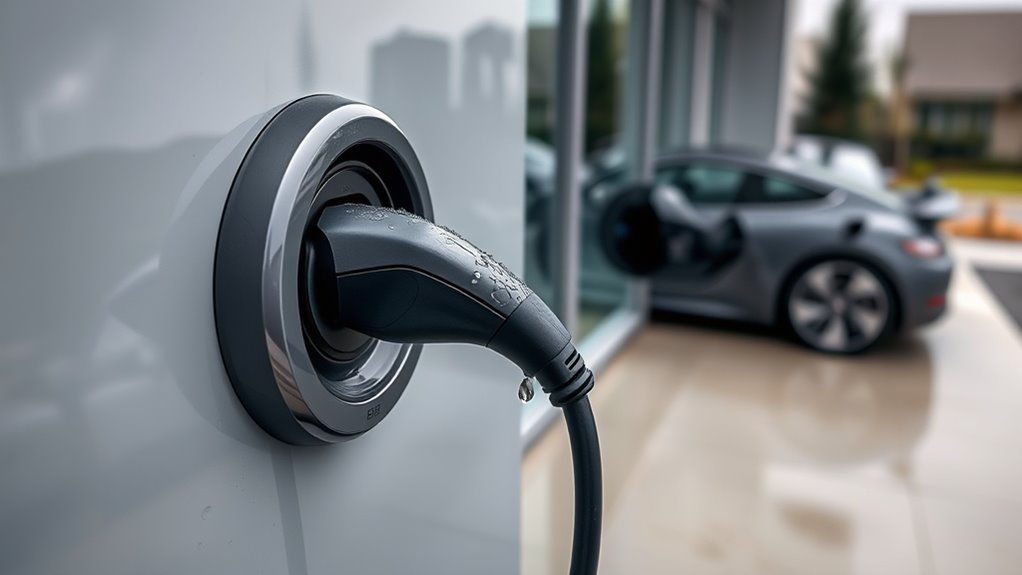
High humidity does not damage every EV charger by itself. The bigger problem is condensation. According to the National Weather Service explanation of dew point, water vapor begins to condense when air or a surface reaches the dew-point temperature. In a garage, carport, or outdoor installation, that can happen after a cold night, a warm humid period, or a fast temperature swing.
When moisture collects where it does not belong, it can corrode metal contacts, weaken insulation, create leakage paths, and trigger protective shutdowns. On an AC home unit, the wall equipment is technically electric vehicle supply equipment, or EVSE. It supplies power and safety signaling, while the vehicle’s onboard charger converts AC power to DC for the battery.
Moisture-related problems can show up as charging sessions that stop early, fault lights, repeated ground-fault trips, hot plugs, or an EV that connects and disconnects unexpectedly. Treat new weather-related faults as warning signs rather than normal humidity behavior.
Warning: Do not open an EV charger enclosure, touch internal wiring, or reset a breaker repeatedly to “see what happens.” If you see moisture inside the unit, burn marks, melted plastic, buzzing, repeated ground-fault trips, or a hot plug, stop using it and call a qualified electrician.
Where Does Moisture Damage EV Chargers?
Moisture usually attacks the weakest points in the charging path. The charger face may look fine while water collects at a cable entry, outlet box, wall penetration, conduit fitting, holster, or connector pin.
- Connector pins: Corrosion can create poor contact, heat, and intermittent charging.
- Cable jacket: Cracks, cuts, or other damage can compromise the cable’s protection against moisture.
- Plug and receptacle: Plug-in Level 2 units add another electrical interface. The receptacle, enclosure, cover, and installation must be suitable for the location and follow the charger manufacturer’s instructions and applicable code.
- Seals and gaskets: Aging or damaged seals and poor cable strain relief can allow damp air or water to enter.
- Conduit and wall penetrations: Water can follow conduit or a poorly sealed wall opening toward electrical equipment.
- Mounting area: Splashback, roof runoff, snow piles, or standing water can expose equipment beyond its intended conditions.
A 2026 SolarQuotes field report on EV charging in rain documented blue corrosion residue after water remained around a charging connector. It is a practical reminder that connector storage, drainage, and keeping the plug out of standing water matter even when the charging equipment itself is designed for outdoor use.
Moisture can also create a hidden corrosion cycle. Once a contact starts to corrode, resistance can rise. Poor electrical contact can create heat, which can accelerate damage. That does not mean every humid day ruins a charger, but early signs deserve attention.
How Can You Spot Corrosion and Condensation?
Start with a visual check while the charger is not actively charging. Look at the connector, holster, cable, wall box, outlet cover, conduit entry, and the area below the charger.
Watch for these signs:
- Green or blue deposits on copper-containing contacts.
- Rust on screws, brackets, steel boxes, or mounting hardware.
- Fogging or droplets inside a clear cover, display window, or outlet cover.
- White powdery residue on aluminum or plated parts.
- Dark marks, melting, or odor near the plug, receptacle, or connector.
- Repeated trips from a breaker, ground-fault device, or charger fault protection.
- Intermittent charging, charging that starts and stops, or new error messages.
If the cable feels damp, sticky, cracked, unusually stiff, or warmer than normal during charging, stop and inspect it more closely. A dry cloth can remove harmless surface moisture when the manufacturer permits it, but wiping the outside cannot repair corrosion, damaged insulation, or water inside electrical equipment.
Pro Tip: Take a quick photo of the connector, outlet cover, and cable every month in a damp or exposed location. Comparing photos makes it easier to spot new rust, discoloration, cracked plastic, or seal movement before the problem becomes serious.
Is It Safe to Charge in Rain or High Humidity?
Yes, charging can be safe in rain or high humidity when the entire setup is designed for that location. The EVSE, outlet or hardwired connection, enclosure, cover, wiring method, protective devices, and installation must follow the manufacturer’s instructions and applicable electrical code.
Do not treat “outdoor rated” as “flood proof.” A charger that is suitable for ordinary rain may still be unsafe if the connector is submerged, a receptacle has water inside it, the cable or plug is damaged, a cover is broken, or water pools around the installation.
For outdoor locations, check the exact enclosure rating in the charger manual. The current NEMA enclosure-type guide explains NEMA enclosure categories and their intended environmental protection. Separately, IEC 60529 defines the IP Code used to classify protection provided by electrical enclosures. NEMA Types 3R, 4, and 4X are examples you may see on outdoor electrical products, but the correct rating depends on the actual installation and exposure. Do not assume that a NEMA type and an IP code are interchangeable.
Note: An enclosure rating describes equipment in its intended, properly installed condition. Cracked plastic, missing caps, damaged gaskets, open covers, unsealed entries, incorrect mounting, or installation changes can defeat that protection.
How Do You Protect an EV Charger From Moisture?
You can reduce moisture-related failures with suitable equipment, correct placement, and routine inspection. The goal is not to make your own sealed box around the charger. It is to preserve the protection the manufacturer designed into the complete charging setup.
- Choose equipment rated for the location. Use listed EVSE suitable for the indoor, damp, or outdoor environment where it will be installed, and follow the manufacturer’s manual.
- Mount it away from unnecessary water exposure. Avoid roof runoff, sprinklers, snow piles, puddles, and driveway splash zones when possible.
- Store the connector correctly. Use the manufacturer’s holster or dock so the connector is protected and can drain as designed.
- Protect plug-in connections. Use the receptacle, enclosure, cover, and wiring method required for the location and charger installation.
- Inspect seals and cable entries. Damaged gaskets, loose fittings, and gaps around conduit or wall penetrations can compromise moisture protection.
- Control a damp garage. Repair water leaks, improve drainage or ventilation where appropriate, and address repeated condensation rather than relying on one relative-humidity number.
- Keep the cable away from standing water and damage. Store it in the intended hanger or holster and do not pinch it under a garage door or vehicle tire.
- Inspect after severe exposure. Check the setup after flooding, heavy runoff, freezing rain, impact damage, or pressure-washing near the equipment.
If you are also comparing home charging equipment and smart features, see our home EV charger guide for Home Assistant users. Weather suitability is only one buying factor; electrical capacity, connector type, installation method, and safety certification also matter.
If you live near salt water, inspect exposed hardware more often because salt contamination can make corrosion more aggressive. Where the manufacturer offers it and the environment requires it, a corrosion-resistant enclosure type such as NEMA 4X may be more appropriate than a basic outdoor enclosure. Match the equipment to the actual site rather than choosing by rating number alone.
What Humidity-Control Tools Help Around an EV Charger?
Humidity control works best when it supports the charger’s original design instead of modifying it. First, read the manufacturer’s environmental specifications. If the manual gives an operating-humidity range with a non-condensing condition, the non-condensing requirement matters just as much as the percentage.
For garages and enclosed parking areas, a humidity sensor can help you compare environmental changes with condensation or charger faults. If the space repeatedly develops visible condensation, fix water leaks and drainage problems first, then consider ventilation or a suitable dehumidifier. There is no universal garage relative-humidity number that guarantees EVSE safety because dew point, temperature swings, equipment specifications, and installation conditions differ.
Industrial electrical enclosures may use engineered measures such as desiccants, breather systems, anti-condensation heaters, conformal coatings, or enclosure climate controls. These are not casual homeowner modifications for a sealed EV charger. Do not add internal heaters, desiccant packs, coatings, vents, or other enclosure changes unless the manufacturer permits them or a qualified professional specifies them.
Humidity becomes a charger problem when it turns into condensation or water where electrical contacts, insulation, connectors, and electronics need to stay protected.
Monthly Moisture Inspection Checklist
Use this quick checklist in humid climates, damp garages, coastal areas, and outdoor charging locations:
- Check the connector face for dirt, green or blue deposits, rust, bent contacts, or moisture.
- Confirm the connector holster is secure and stores the connector as the manufacturer intends.
- Inspect the cable for cracks, cuts, swelling, flattening, or unusual stiffness.
- Look for water stains under the EVSE, outlet box, conduit, or wall penetration.
- Confirm any outlet or connection cover closes correctly and is not cracked or loose.
- Look for fogging, droplets, or insects inside accessible covers or clear windows.
- Check for repeated charger errors, ground-fault trips, or breaker trips.
- Watch for unusual heat, discoloration, or odor at the plug or connector after normal charging.
- Make sure sprinklers, roof runoff, or standing water are not reaching the installation.
- Review the manufacturer manual if you see a new fault code or indicator light.
What Should You Do If an EV Charger Faults After Rain or a Humid Night?
A charger that repeatedly faults after rain, fog, snowmelt, or a humid temperature swing may be detecting a real electrical problem. Do not assume the fault is harmless simply because the charger works again when the weather changes.
- Stop the charging session. Do not keep resetting the breaker or repeatedly restarting the charger.
- Inspect without opening the equipment. Look for condensation, water, corrosion, cracked plastic, damaged cable, a wet receptacle, discoloration, or melting.
- Follow the manufacturer’s drying and cleaning instructions. Do not insert tools, abrasives, sprays, or chemicals into the connector or enclosure unless the manufacturer specifically allows them.
- Record the fault code or indicator. Check the charger manual or manufacturer support information for that exact fault.
- Escalate recurring faults. If the fault returns, moisture is visible inside electrical equipment, or you see heat or corrosion damage, stop using the charger and contact the manufacturer or a qualified electrician.
When Should You Stop Using the Charger?
Stop charging and get help if you see signs that moisture has reached electrical parts. Do not keep resetting the breaker or restarting the session. Repeated faults are information, not an inconvenience to ignore.
Call a qualified electrician or the charger manufacturer if you notice:
- Water inside the charger, outlet box, or plug.
- A cracked connector, damaged cable, or loose wall-mounted unit.
- Melted plastic, burn marks, smoke, buzzing, or a hot plug.
- Repeated ground-fault, breaker, or charger fault trips.
- Corrosion on electrical contacts or inside a receptacle.
- A charger that repeatedly faults after rain, fog, snowmelt, or humid nights.
EV charging equipment should be installed and serviced according to the manufacturer’s instructions, applicable electrical code, and the requirements for listed equipment. In the United States, NFPA 70, the National Electrical Code, is a primary code framework adopted by many jurisdictions, though the locally adopted edition, permits, and requirements can vary.
Frequently Asked Questions
Is it okay if an EV charger gets wet?
It depends on the equipment and installation. EVSE rated and installed for outdoor use can handle environmental exposure within its rating. Do not use a charger with a submerged connector, water inside a receptacle or enclosure, a cracked cable, damaged cover, visible corrosion, melting, or other electrical damage.
Is 65% humidity bad for EV chargers?
Not automatically. There is no universal 65% cutoff for every EV charger. Check the manufacturer’s operating-humidity specification and any non-condensing requirement. Risk increases when temperature changes cause moisture to condense on or inside electrical equipment.
Can humidity trip an EV charger?
Humidity can contribute to a fault when it becomes condensation or moisture reaches a connector, receptacle, wiring, or other electrical part. If a charger repeatedly trips or reports a fault after humid nights, rain, or fog, stop repeatedly resetting it and have the cause checked.
Does humidity affect EV range?
Humidity is usually less important to driving range than temperature, precipitation, wind, road conditions, and heating or air-conditioning demand. For charger reliability, humidity matters most when it produces condensation, corrosion, or water ingress.
Can I cover my EV charger to keep moisture out?
Use only a cover, holster, shelter, or enclosure method permitted by the charger manufacturer. Do not wrap the charger in plastic or block required ventilation because that can trap heat or moisture. Protect the installation by following the manufacturer’s outdoor-location instructions instead of improvising a sealed cover.
What humidity level should I keep in a garage with an EV charger?
There is no single garage humidity percentage that applies to every EVSE. Use the charger’s published operating limits and prevent condensation, leaks, and standing water. A humidity sensor can help identify damp conditions, but dew point and temperature changes determine whether water actually condenses on cold surfaces.
Conclusion
Humidity affects EV chargers mainly when damp air becomes condensation or when water enters parts of the charging system. High relative humidity alone does not automatically make a charger unsafe. What matters is whether the EVSE is rated for its location, installed correctly, kept intact, and operated within the manufacturer’s environmental limits. Inspect the connector, cable, receptacle or hardwired connection, enclosure, seals, and mounting area for moisture or corrosion. If faults repeatedly follow rain or humid weather, or you see water inside electrical equipment, melting, unusual heat, or damaged insulation, stop charging and have the system evaluated before using it again.
Sources
- NOAA / National Weather Service: Dew Point Temperature — explains when water vapor begins condensing from humid air.
- NEMA 10250 Enclosure Types — current NEMA guidance on enclosure-type definitions, applications, and comparison with IEC enclosure classifications.
- IEC 60529: Degrees of protection provided by enclosures — defines the IP Code used for enclosure ingress-protection classifications.
- NFPA 70: National Electrical Code — provides the U.S. electrical-code framework used by adopting jurisdictions.
- SAE J1772_202401 Electric Vehicle Conductive Charge Coupler — current SAE revision covering physical, electrical, functional, and performance requirements for conductive EV charging in North America.
- UL Solutions: Electric Vehicle Charging Infrastructure Services — identifies UL 2594 and related safety standards used for EV charging equipment and components.
- SolarQuotes: EV Charging in the Rain — provides a 2026 field example of water retention and corrosion around an EV charging connector.