
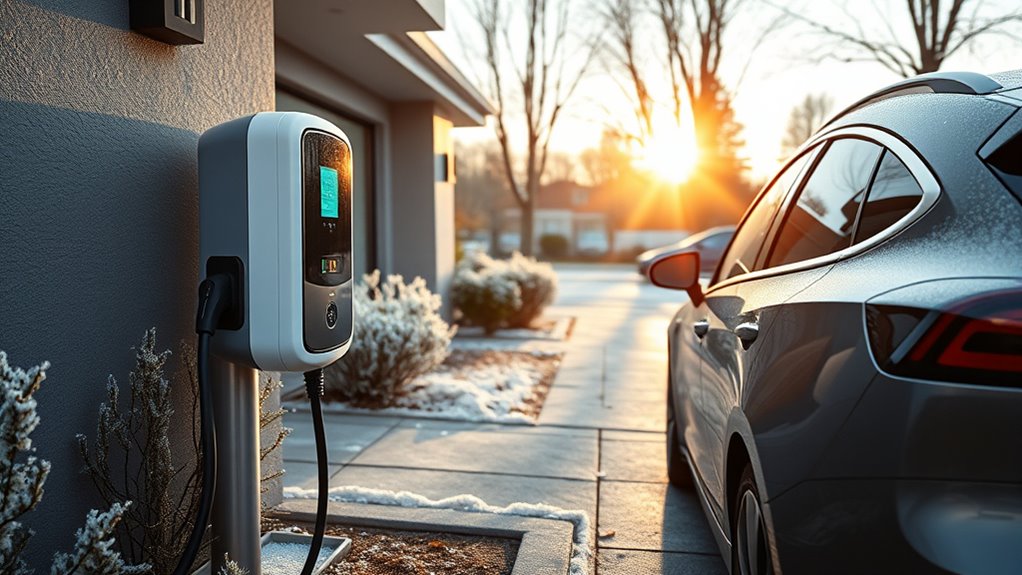
Outdoor EV charging has two temperature limits to think about: what your charger is listed to operate in, and what temperature keeps your EV battery charging efficiently. A weather-rated charger can often handle a wider range than the battery prefers, but heat, poor airflow, loose connections, damaged cables, and freezing conditions can still slow charging or create safety risks.
Quick Answer
Check your charger manual first. Many outdoor EV chargers are listed for wider weather ranges, but a mild range around 32°F to 86°F (0°C to 30°C) is usually easier on the battery and equipment. Stop charging if the plug, cable, outlet, or control box becomes unusually hot, smells burnt, discolors, melts, faults, or trips a breaker.
Key Takeaways
- Use the operating temperature range printed in your charger manual as the real limit for that unit.
- Hot weather, direct sun, poor airflow, loose terminals, undersized wiring, adapters, and coiled cables can raise charger temperature.
- Cold weather usually slows charging because the battery needs warming or preconditioning before it can accept power efficiently.
- A warm cable can be normal, but a hot plug, burnt smell, discoloration, softened plastic, fault code, or repeated breaker trip is not normal.
- Do not open energized charging equipment or touch exposed electrical parts. Call a qualified electrician if heat appears at the outlet, breaker, wiring, plug, or wallbox.
At a Glance
| Time Required | 5 to 10 minutes for a basic visual check; 15 to 30 minutes if you want temperature readings during an active charging session. |
| Difficulty | Easy for visual and surface-temperature checks; electrical repairs should be handled by a qualified electrician. |
| Tools Needed | Your charger manual, phone camera, infrared thermometer or thermal camera, flashlight, and a dry cloth for inspecting connector surfaces. |
| Cost | Free for a visual check; usually low to moderate cost if you buy a basic infrared thermometer or phone thermal camera. |
What Are the Safe Outdoor EV Charger Temperature Limits?
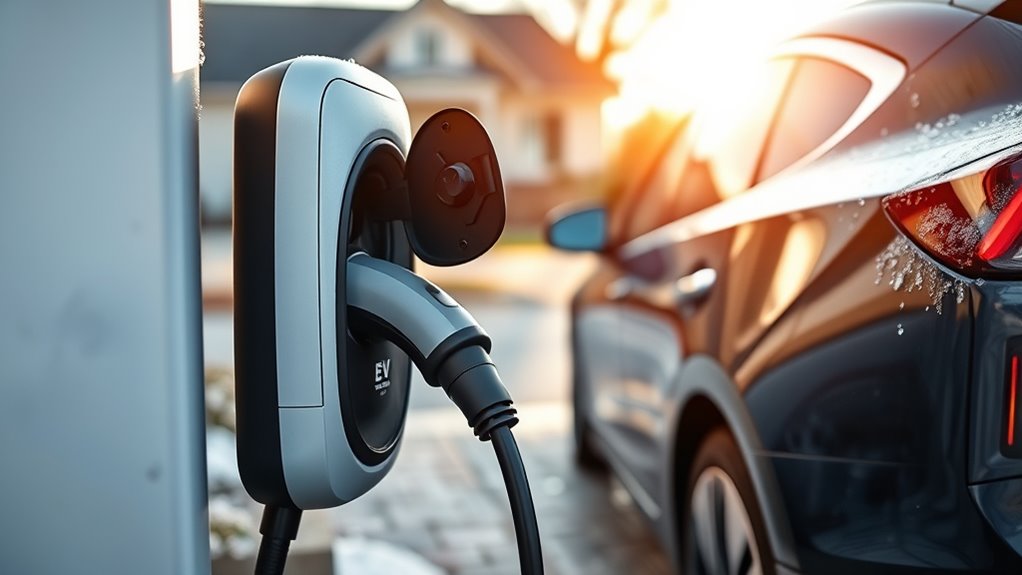
The safe outdoor EV charger temperature limit is the operating range listed by the charger manufacturer. Do not treat one temperature range as universal for every charger, outlet, adapter, and vehicle.
For example, Tesla lists its Universal Wall Connector operating temperature range as -22°F to 122°F (-30°C to 50°C), with a Type 3R/IP54 enclosure and no required ventilation. That does not mean every charger has the same rating. Portable chargers, plug-in units, adapters, and older EVSE hardware may have different limits.
A practical battery-friendly range is narrower. Charging in mild weather, roughly 32°F to 86°F (0°C to 30°C), is usually easier on the battery and charging equipment. Above that range, your EV may cool the battery, reduce charging speed, or work harder to manage heat. Below freezing, the battery may need preconditioning before it can charge efficiently.
Note: The charger’s listed operating range is a hardware safety limit. The battery’s preferred charging temperature is about efficiency, charge speed, and long-term battery health. Always follow the stricter limit when your vehicle or charger warns you.
| Condition | What It Means | What You Should Do |
| Within the charger’s listed range | The EVSE is operating inside its published hardware limit. | Charge normally, but still check for hot plugs, fault codes, or damaged cables. |
| 32°F to 86°F (0°C to 30°C) | A conservative, comfortable range for most charging sessions. | Use this as your ideal range when you can choose when to charge. |
| Hot weather above about 95°F (35°C) | Battery cooling and charger heat buildup become more important. | Use shade, airflow, lower current if needed, and charge during cooler hours. |
| Below freezing | The battery may charge slower until it warms up. | Precondition the battery when available and allow extra charging time. |
Why Do Outdoor EV Chargers Run Hot?
Outdoor EV chargers run hot because Level 2 charging is a high-current, continuous electrical load. The U.S. Department of Energy’s Alternative Fuels Data Center explains that charging time depends on the vehicle, battery, state of charge, charger power, and equipment capacity. More current usually means more heat to manage.
Some warmth is normal during a long charging session. The problem starts when heat collects at one point, such as the plug, outlet, adapter, connector, wallbox, or portable control box. A single hot spot often points to resistance, poor contact, worn parts, trapped heat, or an installation issue.
Heat From Continuous Load
An EV charger can pull power for hours, so it is treated as a continuous load. That steady current creates heat in the conductors, terminals, relays, electronics, and connector pins.
The charger output must match the circuit. As one example, Tesla’s Wall Connector documentation shows that a 60 amp breaker supports up to 48 amps of output, while a 50 amp breaker supports up to 40 amps of output. Use the charger’s own chart, the correct conductor size, the correct breaker, and local electrical code.
If your EVSE is set too high for the circuit, or if a previous installation was not done correctly, heat can build quickly. Repeated overheating can damage insulation, loosen terminals, discolor plastic, and trigger faults.
Cable Resistance and Loose Connections
Cable resistance turns part of the charging current into heat. That effect gets worse when a cable is undersized, damaged, tightly coiled, poorly ventilated, or used with a worn connector.
Loose connections are more serious. A loose plug, outlet, splice, terminal, or adapter can create extra resistance and arcing. That heat may show up as a hot plug face, a burnt smell, brown marks, melted plastic, or repeated breaker trips.
Warning: Do not open a charger housing, touch exposed terminals, bypass a fault, or keep charging through a hot outlet. If heat appears at the outlet, breaker, wiring, plug, or wallbox, stop charging and have the circuit checked by a qualified electrician.
Ambient Conditions Matter
Ambient temperature affects how well a charger can shed heat. Direct sun, a hot wall, a closed cabinet, a tight corner, or poor airflow can trap heat around the enclosure and cable.
Hot weather also affects the EV battery. Battery thermal-management research shows that controlling battery temperature is important for safety, efficiency, and durability, especially in high-temperature conditions. If the vehicle needs to cool the battery during charging, the session may slow down or use extra energy.
Cold weather causes a different problem. The charger may be fine, but the battery may not be ready to accept power quickly. In freezing conditions, the EV may warm the battery first, reduce charge speed, or extend the session.
Which EV Charger Parts Get the Warmest?
The warmest EV charger part depends on your setup. A hardwired wallbox, portable EVSE, plug-in Level 2 charger, adapter, or outdoor receptacle can each show heat in a different place.
Check these areas first:
- Wallbox or portable control box: Some warmth can be normal during sustained charging, but it should not smell, discolor, fault repeatedly, or become too hot to touch briefly.
- Plug and outlet: A hot plug or receptacle is a warning sign because heat at the contact point often means resistance or a loose connection.
- Vehicle connector: Heat, dirt, moisture, damaged pins, or a loose latch can affect charging reliability.
- Adapters: Adapters add another connection point, so they deserve extra attention.
- Main charging cable: A slightly warm cable can be normal. A sharply hotter section, kink, soft spot, or melted area is not normal.
The most important clue is not just temperature. It is uneven temperature. One plug, adapter, outlet, or cable section that is much hotter than the rest of the setup needs inspection.
If you measure a surface near 150°F (65°C), treat it as a caution reading, especially on a plug, outlet, adapter, or portable control box. Stop charging, let the equipment cool, and inspect for odor, discoloration, soft plastic, damaged pins, fault codes, or repeated trips.
How Can You Check EV Charger Temperature Safely?
You can check EV charger temperature safely with a visual inspection and a non-contact infrared thermometer or thermal camera. Do not touch metal contacts, open covers, remove panels, or inspect wiring while equipment is energized.
Safe Temperature Tools
A non-contact infrared thermometer or phone thermal camera lets you compare surface temperatures without touching energized parts. Use it during an active charging session so you can see heat under load.
- Start charging and let the session run long enough for heat to stabilize, usually 15 to 30 minutes.
- Scan the wallbox or portable control box, plug, outlet, adapter, vehicle connector, and cable.
- Compare each reading with nearby parts. A single hot spot matters more than a mildly warm cable.
- Record the outdoor temperature, charge current, and charge duration so you can compare later sessions.
- Stop if you see a fault code, smell burning, notice discoloration, or find a part that is too hot to touch briefly.
Accurate Reading Methods
Infrared tools measure surface temperature, and shiny surfaces can trick them. Glossy plastic, polished metal, wet connectors, and bright sun can reflect heat and give false readings.
For better readings, measure from the same distance and angle each time. Shade the area from direct sun when possible. If a surface is reflective, place a small piece of matte electrical tape on the outside of the housing or cable jacket, then measure the tape after it reaches the same temperature as the surface. Do not place tape on connector pins or inside the charge port.
Pro Tip: Build a normal baseline on a mild day. If the same charger, current setting, and cable later run much hotter in similar conditions, you have a useful early warning.
What Causes an Outdoor EV Charger to Overheat?
An outdoor EV charger can overheat when electrical resistance, high current, poor installation, weather exposure, or limited airflow pushes one part of the system beyond its normal range.
Common causes include:
- Current set too high: The charger output must match the breaker, conductor, charger setting, and manufacturer instructions.
- Loose terminals or worn outlets: A loose connection can create heat at the plug, receptacle, or wiring point.
- Damaged cable or connector: Cuts, kinks, crushed insulation, dirty pins, or moisture can raise risk.
- Direct sun: A hot wall or full afternoon sun can raise enclosure temperature before charging even begins.
- Poor airflow: Tight cabinets, blocked vents, and enclosed mounting spots trap heat.
- Adapters or extension cords: Extra connection points can add resistance and may violate charger instructions.
- Coiled cable: A tightly coiled cable can hold heat instead of letting it dissipate.
- Weather damage: Outdoor connectors need protection from standing water, corrosion, ice, and physical wear.
Heat-related faults are often connected. A charger in direct sun may still work well if the wiring is tight and airflow is open. The same charger with a worn outlet, undersized circuit, adapter, and coiled cable has much less safety margin.
How Can You Keep an Outdoor EV Charger Cool?
You can keep an outdoor EV charger cool by reducing heat exposure, preserving airflow, and lowering electrical stress during the hottest parts of the day.
- Install it in a shaded location: Choose a wall or post that avoids harsh afternoon sun when possible.
- Use an outdoor-rated charger: The unit should be listed for outdoor use and installed according to the manual.
- Keep air moving: Avoid sealed boxes, tight corners, and covers that trap heat around the wallbox.
- Do not coil the cable tightly while charging: Lay the cable loosely so heat can escape.
- Reduce current in extreme heat: Many EVs or chargers let you lower amperage. A slower session can run cooler.
- Charge during cooler hours: Evening, overnight, or early morning charging usually reduces heat stress.
- Keep connectors dry and clean: Wipe the outside of the handle and cable, but never insert objects into connector pins.
- Inspect regularly: Look for cracks, discoloration, swelling, corrosion, loose plugs, and damaged cable jackets.
For outdoor hardwired units, installation details matter. Tesla’s installation documentation, for example, specifies copper conductors for its Wall Connector terminals, a proper ground path, and watertight fittings for outdoor installations. Your charger may have different requirements, so use its manual and local electrical code.
Note: A sun shade can help only if it does not trap heat. Avoid wrapping the charger in a cover while charging unless the cover is designed by the manufacturer for active use.
When Should You Stop Charging and Inspect It?
Stop charging and inspect the setup if heat appears unusual, localized, or paired with another warning sign. Do not wait for a complete failure.
Stop charging right away if you notice any of these signs:
- The plug, outlet, adapter, or connector is too hot to touch briefly.
- You smell burning plastic, ozone, or a sharp electrical odor.
- You see brown marks, melted plastic, softened cable jacket, cracks, or corrosion.
- The charger faults, derates, clicks off, or repeatedly restarts.
- The breaker or GFCI trips more than once.
- A temperature reading near one plug, outlet, or adapter is far higher than the rest of the cable.
- The charging handle does not latch securely or feels loose in the vehicle charge port.
- The connector is wet inside, packed with ice, or visibly damaged.
If the equipment cools down and the warning sign disappears, do not assume the problem is fixed. Heat often returns under load. Resume charging only after you identify the cause. If the heat is at the outlet, breaker, wallbox, wiring, plug, or adapter, have a qualified electrician inspect it before the next full charging session.
Frequently Asked Questions
What temperature is too cold for electric cars?
Below freezing, an EV can still operate, but the battery may charge slower and lose driving range because cold slows battery chemistry. Many EVs use battery preconditioning to warm the pack before charging. Use your vehicle’s app or navigation-based preconditioning when available.
What is the 80/20 rule for EV charging?
The 80/20 rule means charging to about 80% for daily use and avoiding very low battery levels when you can. It is a battery-care habit, not an emergency rule. Charging to 100% is fine when you need the range, but many EV owners reserve full charges for trips.
What temperature should my EV charger be?
Your EV charger should stay within the operating temperature range in its manual. A mildly warm cable or enclosure can be normal during Level 2 charging. A hot plug, outlet, adapter, burnt smell, discoloration, fault code, or repeated breaker trip is not normal and should be inspected.
How cold is too cold to charge a battery?
There is no single number for every EV, but below 32°F (0°C), charging often slows until the battery warms. Follow your vehicle manual. If your EV offers preconditioning, use it before fast charging or before a scheduled winter charging session.
Can I charge my EV outside in rain or snow?
Yes, if your charger is rated for outdoor use, installed correctly, and the connector is not damaged. Do not charge with a cracked handle, damaged cable, standing water at the outlet, exposed wiring, or ice packed inside the connector.
Is a warm EV charging cable normal?
A slightly warm cable can be normal during a long charging session. A hot plug, hot adapter, hot outlet, sharp hot spot, burnt smell, or softened cable jacket is not normal. Stop charging and inspect the equipment before using it again.
Should I use an extension cord with an EV charger?
Do not use an extension cord unless the charger manufacturer specifically allows it. EV charging is a continuous high-current load, and many extension cords are not built for that duty. A safer fix is usually a properly installed outlet or hardwired charger in the right location.
Conclusion
Safe outdoor EV charging starts with the charger manual, not a universal temperature rule. A weather-rated charger may operate across a wide outdoor range, but heat, sun, poor airflow, loose connections, damaged plugs, and freezing battery conditions can still reduce performance or create risk. Keep the charger shaded and ventilated, avoid coiled cables and questionable adapters, monitor hot spots, and stop charging if you see heat damage, odors, fault codes, or repeated breaker trips. When the problem involves wiring, an outlet, a breaker, or a wallbox, call a qualified electrician before charging again.
Sources
- U.S. Department of Energy Alternative Fuels Data Center — EVSE terminology, charging levels, and charging-time factors.
- Tesla Wall Connector Support — wall connector output examples and indoor/outdoor compatibility.
- Tesla Universal Wall Connector Product Specifications — operating temperature range, enclosure rating, and ventilation information.
- Tesla Universal Wall Connector Branch Circuit and Breaker Ratings — breaker/output examples, conductor guidance, grounding, and outdoor fittings.
- Temperature-Controlled Smart Charging for Cold Climate Electric Vehicle Fleets — cold-weather charging and battery heating considerations.
- A Review of the Power Battery Thermal Management System with Different Cooling, Heating and Coupling System — battery thermal-management importance for safety, efficiency, and durability.