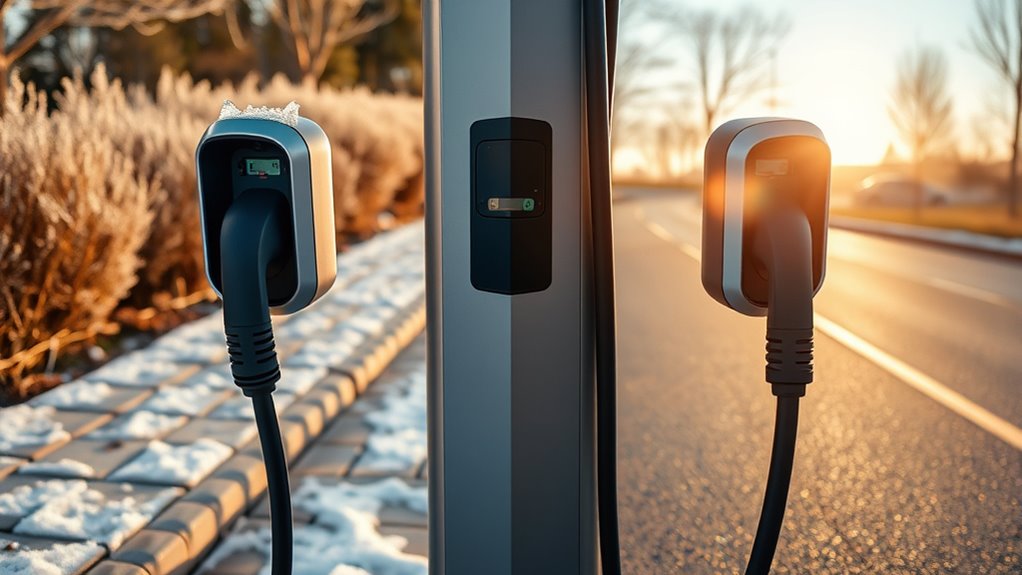
Your EV charger works best when the battery pack is not too cold, not heat-soaked, and not already near full. As a practical target, aim to charge in moderate conditions, roughly 50°F to 86°F (10°C to 30°C), when possible. Charging can still work outside that range, but cold weather can slow battery chemistry and hot weather can make the vehicle limit power to protect the pack. Preconditioning, Level 2 charging, shade, and smart timing help you charge faster and protect battery health.
Quick Answer
The best EV charging temperature is usually a moderate battery temperature, not simply the outdoor temperature. Many EVs charge most predictably in mild weather and may slow down in freezing cold or extreme heat. Use preconditioning before DC fast charging, choose Level 2 charging at home when possible, and park in shade or a garage.
Key Takeaways
- Cold batteries accept power more slowly, especially at DC fast chargers.
- Hot batteries may trigger charging limits because the battery management system protects the pack.
- Preconditioning works best when the EV is plugged in or when navigation is set to a fast charger.
- Level 2 charging at home is usually the most predictable option in winter and summer.
- Follow your owner’s manual for daily charge limits, fast charging, and extreme-weather storage.
At a Glance
| Time Required | 5 to 45 minutes for preconditioning; overnight or several hours for home Level 2 charging. |
| Difficulty | Easy. Most steps use your EV app, in-car charging menu, or normal parking choices. |
| Tools Needed | EV app, scheduled departure feature, navigation to a fast charger, garage or shade, and a safe Level 1 or Level 2 EVSE. |
| Cost | Usually no extra cost beyond normal electricity use, unless you install a Level 2 charger or pay for public fast charging. |
What’s the Best EV Charging Temperature?
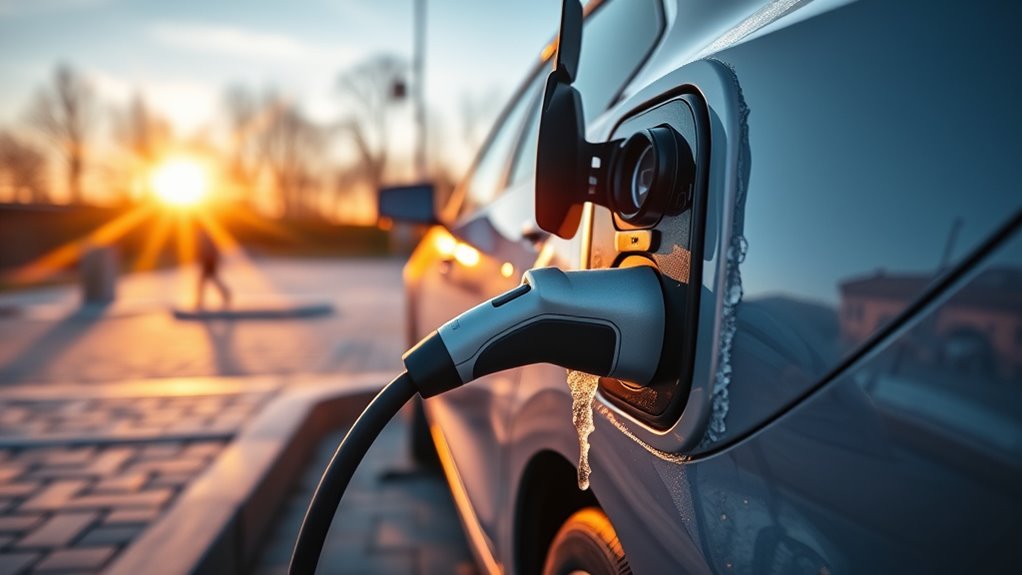
The best EV charging temperature is a moderate battery-pack temperature. Outdoor temperature matters, but the battery’s actual temperature matters more because the vehicle’s battery management system, or BMS, decides how much power the pack can safely accept.
For everyday planning, mild weather is easiest. A practical comfort zone is about 50°F to 86°F (10°C to 30°C). In that range, most EVs charge predictably, thermal-management systems work with less effort, and the pack is less likely to reduce charging power because it is too cold or too hot.
Many modern EVs use lithium-ion battery packs, but the exact chemistry, cooling design, and charging software vary by model. That is why you should treat any single “ideal temperature” number as a guide, not a universal rule.
Note: Your owner’s manual is the final authority for charging limits, cold-weather storage, hot-weather storage, and daily charge settings. Some EVs have LFP batteries, some use NMC or similar chemistries, and each model manages temperature differently.
Battery Temperature vs. Outside Temperature
The temperature shown on your weather app is not always the battery temperature. A battery can stay cold for hours after sitting outside overnight. It can also stay hot after highway driving, repeated DC fast charging, or parking on hot pavement.
This is why two EVs at the same charger can charge at different speeds. One battery may be warm and ready, while another may need time to heat or cool before the BMS allows higher power. The charger may be capable of high output, but the car only accepts what the battery can safely handle.
State of charge also matters. EVs usually charge fastest at lower to mid battery levels and slow down as they approach higher percentages. Temperature sets one limit, but battery percentage, charger power, battery size, and software all shape the final charging speed.
Why Cold Weather Slows EV Charging
Cold weather slows EV charging because the chemical reactions inside the battery slow down. Lithium ions move less easily through the electrolyte, and the pack may not accept high current until it warms up. In very cold conditions, the car may spend part of the session heating the battery before charging speed improves.
| Charge mode | Cold impact | Practical effect |
|---|---|---|
| DC fast charging | Often high | The car may warm the battery first, then ramp up charging power. |
| Level 2 charging | Usually moderate | A steady home session is often more predictable than a cold public fast charge. |
| Level 1 charging | Can feel slow | Some power may go toward keeping the battery warm, leaving less useful charging gain. |
Cold weather also reduces driving range because the battery works less efficiently and the cabin heater uses energy. In AAA testing, EV range dropped by an average of 41% at 20°F when the cabin heat was used compared with testing at 75°F.
How Hot Weather Affects EV Charging
Hot weather affects EV charging in the opposite way. Heat can make the BMS reduce charging current so the battery stays within safe thermal limits. This protects battery health, but it can make charging slower.
Hot weather does not always mean faster charging. If the pack is already heat-soaked, the EV may limit power until the cooling system brings battery temperature under control.
Heat also affects range. In the same AAA study, EV range fell by an average of 17% at 95°F when air conditioning was used. That does not mean every EV loses exactly 17% in summer, but it shows why hot-weather trip planning matters.
Repeated heat exposure can also add stress over time. Parking in shade, charging during cooler parts of the day, and avoiding unnecessary high-state-of-charge parking in extreme heat can help protect the battery.
How Battery Temperature Changes Charging Speed
Battery temperature changes charging speed because the BMS is designed to protect the pack. It watches temperature, voltage, current, and state of charge, then adjusts how much power the EV accepts.
When the battery is too cold, charging current may be reduced to avoid battery stress. When the battery is too hot, current may also be reduced so the pack does not overheat. Research on fast charging and thermal management shows that charging speed, battery temperature, and battery aging are linked, so modern EVs use active thermal control to balance speed and battery health.
This is why charger size is not the whole story. A 250 kW charger cannot force 250 kW into a cold, hot, or nearly full battery. The charger offers power. The vehicle decides what it can safely accept.
How Temperature Affects Level 1, Level 2, and DC Fast Charging
EV charging temperature matters most when power is high. The higher the charging power, the more important battery temperature becomes.
| Charging type | Best use | Temperature tip |
|---|---|---|
| Level 1 | Emergency, low-mileage driving, or overnight top-ups. | Very slow in winter. Use it to stay plugged in, but do not expect fast recovery. |
| Level 2 | Daily home charging and routine overnight charging. | Usually the most dependable option because the car can manage temperature over a longer session. |
| DC fast charging | Road trips and quick public charging stops. | Precondition before arrival in cold weather and avoid arriving with a heat-soaked battery in extreme heat. |
Winter EV Charging Tips
Winter charging works best when you plan before the battery gets cold. The goal is simple: keep the pack warm enough that the EV can accept power without wasting too much time heating itself first.
Precondition Before Charging
Preconditioning warms the battery before charging or driving. Many EVs can do this through a scheduled departure setting, a mobile app, or route planning to a DC fast charger. If your EV has navigation-based preconditioning, set the fast charger as your destination before you arrive.
Preconditioning is most efficient while plugged in because the car can use grid power instead of pulling energy from the driving battery. This helps preserve range and can improve charging speed when you reach a public fast charger.
Pro Tip: In freezing weather, start preconditioning before you leave home or before you reach a DC fast charger. Waiting until you plug in can make the charging session feel much slower.
Use Level 2 Charging
Level 2 charging is usually the best winter home-charging choice. It gives the vehicle more power than a standard 120-volt outlet and lets the car maintain battery temperature over a longer, controlled session.
Level 1 can still help if it is your only option, but in severe cold it may add range slowly. Some of the energy may go toward battery warming rather than fast range gain. Public DC fast charging can be useful on trips, but it works best after the battery has been preconditioned.
Keep Battery Warm
Keep the battery warmer by parking in a garage or covered area when possible. Even an unheated garage can reduce wind exposure and help the pack avoid a deep cold soak.
If your daily routine allows it, leave the EV plugged in at home and use scheduled departure. This lets the car warm the cabin and battery before you drive. It also helps you start with a more stable battery temperature.
For a long winter trip, charging above your normal daily limit can make sense shortly before departure. Avoid leaving the EV parked at a very high state of charge for long periods unless your manual says otherwise.
How to Protect EV Charging in Hot Weather
Hot-weather charging is about lowering heat before and during the session. The less heat the battery and charging hardware hold at the start, the easier it is for the EV to maintain steady charging power.
Park in Shade
Parking in shade or a garage helps reduce battery and cabin heat soak. At public stations, choose a shaded stall if one is available and safe to use. At home, a garage or carport can keep the vehicle cooler than direct sun on pavement.
Shade also helps protect the charging cable, handle, and charge port from heat. That matters because warm electrical components have more resistance and can be less comfortable or safe to handle.
Precondition Before Hot-Weather Charging
Preconditioning is not only for winter. In hot weather, some EVs can cool the cabin and battery before charging or before departure. If you can do this while plugged in, the grid supplies much of the cooling energy instead of the battery.
For home charging, consider charging during cooler evening, night, or early morning hours when your schedule and utility plan allow it. For public fast charging, avoid arriving after aggressive highway driving with a very hot battery if you have time to let the vehicle cool.
Warning: Stop charging and inspect the setup if a plug, outlet, adapter, extension cord, or charging handle becomes unusually hot, smells burnt, shows damage, or has moisture inside the connector. Do not use household extension cords for EV charging unless your vehicle and EVSE manufacturer specifically allow it.
When to Use Preconditioning and Plug-In Charging
Use preconditioning whenever the battery is likely to be outside a comfortable temperature range. That includes freezing mornings, very hot afternoons, and road trips where you plan to use DC fast charging.
Plug-in preconditioning is best because it uses external power. In winter, it warms the cabin and battery before you leave. In summer, it can cool the cabin and help reduce battery heat before you drive or charge.
Use scheduled charging and departure settings when available. Set the cabin and battery to prepare shortly before you need the car, rather than hours early. This keeps the car ready without wasting energy.
Daily Charge Limits and Temperature
The common 80/20 rule means you charge to about 80% for normal daily use and recharge before the battery gets very low. This is a general habit, not a law. Some EVs, especially models with certain LFP battery packs, may recommend charging to 100% at regular intervals for calibration. Always follow your manual.
In cold weather, you may charge higher before a longer trip because the car will use more energy for heat and the battery may deliver less range. In hot weather, avoid leaving the car parked for long periods at a very high state of charge when you do not need that range.
For road trips, a good strategy is to arrive at DC fast chargers with a lower to mid state of charge and leave when the charging curve slows. Charging from 10% to 60% or 70% can be faster than waiting for the last 20%.
Why Your EV Charges Slowly Even on a Fast Charger
If your EV charges slowly on a fast charger, temperature is only one possible reason. Check these common causes:
- Cold battery: The car may be heating the pack before it accepts higher power.
- Hot battery: The BMS may reduce current to control temperature.
- High state of charge: Charging naturally slows as the battery fills.
- Shared charger power: Some stations split power between stalls.
- Station limits: The charger may be rated lower than your vehicle’s peak charging speed.
- Vehicle limits: Your EV may not support the charger’s full advertised power.
- Battery protection message: The vehicle may show that charging is limited for temperature or battery care.
When in doubt, check the in-car charging screen. Many EVs show whether charging is limited by the car, the station, battery temperature, or battery state of charge.
Frequently Asked Questions
What temperature is too cold for electric cars?
Freezing temperatures can reduce range and slow charging, especially below 32°F. The car may still work normally, but the battery may need warming before it can charge quickly. Precondition while plugged in and plan extra range in winter.
What is the 80/20 rule for EV charging?
The 80/20 rule means charging to about 80% for daily use and recharging before the battery drops near 20%. It helps reduce battery stress in many EVs. Treat it as general guidance, because some battery types and manufacturers have different recommendations.
How cold is too cold to charge an EV battery?
Many EVs can charge in cold weather, but charging may slow sharply when the battery is near or below freezing. The vehicle may use battery heaters before accepting higher power. If your EV gives a battery-temperature warning, follow the on-screen instructions and your owner’s manual.
Why is cold weather no longer an EV killer?
Modern EVs are better in winter because many have battery heaters, heat pumps, route-based preconditioning, better software, and larger usable battery packs. Cold weather still reduces range and charging speed, but planning and preconditioning make it manageable.
Is it better to charge an EV at night in hot weather?
Often, yes. Night or early morning charging can reduce heat stress because the battery, cable, and charge port start cooler. It may also save money if your utility offers lower off-peak rates.
Does a bigger charger fix cold-weather charging?
Not by itself. A bigger charger can offer more power, but the EV controls how much power the battery accepts. If the battery is too cold, too hot, or already near full, the car may limit charging speed even on a powerful charger.
Conclusion
EV charging is easiest when the battery stays in a moderate temperature range. Cold weather slows battery chemistry, and hot weather can make the BMS reduce power to protect the pack. You cannot control the weather, but you can control the setup: precondition before fast charging, use Level 2 charging at home when possible, park in shade or a garage, and avoid letting the battery sit extremely hot, cold, full, or empty for longer than needed. Treat temperature as part of your charging plan, and your EV will charge more predictably in every season.
Sources
- U.S. Department of Energy Alternative Fuels Data Center: Batteries for Electric Vehicles — supports lithium-ion battery use in modern EVs and battery background.
- AAA: Icy Temperatures Cut Electric Vehicle Range Nearly in Half — supports the 20°F cold-weather and 95°F hot-weather range-loss figures with HVAC use.
- Associated Press: Frigid Weather Can Cut Electric Vehicle Range and Make Charging Tough — supports the explanation that cold slows ion movement and charging acceptance.
- AP / Edmunds: Wintertime Driving With an Electric Vehicle — supports winter preconditioning, home charging, and cold-weather charging guidance.
- Integrated Optimal Fast Charging and Active Thermal Management of Lithium-Ion Batteries in Extreme Ambient Temperatures — supports the link between fast charging, thermal management, safety, and battery health.