
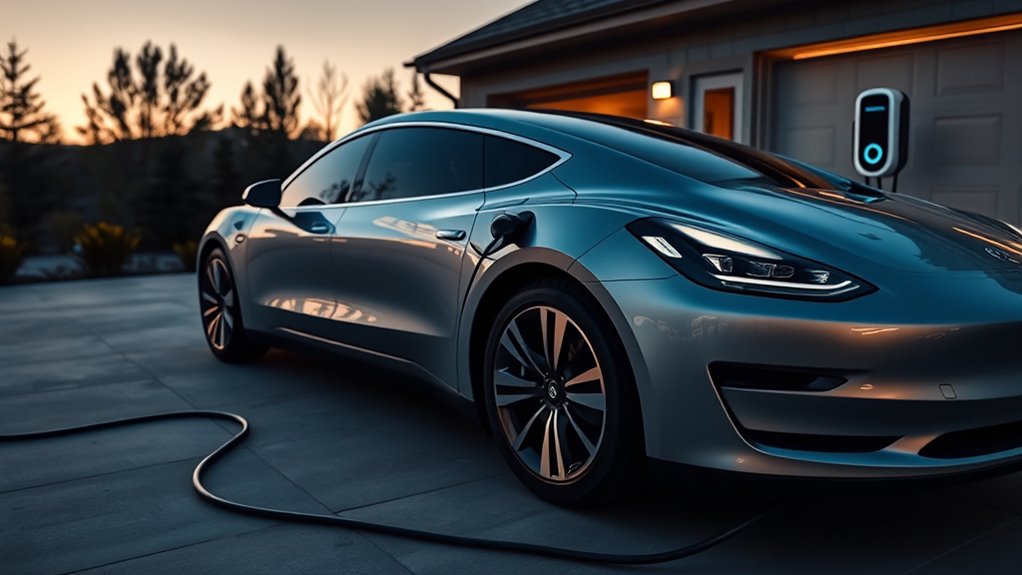
Choose an EV charging cable long enough to reach your charge port without pulling tight, but not so long that it becomes heavy, messy, or easy to trip over. For many simple garage and driveway setups, a 16-foot or 5-meter cable is enough. If your charger is offset, your port is on the far side, or you park at the curb, a 20- to 25-foot cable may be the better fit — and 25 feet is close to the practical ceiling for a plug-in cable anyway.
Quick Answer
For most home EV charging setups, choose a 16-foot or 5-meter cable if the charger and charge port are on the same side. Choose 20 to 25 feet if you park at an angle, share a driveway, use curbside charging, or may switch to a vehicle with the port on the opposite side.
Key Takeaways
- Measure the actual route from the charger to the EV port, including turns around the vehicle, not just the straight-line distance.
- Add about 3 feet or 1 meter of slack so the connector is not under tension.
- A 16-foot or 5-meter cable fits many garages, while 20 to 25 feet helps with offset parking, curbside charging, and future vehicles.
- Cord-and-plug home chargers are capped at 25 feet by NEC Article 625 unless they include a listed cable management system — treat that as a hard ceiling, not just a suggestion.
- Avoid unlisted EV charging extension cables or improvised adapters. Use a listed charger/cable and follow local electrical code.
At a Glance
| Time Required | 10 to 20 minutes to measure your parking layout and compare cable lengths |
| Difficulty | Easy for choosing length; hire a licensed electrician for new circuits, hardwired EVSE, or panel work |
| Tools Needed | Tape measure, parking spot, vehicle, charger location, and your vehicle manual or charge-port specs |
| Cost | Usually no cost to measure; longer or replacement EVSE cables may increase charger price and storage needs |
Why EV Charging Cable Length Matters
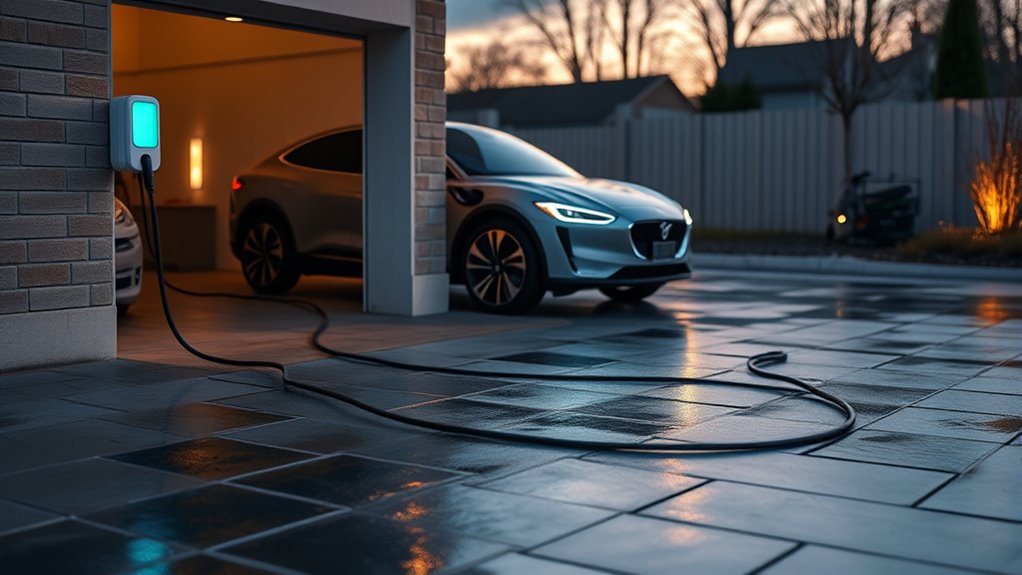
EV charging cable length affects safety, convenience, and how easily you can plug in every day. A cable that is too short forces you to reposition the car or pull the connector tight. A cable that is too long adds weight, clutter, and more cable to drag across the floor.
For home charging, the right length depends on your charger location, parking direction, garage depth, driveway angle, and where the charge port sits on your EV. The U.S. Department of Energy’s Alternative Fuels Data Center explains that Level 2 charging is common at homes, workplaces, and public locations, so the same cable-length logic applies in more than one setting.
A properly chosen cable should reach the port with a gentle curve, not a stretched line. That small amount of slack protects the connector, makes daily use easier, and reduces the chance of someone tripping over extra cable.
The best EV charging cable is the shortest listed cable that reaches your port comfortably in your real parking position.
How to Pick the Right Cable Length
Start with your real parking layout. Park the vehicle where it normally sits while charging, then measure the route from the charger or outlet to the charge port. Follow the path the cable will actually take around the car, wall, post, garage storage, or driveway edge.
Add about 3 feet or 1 meter of extra reach. This gives you enough slack to route the cable without tension, but it does not leave a large coil on the floor.
Measure Your Parking Space
Use a tape measure and check at least two positions: your normal parking spot and the farthest realistic spot you may use. If two drivers share the driveway, measure for both vehicles.
- Park the EV in its normal charging position.
- Measure from the charger body or wall outlet to the vehicle charge port.
- Measure around obstacles instead of measuring only in a straight line.
- Add about 3 feet or 1 meter of slack.
- Compare the total with available listed cable or EVSE cord lengths.
If the number lands between two cable sizes, choose the longer listed option only if the shorter one would pull tight or force the cable across a walkway.
Match the Port and Outlet Location
Port location matters as much as cable length. Some EVs have the inlet on the front fender, some on the rear quarter panel, and some near the nose or tail. A charger mounted on the left garage wall may work perfectly for one EV and poorly for another.
Connector type also matters. Many EVs sold through 2024 in North America use SAE J1772 for AC Level 1 and Level 2 charging, paired with CCS for DC fast charging. SAE J3400, also known as NACS, was originally developed by Tesla and finalized as a published SAE standard in September 2024. It’s now the native charge port on many 2025 and 2026 model-year EVs, with most major automakers already shipping native NACS ports or approved adapters. Check your exact vehicle model, model year, and adapter support before buying a charger or cable.
Note: For DC fast charging, you normally use the station’s attached cable, not your own cable. For AC charging in some markets, especially Type 2 public charging areas, drivers may need to bring a detachable charging cable.
Plan for Future Changes
Do not choose cable length only for today’s vehicle. Think about your next EV, a different parking direction, a second EV, a moved charger, or a future garage storage change.
- 16 feet or 5 meters works well when the charger is near the port and the parking setup is simple.
- 20 to 25 feet gives more margin when the port may sit on the opposite side or the vehicle may park farther away.
- Skip the extra-long cable unless your layout truly needs it — longer cable is heavier and harder to manage, and anything past 25 feet on a plug-in cord generally needs a listed cable management system to meet electrical code.
If you are installing a new hardwired Level 2 charger, discuss placement with a licensed electrician before buying the charger. Moving the charger a few feet during installation may solve the reach problem better than buying the longest cable available.
EV Charging Cable Length Comparison
| Cable Length | Best For | Watch Out For |
| 12 ft or shorter | Very tight garage setups where the charger is next to the port | May not reach if you reverse parking direction or buy a different EV |
| 16 ft / 5 m | Most simple garage and driveway layouts | Can be short for opposite-side ports or curbside parking |
| 20 to 24 ft | Offset chargers, deeper garages, and shared driveways | Needs a wall hook or cable holder to stay tidy |
| 25 ft / 7.5 m | Curbside parking, two-car driveways, and future vehicle flexibility — the maximum length NEC allows for a standard cord-and-plug EVSE | More weight, more slack, and higher trip-risk if poorly routed |
| 10 m / 32 ft | Hardwired installations or chargers with a listed built-in cable management system (reel) — not typical for plug-in home EVSE | Exceeds the NEC’s 25-ft cap for a plain cord-and-plug cable; confirm listing and code compliance before buying |
16-Foot EV Charging Cables: The Standard Pick
A 16-foot or 5-meter EV charging cable is a practical default because it gives enough reach for many home layouts without adding much weight. It works best when the charger is on the same side as the charge port or close to the front or rear of the vehicle.
You get easier storage, less floor clutter, and a lower chance of running cable across a walking path. If you always park in the same spot and your charger is well placed, this length often feels clean and simple.
It may not be enough if your driveway is wide, the charger is mounted near the garage entrance, or your vehicle’s charge port sits on the far side. Measure before choosing it.
When a Longer EV Charging Cable Makes Sense
A longer EV charging cable makes sense when your parking layout is not straight and predictable. This includes deep driveways, curbside parking, two-car garages, angled parking, and shared spaces where the EV cannot always park in the same place.
- Opposite-side port: The charger is on one wall, but the charge port is on the far side of the vehicle.
- Two-car driveway: You may need to reach either side of either vehicle.
- Curbside charging: The car may sit farther from the charger, especially if parking positions change.
- Future EV change: Your next vehicle may have a different charge-port location.
Longer reach can also help public charging. A 2022 field study of 657 public DC fast-charging connectors across the Greater Bay Area found that 4.9% had a cable too short to reach the vehicle’s charging inlet — one of several issues that kept nearly a quarter of the connectors from working that day. It’s an older, California-specific study rather than a current nationwide snapshot, but it illustrates why port location and cable reach matter in real-world use, not just at home.
Pro Tip: Before buying, park your EV in the least convenient realistic position and measure from there. If the cable works in that position, it will usually work in your easier daily position too.
The Downsides of Extra-Long Charging Cables
Extra-long EV charging cables solve reach problems, but they create handling problems. More length means more cable to lift, coil, drag, store, and keep clear of tires, doors, and walkways.
Added Weight and Bulk
EV charging cables are thicker than ordinary household cords because they must carry high current safely. As length increases, the cable becomes heavier and more awkward during daily use.
- More weight: You lift and move more cable each time you plug in.
- More storage space: You need a larger hook, holster, or cable reel area.
- More strain risk: A heavy cable can pull on the connector if it hangs unsupported.
Charging Efficiency and Heat
A longer cable has more electrical resistance, and more resistance can mean a small amount of voltage drop and heat under load. In practice, this rarely translates into a noticeable charging slowdown, because a properly listed EVSE cable is sized for its rated length and current. The bigger everyday issue for most buyers isn’t speed — it’s simply choosing more cable than they can store and route safely.
For high-amperage Level 2 charging, do not modify cables or use unlisted extensions to gain reach. Use equipment rated and listed for the job.
Harder Storage and Handling
Longer EV charging cables are harder to keep neat. Tight coils, sharp bends, and cable left under tires can shorten service life. Cable jacket material matters here too — look for a UV-resistant outer jacket if the cable will sit in direct sun, and a cold-rated jacket if you charge outdoors in freezing temperatures, since cheaper jackets can crack or stiffen in those conditions.
- Store the cable in wide loops, not tight knots.
- Keep the connector off the floor and out of standing water.
- Route the cable along a wall or edge when possible.
- Do not close a garage door, vehicle door, or trunk on the cable.
How Cable Length Affects Safety and Wear
Cable length affects safety because it changes how the cable moves through your space. Extra slack can become a trip hazard. A stretched cable can pull on the connector. A poorly stored cable can kink, abrade, or collect water and dirt.
For installed home charging, NFPA 70, the National Electrical Code, includes EVSE requirements in Article 625. Local code, product listing, and manufacturer instructions matter, especially for hardwired chargers, new circuits, outdoor installations, and higher-amperage charging.
The NEC 25-Foot Cord Length Limit
There’s a specific number behind the “shortest cable that reaches” advice. NEC Section 625.17(C) caps the overall usable length of a cord-and-plug EVSE’s charging cable at 25 feet (7.5 meters), measured from the plug to the vehicle connector, unless the equipment includes a listed cable management system, such as a built-in reel, as part of the charger itself. That’s a big reason almost every home Level 2 charger tops out around 24 to 25 feet — manufacturers design to the code limit.
If your layout genuinely needs more reach than that, the code-compliant paths are a charger with an integrated cable management system, a hardwired installation with the EVSE mounted closer to where you park, or relocating the circuit rather than stretching the cord. A plain cord-and-plug cable longer than 25 feet without a management system is a sign to reconsider placement, not a reason to buy a longer cable.
Warning: Do not use a regular household extension cord, unlisted EV charging extension, damaged adapter, or improvised cable setup to make a charger reach farther. If the listed cable does not reach, move the EVSE, choose a listed longer-cord charger, or ask a licensed electrician about a safer installation.
Tethered vs. Detachable EV Charging Cables
Before choosing a length, know which type of charging setup you are buying.
Tethered EVSE has the cable permanently attached to the charger. This is common for many North American home Level 2 chargers and most DC fast chargers. You choose the charger and its cord length together.
Detachable charging cables are separate cables that plug into both the charger and the vehicle. These are common in some Type 2 AC charging markets. In that case, you choose the cable length, connector type, and current rating separately.
Either way, the rule is the same: choose a listed, compatible cable that reaches without strain and stores safely when not in use.
How to Measure EV Cable Length at Home
To measure the EV cable length you need, use the actual path the cable will follow during charging. Do not measure through the car, across a closed garage door, or through a storage shelf that may move later.
- Mark the charger location. Use the planned charger location if it has not been installed yet.
- Park the car normally. Include the usual distance from the wall or curb.
- Measure to the charge port. Follow the route around bumpers, doors, and corners.
- Add slack. Add about 3 feet or 1 meter so the plug is not under tension.
- Repeat for the worst-case position. Measure again if you may reverse in, park outside, or charge a second EV.
If your measurement is close to the limit of a shorter cable, choose the next listed length or reconsider charger placement.
How to Future-Proof Your Cable Choice
Future-proofing does not always mean buying the longest cable. It means choosing a cable that still works if your setup changes.
Think about these questions:
- Will you buy a second EV in the next few years?
- Could your next EV have the charge port on the other side?
- Will you add garage storage, a trailer, or a second parked car?
- Will you need outdoor charging in winter, rain, or tight parking spaces?
- Does your vehicle use J1772, J3400/NACS, CCS, Type 2, or an adapter?
If two lengths both work, choose the one that gives enough future reach without leaving daily clutter. For many buyers, that means 20 to 25 feet rather than the shortest possible cable.
Best EV Charging Cable Length for Your Setup
The best EV charging cable length depends on your layout, but these rules cover most setups:
- 16 ft / 5 m makes sense if the charger is near the port and the car always parks in the same position.
- 20 to 24 ft is the better call if the charger is offset, the garage is deeper, or the port is not always near the wall.
- 25 ft / 7.5 m gives you the most reach for curbside parking, shared driveways, or opposite-side ports — and it’s the longest a standard cord-and-plug EVSE can be under NEC 625.17(C).
- Treat 10 m / 32 ft setups as the exception, not the goal — that length only makes sense with a hardwired installation or a charger that has a listed cable management system, since a plain cord-and-plug cable that long exceeds the NEC limit.
For most home users, the sweet spot is the shortest cable that reaches the farthest realistic parking position with a little slack. That keeps charging simple without adding unnecessary weight or clutter.
Cable Management Tips for Daily Charging
A good cable length still needs good storage. Clean cable management protects the cable and makes charging easier.
- Install a wall-mounted cable hook or holster near the charger.
- Coil the cable in wide loops to avoid sharp bends.
- Keep the connector capped or holstered when not in use.
- Do not leave the cable where tires can roll over it.
- Keep the cable away from snow piles, standing water, sharp edges, and high-traffic walkways.
If the cable crosses a walking path every day, the charger may be in the wrong location. Moving the EVSE may be safer than living with a trip hazard.
Frequently Asked Questions
How long should my EV charging cable be?
For most home setups, choose 16 feet or 5 meters if the charger is close to the charge port. Choose 20 to 25 feet if your parking position changes, your charge port is on the far side, or you charge from the curb. Always measure the actual route first and add about 3 feet or 1 meter of slack.
Is there a legal limit on how long a home EV charging cable can be?
Yes. Under NEC Section 625.17(C), a cord-and-plug EV charging cable is capped at 25 feet (7.5 meters) of usable length unless the EVSE includes a listed built-in cable management system, such as a reel. That’s why nearly all home Level 2 chargers max out around 24 to 25 feet, and why anything longer usually means a hardwired installation or an integrated reel rather than a simple cord.
Is a longer EV charging cable slower?
A longer conductor can add resistance, but a properly listed EVSE cable is designed for its rated length and current. The bigger downsides are usually weight, storage, trip risk, and cable wear. Do not add reach with a regular extension cord or unlisted EV charging extension.
What is the 80/20 rule for EV charging?
The phrase often means keeping the battery between about 20% and 80% for routine charging when your vehicle maker recommends it. Some people also use 80/20 to describe charging mostly at home and occasionally in public. Neither version decides cable length. Cable length depends on your charger location, parking layout, and charge-port position.
What EV charger does Volvo recommend?
Use the charger connector and adapter setup that matches your exact Volvo EV model and model year. Volvo’s North American EVs (EX90, EX30, EX40, EC40, XC40 Recharge, C40 Recharge) currently use CCS for DC fast charging and J1772 for AC Level 2 charging, and can be fitted with Volvo’s own NACS fast-charging adapter for Tesla Supercharger access — note that this adapter is for DC fast charging only, not for AC or home charging. Check Volvo’s official NACS charging page, your owner’s manual, or your dealer to confirm your model’s exact port and adapter needs before buying a charger.
What stops someone from unplugging your electric car?
Many EVs can lock the connector while the vehicle is locked or charging. Some charging stations also use session authentication, app control, or connector locking. Features vary by vehicle, connector, and station, so check your car’s charge-lock settings if public or shared charging is a concern.
Can I use an EV charging extension cable?
Not with an ordinary household extension cord — those aren’t rated for EV charging current and are a fire risk. Purpose-built EV charging extension cables do exist, but they must carry a recognized listing for EV charging use and be rated for your charger’s amperage; check your EVSE manufacturer’s instructions first, since some prohibit any extension outright. For most home reach problems, moving the charger or choosing a longer-cord EVSE within the 25-foot NEC limit is the simpler, safer fix.
Conclusion
Choose an EV charging cable length by measuring your real parking setup, not by guessing. A 16-foot or 5-meter cable fits many simple home layouts, while 20 to 25 feet gives more room for offset parking, curbside charging, and future vehicles — and 25 feet is also the practical and legal ceiling for a standard cord-and-plug home charger under NEC Article 625. Avoid extra length you do not need, because it adds weight, clutter, and wear. The safest choice is a listed, compatible cable that reaches comfortably, stores neatly, and follows manufacturer instructions and local electrical code.
Sources
- U.S. Department of Energy Alternative Fuels Data Center — Electric Vehicle Charging Stations — supports charging level, EVSE, and connector guidance.
- SAE International — SAE J1772 — supports J1772 AC charging connector reference.
- SAE International — SAE J3400 North American Charging System — supports J3400/NACS connector reference.
- Joint Office of Energy and Transportation — SAE J3400 Charging Connector — supports the current adoption status of J3400/NACS.
- NFPA 70, National Electrical Code — supports EVSE installation code context under NEC Article 625.
- NEC Section 625.17(C) — Overall Cord and Cable Length (up.codes) — supports the 25-foot cord-length limit for cord-and-plug EVSE.
- Reliability of Open Public Electric Vehicle Direct Current Fast Chargers — supports the public-charging reach issue and short-cable finding.
- Volvo Cars USA — North American Charging Standard (NACS) — supports the current Volvo connector and adapter guidance.