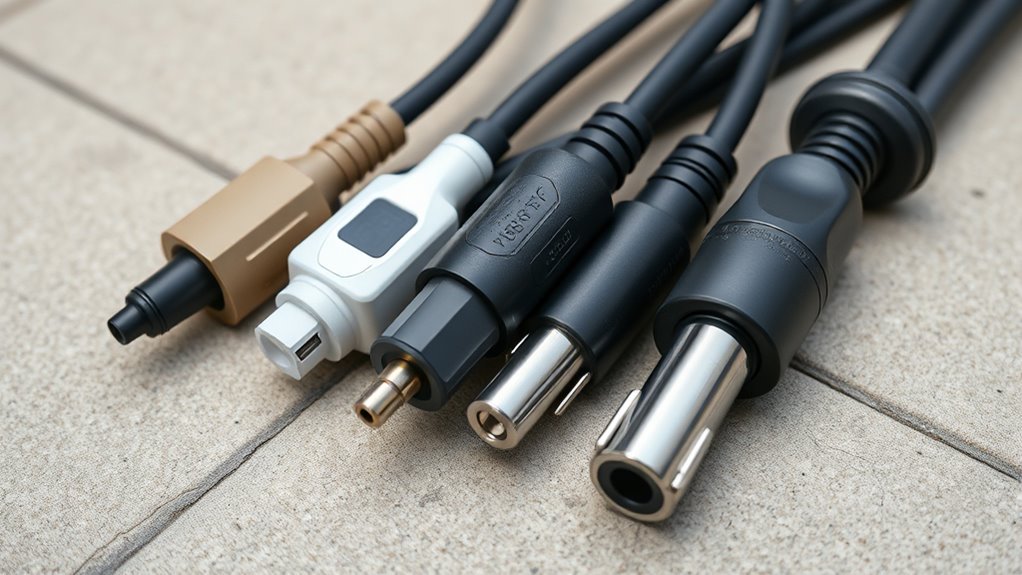
EV charging cable thickness, also called cable gauge, affects how much current a charging cable or branch-circuit conductor can safely carry. A lower AWG number means a thicker conductor, so it usually creates less resistance, less heat, and less voltage drop than a thinner wire. That can make charging safer and more efficient, but it will not make your EV charge faster unless the charger, circuit, connector, and vehicle can all use the higher amperage.
Quick Answer
A thicker EV charging cable can run cooler and reduce voltage drop, but it does not automatically charge faster. Charging speed is limited by your EV’s onboard charger, the EVSE output, the breaker size, the connector rating, and the cable’s approved amp rating.
Key Takeaways
- Lower AWG numbers mean thicker conductors. For example, 8 AWG is thicker than 12 AWG.
- Thicker conductors usually reduce heat and voltage drop, especially on long runs or higher-output Level 2 chargers.
- Cable size does not override your EV’s onboard charging limit or the EVSE’s output setting.
- EV charging is a continuous electrical load, so breaker and conductor sizing must follow the charger manual and local electrical code.
- For a new 240V circuit or hardwired charger, use a licensed electrician rather than guessing from a simple gauge chart.
At a Glance
| Time Required | 10 to 20 minutes to check your EV manual, charger label, breaker size, and cable rating |
| Difficulty | Easy for checking labels; professional level for installing or changing wiring |
| Tools Needed | EV owner’s manual, EVSE installation manual, breaker label, cable label, and an electrician for new 240V work |
| Cost | Free to inspect existing specs; installation cost varies by panel capacity, distance, permits, wiring method, and charger output |
What EV Charging Cable Gauge Means
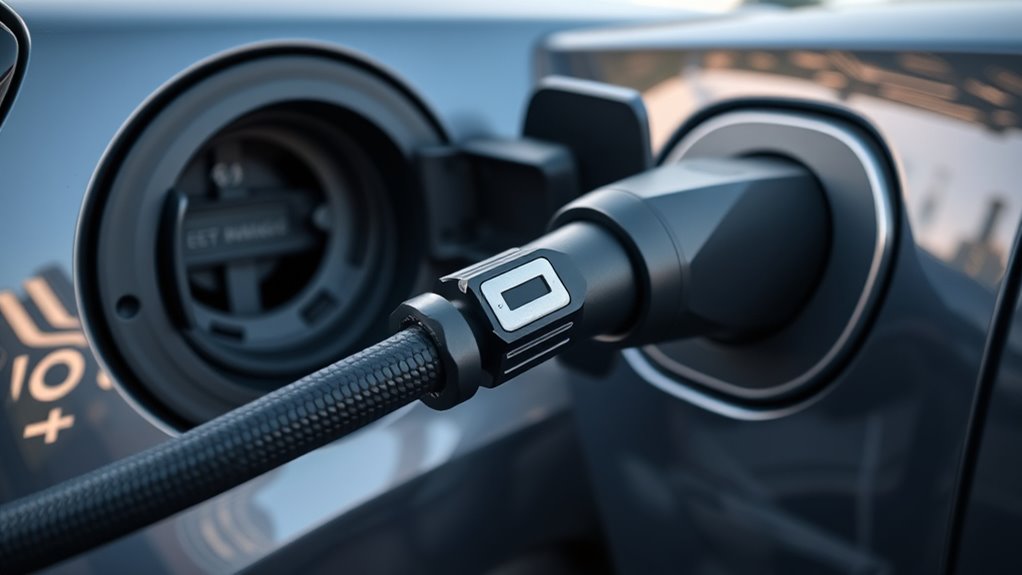
An EV charging cable’s gauge, measured in American Wire Gauge (AWG), tells you the conductor size. In the AWG system, a lower number means a thicker conductor. That is why 8 AWG is thicker than 10 AWG, and 10 AWG is thicker than 12 AWG.
Gauge matters because a thicker conductor can usually carry more current with less resistance. Less resistance means less wasted energy, less heat, and less voltage drop during charging. That is especially important for Level 2 EV charging, which uses 240V service in many homes or 208V service in many commercial settings.
Still, the gauge number is only one part of the system. The safe charging limit also depends on the EVSE output setting, breaker size, plug or connector rating, conductor material, insulation temperature rating, installation method, local code, and your EV’s onboard charging limit.
Note: A charging cable and an in-wall branch-circuit wire are not always the same thing. Portable EVSE cords, hardwired charger leads, and house wiring can have different ratings and rules. Always use the rating on the equipment label and installation manual.
Why Thicker EV Charger Cables Run Cooler
Thicker EV charger conductors run cooler because they offer less electrical resistance. When current flows through a conductor, some energy is lost as heat. A larger conductor reduces that loss, which helps the cable, connector, and insulation stay within a safer temperature range.
This matters most when current is high or charging lasts for hours. EV charging is not a quick appliance load. A Level 2 charger may run at a steady output for several hours, so heat buildup has more time to stress insulation, terminals, plugs, and connectors.
Lower heat also improves long-term reliability. Excessive heat can harden insulation, weaken terminals, discolor plugs, and shorten the life of the cable assembly. A properly sized conductor gives the system more thermal margin, especially in a hot garage, direct sun, conduit, or a long cable run.
How Cable Gauge Affects Current
Cable gauge affects how much current can be carried safely, but you should not size an EV charger from a simple AWG chart alone. You need to match three things: the EVSE output amperage, the branch-circuit breaker, and the conductor or cable rating.
The table below gives common Level 2 home-charging examples. It is a practical starting point, not a substitute for the charger manual, local code, or an electrician’s calculation.
| EVSE output | Common circuit size | Common copper starting point | Best use case |
|---|---|---|---|
| 16A | 20A | 12 AWG | Light Level 2 or upgraded portable charging |
| 24A | 30A | 10 AWG | Moderate home charging |
| 32A | 40A | 8 AWG | Common Level 2 home setup |
| 40A | 50A | Often 6 AWG, depending on wiring method and terminals | Higher-output plug-in or hardwired EVSE |
| 48A | 60A | Often 6 AWG, based on charger manual and code | Hardwired high-output home charger |
| 64A to 80A | 80A to 100A | Larger conductors sized by an electrician | Special high-output installations |
Warning: Do not install a 32A, 40A, or 48A EV charger by guessing from a wire-gauge chart. EV charging circuits are continuous loads and must be sized by the EVSE manual, conductor type, terminal temperature rating, breaker rating, and local electrical code.
Does Thicker Cable Speed Up Charging?
A thicker EV charging cable can support higher current with less heat, but it does not automatically increase charging speed. Your EV will only draw the current allowed by the charging station and by the vehicle’s onboard charger.
For example, if your EV can accept only 32A on AC Level 2, a 48A charger cable will not force the vehicle to charge at 48A. The car will still limit the session to its accepted amperage. The same is true if the EVSE is set to 24A or 32A because of the circuit it is connected to.
Thicker cable helps when the current charger, breaker, wiring, connector, and vehicle can all support more amperage. It can also help preserve efficiency by reducing heat and voltage drop. But cable thickness alone is not a speed upgrade.
The fastest safe charging setup is not the thickest cable. It is the setup where the EV, charger, breaker, wiring, connector, and installation rating all match.
8 AWG vs. 12 AWG EV Charging Cables
When you compare 8 AWG and 12 AWG conductors, 8 AWG is thicker and can usually handle more current with less voltage drop. That makes it more suitable for many Level 2 charging setups. A 12 AWG conductor is thinner and is normally used for lower-current circuits.
The key point is context. A 12 AWG conductor may be appropriate for a 16A EVSE on a properly rated 20A circuit. It is not appropriate for a 32A Level 2 charger. An 8 AWG conductor is commonly seen with 32A EVSE setups on 40A circuits, but that still depends on the wiring method, copper vs. aluminum, insulation rating, and code requirements.
For many drivers, the practical choice is not “8 AWG or 12 AWG?” It is “What output does my charger use, what circuit does it require, and what conductor size does the manual and electrician specify?”
Why Level 2 Charging Benefits Most
Level 2 charging benefits most from correct cable sizing because it runs at higher power than Level 1. The U.S. Department of Energy’s Alternative Fuels Data Center explains that Level 2 equipment uses 240V service in typical residential applications or 208V service in typical commercial applications, with power output ranging from 2.9 kW to 19.2 kW.
Higher power means higher current, and higher current makes conductor resistance and heat more important. A properly sized cable supports stable charging, reduces thermal stress, and helps prevent nuisance breaker trips caused by overheated or overloaded equipment.
Higher Current Capacity
Level 2 chargers may be set to 16A, 24A, 32A, 40A, 48A, or higher, depending on the model and circuit. The higher the output, the more important conductor sizing becomes. A 16A portable Level 2 setup and a hardwired 48A wall charger are not the same installation.
For high-output units, the conductor must be sized for the continuous load and installation conditions. That is why many 48A chargers are hardwired instead of plugged into a common receptacle. Hardwiring can reduce connection points and allow a higher approved output when the electrical system supports it.
Faster Level 2 Charging
Level 2 charging is faster than Level 1 because it uses higher voltage and higher power. AFDC estimates about 25 miles of range per hour for many Level 2 charging situations, though the real number depends on the EV, battery, charger power, and electrical service.
A thicker cable supports faster Level 2 charging only when it is part of a complete higher-output setup. If your vehicle accepts 48A and your charger, circuit, and wiring are all rated for 48A output, the larger wiring helps the system deliver that current safely. If the vehicle accepts only 32A, the extra cable size mainly adds thermal margin, not more speed.
Which Cable Gauge Fits Your Amperage?
The right cable gauge depends on amperage, but you need to know which amperage you are talking about. EV owners often mix up three different numbers:
- EVSE output amps: the current the charger can deliver to the car.
- Breaker amps: the circuit protection size feeding the charger.
- Conductor ampacity: the safe current rating of the wire or cable under the installation conditions.
For EV charging, the breaker is normally larger than the charger’s continuous output. For example, a 32A EVSE is commonly paired with a 40A circuit, and a 48A EVSE is commonly paired with a 60A circuit. This is why you should not match cable gauge to the EVSE output number alone.
Gauge and Amperage Match
Wire gauge and charging amperage must match the complete electrical design. The charger manual usually lists the required breaker size, conductor type, and connection method. Follow that manual first, then confirm the installation with local code.
- Check the EVSE output setting, not just the product’s maximum advertised amperage.
- Confirm whether the unit is plug-in or hardwired.
- Use the breaker size specified by the manufacturer.
- Confirm conductor material, insulation rating, and installation method.
- Use a licensed electrician for new 240V circuits or hardwired chargers.
Lower Gauge, Higher Capacity
Lower AWG numbers mean thicker conductors, and thicker conductors generally support higher current with less heat. That is why a 6 AWG conductor is thicker than 8 AWG, and 8 AWG is thicker than 10 AWG.
But lower gauge is not always better for every job. Oversized wire can be harder to route, harder to terminate, and incompatible with some terminals. The correct conductor must fit the charger’s terminal lugs and comply with the temperature rating marked on the equipment.
Specs Set Charging Limits
Your charging specs set the real limit. If your charger is configured for 32A, it will not deliver 48A just because the cable is thicker. If your EV’s onboard charger accepts only 32A, it will not draw 48A from a higher-rated EVSE.
Review the vehicle’s AC charging limit, the EVSE output, the branch-circuit size, and the cable rating before buying or upgrading equipment. The goal is a matched system, not simply the largest wire you can buy.
When a Thicker Cable Won’t Help
A thicker EV charging cable will not help much when another part of the system is the bottleneck. Common examples include:
- Your EV’s onboard AC charger is limited to 16A, 24A, or 32A.
- Your wall charger is configured to a lower output because of the breaker size.
- Your plug or receptacle is rated lower than the charger’s maximum setting.
- Your electrical panel does not have enough capacity for a higher-output circuit.
- The cable is thicker, but the connector or EVSE electronics are not rated for more current.
In those cases, a thicker cable may still run cooler, but it will not raise the charging rate. For speed, every part of the charging path must support the higher output.
How to Choose the Right EV Charging Cable
To choose the right EV charging cable, start with the charger and vehicle specs. Do not start with a random AWG number. The EVSE manual should tell you the required circuit size and approved wiring method.
Step 1: Check Your EV’s AC Charging Limit
Look in your owner’s manual or charging screen for the vehicle’s maximum AC charging rate. Some EVs accept 32A on Level 2, while others can accept 40A, 48A, or more. A higher-output charger only helps if the vehicle can use it.
Step 2: Check the EVSE Output Setting
Many chargers can be configured for different output levels, such as 16A, 24A, 32A, 40A, or 48A. The output setting must match the installed circuit. Do not set the charger higher than the circuit, breaker, and conductor are approved to handle.
Step 3: Check Cable Length and Voltage Drop
Longer cable runs create more voltage drop. A small amount is normal, but excessive voltage drop wastes energy and can create extra heat. If the charger is far from the electrical panel, your electrician may recommend a larger conductor than the minimum size.
Step 4: Check Environment and Rating
Outdoor chargers, wet areas, hot garages, and conduit runs all affect the installation. AFDC notes that outdoor home charging can be safe when the equipment is outdoor-rated. Use weather-rated equipment outdoors and keep cable connections protected from damage.
Pro Tip: Before buying a charger, choose the output you actually need. A 32A Level 2 charger is enough for many drivers overnight, while 40A or 48A output may make sense for larger batteries, heavy daily driving, or shorter charging windows.
Check EV and Charger Specs Before You Buy
Even the right cable gauge will not improve charging speed if your EV or charger cannot use the available current. Check these details before buying:
- Vehicle AC charging limit: The maximum Level 2 amperage or kilowatt rate your EV can accept.
- EVSE output: The charger’s adjustable or fixed output setting.
- Circuit size: The breaker size required by the charger manual.
- Connection type: Plug-in chargers may be limited by receptacle rating; hardwired chargers often support higher output.
- Cable rating: The cord, connector, and plug must be rated for the charger output.
- Certification: Look for a listed EVSE and check certified models through resources such as the ENERGY STAR EV charger product finder.
For any new 240V circuit, panel upgrade, receptacle change, or hardwired charger, have a licensed electrician verify the design. The National Electrical Code is the main U.S. code reference, but local rules and permits can vary.
Common EV Cable Gauge Mistakes
Avoid these common mistakes when choosing or installing EV charging equipment:
- Using charger output amps as breaker amps: A 32A EVSE is not the same as a 32A circuit.
- Ignoring the manual: The manufacturer’s installation instructions control the approved setup.
- Assuming all 8 AWG wire is equal: Copper, aluminum, insulation rating, conduit fill, and terminal temperature all matter.
- Using regular extension cords: Household extension cords are not a safe solution for Level 2 EV charging.
- Overlooking plug limits: A plug-in charger cannot exceed the safe rating of the receptacle and circuit.
- Skipping permits: Many areas require permits or inspection for new 240V EV charger circuits.
Signs Your EV Charging Cable May Be Overheating
Stop charging and inspect the system if you notice:
- A hot plug, hot receptacle, or hot connector.
- Burning smell, buzzing, discoloration, or melted plastic.
- Repeated breaker trips.
- Charging sessions that slow down unexpectedly because of heat.
- Loose plug fit or visible cable damage.
If any of these signs appear, unplug only if it is safe to do so and have the charger, receptacle, breaker, and wiring inspected before using the system again.
Frequently Asked Questions
What thickness cable for EV charging?
It depends on the EVSE output, breaker size, wiring method, and charger manual. As a common starting point, 16A output often pairs with a 20A circuit and 12 AWG copper, 24A with a 30A circuit and 10 AWG copper, 32A with a 40A circuit and 8 AWG copper, and 48A with a 60A circuit and often 6 AWG copper. Final sizing must follow local code and the manufacturer’s instructions.
What is the 80/20 rule for EV charging?
For many EV owners, the 80/20 rule means keeping the battery roughly between 20% and 80% for normal daily driving instead of charging to 100% every day. It is a battery-care habit, not a cable-gauge rule. Follow your vehicle manufacturer’s battery recommendations because some battery chemistries have different guidance.
Do thicker cables charge faster?
Not by themselves. Thicker cables can carry more current with less heat, but charging speed is still limited by the EVSE output, circuit rating, connector rating, and your EV’s onboard charger. A thicker cable helps speed only when the whole system is rated for the higher current.
What stops someone from unplugging your electric car?
Many EVs lock the connector while the car is locked or actively charging, but behavior varies by vehicle, connector, and station. Some public stations also require app or card authorization and may alert you if charging stops. Check your vehicle’s charge-lock settings if unplugging is a concern.
Can I use an extension cord with an EV charger?
Do not use a regular household extension cord for EV charging, especially Level 2 charging. Extra connections add resistance and heat. Use only the EVSE and cable setup approved by the manufacturer, and have a proper circuit installed when needed.
Is 8 AWG enough for a Level 2 EV charger?
Sometimes, but not always. 8 AWG copper is commonly used for many 32A EVSE installations on a 40A circuit, depending on the wiring method and local code. It should not be assumed correct for 40A, 48A, 64A, or 80A output. Check the charger manual and use an electrician for final sizing.
Conclusion
When you choose an EV charging cable, do not assume thicker always means faster. A thicker cable usually gives you better heat management, lower voltage drop, and more current capacity, but charging speed still depends on your EV, charger, breaker, connector, and wiring. Match the cable gauge to the complete system, follow the EVSE manual, and use a licensed electrician for new 240V or hardwired installations. The safest setup is not the biggest cable. It is the correctly rated one.
Sources
- U.S. Department of Energy Alternative Fuels Data Center: Electric Vehicle Charging Stations — backs Level 1, Level 2, DC fast charging definitions, charging-rate ranges, and Level 2 voltage/output context.
- U.S. Department of Energy Alternative Fuels Data Center: Charging Electric Vehicles at Home — backs home charging, overnight charging, and outdoor-rated equipment guidance.
- NFPA 70: National Electrical Code — supports the need to follow electrical-code requirements for EV charging installations.
- ENERGY STAR Certified EV Chargers Product Finder — helps readers identify certified Level 2 EV charging equipment.