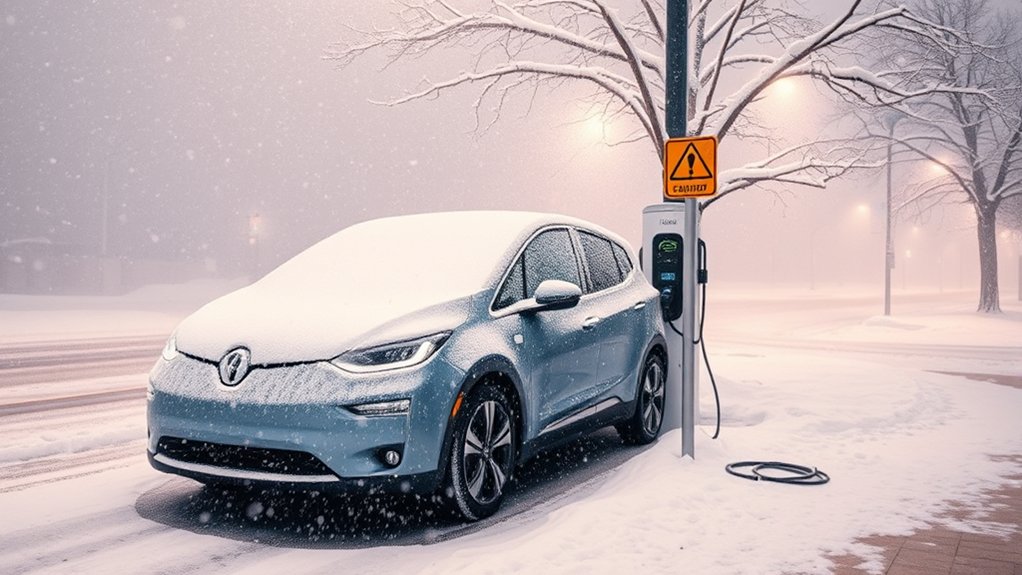
Charging your EV during a blizzard can be safe, but only if you plan ahead, use the right equipment, and keep snow, ice, and moisture away from the charging connection. Cold weather can reduce driving range, slow fast charging, and make public stations harder to reach, so your best defense is a warm battery, a higher state of charge, and backup charging options.
Quick Answer
Yes, you can charge an EV during a blizzard if the charger is properly installed, outdoor-rated, undamaged, and not sitting in standing water. Clear snow from the charge port, keep the connector dry, precondition while plugged in, and avoid relying on one public charger during severe weather.
Key Takeaways
- Charge before the storm. Aim for about 80–90% before blizzard conditions arrive, or follow your owner’s manual if it recommends a different limit.
- Use only outdoor-rated, undamaged charging equipment. Do not plug in if the connector is damaged, submerged, packed with ice, or exposed to standing water.
- Cold batteries charge more slowly, especially at DC fast chargers, so allow extra time and precondition the battery before public fast charging.
- Keep a backup plan with more than one charging stop, offline maps, winter supplies, and enough range to reach shelter if a station is blocked or offline.
At a Glance
| Time Required | 10–20 minutes to inspect and prepare; charging time varies by charger type, battery temperature, and state of charge. |
| Difficulty | Easy at home with safe equipment; moderate if using public chargers during active snowfall. |
| Tools Needed | Outdoor-rated EVSE, snow brush, ice scraper, gloves, flashlight, phone charger, and winter emergency kit. |
| Cost | Usually no extra cost beyond electricity if you already have safe charging gear; winter covers and emergency supplies may add $20–$100+. |
Why Charging Your EV During a Blizzard Requires Extra Caution
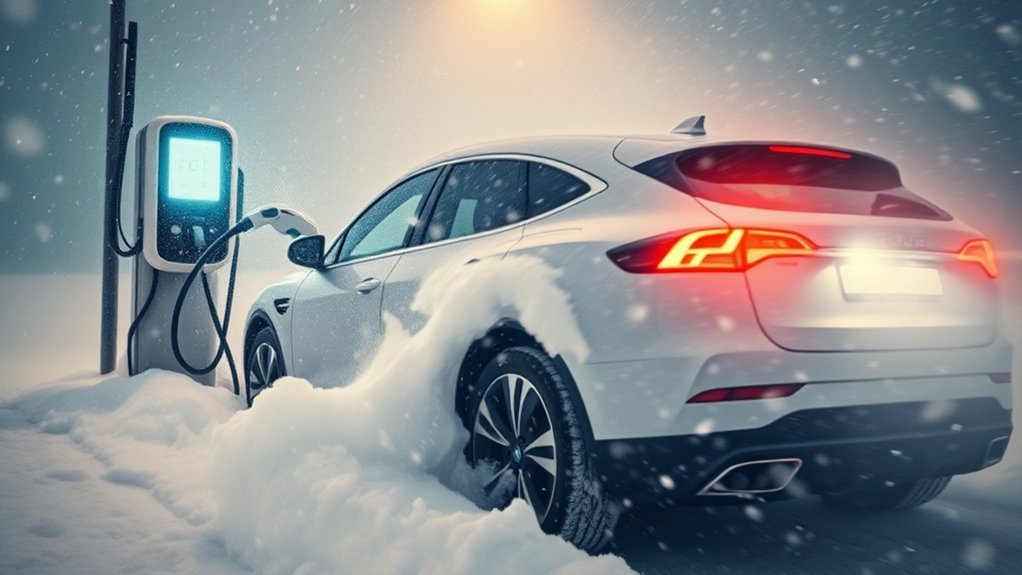
Charging your EV during a blizzard needs extra caution because the problem is not just the cold. Snow can block the driveway, bury public chargers, hide curbs, freeze charge-port doors, and make cables harder to handle with gloves.
Cold weather also changes how your EV behaves. A cold battery may deliver less range, accept less charging power, and use extra energy to warm itself and the cabin. The U.S. Department of Transportation’s NHTSA winter driving guidance notes that electric and hybrid-electric vehicle range can be reduced in cold weather and that keeping an EV warm and plugged in can help limit battery drain.
Before a blizzard, charge earlier than normal. For daily battery care, many EV owners use an 80% limit, but storm preparation is different. If severe weather, power outages, rural driving, or public charger delays are possible, starting around 80–90% gives you more margin. Follow your vehicle owner’s manual if it recommends a specific cold-weather or trip-charging limit.
Warning: Never use damaged charging equipment, force a frozen connector, or charge with the plug or outlet sitting in standing water. Outdoor EV charging can be safe only when the equipment is properly installed, outdoor-rated, and in good condition.
Potential Risks of Charging in Cold Weather
Charging in cold weather is usually manageable, but a blizzard adds several risks at the same time: lower range, slower charging, ice on the connector, poor footing, blocked chargers, and possible power outages. The goal is to remove as many of those risks as possible before you plug in.
Battery Performance Degradation
Cold temperatures slow the chemical activity inside lithium-ion batteries. That can reduce available range and limit how quickly the battery accepts energy, especially at a DC fast charger. Edmunds, in reporting provided through the Associated Press, notes that very cold weather can cut EV range by roughly 20–30% and that cold batteries charge more slowly at fast-charging stations.
Real-world loss varies by vehicle, battery temperature, route speed, wind, tires, heater use, and whether the EV has a heat pump. Do not assume your summer range will be available in a blizzard. If your EV normally shows 250 miles after charging, plan as if you may have far less usable range once heat, snow, and slow traffic are involved.
Preconditioning helps because it warms the cabin and, on many EVs, the battery. It works best while plugged in because the wall charger supplies much of the heat energy instead of taking it all from the battery.
Ice and Snow Accumulation
Ice and snow can prevent a secure charging connection. Before plugging in, clear the charge-port door, inlet, connector handle, cable path, and the ground where you will stand. Use a brush or gloved hand rather than a sharp tool that could damage the inlet or seals.
If the connector will not seat fully, stop and inspect it. Do not slam the connector into place. Do not pour hot water over the charge port, because refreezing can make the problem worse and moisture can move into areas you do not want wet. Use your vehicle’s charge-port heater or defrost feature if it has one, or move the vehicle to a warmer sheltered area if possible.
Risk of Electrical Hazards
EV charging equipment is designed with safety systems, but blizzard conditions still require judgment. The U.S. Department of Energy’s Alternative Fuels Data Center says outdoor charging can be safe, including in rain, when outdoor-rated equipment is used. That does not mean every cord, outlet, adapter, or damaged connector is safe in snow and slush.
Do not use household extension cords for EV charging unless your vehicle manufacturer and charger instructions specifically allow the exact setup. Avoid adapters that are not approved for your charger. If the outlet, plug, cable, or charging handle looks cracked, scorched, loose, or waterlogged, do not use it.
Top Strategies for Efficient EV Charging in Cold Weather
Efficient winter charging starts before the storm reaches your area. A few small steps can save hours later, especially if public chargers become busy or roads are difficult to clear.
- Charge early. Bring the battery to a comfortable storm-ready level before heavy snow begins. For most drivers, 80–90% is a practical target before severe weather.
- Precondition while plugged in. Warm the cabin and battery before leaving. This keeps more stored energy available for driving.
- Use Level 2 when available. Level 2 home charging is faster than a standard 120-volt outlet and can help maintain battery warmth better during long winter charging sessions.
- Use DC fast charging strategically. If you need a public fast charger, navigate to it through the EV’s built-in route planner when possible so the vehicle can prepare the battery.
- Keep a reserve. Try to stay above 50% during active blizzard conditions. Treat 20–30% as an emergency floor, not a target.
- Plan for delays. Public chargers may be occupied, blocked by snow, offline, or charging more slowly than usual.
Pro Tip: If your EV lets you schedule departure time, set it while the car is plugged in. The vehicle can warm the cabin and battery from grid power, which helps preserve driving range once you leave.
Best Locations for Charging Your EV in a Blizzard
The best charging location during a blizzard is the one that is safe, reachable, plowed, powered, and not dependent on a single point of failure. For most EV owners, that means charging at home before the storm and using public charging only when necessary.
| Location Type | Best Use During a Blizzard | Watch Out For | ||||||
| Home Level 2 Charging | Best option for charging before the storm and preconditioning while plugged in. | Make sure the unit is outdoor-rated if!important;background:#ffffff!important;”> | Home Level 2 Charging | Best option for charging before the storm and preconditioning while plugged in. | Home Level 1 Charging | Useful for maintaining charge overnight if your daily miles are low. | Very slow in cold weather and not ideal if the battery is low. | |
| Public Level 2 Station | Good backup near work, hotels, parking garages, or shopping centers. | May be blocked by plowed snow or parked vehicles. | ||||||
| DC Fast Charger | Best for road trips or urgent range recovery. | Cold batteries can charge slower, and stations may have lines during storms. | ||||||
| Covered Garage Charger | Helpful when available because it reduces snow and ice buildup. | Check access hours, payment rules, and clearance height. |
Before leaving home, save at least two backup stations in your route planner. Use your EV’s navigation, the charging network’s app, and an offline map. A charger that looks close on a map may be useless if the access road is closed or the lot has not been plowed.
Things to Check Before You Plug In
Before you connect the charger, slow down and inspect the charging area. Most winter charging problems are easier to prevent than fix after the connector freezes in place.
- Clear your footing. Remove snow and ice where you will stand so you do not slip while handling the cable.
- Clear the charge door and inlet. Brush away snow before opening the port so it does not fall inside.
- Inspect the connector. Check for packed snow, ice, cracked plastic, bent pins, scorch marks, or moisture inside the handle.
- Inspect the cable path. Keep the cable away from snowblower paths, plows, moving tires, sharp ice, and pedestrian walkways.
- Plug in fully. The connector should seat normally and lock if your vehicle uses a lock. Do not force it.
- Confirm charging starts. Check the vehicle screen, charger light, or app to make sure power is flowing.
- Monitor the first few minutes. If the charger stops, faults, or shows reduced power, reassess before walking away.
Note: A battery-electric vehicle does not produce tailpipe carbon monoxide while using cabin heat. Carbon monoxide warnings still matter for hybrids with an engine running, gas vehicles nearby, enclosed garages, or any vehicle with a blocked exhaust.
How to Protect Your Charging Equipment From Snow and Ice
Protecting your charging equipment keeps the connection reliable and reduces the chance of damage. Start with the basics: use the charger as directed by the manufacturer, keep the handle off the ground, and store the connector in its holster when not in use.
- Use a charge-port cover if it fits your vehicle. A magnetic or fitted winter cover can help reduce snow buildup around the inlet.
- Keep the connector holstered. Do not leave the handle lying in snow, slush, or road salt.
- Brush before you open. Clear snow from the charge door before opening it so loose snow does not fall inside.
- Avoid sharp tools. Do not chip ice from the inlet with a screwdriver, knife, or metal scraper.
- Park nose-in or tail-in based on wind. If possible, position the charge port away from blowing snow.
- Check after plowing. Snowbanks can bury cables, block charger access, or pack snow around the charging pedestal.
If your connector freezes to the vehicle, do not yank it. Unlock the connector from the vehicle controls or app, warm the cabin, use any built-in charge-port heater, and give the ice time to loosen. If it still will not release, contact roadside assistance or the charger operator.
Charging Speeds in Low Temperatures: What to Expect
Charging speed depends on charger power, battery temperature, current state of charge, and the EV’s battery-management system. In mild weather, DC fast charging may quickly add range up to about 80%. In a blizzard, the same session can take longer because the battery may need to warm before it accepts higher power.
FuelEconomy.gov, the official U.S. government fuel economy site, notes that EV recharge time varies by equipment and that a fast charge to 80% can take about 30 minutes under suitable conditions. Cold weather can stretch that because the vehicle may limit charging power to protect the battery.
Expect the final stretch from 80% to 100% to be slower than the middle of the session. If you are road-tripping in severe weather, it may be faster to make shorter charging stops between roughly 20% and 80%, unless you need a fuller battery to reach the next safe stop.
Cold weather does not make EV charging impossible, but it reduces your margin for error. Start with more charge, plan extra time, and never depend on a single public station during a blizzard.
Safety Protocols When Stranded While Charging
If you are stranded while charging or waiting for a charger, focus first on people, heat, visibility, and communication. The car is important, but safety comes first.
- Stay with the vehicle if it is safer than walking. In whiteout conditions, walking for help can be more dangerous than waiting.
- Call for help early. Contact roadside assistance, the charging network, local emergency services, or a trusted contact before the battery gets low.
- Share your location. Send your exact location from your phone or vehicle app.
- Use heat carefully. Lower the cabin temperature and use seat heaters or steering-wheel heat when possible to conserve energy.
- Keep the charge port clear. If snow is piling up, safely clear around the connection so the cable does not freeze under heavy snow.
- Stay visible. Use hazard lights when appropriate and keep reflective markers or warning triangles in your emergency kit.
- Protect your phone battery. Keep a power bank or 12-volt phone charger available.
If you drive a plug-in hybrid and the gasoline engine is running, follow carbon monoxide safety rules. Keep the exhaust area clear of snow, avoid running the engine in an enclosed space, and use heat only as needed.
Preparing Your EV for Blizzard Conditions: Key Features
Some EV features make blizzard driving and charging easier. They do not replace safe planning, but they can improve range, comfort, and confidence.
- Battery preconditioning: Warms the battery before driving or fast charging. Use it while plugged in when possible.
- Scheduled departure: Lets the EV warm itself before you leave, often using grid power instead of stored battery energy.
- Heat pump: Can use energy more efficiently for cabin heat than a basic resistive heater, depending on vehicle design and temperature.
- Battery thermal management: Helps the vehicle protect the battery and manage charging in cold conditions.
- All-wheel drive: Can improve traction when paired with proper tires, but it does not shorten stopping distance on ice.
- Winter tires: Often matter more than drivetrain type for braking and steering on snow and ice.
- Battery and charger app alerts: Let you confirm charging status from indoors and catch interruptions sooner.
Also check tire pressure before the storm. NHTSA notes that tire inflation pressure drops as outside temperature drops, so use the pressure listed in your owner’s manual or driver-door label, not the maximum pressure printed on the tire sidewall.
Essential Winter Supplies for EV Owners
A winter emergency kit is useful for every driver, but EV owners should also think about charging access, phone power, and warmth during long waits. NHTSA recommends carrying items for common winter tasks and emergency needs, including a snow shovel, broom, ice scraper, abrasive material, jumper cables, flashlight, warning devices, first aid kit, blankets, phone charger, water, food, and medicine.
- Snow shovel, brush, and ice scraper: Clear the charge port, windshield, and area around the tires.
- Warm gloves and hat: Make it easier to handle a cold charging cable without rushing.
- Blankets or emergency bivy: Preserve body heat if you must wait.
- Portable phone power bank: Keeps maps, calls, and charger apps available.
- Flashlight or headlamp: Helps you inspect the port and cable in blowing snow.
- Traction material: Sand or kitty litter can help if tires spin on packed snow.
- Snacks, water, and medicine: Useful if traffic stops or charging takes longer than expected.
- Offline maps: Important when cell service is weak or towers lose power.
Blizzard Charging Mistakes to Avoid
Many winter EV problems come from rushing. Avoid these common mistakes when snow is falling or temperatures are dropping fast.
- Waiting until the battery is low: A low battery has less energy available to warm itself before charging.
- Relying on one public charger: Always identify backup stations before you need them.
- Skipping preconditioning: A cold battery can charge slowly, especially at a fast charger.
- Forcing a frozen connector: This can damage the inlet, latch, or cable.
- Using unsafe cords or adapters: Use only equipment approved by the vehicle and charger manufacturer.
- Blocking walkways with cables: Snow can hide the cable and create a trip hazard.
- Ignoring charger status: Confirm the session actually starts before leaving the vehicle.
Frequently Asked Questions
Is it safe to charge an EV during a storm?
Yes, it is generally safe when you use properly installed, outdoor-rated, undamaged charging equipment and keep the connector out of standing water. Do not use a damaged charger, a submerged plug, or an unapproved extension cord. If lightning, flooding, or equipment damage is present, wait and follow local safety guidance.
What are the safety precautions for EV charging in a blizzard?
Clear snow from the charge port, dry the connector, inspect the cable, stand on a clear surface, plug in fully, and confirm charging starts. Keep the cable away from plows, tires, walkways, and deep slush. Stop if you see damage, scorching, cracked plastic, exposed wiring, or water inside the connector.
Should I plug in my EV every night in winter?
Usually, yes. Plugging in overnight helps the vehicle maintain battery temperature, supports scheduled preconditioning, and gives you more range if weather changes suddenly. Set a normal charge limit that matches your owner’s manual and daily needs, then raise it before severe weather or longer trips if needed.
How much charge should I have before a blizzard?
Aim for about 80–90% before the storm if you may need to drive, use cabin heat, or deal with outages. If you are taking a longer rural trip, follow the route planner and owner’s manual. During active severe weather, try to stay above 50%, and treat 20–30% as a minimum emergency reserve.
Why does fast charging slow down in cold weather?
A cold battery cannot accept high charging power as easily as a warm battery. The EV may use energy to heat the pack first, then increase charging speed once the battery reaches a safer operating temperature. Preconditioning before a DC fast charger can reduce this delay.
Is life with an electric car in winter really a nightmare?
No. Winter EV driving takes more planning, but it is manageable when you charge early, precondition, use winter tires, keep backup charging options, and carry emergency supplies. The biggest problems usually happen when drivers start a storm with low charge or depend on one crowded public charger.
Conclusion
Charging your EV during a blizzard is not just about plugging in. It is about keeping the battery warm, protecting the charging connection, allowing extra time, and planning for blocked roads or crowded public stations. Charge before the storm, use outdoor-rated equipment, keep the connector clean and dry, and maintain enough reserve to reach safety if plans change. With the right preparation, winter EV charging becomes a controlled routine instead of a stressful emergency.
Sources
- NHTSA Winter Weather Driving Tips — supports winter emergency kit guidance, tire-pressure checks, reduced EV range in cold weather, and keeping EVs plugged in during winter.
- U.S. Department of Energy Alternative Fuels Data Center: Charging Electric Vehicles at Home — supports outdoor-rated charging equipment guidance and home Level 1/Level 2 charging basics.
- FuelEconomy.gov: All-Electric Vehicles — supports general EV recharge-time context and battery-life considerations in severe climates.
- Associated Press / Edmunds: Wintertime Driving With an Electric Vehicle — supports cold-weather range-loss, slower fast-charging, and preconditioning guidance.
- Associated Press: Frigid Weather and EV Charging — supports cold-weather charging delays, public charger planning, and battery-warming context.
- Online Electric Vehicle Charging Control With Battery Thermal Management in Cold Environments — supports current research context on battery thermal management during cold-weather charging.