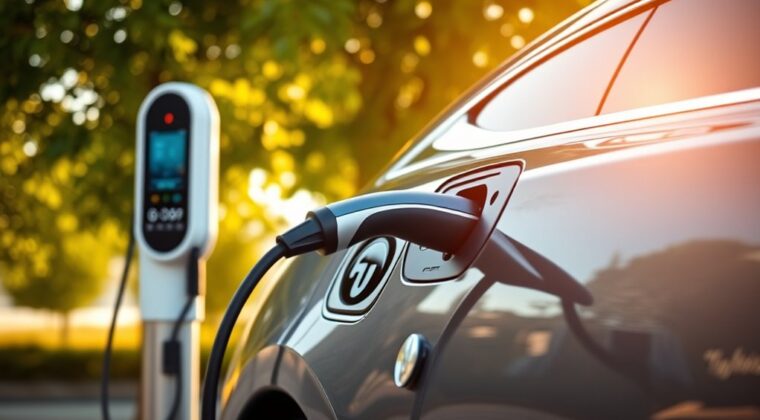
Charging your electric vehicle (EV) is simple once you know which charger to use, how long each option takes, and when public fast charging makes sense. Most daily drivers do best with home charging, while DC fast charging is mainly for road trips, low-battery emergencies, or days when you need a quick top-up away from home.
Quick Answer
To charge an EV, plug the connector into your vehicle, start the session through the charger, app, or vehicle screen, and monitor the battery level. Use Level 1 for slow overnight charging, Level 2 for regular home charging, and DC fast charging for longer trips or quick stops.
Key Takeaways
- Level 1 uses a standard 120V outlet and is best for short daily driving or backup charging.
- Level 2 uses 240V residential power or 208V commercial power and is the best fit for most home charging setups.
- DC fast charging is fastest, but charging usually slows as the battery gets closer to full.
- Charging cost depends on how many kilowatt-hours you add and your electricity rate or public-network price.
- For battery health, follow your owner’s manual, avoid frequent deep discharges, and use fast charging mainly when you need it.
At a Glance
| Time Required | A few minutes to plug in; charging can take 30 minutes to overnight depending on charger level and battery size. |
| Difficulty | Easy for normal charging; moderate for planning a home Level 2 installation. |
| Tools Needed | Vehicle charge cord or wall charger, compatible connector, charging app or RFID card for some public stations, and owner’s manual. |
| Cost | Home cost equals kWh added × your electricity rate. Public fast charging usually costs more and may include idle or session fees. |
Understanding EV Charging Levels
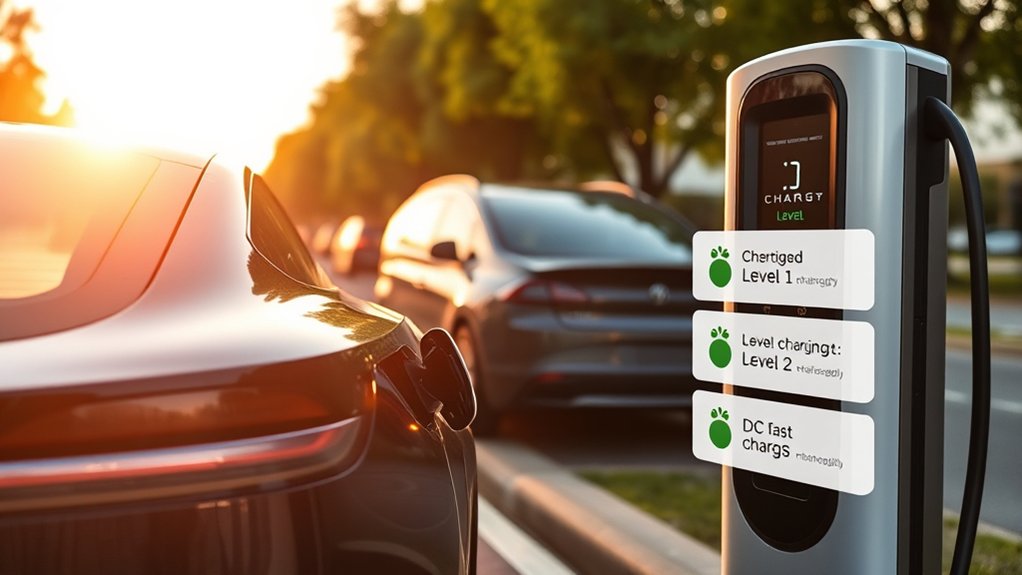
EV charging is usually described in three everyday categories: Level 1, Level 2, and DC fast charging. The right one depends on your daily mileage, your home electrical setup, your vehicle’s onboard charger, and whether you are charging at home or on the road.
Most EV owners do the majority of their charging at home, while public and workplace stations add flexibility for longer days and road trips.
The U.S. Department of Energy’s Alternative Fuels Data Center explains that charging time depends on battery size, state of charge, vehicle limits, charger power, and electrical service.
| Charging Type | Typical Use | What to Expect |
| Level 1 | Standard 120V outlet | Slow charging, often about 3 to 5 miles of range per hour depending on vehicle efficiency. |
| Level 2 | Home, workplace, apartments, public parking | Often around 20 to 30 miles of range per hour, with speed varying by charger power and vehicle limits. |
| DC Fast Charging | Highway stops and fast public charging hubs | Can add a large amount of range quickly, but speed depends heavily on the EV, charger, temperature, and battery percentage. |
How to Charge Your EV at Home
Home charging is the most convenient option for many EV owners because you can plug in at night and start the next day with enough range for normal driving. You can use Level 1 charging with a standard outlet, but a Level 2 charger is usually better if you drive often, have a longer commute, or want faster overnight charging.
A Level 1 cord may be enough if you drive only a few miles per day and can leave the vehicle plugged in for long periods. A Level 2 setup is better if you want more predictable daily charging, share one EV with several drivers, or need to recover range quickly after work.
Warning: Do not treat EV charging like a normal phone charger. Avoid extension cords unless your vehicle manufacturer specifically allows one, stop using any outlet or cord that feels hot, and have a qualified electrician inspect your setup before adding a Level 2 charger.
Home Level 2 Installation Checklist
- Check your panel capacity: An electrician can confirm whether your electrical panel can handle the added load.
- Plan charger location: Place the charger where the cord reaches your vehicle’s charge port without stretching across walkways.
- Use a dedicated circuit: Many residential Level 2 chargers require a dedicated circuit sized for the charger.
- Confirm plug or hardwired setup: Some chargers use a NEMA outlet, while others are hardwired.
- Check permits and inspection rules: Local electrical code, HOA rules, rental agreements, or garage requirements may apply.
- Choose weather-rated equipment: Outdoor chargers should be rated for the location where they will be installed.
Pro Tip: Before buying a charger, check your EV’s maximum AC charging rate. A very powerful wall charger will not charge faster than your vehicle’s onboard charger can accept.
EV Connector Types and Compatibility
Before you use a public station, confirm that the plug matches your vehicle or that you have the correct adapter. Most North American EVs can use AC Level 1 and Level 2 charging, but DC fast charging depends on the fast-charge connector and vehicle support.
- J1772: Common for Level 1 and Level 2 AC charging on many non-Tesla EVs in North America.
- CCS: Also called SAE J1772 Combo, this adds DC fast-charging pins below the J1772 section.
- CHAdeMO: A DC fast-charging connector used by some older or Japanese-market EVs.
- J3400 / NACS: The connector based on Tesla’s North American Charging Standard design. SAE is standardizing it, and many automakers have announced adoption.
Connector support changes by model year, so always check your owner’s manual or your vehicle’s charging screen before relying on a specific station.
Master Fast Charging Techniques for Your EV
DC fast charging is best for long trips, busy travel days, or quick public top-ups. It is not usually necessary for every daily charge because home Level 2 charging is gentler, cheaper in many areas, and easier to schedule overnight.
- Arrive with room to charge: On road trips, plan to arrive at a fast charger with a buffer instead of reaching it at 1% battery.
- Use the faster part of the charging curve: Many EVs charge fastest at lower battery percentages and slow down as they approach 80% or higher.
- Stop around 80% when practical: If the next charger or destination is reachable, leaving at 70% to 80% can be faster than waiting for a slow top-off to 100%.
- Precondition the battery when available: Some EVs warm or cool the battery before fast charging when you set a fast charger as the navigation destination.
- Have a backup station: Public chargers can be busy, blocked, offline, or slower than advertised, so plan one nearby alternative.
Note: A 350 kW charger will not make every EV charge at 350 kW. Your vehicle’s battery system, temperature, battery percentage, and software decide the actual charging rate.
Using Apps to Find Public EV Charging Stations
Charging apps help you find stations, check plug types, read recent driver comments, and see whether a charger is available. Popular options include PlugShare, ChargePoint, Electrify America, EVgo, Tesla, and your vehicle’s built-in navigation system.
You can also use the Alternative Fueling Station Locator from the U.S. Department of Energy to search for public and private EV charging stations by location, route, connector type, and charging level.
Before a trip, install the apps for the charging networks along your route, add a payment method, and confirm whether the station requires an app, credit card, RFID card, or plug-and-charge setup.
Charging Costs: Home vs. Public
EV charging cost depends on three things: how many kilowatt-hours you add, what your electricity or charging-network rate is, and whether extra fees apply. The easiest formula is:
Charging cost = kilowatt-hours added × price per kilowatt-hour.
Home Charging Expenses
Home charging is often cheaper than public fast charging because you pay your residential electricity rate. If your utility offers time-of-use pricing, charging overnight or during off-peak hours may reduce your cost.
For example, if you add 40 kWh and your electricity rate is $0.16 per kWh, that session costs about $6.40 before taxes or fees. Your real cost may be higher or lower depending on local rates, charging losses, and utility plans.
When shopping for a home charger, check utility, state, local, and current federal incentive rules before you buy. Programs change, and some require approved equipment, permits, or installation by a licensed electrician.
Public Charging Fees
Public charging can be priced per kWh, per minute, by session, by membership tier, or through a mix of fees. DC fast charging usually costs more than home charging because the equipment is expensive, power demand is high, and the station provides convenience on the road.
Always review the station price in the app before you start. Also watch for idle fees, which can start if your vehicle remains plugged in after charging is complete.
Best Practices for EV Charging Etiquette
Good charging etiquette keeps stations available and reduces frustration for other drivers. A few simple habits make a big difference at busy public chargers.
- Move your EV when charging is done: Do not use a charging stall as regular parking.
- Use the right charger for your need: If you only need a slow top-up, do not block the fastest DC stall when a Level 2 station is available.
- Keep the cable tidy: Return the handle to the holder so the next driver does not find the cable on the ground.
- Do not unplug another vehicle: Only unplug another EV if the station clearly allows it and the driver has left permission.
- Respect accessible spaces: Do not use an accessible charging stall unless you are entitled to use that space.
How to Fix Common EV Charging Problems
If your EV will not charge, start with the simple checks first. Many charging problems come from a loose connector, a payment issue, an app error, a tripped breaker, or a station fault rather than a vehicle failure.
Common Charging Errors
- Check the connector: Make sure the plug type matches your vehicle and the connector is fully seated.
- Inspect the charge port: Look for dirt, ice, moisture, or debris that could prevent a secure connection.
- Restart the session: End the session in the app or on the charger, unplug, wait a moment, and try again.
- Check payment: Confirm your card, app balance, membership, or RFID card is active.
- Try another stall: If one connector fails, another connector at the same site may still work.
- Call support: Most public stations list a support phone number on the charger or in the app.
Slow Charging Solutions
Slow charging can happen even when nothing is broken. Your vehicle may slow the session because the battery is cold, hot, nearly full, or protecting itself. The charger may also share power with another stall or be limited by the site’s electrical capacity.
- For Level 1: Use a properly grounded outlet and avoid sharing the circuit with heavy appliances.
- For Level 2: Confirm the charger amperage, circuit size, and your vehicle’s onboard AC charging limit.
- For DC fast charging: Navigate to the charger in your EV if battery preconditioning is available.
- For cold weather: Expect slower charging until the battery warms up.
- For high battery percentages: Charging may slow sharply above 80% on many EVs.
Tips for Maximizing Your EV Battery Life
EV batteries are designed for long service life, but charging habits still matter. The best routine is simple: follow your owner’s manual, avoid unnecessary stress, and charge in a way that fits your daily driving.
- Use a daily charge limit: Many EV owners set a daily limit below 100%, often around 80% or 90%, unless they need full range for a trip.
- Avoid frequent deep discharges: Try not to run the battery very low unless necessary.
- Save 100% charges for longer drives: Charge to full shortly before departure rather than letting the car sit full for long periods.
- Do not overuse DC fast charging: It is helpful on trips, but home Level 2 charging is usually better for daily use.
- Protect the battery from extreme heat and cold: Park in shade, a garage, or a climate-moderated area when practical.
FuelEconomy.gov notes that EV batteries are designed for extended life and cites a DOE estimate of 12 to 15 years in moderate climates and 8 to 12 years in severe climates. That is not a guarantee for every vehicle, but it shows why temperature and charging habits are worth managing.
Charging Without a Garage or Driveway
You can still own an EV without a private garage, but you need a charging plan before buying. Look for reliable charging near places where the vehicle already sits for hours.
- Workplace charging: Ask whether your employer offers Level 2 charging or plans to add it.
- Apartment or condo charging: Check lease rules, HOA policies, assigned parking access, and electrical availability.
- Public Level 2 charging: Grocery stores, libraries, city lots, hotels, and parking garages may work for routine top-ups.
- Fast charging backup: Use DC fast charging when needed, but do not rely on it as your only plan unless stations near you are dependable and affordable.
Note: If you rent, get written permission before using an outlet that is not clearly assigned to you. Shared electrical use can create safety, billing, and lease issues.
Frequently Asked Questions
What is the 80/20 rule for EV charging?
The 80/20 rule means keeping the battery roughly between 20% and 80% for normal daily driving when that range fits your needs. It is a helpful habit, not a strict law. Follow your owner’s manual because some vehicles recommend different daily charge limits.
What EV charger does Volvo recommend?
For daily home charging, most Volvo EV and plug-in hybrid owners should use a compatible Level 2 AC charger if they want faster overnight charging. Check your exact Volvo owner’s manual for the maximum AC charging rate, connector type, and charging-limit settings for your model year.
What charger does the Equinox EV use?
The Chevrolet Equinox EV has used CCS-style fast charging in recent North American model years, while connector plans can change as automakers move toward J3400/NACS. Confirm your exact model year in the owner’s manual or on the vehicle’s charge-port label before planning a trip.
What drains an EV battery the most?
High speeds, aggressive acceleration, steep hills, cold weather, hot weather, heavy cargo, underinflated tires, cabin heating, and towing can all reduce range. Preconditioning while plugged in, driving smoothly, and keeping tires properly inflated can help.
Is it bad to charge an EV to 100%?
Charging to 100% is fine when you need maximum range, especially before a long trip. For daily use, many EVs let you set a lower charge limit to reduce battery stress. Do not leave the vehicle sitting at 100% for long periods unless your manual says it is acceptable.
Can I install a Level 2 charger myself?
You should not install a new Level 2 circuit unless you are qualified to do electrical work and local code allows it. Most homeowners should hire a licensed electrician to check panel capacity, install the correct circuit, and handle permits or inspections.
Conclusion
EV charging becomes easy once you match the charger to the job. Use Level 1 for slow backup charging, Level 2 for everyday home or workplace charging, and DC fast charging when you need range quickly on the road. Check connector compatibility, plan public charging before long trips, move your vehicle when charging is done, and follow your owner’s manual for battery-care settings. With the right routine, you can keep your EV ready without overthinking every charge.
Sources
- U.S. Department of Energy Alternative Fuels Data Center: Electric Vehicle Charging Stations — charging levels, Level 1/Level 2/DC fast charging, connector types, home charging, and public charging infrastructure.
- U.S. Department of Energy Alternative Fueling Station Locator — finding public EV charging stations by location, route, fuel type, and charger details.
- FuelEconomy.gov: All-Electric Vehicles — EV efficiency, driving range, recharge time, and battery-life background.
- Reliability of Open Public Electric Vehicle Direct Current Fast Chargers — public DC fast-charger reliability findings and common failure categories.