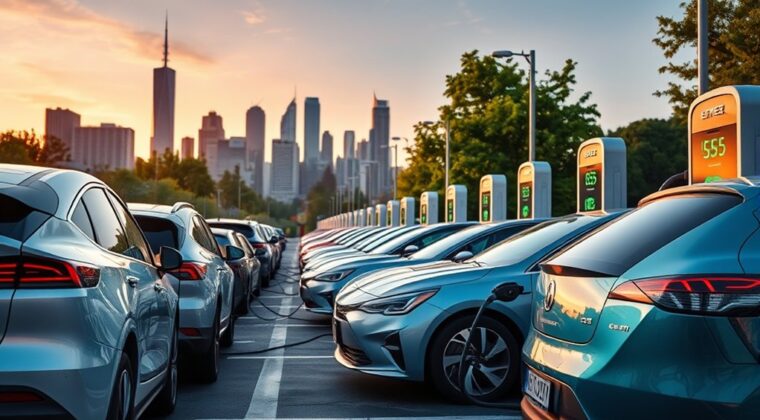
EV charging networks in the U.S. are not all built for the same job. Some are best for overnight Level 2 charging at hotels, workplaces, apartments, and parking garages. Others focus on DC fast charging for road trips and quick top-ups. The best choice depends on your vehicle’s connector, your charging speed, station reliability, payment options, and whether the app shows real-time availability before you arrive.
Quick Answer
For daily use, Level 2 networks such as ChargePoint often make the most sense at work, apartments, hotels, and public parking. For road trips, choose DC fast networks such as Tesla Supercharger, Electrify America, EVgo, and other high-power corridor sites that match your vehicle’s connector and show live availability.
Key Takeaways
- As of July 8, 2026, the U.S. Alternative Fuels Data Center lists 81,155 electric charging station locations and 252,884 charging ports, including 178,534 Level 2 ports and 73,621 DC Fast ports.
- Level 2 charging is best when your car will sit for hours. DC fast charging is best when travel time matters.
- Connector fit matters. U.S. EVs may use J1772, CCS, CHAdeMO, or NACS/J3400 depending on the vehicle and charger.
- Tesla Superchargers are no longer simply “Tesla-only.” Some sites are Tesla-only, some support all EVs with Magic Dock, and some open by automaker through NACS access.
- Always check live station status, recent driver comments, pricing, and backup chargers before starting a road-trip charging stop.
Understanding the Current Landscape of EV Charging in the U.S.
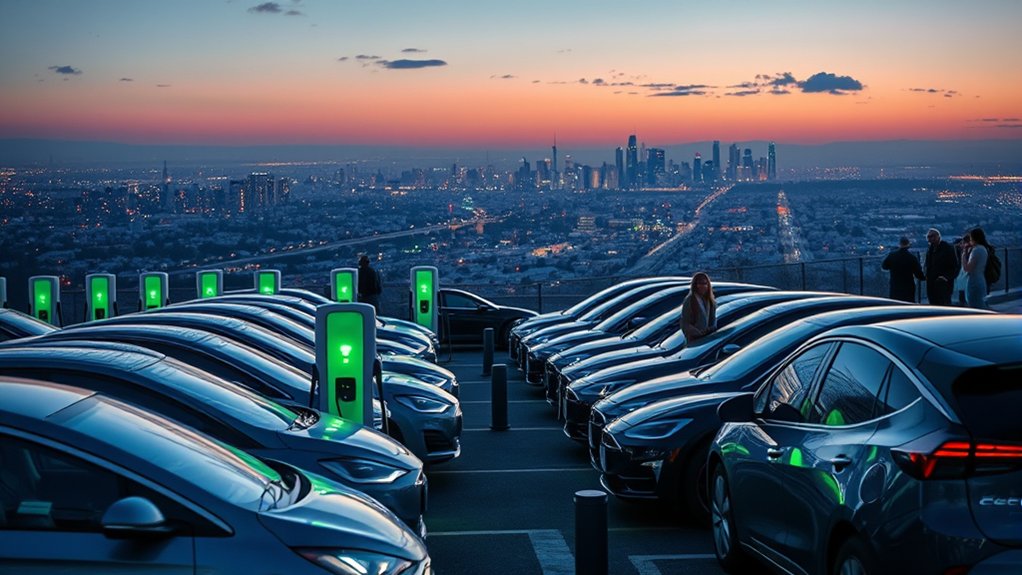
The U.S. charging network is growing quickly, but the numbers need context. The U.S. Department of Energy Alternative Fuels Data Center listed 81,155 electric station locations and 252,884 electric charging ports as of July 8, 2026. That total includes 710 Level 1 ports, 178,534 Level 2 ports, and 73,621 DC Fast ports. It does not include residential home chargers.
| Charging Type | U.S. Ports Listed by AFDC | Best Use |
|---|---|---|
| Level 1 | 710 | Emergency, low-power, or long dwell-time charging |
| Level 2 | 178,534 | Home, work, hotels, apartments, shopping centers, and parking garages |
| DC Fast | 73,621 | Road trips, quick top-ups, highway corridors, and busy urban charging hubs |
A station location is the physical place where charging is offered. A charging port powers one vehicle at a time. A connector is the plug that attaches to the vehicle. One port can have more than one connector, but it usually charges only one vehicle at a time.
The most useful charging network is not always the biggest one. It is the one with the right connector, working ports, clear pricing, enough stalls, and good locations for your driving pattern.
AC Level 2 vs. DC Fast Charging: Which Is Right for You?
AC Level 2 charging is the better choice when your EV will be parked for several hours. According to the AFDC charging equipment guide, Level 2 charging adds about 25 miles of range per hour, though the exact result depends on the charger, vehicle, battery size, and temperature.
DC fast charging is the better choice when time matters. AFDC describes DC fast charging as adding about 100 to 200+ miles of range in 30 minutes, with equipment rated up to 500 kW. Your EV may not accept the charger’s full rating, especially when the battery is cold, nearly full, or limited by its own charging curve.
Note: A 350 kW charger does not guarantee your vehicle will charge at 350 kW. The vehicle controls how much power it accepts, and charging usually slows after the battery reaches a higher state of charge.
Key Players in the EV Charging Network Arena
The major U.S. EV charging networks serve different needs. Some focus on fast highway charging. Others focus on workplace, apartment, fleet, or destination charging. Instead of choosing one network forever, most EV drivers use two or three apps and keep at least one backup charging option for road trips.
| Network | Best For | Typical Strength | Main Thing to Check |
|---|---|---|---|
| Tesla Supercharger | Road trips and high-use fast charging | Large sites, route planning, live availability, and simple Tesla vehicle experience | Whether your non-Tesla EV can use that exact site |
| ChargePoint | Level 2 charging at work, apartments, hotels, parking lots, and destinations | Broad destination charging presence and app-based access | Power level, pricing, and whether the station is public or restricted |
| Electrify America | CCS and NACS public fast charging | High-power DC fast charging and highway or retail locations | Live status, payment method, and connector availability |
| EVgo | Urban fast charging and retail-area charging | Fast charging in metro areas and partner locations | Idle fees, membership pricing, and stall availability |
| Blink and other site-host networks | Apartments, commercial parking, local destinations, and mixed public sites | Convenient local placement | Recent check-ins and whether the charger is working |
What Makes Tesla’s Supercharger Network Unique?
Tesla’s Supercharger network is known for route integration, high stall counts at many sites, and a smoother charging experience for Tesla owners. For Tesla vehicles, the car can route to Superchargers, estimate arrival battery level, precondition the battery when supported, and start charging with minimal steps.
The bigger change is access for other EVs. Tesla says select Superchargers are now open to vehicles outside Tesla if they are NACS-equipped or use an approved NACS DC adapter. Tesla also explains that there are three types of Superchargers: Tesla-only sites, All EVs sites with Magic Dock, and NACS Superchargers that open gradually by vehicle manufacturer.
Warning: Do not assume every Tesla Supercharger works with every non-Tesla EV. Check your vehicle app, the Tesla app, or Tesla’s map before driving there, and use only Tesla-approved or manufacturer-approved DC adapters.
Seamless User Experience
The strongest Tesla advantage is the charging workflow. Tesla owners usually plug in, charge, and leave without scanning a card or starting a separate session in a third-party app. Live availability and route planning are built into the vehicle interface.
Non-Tesla drivers may need the Tesla app, a supported vehicle account, a compatible adapter, or a Magic Dock site. The process is improving, but it is still more important for non-Tesla drivers to confirm access before each trip.
Changing Access for Non-Tesla EVs
The old idea that Superchargers are only for Tesla owners is no longer fully accurate. Some Superchargers remain Tesla-only, but Tesla has opened selected locations to other EVs through Magic Dock or NACS access by automaker. The access list has expanded to many brands, including Ford, GM, Rivian, Hyundai, Kia, BMW, Mercedes-Benz, Toyota, Volkswagen, Volvo, and others.
Advanced Technology Integration
Tesla’s network stands out because the charger, app, vehicle software, route planner, payment system, and live station data are tightly connected. Newer V4 hardware also helps address cable-reach problems for non-Tesla EVs because charge port locations vary by vehicle.
How ChargePoint and Electrify America Improve Charging Options
ChargePoint is especially useful for Level 2 charging at destinations where the vehicle will sit for a while. That includes workplaces, apartment communities, garages, hotels, medical campuses, universities, and shopping areas. For many drivers, these slower stops matter more than fast charging because the car charges while they do something else.
Electrify America focuses more heavily on public fast charging. Its charger locator identifies fast charging stations, Level 2 locations, coming-soon sites, and connector types such as CCS, CHAdeMO, NACS, and Level 2. Electrify America’s investment plan also describes a 10-year, $2 billion zero-emission vehicle infrastructure program in the United States.
For road trips, Electrify America can be a strong choice for CCS-equipped EVs and for vehicles gaining NACS access, but you should still check live charger status and recent driver reports. High advertised power does not help if the station is full, derated, blocked, or offline.
How EVgo, Blink, and Newer Networks Contribute to EV Charging Access
EVgo, Blink, Shell Recharge, Francis Energy, FLO, IONNA, and other operators help fill gaps that one or two national networks cannot cover alone. EVgo is often useful in metro areas and retail corridors. Blink and similar site-host networks can be useful at apartments, commercial spaces, parking lots, and local destinations.
Newer high-power networks are also changing the market. Automaker-backed networks such as IONNA are designed to improve fast-charging availability, site amenities, and connector compatibility. These newer networks may not replace Tesla, ChargePoint, Electrify America, or EVgo immediately, but they can create more road-trip options as they expand.
Connector Compatibility: J1772, CCS, CHAdeMO, and NACS/J3400
Connector compatibility is one of the easiest places to make a mistake. Before you choose a charging network, know what your vehicle can accept.
- J1772: Common for AC Level 1 and Level 2 charging on many non-Tesla EVs.
- CCS: Common for DC fast charging on many non-Tesla EVs sold in North America.
- CHAdeMO: Older DC fast connector used by some vehicles, including older Nissan Leaf models. Availability is shrinking compared with CCS and NACS.
- NACS/J3400: Tesla’s connector design, now standardized as SAE J3400 and increasingly adopted by other automakers in North America.
Pro Tip: Save your vehicle details in each charging app. Good apps can filter out stations your car cannot use, which prevents wasted stops at incompatible chargers.
Why Reliable Charging Stations Matter
Reliability matters as much as charger count. A charging network can look strong on a map but still fail a driver if the screen is broken, the connector is damaged, payment fails, the app status is wrong, or the charger cannot initiate a session.
A field study of open public CCS DC fast chargers in the Greater Bay Area found that 72.5% of tested EVSE were functional at the time of testing, while 22.7% were nonfunctioning due to issues such as failed charge initiation, unresponsive screens, payment failures, network problems, or broken connectors. That study should not be treated as a current national average, but it clearly shows why live status and recent check-ins matter.
Federal standards are pushing the market toward better reliability. The NEVI final rule requires each covered charging port to have average annual uptime greater than 97%. It also requires clearer pricing, real-time status, and payment access for federally funded projects.
Accessibility for All EVs
Good charging access means more than installing hardware. Drivers need chargers near useful routes, clear signs, well-lit sites, safe parking, working payment methods, accessible stall design, and accurate app information. Rural corridors, apartment-heavy neighborhoods, and older urban areas can still be harder for EV owners who cannot charge at home.
Impact on Travel Plans
For road trips, plan charging stops before you leave and build in a backup. A good charging stop should have enough stalls, a compatible connector, recent successful check-ins, clear pricing, nearby amenities, and a second option within range if the first station is full or down.
Pricing Models: What to Expect at EV Charging Stations
Public EV charging pricing varies by network, location, power level, time of day, and membership status. Some stations bill by kilowatt-hour. Some may add session fees, idle fees, parking fees, or congestion fees. A station at a premium highway location may cost more than a slower charger at work or at home.
Federally funded chargers under the NEVI standards must clearly display real-time pricing and explain other fees. Unless charging is free, covered stations must also provide secure payment methods that include contactless debit or credit card payment and either an automated toll-free phone option or SMS option.
- Home charging: Usually cheapest if you have access and a favorable utility rate.
- Level 2 public charging: Often cheaper than DC fast charging, but slower.
- DC fast charging: Usually costs more, but saves time during travel.
- Membership plans: Can lower rates if you use the same network often.
- Idle or congestion fees: Can apply if you stay plugged in after charging or occupy a busy fast-charging stall too long.
Future Trends in EV Charging Infrastructure Development
The U.S. charging market is moving toward more ports, more high-power stations, and easier cross-brand access. The biggest trends are NACS/J3400 adoption, more fast-charging hubs with multiple stalls, better app data, clearer payment methods, and stricter reliability expectations for federally funded projects.
Medium- and heavy-duty EVs will also increase demand for higher-power charging. Some sites will need major utility upgrades, on-site battery storage, solar support, or smarter load management to avoid grid bottlenecks and expensive demand charges.
| Trend | What It Means for Drivers |
|---|---|
| NACS/J3400 expansion | More non-Tesla EVs will be able to use selected Tesla-style charging hardware, but access still depends on vehicle support and site compatibility. |
| More high-power hubs | Road-trip stops should become easier where multiple fast chargers are installed at one site. |
| Better payment rules | Drivers should see more contactless payment options and clearer price display at federally funded sites. |
| Reliability standards | Covered ports must meet uptime reporting and performance expectations, which should improve confidence over time. |
| Fleet and truck charging | More depots and heavy-duty corridors may appear, but they can also increase grid-planning complexity. |
Tips for Finding the Best Charging Stations Near You
The best charging station near you is not always the closest one. Choose the station that fits your connector, has enough working ports, shows recent successful use, and gives you something useful to do while you wait.
Use Charging Apps Before You Drive There
Use apps such as PlugShare, ChargePoint, Tesla, Electrify America, EVgo, your automaker’s app, or your vehicle’s built-in navigation. Check the station’s live status, connector type, power rating, price, user comments, and parking restrictions.
Check Station Availability and Recent Check-Ins
A map pin is not enough. Look for recent successful sessions, not just the station listing. If several drivers report broken screens, blocked stalls, payment problems, or slow speeds, choose another station when possible.
Consider Charging Speed and Battery State
Use DC fast charging when you need a quick stop. Use Level 2 when the car will sit for hours. On road trips, it is often faster to charge from about 10% to 70% or 80% and then continue driving, rather than waiting for the last part of the battery to fill slowly.
Keep a Backup Stop Within Range
Before you commit to a fast charger, know where your second option is. This is especially important in cold weather, rural areas, holiday travel, towing, or mountain driving, where range can drop faster than expected.
Frequently Asked Questions
What factors influence the cost of charging at different EV networks?
Charging cost can depend on the local electricity rate, charger speed, network pricing model, time of day, membership status, taxes, parking fees, idle fees, and congestion fees. DC fast charging usually costs more than home or Level 2 charging because it uses higher-power equipment and more expensive site infrastructure.
How do charging networks handle maintenance and reliability issues?
Networks use remote monitoring, driver reports, field technicians, parts replacement, software updates, and uptime tracking. Reliability still varies by site. For federally funded NEVI projects, covered ports must meet an average annual uptime requirement above 97%, with specific reporting rules.
Are there mobile apps to locate charging stations easily?
Yes. Common options include PlugShare, ChargePoint, Tesla, Electrify America, EVgo, and automaker apps. A good app should show connector type, live availability, pricing, station power, recent user feedback, and navigation.
What payment methods are accepted at various charging networks?
Payment options vary. Many networks accept app payments, RFID cards, stored credit cards, Plug & Charge, or contactless card payment at supported stations. Federally funded NEVI stations must provide secure payment options that include contactless major debit or credit cards plus either an automated toll-free phone or SMS payment option unless charging is free.
How can I report a malfunctioning charging station?
Use the network’s app, the phone number on the charger, or the station details page in a charger-locator app. Include the station ID, port number, connector type, error message, time, and what happened. If the charger is listed in AFDC, you can also suggest station updates through the AFDC Station Locator.
Can non-Tesla EVs use Tesla Superchargers?
Some can, but not at every Tesla Supercharger. Tesla lists Tesla-only Superchargers, All EVs Superchargers with Magic Dock, and NACS Superchargers that open gradually by vehicle manufacturer. Non-Tesla drivers should check compatibility in the Tesla app, their automaker app, or Tesla’s map before relying on a Supercharger stop.
Is Level 2 or DC fast charging better for battery health?
For everyday charging, Level 2 is usually the gentler and more convenient choice. DC fast charging is useful for travel and quick stops, but frequent high-power charging can create more heat. Follow your vehicle manufacturer’s charging guidance, especially for daily charge limits and battery preconditioning.
Conclusion
The best EV charging network depends on how and where you drive. Use Level 2 charging when your car will sit for hours, and use DC fast charging when you need to get back on the road quickly. Tesla Supercharger access, NACS/J3400 adoption, clearer federal standards, and more high-power sites are improving the U.S. charging experience, but you still need to check connector compatibility, live availability, pricing, and recent driver reports before each important charging stop.
Sources
- U.S. Department of Energy Alternative Fuels Data Center: Alternative Fueling Station Counts by State — current U.S. charging station and port counts by charging level.
- U.S. Department of Energy Alternative Fuels Data Center: Electric Vehicle Charging Stations — charging levels, connector terminology, and charging speed estimates.
- Tesla Support: Supercharging Other EVs — Tesla Supercharger access for non-Tesla EVs, Magic Dock, NACS access, and payment details.
- Electrify America: Our Investment Plan — Electrify America’s ZEV infrastructure investment background.
- Federal Register: National Electric Vehicle Infrastructure Standards and Requirements — NEVI standards for uptime, payment, pricing, power level, and interoperability.
- Reliability of Open Public Electric Vehicle Direct Current Fast Chargers — field study on CCS DC fast charger functionality in the Greater Bay Area.