Yes, most electric cars can go through a car wash safely when you prepare the vehicle first. Close the charging port, secure every door, window, and sunroof, turn off automatic wipers, fold the mirrors if needed, and use your EV’s Car Wash Mode or neutral/free-roll setting when the wash requires it. The safest choice is usually a well-maintained touchless wash, a gentle soft-touch wash, or a careful hand wash with low-pressure water.
Quick Answer
You can take an electric car through a car wash if it is unplugged, the charge port door is fully closed, and the vehicle is set up for the wash. Use Car Wash Mode if available, or follow the owner’s manual for neutral, wipers, mirrors, locks, and automatic brake settings.
Key Takeaways
- Most EVs can use automatic car washes, but the exact setup depends on your model and owner’s manual.
- Never wash the vehicle while it is plugged in or charging.
- Close the charge port, windows, doors, sunroof, trunk, and frunk before entering.
- Use Car Wash Mode, neutral, or free-roll only as your vehicle and the wash operator require.
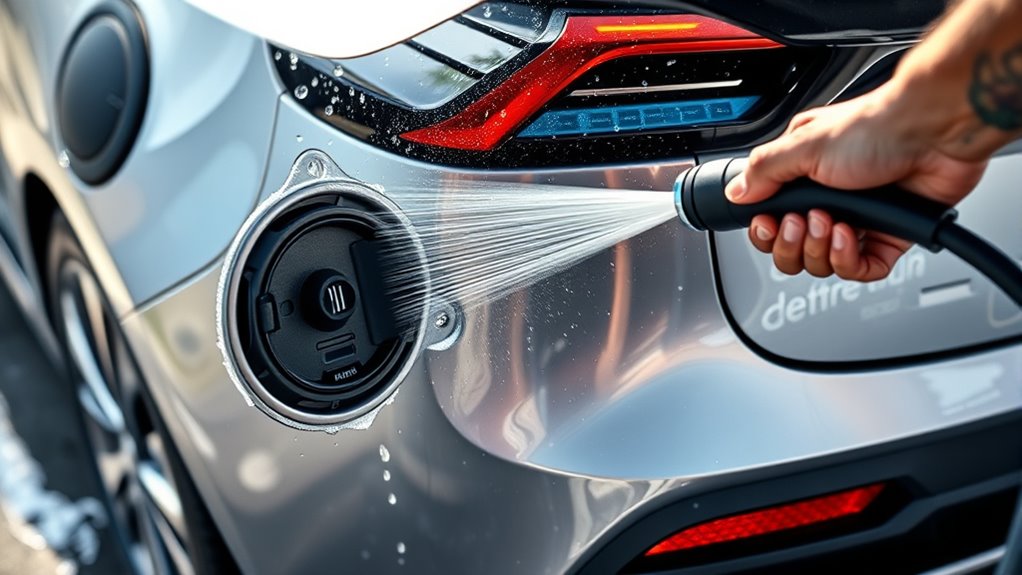
- Avoid direct high-pressure spray on the charge port, cameras, sensors, seals, and trim.
At a Glance
| Time Required | 2 to 5 minutes to prepare the EV before entering the wash |
| Difficulty | Easy, but you must follow your vehicle’s wash and neutral instructions |
| Tools Needed | Owner’s manual, microfiber towel, pH-balanced car shampoo for hand washing |
| Cost | Usually free for prep; about $10 to $30 for a typical automatic wash |
Can Electric Cars Go Through a Car Wash?
Yes, electric cars can go through many car washes safely, but they are not all prepared the same way. The key is to treat the EV like a modern vehicle with cameras, sensors, seals, and a charging inlet that should not be blasted with direct pressure.
Before you enter, make sure the vehicle is not charging, the charging cable is removed, and the port door is fully closed. Then check the windows, doors, mirrors, sunroof, trunk, and frunk. If your EV has a wash setting, turn it on before the wash begins.
Some EVs, including supported Tesla models, provide a dedicated Car Wash Mode in the vehicle controls. Tesla’s owner guidance explains that this mode can prepare the vehicle for an automatic wash by managing items such as windows, wipers, charge-port locking, and free-roll behavior. Always confirm the exact steps in your own model’s owner’s manual, because software and model features can change.
Warning: Do not wash an EV while it is plugged in or actively charging. Stop the charging session, unplug the cable, close the charge-port door, and avoid spraying directly into the charging inlet.
EV Car Wash Checklist Before You Enter
Use this quick checklist before you pull into a tunnel, bay, or hand-wash area. It helps protect the charging port, mirrors, wipers, sensors, cameras, and trim.
- Stop charging and unplug the EV.
- Close the charging port door until it latches.
- Close all doors, windows, sunroof, trunk, and frunk.
- Fold side mirrors if the wash path is narrow or the vehicle recommends it.
- Turn off automatic windshield wipers.
- Disable automatic liftgate opening if your vehicle has that setting.
- Use Car Wash Mode if your EV offers it.
- Shift to neutral or enable free roll only when the wash requires it.
- Keep the key or phone key with you so the vehicle does not lock unexpectedly.
Close Charging Port
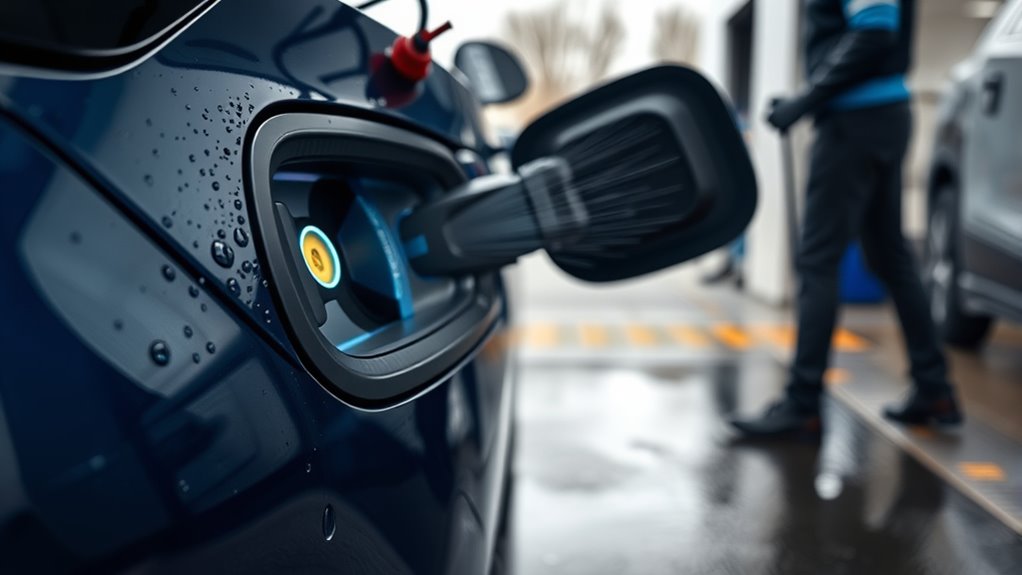
Make sure the charging port door is fully closed before you enter the wash. A properly latched door helps keep water, soap, and debris away from the charging inlet.
Check the seal and hinge area for grit, leaves, ice, or road salt. If the seal is loose, cracked, or warped, skip the automatic wash until the problem is checked. A damaged port door may not protect the inlet well under spray.
- Confirm the port door sits flush with the body.
- Wipe away grit around the seal.
- Do not aim a pressure washer at the port.
- Check for moisture inside the port area after the wash.
Enable Car Wash Mode
If your EV includes Car Wash Mode, turn it on before you enter the wash bay. Depending on the vehicle, this setting may close or check windows, lock the charge port, fold mirrors, disable automatic wipers, reduce parking-sensor alerts, or help the car stay in neutral/free roll.
Supported Tesla models use Car Wash Mode through the vehicle controls. For conveyor washes, Tesla also provides an Enable Free Roll function on supported vehicles. Other EV brands may use different menus or may not use the term “Car Wash Mode” at all.
Note: Car Wash Mode is not universal. If your EV does not have it, manually close openings, turn off auto wipers, fold mirrors if needed, and follow your owner’s manual for neutral or tow-conveyor operation.
Use Neutral or Free Roll Correctly
Many drive-through car washes use a conveyor that pulls the vehicle forward. In that type of wash, the operator may ask you to shift into neutral and keep your foot off the brake. Some EVs also have Auto Hold, creep, one-pedal driving, or parking-brake behavior that can interfere with the conveyor.
Do not guess. Check the vehicle display and follow the wash operator’s instructions. If the EV will not stay in neutral, ask the operator to pause the wash and exit safely. Forcing the process can damage the wash equipment or the vehicle.
Why Charging Ports Need Care
The charging port is built for outdoor use, but it still needs basic care. EV charging inlets use electrical contacts and communication pins. The SAE J1772 charging-coupler standard covers the physical and communication design used by many North American EV charging systems.
That does not mean you should blast the port area with high-pressure water. Seals work best when they are clean, closed, and not damaged. Strong spray can push water into small gaps around trim, hinges, cameras, sensors, and charge-port doors.
- Keep the port closed during washing.
- Do not wash while plugged in.
- Do not insert towels or tools into the inlet.
- Let the port area dry before charging if you see moisture.
- Contact service if the car shows a charging or electrical warning after washing.
How Tesla Car Wash Mode Helps
Tesla Car Wash Mode is designed to reduce common automatic-wash problems. On supported models, it can prepare the vehicle by managing windows, wipers, locks, charge-port behavior, and related settings. For conveyor systems, supported Tesla vehicles can also use Enable Free Roll so the wash can move the car without drivetrain resistance.
Use the mode before the wash begins, not after the vehicle is already on the track. Check the center display for confirmation, then follow the operator’s directions for neutral, braking, and steering.
Cybertruck owners should be extra careful because the stainless-steel finish has its own cleaning guidance. Tesla’s Cybertruck manual guidance points owners toward gentle cleaning methods, pH-neutral soap, and care around harsh cleaners. Check the Cybertruck owner’s manual before using any automatic wash.
What If Your EV Has No Car Wash Mode?
You can still use many car washes if your EV does not have a dedicated wash setting. You just need to handle the steps manually.
- Turn off automatic wipers.
- Fold mirrors if the wash is narrow or uses brushes.
- Disable Auto Hold if the conveyor needs the wheels to roll freely.
- Shift to neutral only when instructed.
- Keep the vehicle powered as required by the manual so it stays in neutral.
- Do not open the door during the wash unless the operator tells you to exit.
If you are unsure how to keep your EV in neutral, choose a stationary bay, touchless bay, or hand wash instead of a conveyor tunnel.
Best Car Wash Types for EVs
The best car wash for an EV is gentle, clean, and compatible with your vehicle’s neutral and safety settings. Each wash type has benefits and tradeoffs.
- Touchless wash: No brushes touch the paint, so scratch risk is lower. The downside is that some systems use stronger spray or stronger chemicals.
- Soft-touch wash: Modern soft cloth can clean well, but dirty or worn brushes can scratch paint and trim.
- Self-serve pressure bay: Gives you control, but you must keep pressure low and avoid sensitive areas.
- Hand wash: Often the safest choice when done with clean microfiber tools and pH-balanced shampoo.
For pressure washing, use a wide spray pattern, keep distance from the paint, and avoid cameras, sensors, seals, trim edges, and the charging port. General pressure-washing guidance for vehicles recommends caution because high-pressure water can harm paint and sensitive parts when used too close or too aggressively.
Pro Tip: If you can choose the wash level, skip aggressive underbody blasts and heavy wax add-ons unless your owner’s manual allows them. A basic gentle wash is usually enough for routine EV cleaning.
How to Fold Mirrors and Disable Wipers
Fold the mirrors before entering a narrow tunnel or a wash that uses moving brushes. This reduces the chance that a mirror catches on cloth, rails, or guide equipment.
Next, turn off automatic wipers. Rain-sensing wipers can activate when water hits the windshield, which can stress the wiper arms or blades during the wash. If your EV has Car Wash Mode, confirm that the display shows wipers are disabled. If it does not, turn them off manually.
Also check rear wipers, camera washers, and automatic liftgate settings. Some vehicles have hands-free liftgate sensors that can react near moving water, brushes, or people behind the car. Lock or disable that feature if your manual recommends it.
Signs a Car Wash Is Too Harsh
A car wash may be too harsh for your EV if the equipment looks dirty, worn, or poorly maintained. Treat the condition of the wash as part of the safety check.
- Brushes look stiff, frayed, muddy, or gritty.
- Rollers slap hard against mirrors or trim.
- The wash has a strong chemical smell.
- Spray hits the car with extreme force at close range.
- The operator cannot explain neutral or conveyor steps for EVs.
- The wash requires you to leave the vehicle in a way your manual does not allow.
If any of these signs are present, choose another wash. It is better to wait than risk scratches, trim damage, wiper damage, or water pushed into sensitive areas.
How to Wash an EV by Hand Safely
A careful hand wash gives you the most control around the charge port, cameras, sensors, badges, and trim. Use gentle products and low-pressure water.
Safe Wash Supplies
Use supplies made for automotive finishes. Avoid dish soap, harsh degreasers, stiff brushes, and abrasive pads.
- pH-balanced car shampoo
- Two buckets or a grit guard if available
- Soft microfiber wash mitt
- Clean microfiber drying towels
- Low-pressure hose spray
- Detail towel for cameras, sensors, and charge-port edges
Gentle Hand-Wash Steps
- Park in shade and let hot panels cool.
- Unplug the EV and close the charge-port door.
- Rinse from the top down with low-pressure water.
- Wash with a microfiber mitt and pH-balanced shampoo.
- Keep the mitt clean so grit does not scratch the paint.
- Do not spray directly into the charging port, cameras, sensors, or seals.
- Rinse gently from top to bottom.
- Dry with clean microfiber towels.
- Pat dry around the charge-port door, cameras, mirrors, and badges.
After the Wash: What to Check Before Driving Away
After the wash, take one minute to check the vehicle before you leave the bay or parking area.
- Make sure mirrors are unfolded and locked in place.
- Turn automatic wipers back on only after the wash is complete.
- Check the charge-port door for trapped water or soap.
- Wipe camera lenses and parking sensors with a clean microfiber towel.
- Look for dashboard warnings before driving.
- Confirm the vehicle is back in Drive, not Neutral or free roll.
- Test brakes gently because rotors may be wet.
If the charge port looks wet inside, leave the door open only in a safe, dry place and let the area air-dry before charging. Do not use heat guns, compressed air at close range, or tools inside the inlet.
How to Keep Your EV Clean Longer
Regular washing helps protect paint, trim, glass, sensors, and cameras. Dirt, road salt, pollen, bird droppings, tar, and bug residue can bond to the finish if they sit too long.
- Wash soon after road salt, heavy pollen, mud, or bird droppings.
- Park in a garage or covered area when possible.
- Use a pH-balanced car shampoo for hand washing.
- Apply a compatible wax, sealant, or ceramic spray if your owner’s manual allows it.
- Keep microfiber towels clean and separate from wheel-cleaning towels.
Do not use household cleaners on paint or trim. Some strong cleaners can stain plastics, dull finishes, or leave residue on cameras and sensors.
Frequently Asked Questions
Is it safe to run an EV through a car wash?
Yes, it is usually safe if the EV is unplugged, the charge port is closed, all openings are secured, and the vehicle is set up for the wash. Use Car Wash Mode if available and follow the owner’s manual for neutral, wipers, mirrors, and brake settings.
Can you take an EV through a drive-through car wash?
Yes, but conveyor-style drive-through washes need extra care. The vehicle may need neutral, free roll, Auto Hold disabled, and wipers off. If you do not know how to keep your EV rolling freely, use a stationary touchless bay or hand wash instead.
Why do some people say Tesla vehicles cannot go through a car wash?
Most Tesla vehicles can use many car washes when prepared correctly, but owners must use the right settings. Supported models include Car Wash Mode, and conveyor washes may require Enable Free Roll. Cybertruck has more specific finish-care guidance, so Cybertruck owners should check the manual before using automatic washes.
Can high-pressure water damage an EV charging port?
High-pressure water can be risky if it is aimed directly at the charge-port door, seals, cameras, sensors, or trim gaps. Keep pressure low, use distance, and avoid direct spray into the charging area.
Can you wash an electric car while it is charging?
No. Stop the charging session, unplug the cable, close the charge-port door, and then wash the vehicle. Do not spray water at a connected charging cable, wall connector, or open inlet.
Is touchless better than soft-touch for EVs?
Touchless washes avoid brush contact, which lowers scratch risk. Soft-touch washes can also be safe when the equipment is clean and well maintained. Avoid dirty brushes, harsh chemicals, and strong spray aimed at sensitive areas.
Conclusion
You can take most electric cars through a car wash, but preparation matters. Unplug first, close the charging port, secure every opening, turn off automatic wipers, and use Car Wash Mode, neutral, or free roll only as your vehicle requires. Choose a gentle wash, avoid direct high-pressure spray on sensitive areas, and check the charge port, mirrors, cameras, and dashboard warnings before you drive away.
Sources
- Tesla Model 3 Owner’s Manual — supports Tesla Car Wash Mode, vehicle settings, and owner-manual verification.
- Tesla Cybertruck Owner’s Manual — supports Cybertruck-specific cleaning and finish-care caution.
- SAE J1772 Charging Coupler Standard — supports charging-coupler and EV inlet context.
- Popular Mechanics Pressure-Washing Guidance — supports low-pressure and sensitive-area cautions for vehicle washing.
- NHTSA Interim Guidance for Electric and Hybrid Vehicles — supports general EV safety awareness around high-voltage vehicles.