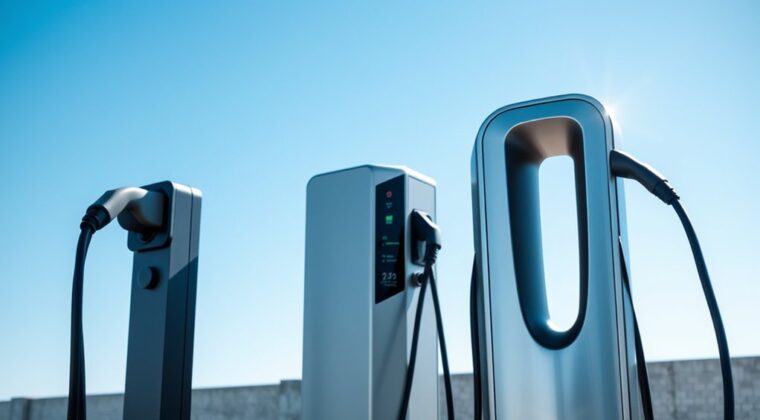
EV charging speed depends on the charger level, your vehicle’s maximum charge rate, battery size, battery temperature, and state of charge. In simple terms, Level 1 charging is slow but easy, Level 2 charging is the best fit for most home charging, and DC fast charging, often called Level 3, is built for road trips and quick public stops.
Quick Answer
Level 1 usually adds only a few miles of range per hour, Level 2 often adds about 10 to 30+ miles per hour, and DC fast charging can add roughly 100 to 200+ miles in about 30 minutes when your EV and the station support those speeds.
Key Takeaways
- Level 1 uses a standard 120-volt outlet and works best for short daily driving, plug-in hybrids, or backup charging.
- Level 2 uses 240 volts at home or 208 volts in many commercial settings and is the best everyday charging choice for most EV owners.
- DC fast charging is the fastest option, but real speed depends on the charger, the EV, battery temperature, and state of charge.
- Connector type matters. North American EVs may use J1772, CCS, CHAdeMO, or SAE J3400/NACS depending on the vehicle and charging level.
- For road trips, charging from about 20% to 80% is usually faster than waiting for a full 100% charge.
At a Glance
| Time Required | 5 to 10 minutes to compare your daily mileage, home power, and public charging needs |
| Difficulty | Easy for charger comparison; professional help may be needed for Level 2 installation |
| Tools Needed | Owner’s manual, EV charging app, route planner, and basic home electrical panel information |
| Cost | Level 1 may use the included cord; Level 2 costs vary by charger, wiring, permits, and panel capacity; DC fast charging is usually paid per session, minute, or kWh where allowed |
Get to Know the Three Levels of EV Charging
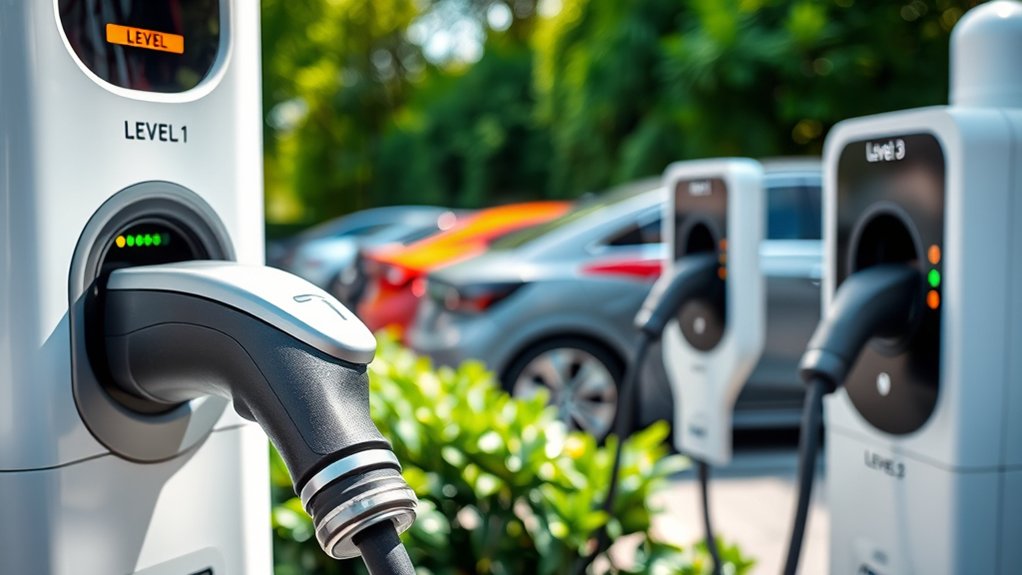
When you compare EV charging levels, think of them as three different refueling speeds. Level 1 is the slow outlet option, Level 2 is the everyday home and workplace option, and DC fast charging is the highway stop option.
Level 1 charging uses a standard 120-volt household outlet. The U.S. Department of Energy’s Alternative Fuels Data Center estimates about 5 miles of range per hour for Level 1 charging under typical assumptions. In real life, many EV owners see roughly 3 to 5 miles per hour, depending on the vehicle and the outlet.
Level 2 charging uses 240 volts in many homes or 208 volts in many commercial locations. It is much faster than Level 1 and is the most practical choice if you drive daily and want to wake up with a usable charge. DOE estimates about 25 miles of range per hour for Level 2 under typical assumptions, while actual results can be lower or higher depending on the EV and charger output.
DC fast charging, often called Level 3 charging, bypasses the vehicle’s onboard AC charger and sends DC power directly to the battery. DOE lists typical DC fast charging as about 100 to 200+ miles of range in 30 minutes, but only when the vehicle, battery conditions, and station can support those speeds.
Note: “Miles added per hour” is only an estimate. A very efficient EV may gain more miles from the same energy than a heavy electric truck or SUV.
How Charging Speeds Differ Among Levels
The easiest way to compare EV charging speeds is to look at voltage, power, range added, and best use case. Higher power usually means faster charging, but your EV always controls how much power it can accept.
| Charging Level | Typical Power | Range Added | Best Use |
|---|---|---|---|
| Level 1 | 120V AC, often about 1.4 to 1.9 kW | About 3 to 5 miles per hour | Short commutes, plug-in hybrids, backup charging, overnight top-ups |
| Level 2 | 208V to 240V AC, commonly 2.9 to 19.2 kW | About 10 to 30+ miles per hour | Home charging, workplace charging, hotels, daily driving |
| DC Fast Charging | Often 50 to 350 kW, with some equipment up to 500 kW | About 100 to 200+ miles in 30 minutes when conditions allow | Road trips, quick public charging, highway corridors |
Level 1 is slow because it uses a normal household circuit. It can still work well if you drive only a few miles per day or can leave the vehicle plugged in for long stretches.
Level 2 is the practical upgrade for most full battery-electric vehicles. A home Level 2 charger can often replace the miles you use in a normal day while you sleep, so you do not need to visit a public charger for routine driving.
DC fast charging is the quickest option, but it is not always worth waiting for 100%. Most EVs charge fastest at a lower state of charge, then slow down as the battery fills.
The fastest road-trip stop is often not a full charge. It is usually a shorter stop that gets you enough range to reach the next reliable charger.
Key Factors Influencing EV Charging Efficiency
Charging speed is not set by the charger alone. Your car, battery, and charging environment all matter.
| Factor | Impact on Charging Speed | What to Check |
|---|---|---|
| Charger output | A higher-output charger can deliver more power, but only up to your EV’s limit. | Station kW rating and your vehicle’s max AC and DC charge rates |
| Battery size | A larger battery usually takes longer to fill, even on the same charger. | Battery capacity in kWh |
| State of charge | Charging is usually fastest at lower battery percentages and slower near full. | Plan DC fast stops around the faster middle range when possible |
| Battery temperature | Cold batteries may charge slower until warmed; high heat can also trigger protection limits. | Use battery preconditioning when your EV offers it |
| Shared station power | Some public chargers split power when more than one vehicle is connected. | Check station details in the charging app before you plug in |
The biggest real-world surprise is charge taper. On DC fast charging, your EV may accept high power at first, then reduce the rate as the pack fills. This protects the battery and helps manage heat. That is why a 10% to 80% charging estimate can look fast, while 80% to 100% may take much longer than expected.
Pro Tip: For road trips, use your EV’s built-in navigation or a trusted EV route planner so the car can guide you to compatible chargers and, on some models, precondition the battery before arrival.
Understanding EV Charging Connectors
Charging level and connector type are related, but they are not the same thing. The charging level describes power. The connector is the plug shape that must match your vehicle or adapter.
- J1772: Common for Level 1 and Level 2 AC charging on many non-Tesla EVs and plug-in hybrids in North America.
- CCS Combo 1: Common for DC fast charging on many non-Tesla EVs. It combines the J1772-style upper section with two larger DC pins.
- CHAdeMO: A DC fast-charging connector used mainly by some older Nissan Leaf models and a limited number of other vehicles.
- SAE J3400/NACS: The connector style used by Tesla in North America and adopted by several other automakers for newer vehicles. It can support both AC and DC charging when the vehicle and station are compatible.
Before using a public charger, check three things: the connector, the station’s power rating, and whether your vehicle needs an adapter. A 350 kW charger does not make every EV charge at 350 kW. Your vehicle’s charging hardware and battery management system set the final limit.
Choosing the Right EV Charger for You
Selecting the right EV charger starts with your daily mileage. If you drive only 20 to 30 miles a day and can plug in every night, Level 1 may be enough. If you drive more, share the vehicle, or want faster recovery after a long day, Level 2 is usually the better home setup.
Choosing the right EV charger is not about buying the fastest unit. It is about matching your daily miles, your vehicle’s limits, and your home’s electrical capacity.
A Level 2 charger is ideal for many households because it can add meaningful range overnight. Before installation, confirm your electrical panel has capacity for the new load, choose the right charger amperage, and check whether your city or utility requires a permit.
Warning: Do not run an EV charger through a basic extension cord or an undersized outlet. If you need a new 240-volt circuit, hardwired charger, or panel upgrade, hire a qualified electrician and follow local code requirements.
When buying a home charger, look for a unit with the correct plug or connector, enough cable length, outdoor rating if needed, and a proper safety listing. You can also compare ENERGY STAR certified AC EV chargers to review qualified products and efficiency information.
For incentives, check current state, local, and utility programs before buying. The federal Alternative Fuel Vehicle Refueling Property Credit for individuals applied to qualifying property placed in service from January 1, 2023, through June 30, 2026, according to the IRS. After that federal deadline, available incentives depend on current law and local programs.
Planning Your EV Charging Strategy for Road Trips and Daily Use
For daily use, the easiest strategy is to plug in where the vehicle spends the most time. For many drivers, that means home charging overnight. If you cannot charge at home, workplace Level 2 charging or reliable public Level 2 stations may cover your weekly routine.
For road trips, plan around DC fast chargers. Start by checking your route, connector type, station reliability, and backup charging locations. It is often faster to stop more than once for shorter sessions than to wait for a single full charge.
Try to arrive at a DC fast charger with a lower but comfortable battery level, then leave when the charge rate slows or when you have enough range to reach the next stop. Many drivers aim for the 20% to 80% range because it is usually the most time-efficient part of a fast-charging session.
Weather also matters. FuelEconomy.gov notes that cold weather can reduce EV efficiency and range, and battery performance decreases in cold conditions. Hot weather can also increase energy use when air conditioning demand is high, according to FuelEconomy.gov’s hot weather guidance.
Note: Cold “wind chill” is not the main issue for charging. Battery temperature and ambient temperature are what affect how quickly the pack can accept power.
Frequently Asked Questions
Can I install a Level 2 charger at home?
Yes, many EV owners install Level 2 charging at home. You need enough electrical panel capacity, the right circuit size, a safe charger location, and any required local permits. If the installation requires a new 240-volt circuit or hardwiring, use a qualified electrician.
What maintenance do EV chargers require?
Home EV chargers usually need simple checks. Keep the connector clean and dry, inspect the cable for damage, make sure the plug or hardwired connection stays secure, and install software or firmware updates if your charger is a connected model. Stop using the charger if you see heat damage, exposed wiring, or repeated fault warnings.
Are public chargers compatible with all EV models?
No. Public chargers are not universal for every EV. You must match the connector to your vehicle or use an approved adapter. Common North American connector types include J1772 for AC charging, CCS for many DC fast-charging vehicles, CHAdeMO for some older models, and SAE J3400/NACS for Tesla and newer compatible EVs.
How do weather conditions affect charging speeds?
Cold weather can slow charging because a cold battery may not accept high power until it warms up. Hot weather can also cause the vehicle to limit charging if the battery needs cooling. If your EV offers battery preconditioning, use the built-in navigation to route to a fast charger before you arrive.
What are the costs associated with installing EV chargers?
Costs vary by charger type, circuit size, wiring distance, permit requirements, and whether your electrical panel needs an upgrade. Level 1 may use the cord that came with your vehicle. Level 2 usually costs more because it may require a 240-volt circuit, professional labor, and a wall-mounted charging unit.
Is DC fast charging bad for my EV battery?
Occasional DC fast charging is normal for road trips. For daily charging, Level 2 is usually gentler, cheaper, and more convenient. To support long-term battery health, follow your vehicle maker’s charging limits, avoid leaving the battery at 100% longer than needed, and use DC fast charging when speed matters.
Conclusion
Understanding EV charging speeds helps you choose the right charging setup and plan smoother trips. Level 1 is simple but slow, Level 2 is the best everyday option for many EV owners, and DC fast charging is the right tool for long-distance driving. The smartest approach is to match the charger to your real routine: use home or workplace charging for daily miles, save fast charging for travel, and always check connector compatibility before you plug in.
Sources
- U.S. Department of Energy, Alternative Fuels Data Center — EV charging levels, typical range added, charger power, and connector types
- FuelEconomy.gov, All-Electric Vehicles — EV recharge-time context and battery charging efficiency references
- FuelEconomy.gov, Fuel Economy in Cold Weather — cold-weather effects on EV range and battery performance
- Internal Revenue Service — Alternative Fuel Vehicle Refueling Property Credit dates and limits
- ENERGY STAR Product Finder — certified AC EV charger product category and comparison resource
- SAE International J3400 — North American Charging System connector standard reference
