Daily EV charging works best when you treat it like a simple routine, not a last-minute errand. Set up dependable home charging when possible, use off-peak rates, keep a realistic range buffer, and know where your backup public chargers are before you need them.
Quick Answer
For most daily commuters, the best EV charging strategy is to charge at home with a Level 2 charger, schedule charging during off-peak hours, keep a normal daily limit around 70%–90% if your car allows it, and use public Level 2 or DC fast chargers only when your route, errands, or road trips require them.
Key Takeaways
- A Level 2 home charger is the most convenient choice for most commuters because it can usually refill a typical daily drive overnight.
- Use your EV app or charger app to schedule charging during cheaper off-peak hours when your utility offers time-of-use rates.
- Plan public charging around real stops, such as work, groceries, gyms, and highway breaks, instead of waiting until the battery is low.
- For DC fast charging, the fastest part of the session is usually before the battery gets high, so stopping near 80% often saves time on trips.
At a Glance
| Time Required | 5–10 minutes to set a daily charging routine; several hours overnight for most home Level 2 charging sessions |
| Difficulty | Easy once the charger is installed; moderate if you need a new circuit or panel review |
| Tools Needed | EV app, charger app, utility rate plan, public charging apps, and a qualified electrician for Level 2 installation |
| Cost | Lowest with off-peak home charging; usually higher at public DC fast chargers; installation costs vary by panel capacity, wiring distance, permits, and charger type |
Maximize Your Home EV Charging Setup for Daily Convenience
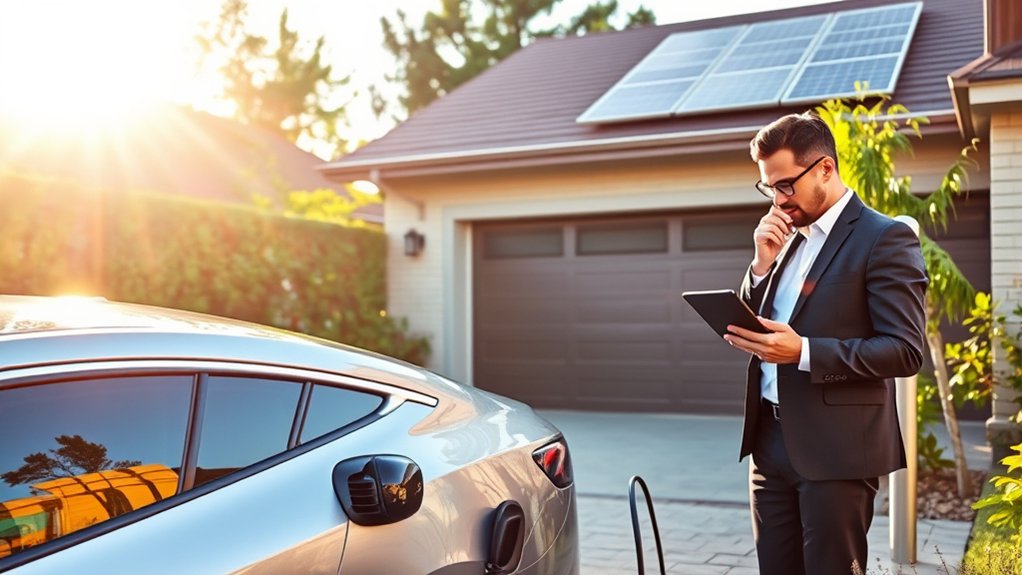
Most EV owners do the majority of their charging at home, so your home setup is the foundation of a smooth commute. A properly installed Level 2 charger is usually the best fit because it uses 240V service and can add about 25 miles of range per hour for a typical setup, depending on the charger, vehicle, and circuit. You can compare charging levels through the U.S. Department of Energy’s Alternative Fuels Data Center.
Start with your real driving pattern. If you drive 40 miles a day and your EV averages 3.5 miles per kWh, you need about 12 kWh to replace that commute, plus a small buffer for errands, weather, hills, and cabin heat. That means many commuters do not need a full battery every morning.
Warning: Do not treat Level 2 installation like a normal appliance hookup. Have a qualified electrician check panel capacity, circuit size, breaker requirements, wire run, outlet or hardwired setup, permits, and local code before installing EV charging equipment.
Before buying a home charger, check these items:
- Panel capacity: Your home must have enough available electrical capacity for the charger amperage you want.
- Plug-in vs. hardwired: Plug-in units can be easier to replace, but hardwired units are often preferred outdoors or for higher-amperage setups.
- Cable length: Choose a cord long enough to reach the charge port when you park normally.
- Weather rating: Outdoor chargers should be rated for outdoor use.
- Smart features: Wi-Fi scheduling, energy tracking, and utility demand-response features can help lower costs.
- Certification: Look for safety-listed equipment and consider ENERGY STAR certified EV chargers to reduce standby energy waste.
Pro Tip: Set your EV or charger app to finish charging shortly before you leave. That keeps the car ready, supports battery conditioning in some vehicles, and helps you use cheaper off-peak electricity when your utility offers it.
Choose the Best Charging Level for Your Commute
Choosing the right charging level depends on how far you drive, how long the car sits parked, and whether you can charge at home, work, or a nearby public station. Here is a practical comparison:
| Charging Level | Typical Use | Range Added |
|---|---|---|
| Level 1 | Standard 120V outlet, backup charging, short commutes | About 3–5 miles per hour |
| Level 2 | Home, workplace, apartments, public destination charging | Often around 25 miles per hour; varies by charger and vehicle |
| DC Fast Charging | Road trips, quick top-ups, emergency range recovery | About 100–200+ miles in 30 minutes when conditions allow |
For most daily commuters, Level 2 charging is the best balance of speed, cost, and convenience. Level 1 can still work if your commute is short and your car sits plugged in for many hours. DC fast charging is valuable on long trips, but it is usually more expensive than home charging and is not the most convenient daily routine.
Set a Daily Charging Routine That Protects Range
A good daily routine keeps enough range for your commute without making every charge session a full charge. Many EVs let you set a daily charge limit in the vehicle screen or mobile app. For everyday use, a range around 70%–90% is often enough, but you should follow your owner’s manual because battery chemistry and manufacturer guidance vary.
Use this simple routine:
- Estimate your daily miles. Include the commute, school pickup, errands, and a backup buffer.
- Check your efficiency. Use your car’s average miles per kWh or kWh per 100 miles.
- Set a charge limit. Choose enough range for the next day, not a full battery by default.
- Schedule off-peak charging. Match your utility’s lower-rate window when available.
- Charge higher before trips. A full or near-full charge makes sense before longer drives when the owner’s manual allows it.
Note: The best daily charge limit is not the same for every EV. LFP batteries, NMC batteries, plug-in hybrids, and older EVs may have different recommendations, so your owner’s manual should override general advice.
Find Nearby Public Charging Stations With Apps
Public charging is easiest when you already know your best backup stations. The U.S. Department of Energy’s Alternative Fueling Station Locator lets you find public stations by location or along a route. As of July 8, 2026, AFDC listed more than 81,000 public electric station locations and about 253,000 public charging ports in the United States.
Use charging apps to compare:
- Connector type: J1772, CCS, CHAdeMO, or J3400/NACS.
- Charging speed: Level 2 is useful while parked for work or errands; DC fast charging is better for short stops.
- Real-time status: Check whether the charger is available, occupied, offline, or restricted.
- Pricing: Some stations bill by kWh, by minute, by session fee, or by parking fee.
- User comments: Recent driver notes can reveal broken screens, blocked stalls, short cables, or payment problems.
Do not wait until your battery is low to install apps or create accounts. Some networks require an app, RFID card, plug-and-charge setup, or stored payment method before you can start a session.
Plan Efficient Routes for Your Commute
Efficient route planning is not only for road trips. A commuter should know where charging fits naturally into the week. Good locations include work parking, grocery stores, gyms, medical offices, libraries, park-and-ride lots, and shopping centers.
| Charging Option | Best Location | Best Use |
|---|---|---|
| Home Level 2 | Garage, driveway, assigned parking | Daily charging at the lowest usual effort |
| Workplace Level 2 | Employee parking | Great for renters, apartment dwellers, and long commutes |
| Public Level 2 | Stores, gyms, parking garages | Useful during errands or longer parked stops |
| DC Fast Charger | Highway corridors and busy retail stops | Quick range recovery and road trips |
For a reliable commute, keep at least one backup charger near work and one near home. If you drive in a rural area or have a long highway commute, plan a larger arrival buffer. Public chargers can be occupied, blocked, slower than advertised, or temporarily unavailable.
Understand Connectors and Adapters Before You Need Them
Connector confusion can waste time at public chargers. In North America, many older and current EVs use J1772 for AC Level 1 and Level 2 charging and CCS for DC fast charging. Tesla-style J3400/NACS connectors are becoming more common as automakers adopt the standard and public networks add support.
Before relying on a station, check whether your EV can use that connector directly or needs an adapter. Also check the adapter’s rating. Some adapters work only for Level 2 charging, while others support DC fast charging only on approved vehicles and networks.
Fast Charging Best Practices for Your EV
DC fast charging is ideal when time matters, but the fastest session is usually not a 0% to 100% charge. Charging speed depends on the charger power, battery temperature, vehicle limit, battery state of charge, and whether your car preconditions the battery.
For faster, smoother DC charging:
- Arrive with a warm battery when possible. Use your EV’s built-in navigation to route to the fast charger if that triggers battery preconditioning.
- Do not chase 100% on every stop. On many EVs, charging slows as the battery gets fuller. For road trips, charging to about 80% and moving on is often faster unless you need the extra range.
- Match the charger to your car. A 350 kW charger will not help much if your EV can only accept 100 kW.
- Have a backup station. Choose a second nearby charger before you arrive.
- Move when finished. Idle fees and etiquette both matter at busy stations.
A smart charging stop is not always the longest stop. For many EVs, shorter DC fast-charge sessions in the lower and middle part of the battery can save more time than waiting for the final percentage points.
Manage Weather Effects on EV Charging and Range
Weather changes how far your EV can go and how quickly it charges. According to FuelEconomy.gov, cold weather can reduce EV fuel economy and driving range because the battery and cabin heating system use extra energy. Hot weather can also increase energy use when air conditioning runs heavily.
Use these habits in extreme weather:
- Preheat or precool while plugged in. This uses grid power instead of battery energy before you leave.
- Use heated seats wisely. Seat and steering-wheel heaters often use less energy than heating the whole cabin.
- Check tire pressure. Cold temperatures can lower tire pressure and increase rolling resistance.
- Keep a larger buffer. Add extra range margin during freezing weather, heavy rain, snow, or strong headwinds.
- Expect slower fast charging in cold conditions. Battery preconditioning helps when your EV supports it.
Follow Charging Etiquette for Shared Access
Shared charging works best when each driver treats the space as a charging spot, not a parking spot. If your EV is done charging, move it as soon as practical so the next driver can plug in.
Good EV charging etiquette includes:
- Do not park in a charging stall unless you are charging.
- Do not unplug another vehicle without permission.
- Move after reaching your target charge.
- Watch app alerts. Many networks notify you when the session ends or idle fees begin.
- Use DC fast chargers for fast charging, not long parking. If you need to park for hours, choose Level 2 instead.
Troubleshoot Common EV Charging Problems
Charging problems are frustrating, but many have simple causes. Start with the basics before assuming the car or charger has failed.
- Charger will not start: Re-seat the connector, check the app, confirm payment, and look for a station screen error.
- Charging is slower than expected: Check your battery percentage, battery temperature, vehicle charge limit, and the charger’s actual output.
- Connector does not fit: Confirm the connector type and whether your adapter supports that charging level.
- Home charger trips the breaker: Stop using it and call a qualified electrician. Do not keep resetting a breaker.
- Public charger is offline: Report it in the network app and move to your backup station.
- Regular outlet charging is too slow: Use Level 1 only as a backup or for short commutes, and avoid extension cords unless your vehicle manual and charger manufacturer specifically allow a rated setup.
Frequently Asked Questions
How can I calculate my EV’s range for daily commuting?
Start with your round-trip commute, then add errands and a safety buffer. Next, divide your expected miles by your EV’s average efficiency. For example, a 42-mile day at 3.5 miles per kWh needs about 12 kWh, plus extra range for weather, traffic, hills, and cabin heat.
What should I do if my charger stops working?
For a public charger, re-seat the connector, check the app, confirm payment, and try another stall if available. For a home charger, check the vehicle app and charger lights, but do not repeatedly reset a tripping breaker. If the breaker trips or the unit smells hot, stop charging and call a qualified electrician.
Are there incentives for installing home EV chargers?
Possibly, but the rules change. As of July 2026, the IRS 30C home charger credit applied to qualified equipment placed in service from January 1, 2023, through June 30, 2026, and only in eligible locations. For a new installation, check current IRS guidance, state programs, local rebates, and your utility’s EV rate or rebate page.
How do weather conditions affect EV charging efficiency?
Cold weather can reduce range and may slow charging because the battery works best within a certain temperature range. Precondition the cabin and battery while plugged in when your EV supports it. In hot weather, parking in shade and avoiding unnecessary cabin cooling can help preserve range.
Can I charge my EV using a regular outlet?
Yes. A regular 120V outlet provides Level 1 charging, which is slow but useful for short commutes or backup charging. Use a properly grounded outlet, follow your vehicle manual, and avoid extension cords unless the charger manufacturer specifically allows a correctly rated cord.
Is Level 2 charging worth it for a daily commuter?
Level 2 charging is worth it for many commuters because it reduces charging time and makes overnight charging easy. It is especially helpful if you drive more than 30–40 miles a day, share the EV with another driver, live in a cold climate, or want to use off-peak electricity rates reliably.
Should I fast charge my EV every day?
Daily DC fast charging is usually not needed if you have home or workplace charging. Use fast charging when it saves time, supports a long trip, or solves an unexpected range issue. For routine commuting, Level 2 charging is usually cheaper, easier, and more convenient.
Conclusion
A smart EV charging strategy makes your commute easier, cheaper, and less stressful. Build your routine around dependable home or workplace charging, use off-peak scheduling, keep backup public chargers in your apps, and save DC fast charging for the moments when speed really matters. With the right setup, your EV can start each day ready without requiring a full battery every morning.
Sources
- U.S. Department of Energy Alternative Fuels Data Center: Electric Vehicle Charging Stations — supports charging levels, typical charging speeds, connectors, and charging infrastructure terminology.
- U.S. Department of Energy Alternative Fueling Station Locator — supports finding public charging stations by location or route.
- U.S. Department of Energy AFDC Station Counts by State — supports current U.S. public electric station and charging-port counts.
- ENERGY STAR Electric Vehicle Chargers — supports charger selection, installation considerations, off-peak utility programs, and certified EV charger guidance.
- IRS Alternative Fuel Vehicle Refueling Property Credit — supports federal home charger credit timing, location requirements, and claim rules.
- FuelEconomy.gov: Fuel Economy in Cold Weather — supports cold-weather range and energy-use guidance for EV drivers.