
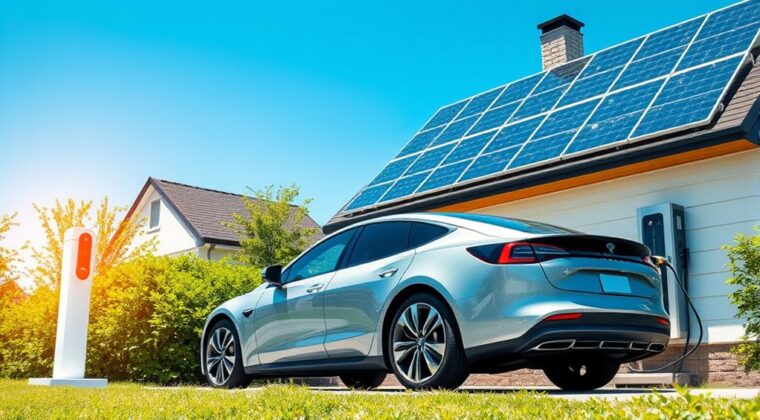
Integrating solar battery storage with your home EV charging setup can lower charging costs, improve energy independence, and help you use more of the solar power your roof already produces. The best setup is not the same for every home, though. You need to size the system around your daily mileage, your EV’s efficiency, your local sun hours, your utility rate plan, and the capacity of your home electrical panel.
Quick Answer
Solar battery storage is best for EV charging when your solar system produces extra daytime power, your utility has high peak rates or low export credits, and you want backup flexibility. For most homes, start by calculating your EV’s daily kWh needs, then size solar panels and battery storage around that load.
Key Takeaways
- Your EV charging load depends on miles driven and vehicle efficiency, usually measured in kWh per 100 miles.
- A Level 2 charger is the best fit for most solar EV charging setups because it can add range much faster than a standard outlet.
- Battery storage helps shift solar power from daytime to nighttime charging, but it must be sized around usable capacity, not just nameplate capacity.
- Federal solar, battery, and EV charger incentives changed in 2025 and 2026, so always verify eligibility before relying on a tax credit.
- A licensed electrician should confirm your panel capacity, circuit size, permits, and code requirements before any Level 2 charger installation.
At a Glance
| Time Required | 1–3 hours for planning and quotes; 1–3 days for typical professional installation once permits and equipment are ready |
| Difficulty | Moderate for planning; professional-only for electrical installation, interconnection, and code compliance |
| Tools Needed | EV efficiency rating, recent electric bills, utility rate plan, solar production estimate, charger specs, and a licensed electrician’s load calculation |
| Cost | Varies widely by system size, battery capacity, panel upgrades, labor, permits, utility rules, and local incentives |
Why Choose Solar Battery Storage for EV Charging?
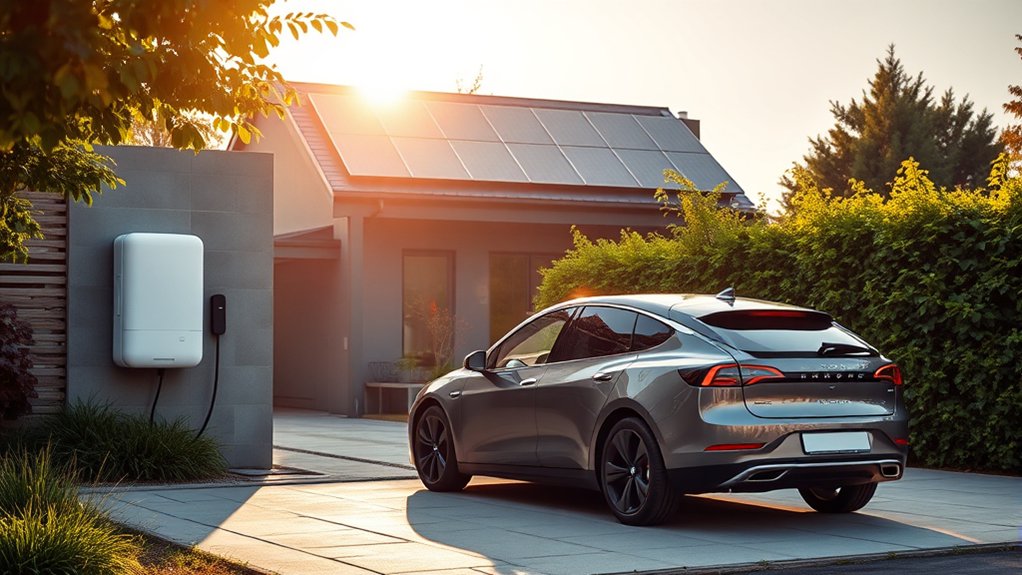
Solar panels can produce electricity while your car is parked at work, running errands, or sitting in the driveway during the day. A battery lets you store some of that energy and use it later, including at night when many drivers plug in their EV. That makes solar battery storage for EV charging useful when your schedule does not match your solar production.
The biggest benefit is control. Instead of buying all charging energy from the grid during expensive hours, you can use your own stored solar power, schedule charging during lower-rate periods, or combine both strategies. This can be especially helpful if your utility uses time-of-use rates, demand charges, or lower credits for exported solar electricity.
Battery storage can also add resilience. Depending on your inverter, transfer equipment, and battery settings, a solar-plus-storage system may keep selected home circuits running during an outage. Not every system can charge an EV during a blackout, though, because EV charging uses a lot of power. You need a backup-capable inverter, enough battery capacity, and a load plan that gives priority to essential circuits.
Note: Solar battery storage does not automatically mean unlimited free EV charging. Your savings depend on your utility rate, solar production, export credit, battery efficiency, daily mileage, and whether you charge during peak or off-peak hours.
How Much Energy Does Your EV Need for Charging?
Before you choose panels, batteries, or chargers, calculate your EV’s daily energy need. Do not start with the number of solar panels. Start with how many miles you drive and how efficient your EV is.
Use kWh Per 100 Miles
EV efficiency is commonly listed as kWh per 100 miles. The lower the number, the less electricity the vehicle uses. The U.S. Department of Energy’s Alternative Fuels Data Center notes that many light-duty EVs use about 25–40 kWh per 100 miles, though larger SUVs and trucks can use more depending on load, weather, speed, tires, and terrain.
You can check your vehicle’s official rating with the FuelEconomy.gov Find a Car tool. Once you know the rating, use this simple formula:
Daily EV energy need = daily miles × EV kWh per 100 miles ÷ 100
For example, if you drive 40 miles per day and your EV uses 30 kWh per 100 miles, your charging need is:
- 40 × 30 ÷ 100 = 12 kWh per day
If your EV uses 45 kWh per 100 miles, the same 40-mile day would need:
- 40 × 45 ÷ 100 = 18 kWh per day
Daily Charging Requirements
Your daily charging requirement is not the same as your battery size. A vehicle with a 75 kWh battery does not need 75 kWh every night unless you nearly empty it. Most drivers only replace the energy used that day.
Use these planning ranges as a starting point:
| Daily Driving | Efficient EV at 28 kWh/100 mi | Larger EV at 45 kWh/100 mi |
| 20 miles/day | 5.6 kWh/day | 9 kWh/day |
| 40 miles/day | 11.2 kWh/day | 18 kWh/day |
| 60 miles/day | 16.8 kWh/day | 27 kWh/day |
What Affects EV Energy Use?
Your real-world EV charging load can rise above the rated number. Cold weather, highway speeds, towing, roof racks, heavy cargo, steep grades, aggressive acceleration, underinflated tires, and cabin heating can all increase energy use. If you drive in winter or tow with an electric truck, add a safety margin when sizing your solar battery system.
What’s the Best Setup for Combining Solar Panels and EV Chargers?
The best setup combines four parts: enough solar production, a properly sized inverter, useful battery capacity, and a charger that matches your driving pattern and home electrical capacity.
Solar Panel Sizing Formula
To estimate the solar array needed for EV charging, use this formula:
Solar size in kW = daily EV kWh ÷ local peak sun hours ÷ system efficiency
Use about 0.75 to 0.85 for system efficiency as a planning range because real systems lose energy through heat, wiring, inverter conversion, dust, shading, and battery round-trip losses.
Example: You need 12 kWh per day for EV charging, your area averages 4.5 peak sun hours, and you use 0.80 system efficiency:
- 12 ÷ 4.5 ÷ 0.80 = 3.3 kW of solar capacity
If you use 400-watt panels, that is about:
- 3.3 kW ÷ 0.4 kW per panel = 8.25 panels
In real planning, you would round up and consider roof space, shade, seasonal production, and whether the same solar system also needs to power your home.
Battery Storage Sizing
Battery sizing should focus on usable capacity, not just nameplate capacity. A 10 kWh battery may not deliver the full 10 kWh to your EV after reserve settings, inverter losses, and battery management limits.
For basic planning:
- Small commute: 5–8 kWh usable storage may cover part of a short daily drive.
- Average commute: 10–15 kWh usable storage can cover many daily charging needs.
- Large EV, truck, or long commute: 20 kWh or more may be needed if you want meaningful nighttime solar charging.
You do not always need a battery large enough to fill the EV. In many homes, the better target is storing enough solar energy to cover the daily driving load while still leaving reserve power for the house.
Pro Tip: Ask installers to show two designs: one sized for your current EV and one sized for a future second EV or larger battery vehicle. The price difference may be smaller if conduit, inverter capacity, or panel layout can be planned upfront.
Efficient Charger Selection
A Level 1 charger uses a standard 120-volt outlet and is slow, often adding about 5 miles of range per hour. It may work if you drive very little each day and can charge overnight.
A Level 2 charger uses 240-volt service and is the better fit for most home solar EV charging systems. The U.S. Department of Energy’s Alternative Fuels Data Center estimates Level 2 charging at roughly 25 miles of range per hour, though the exact speed depends on charger output, vehicle onboard charger limits, circuit size, and battery state of charge.
Look for these charger features:
- Adjustable amperage so the charger can match your circuit and panel capacity.
- Scheduled charging so you can avoid peak-rate periods.
- Solar-aware charging if you want the charger to follow excess solar production.
- Load management if your electrical panel is limited or if several large loads run at the same time.
- Safety certification from a recognized testing organization.
Warning: Do not install a Level 2 EV charger without confirming electrical capacity, circuit sizing, permits, and local code requirements. EV charging is a continuous load, and improper installation can create fire, shock, or equipment-damage risks. Use a licensed electrician.
How Many Solar Panels Do You Really Need?
The number of solar panels you need depends on your daily EV energy use, panel wattage, local sun, roof conditions, and whether you want to charge only the EV or offset household loads too.
For a simple estimate, follow these steps:
- Find your EV efficiency: Use kWh per 100 miles from FuelEconomy.gov or your vehicle display.
- Calculate daily EV kWh: Daily miles × kWh per 100 miles ÷ 100.
- Estimate solar system size: Daily EV kWh ÷ peak sun hours ÷ 0.80.
- Convert kW to panel count: Solar system kW ÷ panel wattage in kW.
- Add margin: Increase the estimate for winter, shade, battery losses, and future mileage.
Here are practical examples using 400-watt panels and 4.5 peak sun hours:
| Daily EV Load | Approx. Solar Size | Approx. 400W Panels |
| 8 kWh/day | 2.2 kW | 6 panels |
| 12 kWh/day | 3.3 kW | 9 panels |
| 18 kWh/day | 5.0 kW | 13 panels |
These are planning examples, not final engineering numbers. A shaded roof, north-facing roof plane, high winter load, or low local sun can require more panels. A sunny roof, efficient EV, short commute, and daytime charging can require fewer.
What Benefits Does Home EV Charging With Solar Power Offer?
Home EV charging with solar power can offer four main benefits: lower charging cost, better use of your solar production, less exposure to peak utility rates, and lower emissions when your charging is powered by renewable electricity.
The cost benefit depends on what you would otherwise pay for electricity. The Alternative Fuels Data Center explains that EV charging cost depends on your electricity price and your vehicle’s kWh per 100 miles. You can use this formula:
- Cost per mile = electricity price per kWh × EV kWh per 100 miles ÷ 100
If your utility charges a high peak rate in the evening, charging directly from the grid at that time may be expensive. A battery can help by storing solar energy earlier in the day and discharging it when you plug in. If your utility gives low credit for exported solar power, using that energy in your EV may be more valuable than sending it back to the grid.
Solar charging can also reduce strain on your household budget because electricity prices are often more stable than gasoline prices. With smart scheduling, you can charge during solar production windows, off-peak utility periods, or both.
Understanding Costs and Available Incentives for Solar EV Charging
The total cost of a solar EV charging setup depends on system size, roof work, battery capacity, charger type, electrical-panel condition, permitting, utility interconnection, and labor rates. A simple Level 2 charger installation costs far less than a full solar-plus-battery system with backup capability.
When comparing quotes, separate the project into these parts:
- Solar array: panels, racking, wiring, inverter, monitoring, permits, and interconnection.
- Battery storage: battery modules, hybrid inverter or battery inverter, gateway, backup panel, and installation labor.
- EV charger: charger hardware, circuit, conduit, breaker, permit, and possible panel upgrade.
- Electrical upgrades: service upgrade, subpanel, load-management device, or dedicated EV circuit.
Federal Incentive Update for 2026
Federal clean energy incentives changed. The IRS Residential Clean Energy Credit page says qualifying residential solar, battery storage, and other clean energy property installed from 2022 through December 31, 2025 may qualify for a 30% credit, but the credit is not available for property placed in service after December 31, 2025. Battery storage technology must have at least 3 kWh of capacity to qualify under that program.
The IRS Alternative Fuel Vehicle Refueling Property Credit page says qualifying home EV charging property placed in service from January 1, 2023 to June 30, 2026 may qualify for a 30% credit up to $1,000 per item for individuals, if it meets location and other requirements.
Note: Tax credits depend on placed-in-service date, property type, location, tax liability, and current IRS rules. Check with a qualified tax professional before buying equipment based on an expected credit.
Even when federal credits are not available, you may still find state, local, or utility rebates. Check your electric utility, state energy office, and the AFDC Laws and Incentives database before signing a contract.
How to Future-Proof Your EV and Solar Setup
Future-proofing means designing the system so it can handle your next car, not just your current one. A second EV, a longer commute, an electric truck, a heat pump, or a home battery upgrade can change your electrical needs.
Focus on these planning points:
- Panel capacity: Leave roof space or inverter capacity for more solar if your household load will grow.
- Conduit runs: Installing extra conduit during the first project can make future charger or battery upgrades easier.
- Electrical panel capacity: Ask for a load calculation before choosing charger amperage.
- Battery expansion: Choose a system that can add battery modules if your nighttime charging load grows.
- Smart controls: Use scheduling, load management, and solar-aware charging to avoid unnecessary peak demand.
- Backup priorities: Decide whether the battery should support essentials, EV charging, or both during outages.
If you want the option to use your EV as backup power, ask specifically about bidirectional charging, vehicle-to-home compatibility, required transfer equipment, utility approval, and warranty limits. Not every EV, charger, inverter, or utility program supports it.
Common Mistakes to Avoid
A solar EV charging setup works best when the design is based on real loads instead of guesses. Avoid these common mistakes:
- Buying too little battery capacity: A small battery may not cover nighttime EV charging after home loads and reserve settings.
- Ignoring winter production: Solar output can fall during shorter, cloudier days while EV energy use rises in cold weather.
- Charging at the wrong time: A solar system does not help much if your charger runs during expensive peak hours and your battery is empty.
- Skipping electrical review: A Level 2 charger may require a new circuit, load-management equipment, or panel upgrade.
- Assuming every battery backs up the house: Some batteries are grid-tied only unless backup hardware is installed.
- Relying on outdated incentives: Tax rules have changed, and eligibility can depend on exact placed-in-service dates.
Frequently Asked Questions
Can I charge my EV with a solar battery?
Yes. You can charge an EV from a solar battery if your inverter, battery, electrical panel, and charger are designed to support the load. For best results, size the battery around your daily EV kWh need and keep enough reserve for essential home loads.
Can I charge my EV and solar battery at the same time?
Yes, many systems can send solar power to the home, battery, grid, and EV charger at the same time. The exact behavior depends on inverter capacity, charger settings, solar production, battery state of charge, and load-management rules.
What drains an EV battery the most?
High speeds, cold weather, cabin heating, towing, steep terrain, heavy cargo, aggressive acceleration, and poor tire pressure can increase EV energy use. If you often drive in these conditions, use a larger safety margin when sizing solar and battery storage.
What is the cheapest way to charge an EV at home?
The cheapest method is usually the one that uses your lowest-cost energy. That may be direct daytime solar, stored solar from a battery, an off-peak utility rate, or a mix of all three. Compare your solar export credit, retail electricity rate, and time-of-use schedule.
Do I need a Level 2 charger for solar EV charging?
Not always, but Level 2 is best for most drivers. Level 1 can work for short daily mileage, while Level 2 is faster and easier to schedule during solar or off-peak windows. A licensed electrician should confirm that your home can support the circuit.
Will solar battery storage charge my EV during a power outage?
Only if your system is designed for backup operation and has enough power capacity to support EV charging. Many homeowners choose to reserve battery power for refrigerators, lights, internet, medical devices, and other essential loads instead of EV charging during outages.
Conclusion
Solar battery storage can be a smart way to charge an EV at home, but the right design starts with math, not guesswork. Calculate your daily EV kWh need, compare your utility rates, estimate solar production, and choose a battery that fits your charging schedule. Then have a qualified electrician confirm your charger, panel capacity, permits, and code requirements.
If you already have solar panels, adding battery storage may help you use more of your own power instead of exporting it. If you are planning a new system, design it around both your home load and your EV load so the setup can serve you for years, even if your commute, vehicle, or utility rate plan changes.
Sources
- IRS Residential Clean Energy Credit — current federal solar and battery storage credit rules, deadlines, qualified expenses, and battery capacity requirement.
- IRS Alternative Fuel Vehicle Refueling Property Credit — EV charger credit rules, eligible locations, placed-in-service dates, and credit limits.
- U.S. Department of Energy Alternative Fuels Data Center: Electric Vehicle Charging Stations — Level 1, Level 2, and DC fast charging speeds, connector information, and charger terminology.
- U.S. Department of Energy Alternative Fuels Data Center: Charging Electric Vehicles at Home — home charging, electricity cost calculation, safety-certified equipment, permits, and electrical contractor guidance.
- U.S. Department of Energy Alternative Fuels Data Center: Electric Vehicle Benefits and Considerations — EV efficiency ranges, fuel economy metrics, and cost considerations.
- FuelEconomy.gov Find a Car — official vehicle-specific EV efficiency ratings for calculating daily charging needs.