
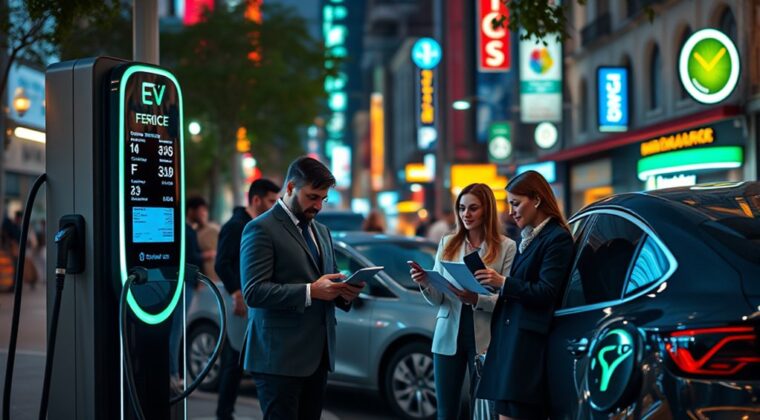
EV charging stations make money by charging drivers for electricity, access, parking time, convenience, and related services. The best sites do not rely on one income source. They combine charging fees with strong location demand, smart pricing, reliable uptime, fleet or host agreements, retail traffic, and sometimes grants or utility programs.
Quick Answer
EV charging stations make money through per-kWh fees, per-minute or session fees, idle or congestion fees, subscriptions, fleet contracts, advertising, parking charges, and retail partnerships. Profit depends most on charger type, electricity cost, site utilization, uptime, local demand, installation cost, and the business agreement between the site host and charging network.
Key Takeaways
- The main income source is usually charging fees, but strong operators also use parking fees, subscriptions, fleet deals, ads, and retail partnerships.
- Location matters because a charger only earns when drivers actually use it.
- DC fast chargers can earn more per session than Level 2 chargers, but they also cost much more to install and operate.
- Electricity rates, demand charges, network fees, maintenance, and downtime can quickly reduce profit.
- Federal tax-credit rules changed in 2026, so always confirm current incentive eligibility before building your return model.
How EV Charging Stations Generate Revenue
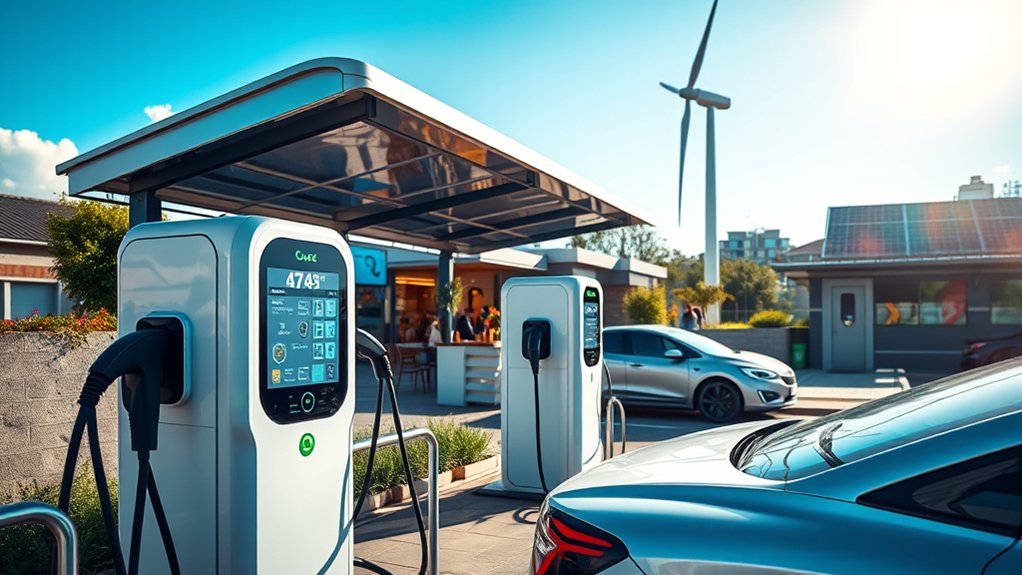
EV charging stations generate revenue in several ways. Some income comes directly from the driver. Other income comes from the property owner, a charging network, a fleet customer, nearby retail spending, or a public funding program.
The most common direct billing models include:
- Per-kWh pricing: Drivers pay for the electricity delivered to the vehicle.
- Per-minute pricing: Drivers pay based on time plugged in, usually where energy-based billing is limited or not used.
- Session fees: A flat fee starts or completes a charging session.
- Idle or congestion fees: Drivers pay extra if they stay plugged in after charging or keep using a busy fast charger at a high battery level.
- Parking fees: Some sites charge for the parking space separately from the electricity.
- Subscription plans: Frequent users pay a monthly fee for lower rates or easier access.
For example, Tesla explains that Supercharger pricing can vary by location, time, occupancy, and demand. It also notes that customers may be billed per kWh where possible or per minute in some areas. That same principle applies across the wider charging market: the money is not only in the electricity. It is in access, convenience, speed, and reliability.
Main Revenue Streams for EV Charging Stations
| Revenue Stream | How It Makes Money | Best Fit |
| Charging fees | Charges drivers by kWh, minute, session, or a mix of these models. | Public Level 2 and DC fast charging |
| Idle and congestion fees | Encourages drivers to move after charging and keeps stalls available. | Busy fast-charging sites |
| Subscriptions | Creates recurring revenue from frequent drivers or members. | Charging networks and commuter corridors |
| Fleet contracts | Locks in regular use from taxis, delivery vans, rideshare drivers, or company vehicles. | Urban DC fast charging and depot charging |
| Advertising | Uses charger screens, apps, or station signage to sell local ads. | Retail centers and high-foot-traffic sites |
| Retail lift | Drivers shop, eat, or use services while waiting. | Grocery stores, restaurants, malls, hotels, and travel centers |
| Site-host agreements | A host earns rent, a revenue share, or customer traffic while the network runs the charger. | Property owners that do not want to operate chargers directly |
The Importance of Location for Charging Station Profitability
Location can make or break an EV charging station because a charger only earns money when drivers use it. The best location is not always the busiest road. It is the place where drivers have a reason to stop long enough to charge.
Strong sites usually have these traits:
- High driver demand: Locations near highways, dense neighborhoods, offices, apartments, hotels, grocery stores, hospitals, and rideshare zones can attract more sessions.
- Good dwell time: Level 2 chargers work best where people stay for 30 minutes to several hours. DC fast chargers work best where drivers want a quick stop.
- Easy access: Drivers need clear entrances, safe lighting, visible stalls, simple parking, and room to maneuver.
- Power availability: A site with enough electrical capacity may avoid costly utility upgrades.
- Low nearby competition: A great retail site may still underperform if cheaper or faster chargers are next door.
- App visibility: Drivers often choose chargers through maps and charging apps, so accurate station data matters.
Pro Tip: Before installing chargers, check nearby EV registrations, competitor chargers, electrical capacity, parking patterns, lighting, safety, and average customer dwell time. A lower-traffic site with longer dwell time can outperform a busy site where nobody wants to stay.
Pricing Strategies for EV Charging Stations
Pricing has to cover more than electricity. A profitable station also has to recover equipment, installation, software, maintenance, payment processing, rent, taxes, insurance, and utility costs.
Pricing Models Overview
Common pricing models include:
- Cost per kWh: This is the clearest model for drivers because they pay for the energy they receive.
- Time-based billing: This charges by minute or hour. It may work where energy-based billing is not used, but drivers may dislike it when charging speed slows.
- Flat session fee: This is simple, but it can overcharge short sessions and undercharge long ones.
- Hybrid pricing: A station may combine a session fee, per-kWh rate, parking fee, and idle fee.
- Dynamic pricing: Rates change by demand, time of day, occupancy, electricity cost, or congestion.
- Membership pricing: Subscribers pay less per session, while casual users pay a higher public rate.
Dynamic pricing can help when a station is busy, but it must be clear. Drivers are more likely to return when they understand the price before plugging in.
Utilization Rate Impact
Utilization is one of the biggest profit drivers. A charger with low utilization may not cover its fixed costs, even if the price per session looks high. A charger with steady daily use can earn more predictable revenue and justify maintenance, software, and electrical expenses.
A simple way to think about revenue is:
Charging revenue = sessions per day × average energy sold per session × price per kWh, plus any session, idle, parking, subscription, fleet, or advertising income.
That formula is only the top line. True profit comes after subtracting electricity, demand charges, network fees, maintenance, rent, financing, taxes, and repair costs.
Competitive Pricing Strategies
Competitive pricing should match the site and the user. A highway fast charger can often charge more for speed and convenience. A workplace Level 2 charger may need lower pricing because drivers can wait longer. A hotel may treat charging as an amenity instead of a major profit center.
Good pricing usually balances three goals:
- Cover costs: The station must pay for electricity and fixed expenses.
- Stay attractive: Drivers compare rates in apps before choosing where to charge.
- Improve turnover: Idle fees and congestion fees help keep chargers open for the next driver.
Level 2 vs DC Fast Charger Profit
Level 2 and DC fast chargers can both make money, but they work best in different business models.
Level 2 chargers usually cost less to install and are a better fit for apartments, workplaces, hotels, parking garages, campuses, restaurants, and shopping centers. They earn money slowly over longer parking sessions. They can also attract customers who plan to stay anyway.
DC fast chargers can serve more drivers per day and sell more electricity per session. They are a better fit for highways, travel centers, fleet routes, rideshare zones, and busy urban corridors. The tradeoff is cost. DC fast chargers often require more expensive equipment, more electrical capacity, more maintenance, and stronger utility coordination.
The right choice depends on dwell time. If drivers stay for hours, Level 2 may fit. If drivers want to leave in 15 to 40 minutes, DC fast charging is usually the better match.
Costs That Affect EV Charging Station Profit
Revenue is only half of the story. The largest profit risks often sit on the cost side.
- Equipment cost: Chargers, cabinets, cables, screens, payment systems, and networking hardware.
- Installation cost: Trenching, conduit, wiring, concrete, signage, bollards, striping, and permits.
- Utility upgrades: Transformer upgrades, service extensions, switchgear, and interconnection work.
- Electricity cost: Energy charges plus possible demand charges for peak power draw.
- Software and network fees: Billing, monitoring, driver support, roaming, and payment processing.
- Maintenance: Cable replacement, connector repair, screen repair, cleaning, snow removal, and inspections.
- Downtime: A broken charger loses revenue and can damage your station rating in apps.
- Lease or revenue share: Some locations require rent or a split with the property owner.
Warning: Do not judge a charging station by gross revenue alone. A busy DC fast charger can still disappoint if utility demand charges, repair costs, financing, or site rent are too high.
Government Incentives That Enhance Profit Margins
Government incentives can improve project economics, but the rules change. As of July 2026, the federal Alternative Fuel Vehicle Refueling Property Credit should not be treated as an open-ended future subsidy. The IRS explains that the business credit applied to qualified property placed in service from January 1, 2023, to June 30, 2026. The U.S. Department of Energy Alternative Fuels Data Center also lists the Alternative Fuel Infrastructure Tax Credit as expired on June 30, 2026.
That does not mean all support is gone. State rebates, utility make-ready programs, local grants, fleet programs, and federal competitive grants may still matter. For example, the U.S. Department of Transportation lists EV infrastructure funding programs, including Charging and Fueling Infrastructure grants for eligible public charging projects.
Note: Incentives depend on the project location, ownership structure, tax status, eligible census tract, placed-in-service date, charger type, and current program funding. Confirm current rules before using incentives in your return estimate.
How Charging Amenities Attract More Customers
Charging stations can do more than sell electricity. They can bring drivers to a business and keep them on-site while they wait.
Good amenities include:
- Clean restrooms
- Food and coffee
- Convenience retail
- Canopies or shade
- Good lighting and security cameras
- Trash cans and windshield-cleaning supplies
- Clear signage
- Pull-through stalls for larger vehicles or towing
- Reliable Wi-Fi or strong cell service
A 2026 mobility-data study found that EV drivers showed higher visitation rates to nearby cafes and restaurants during charging sessions. That supports a key business point: the charger may earn money directly, but the larger profit can come from the customer’s visit.
For retailers, restaurants, hotels, and travel centers, EV charging can also improve brand visibility in charging apps and maps. Drivers may choose a location because it has reliable charging, then return because the overall stop is convenient.
How Technology Can Boost EV Charging Revenue
Technology can raise revenue by making the station easier to find, easier to use, and easier to manage.
Useful tools include:
- Mobile app payments: Drivers can start, stop, and pay for sessions quickly.
- Real-time availability: Apps can show which stalls are working and open.
- Dynamic pricing: Prices can change by demand, occupancy, or time of day.
- Remote monitoring: Operators can detect failures before drivers leave bad reviews.
- Load management: Smart charging can reduce peak demand and lower utility costs.
- Battery storage: On-site batteries can help reduce peak grid draw at some fast-charging sites.
- Solar integration: Solar can offset some energy use, though it usually does not remove the need for grid power.
- Plug-and-charge features: Easier authentication can reduce failed sessions and improve repeat use.
Reliable software matters because charging is a trust-based service. If drivers arrive and the charger is broken, blocked, or hard to activate, they may not return.
Business Models for Site Hosts and Operators
Not every charging station owner uses the same business model. Before you estimate profit, know who pays for the charger, who owns the equipment, who sets the price, and who handles maintenance.
Site Host-Owned Model
The property owner buys and operates the chargers. This gives you more control over pricing and customer experience, but you also take on more risk, maintenance, and billing responsibility.
Network-Owned Model
A charging company installs or operates the equipment at your site. You may receive rent, a revenue share, or extra customer traffic. This can reduce your workload, but you may have less control over pricing and branding.
Revenue Share Model
The site host and charging network split charging revenue. This model can work when both sides benefit from growing usage, but the contract terms matter. Check who pays for electricity, repairs, network fees, and upgrades.
Fleet or Private Charging Model
A business installs chargers mainly for its own vehicles. The profit may come from lower fuel costs, better route control, employee charging benefits, or fleet uptime instead of public charging fees.
What People Get Wrong About EV Charging Station Profits?
The biggest mistake is assuming that EV charging is passive income. A charger is not a vending machine that always earns money after installation. It needs the right site, pricing, maintenance, software, power supply, and customer demand.
EV charging profit is not just the gap between electricity cost and charging price. It is the result of utilization, uptime, utility costs, site design, customer dwell time, and the contract behind the charger.
Here are three common misunderstandings:
- “The electricity markup is the whole business.” In reality, subscriptions, parking, idle fees, fleet deals, retail sales, advertising, and host agreements can matter too.
- “Any busy parking lot will work.” A good site needs the right dwell time, power capacity, safety, visibility, and user demand.
- “Fast chargers always make more profit.” DC fast chargers can generate more revenue, but they also bring higher installation, maintenance, and utility costs.
The best way to evaluate a project is to build a site-specific model. Estimate daily sessions, average kWh per session, pricing, electricity costs, demand charges, maintenance, uptime, financing, and any host or network fees.
Frequently Asked Questions
How profitable are EV charging stations?
EV charging stations can be profitable, but profit is highly site-specific. A strong site needs steady utilization, reliable equipment, fair electricity costs, good pricing, and manageable installation costs. Level 2 chargers often work best as an amenity or long-dwell revenue source, while DC fast chargers need higher traffic to justify their larger cost.
What is the 80/20 rule for EV charging?
In EV charging, the 80/20 rule is a business shortcut, not a fixed law. It usually means a small share of drivers, sites, or charging sessions may create most of the revenue. Operators use this idea to focus on frequent users, high-demand locations, fleet customers, and repeat charging behavior.
Does Elon Musk make money from Tesla charging stations?
Tesla earns revenue from Supercharger sessions, memberships, and related fees. Elon Musk does not personally collect each charging fee, but he may benefit indirectly if Tesla’s charging business improves Tesla’s financial results and company value.
Is charging a Tesla actually cheaper than gas?
Charging a Tesla is often cheaper than buying gas when you charge at home, especially with off-peak electricity rates. Public fast charging can cost more, and savings depend on your local electricity rate, gasoline price, vehicle efficiency, charging mix, and driving habits.
How long does it take an EV charging station to break even?
Break-even timing varies widely. A low-cost Level 2 site with steady use may recover costs faster than an expensive DC fast-charging site with utility upgrades and low early utilization. To estimate break-even, divide total installed cost by expected annual net profit after electricity, maintenance, software, rent, and financing costs.
Can a business make money by offering free EV charging?
Yes, but the money usually comes indirectly. A hotel, grocery store, restaurant, or shopping center may offer free or discounted charging to attract customers, increase dwell time, support loyalty programs, or strengthen its brand. In that model, charging is a customer-acquisition tool rather than the main revenue source.
Conclusion
EV charging stations make money through more than electricity sales. The strongest business models combine fair charging fees, strong location demand, reliable uptime, smart pricing, retail traffic, fleet use, and clear ownership terms. Profit is possible, but it is not automatic.
If you are evaluating a station, start with the basics: who will use it, how long they will stay, how much power the site can support, what electricity will cost, who maintains the equipment, and how pricing compares with nearby chargers. Then check current incentives and grants before counting them in your return model. With the right site and cost control, EV charging can become both a revenue stream and a customer-attraction tool.
Sources
- Internal Revenue Service: Alternative Fuel Vehicle Refueling Property Credit — supports current tax-credit eligibility and placed-in-service rules.
- U.S. Department of Energy Alternative Fuels Data Center: Alternative Fuel Infrastructure Tax Credit — supports the June 30, 2026 expiration update.
- U.S. Department of Transportation: Federal EV Infrastructure Funding Programs — supports grant and funding-program context.
- National Renewable Energy Laboratory: The 2030 National Charging Network — supports charging-infrastructure planning, utilization, and investment context.
- Tesla Support: Supercharging — supports billing models, dynamic pricing, payment methods, and congestion-fee context.
- Using Large Scale GPS Data to Reveal EV Driver Activity Patterns Beyond Charging Sessions — supports the point that charging can connect with nearby cafe and restaurant visits.