
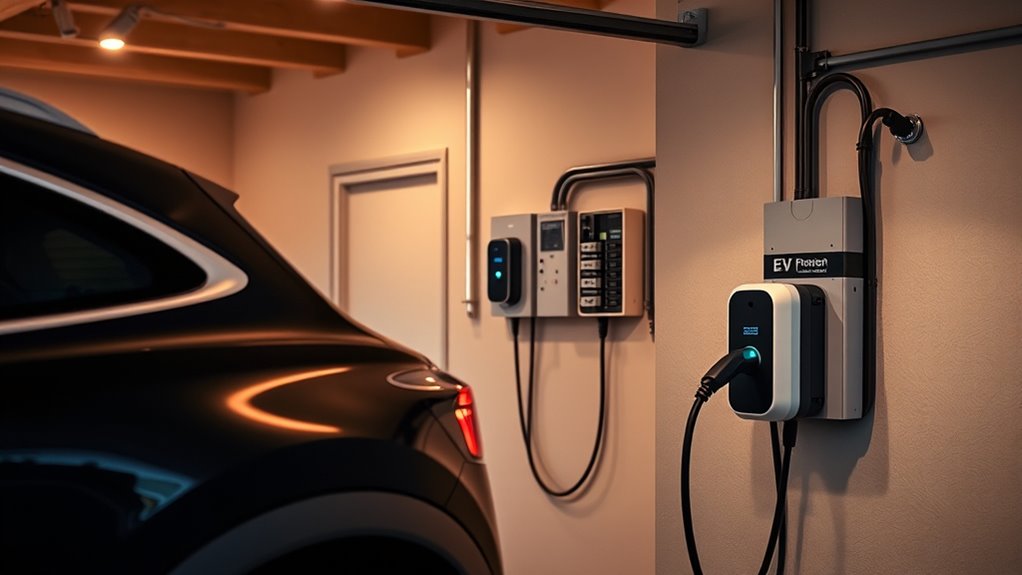
For most home EV charging, a 32-amp or 40-amp Level 2 charger is the best fit. A 32-amp charger is enough for many daily drivers, while a 40-amp charger adds more speed without the heavier setup of a 48-amp unit. The right choice depends on your EV’s onboard AC charger, your daily miles, your electrical panel, and whether the charger is plug-in or hardwired.
Quick Answer
Choose a 32-amp charger for normal commuting, a 40-amp charger for a strong speed-and-cost balance, and a 48-amp charger only if your EV, panel, wiring, and hardwired installation can use it. Lower-amp charging can still work well for short trips, plug-in hybrids, and overnight charging.
Key Takeaways
- A 32-amp Level 2 charger provides about 7.7 kW at 240 volts and is enough for many daily drivers.
- A 40-amp charger provides about 9.6 kW and is often the best balance for home charging speed and installation cost.
- A 48-amp charger provides about 11.5 kW, but it usually needs hardwiring and a properly sized 60-amp circuit.
- Your EV’s onboard AC charger sets the real charging limit, so extra amperage may not make your car charge faster.
- Have a licensed electrician confirm panel capacity, circuit size, permits, and local code before installing Level 2 equipment.
At a Glance
| Best Overall Choice | 40 amps for many full EV owners with enough panel capacity |
| Simpler Setup | 16 to 32 amps for short commutes, plug-in hybrids, and tighter panels |
| Fast Home Setup | 48 amps if your EV accepts it and a licensed electrician confirms the circuit |
| Main Safety Check | Panel load calculation, dedicated circuit, correct breaker, correct wire, and safety-certified EVSE |
What Amps Do Home EV Chargers Use?
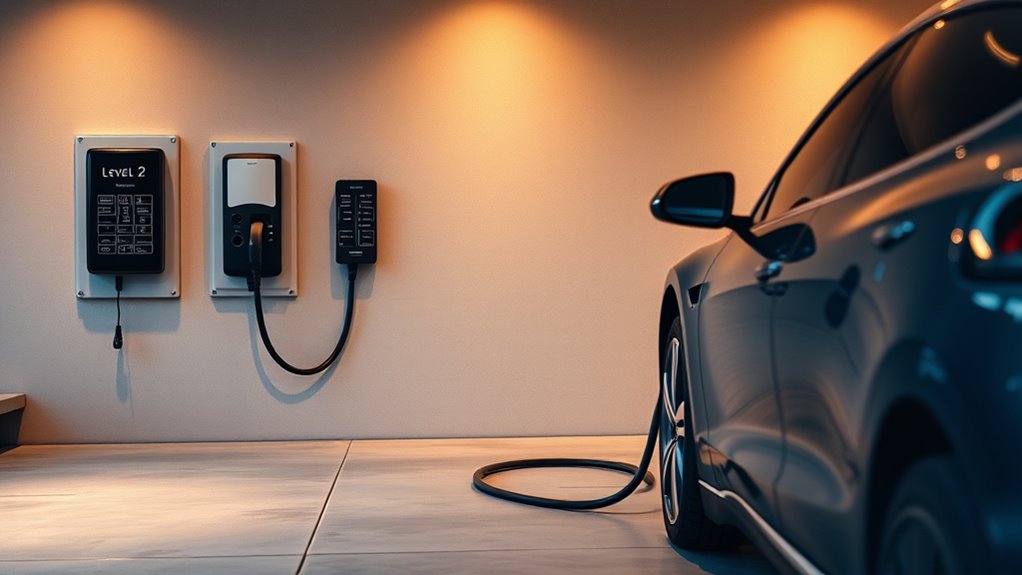
Home EV chargers usually use 12 to 16 amps on Level 1 or 16 to 48 amps on common residential Level 2 setups. Some Level 2 equipment can go higher, but most home buyers compare 32-, 40-, and 48-amp options.
The U.S. Department of Energy’s Alternative Fuels Data Center explains that AC Level 1 charging uses 120 volts, while AC Level 2 uses 240 volts in typical residential settings. Level 2 is the usual upgrade when you want faster overnight charging at home.
The simple power formula is:
Volts × amps ÷ 1,000 = charging power in kilowatts.
At 240 volts, that means a 32-amp charger supplies about 7.7 kW, a 40-amp charger supplies about 9.6 kW, and a 48-amp charger supplies about 11.5 kW before normal charging losses.
How EV Charger Amps Affect Charging Speed
Amps affect charging speed because they help set the charger’s power output. Higher amps usually add more miles per hour, but the exact range you gain depends on your EV’s efficiency, battery temperature, state of charge, and onboard AC charger limit.
| Charger Output | Power at 240V | Typical Range Added | Best Fit |
|---|---|---|---|
| 16 amps | 3.8 kW | About 10 to 15 miles per hour | Plug-in hybrids, short commutes, limited panels |
| 24 amps | 5.8 kW | About 15 to 22 miles per hour | Moderate daily driving |
| 32 amps | 7.7 kW | About 20 to 25 miles per hour | Most normal commuting |
| 40 amps | 9.6 kW | About 25 to 35 miles per hour | Best balance for many full EVs |
| 48 amps | 11.5 kW | About 30 to 40 miles per hour | Fast home charging when supported |
Do not choose amperage from mileage estimates alone. A less efficient EV may add fewer miles per hour than a smaller, more efficient EV at the same charger output. Use kW for the electrical comparison, then use your EV’s efficiency to estimate miles.
Why Your EV’s Onboard Charger Matters
Your EV’s onboard AC charger sets the upper limit for Level 1 and Level 2 charging. The wall unit, also called EVSE, advertises how much current is available. Your car decides how much AC power it can actually accept.
If your EV can accept only 7.7 kW on AC power, a 48-amp home charger will not make it charge faster than a 32-amp setup. If your EV can accept 11.5 kW, a 48-amp charger can help, as long as the circuit and panel can support it.
Note: Look for “maximum AC charging rate,” “onboard charger,” or “Level 2 charging” in your owner’s manual or manufacturer specs. DC fast-charging speed is different and does not tell you how fast the car will charge at home on AC power.
32, 40, 48, and 80 Amp EV Chargers Compared
The main tradeoff is charging speed versus installation complexity. A 32-amp charger is practical and often easier to install. A 40-amp charger is a strong middle ground. A 48-amp charger is faster, but it usually requires hardwiring and more panel capacity.
| Max Charger Output | Common Breaker Example | Power at 240V | Use This When |
|---|---|---|---|
| 32 amps | 40-amp circuit | 7.7 kW | You want reliable overnight charging without chasing maximum speed. |
| 40 amps | 50-amp circuit | 9.6 kW | You drive more miles and want a balanced home setup. |
| 48 amps | 60-amp circuit | 11.5 kW | Your EV accepts the power and your electrician confirms the panel can handle it. |
| 80 amps | 100-amp circuit | 19.2 kW | Only for rare homes and EVs that support high AC charging. |
These breaker pairings follow the common continuous-load rule used for EV charging circuits, but your charger manual and local electrical code control the final installation. For example, the Tesla Universal Wall Connector manual lists 48 amps of output on a 60-amp breaker, 40 amps on a 50-amp breaker, and 32 amps on a 40-amp breaker.
When a Lower-Amp EV Charger Makes Sense
A lower-amp charger can be the smartest choice if your daily driving is modest. You may not need 40 or 48 amps if you drive 20 to 40 miles per day, own a plug-in hybrid, or leave the car parked overnight for many hours.
| Use Case | Why Lower Amps Work | Good Starting Point |
|---|---|---|
| Plug-in hybrid | Smaller battery and shorter electric range | Level 1, 16A, or 24A |
| Short commute | You only replace a small amount of energy each night | 16A to 32A |
| Older or tight panel | Lower output may avoid a service upgrade | 16A to 24A, or load-managed Level 2 |
| Budget-focused setup | Smaller circuits can reduce installation cost | 24A to 32A |
AFDC notes that many EV owners can meet daily range needs by charging overnight with Level 1 equipment when a suitable dedicated branch circuit is available. Level 2 becomes more useful for longer commutes, less regular schedules, and larger batteries.
Are 80-Amp EV Chargers Worth It?
An 80-amp EV charger is rarely worth it for a normal home installation. It can provide up to 19.2 kW at 240 volts, but only a limited number of EVs can accept that much AC power. It also needs much more electrical capacity than a 32-, 40-, or 48-amp setup.
That does not mean 80 amps is useless. It can make sense for a large battery EV with high AC charging capability, a home that already has enough spare capacity, or a special use case where fast AC charging matters. For most drivers, though, a 40- or 48-amp charger gives plenty of overnight recovery with less cost and complexity.
Pro Tip: Before paying for an 80-amp charger, check your EV’s maximum AC charging rate. If the car accepts only 11.5 kW or less, an 80-amp circuit will not improve home charging speed.
What Your Home Electrical Panel Can Handle
Your home electrical panel sets the ceiling for your charger choice. Many homes have 100-amp, 150-amp, or 200-amp service, but the label on the panel is not the same as spare capacity. Your actual available capacity depends on your home’s load calculation.
Large electric loads can include air conditioning, heat pumps, electric ranges, dryers, water heaters, hot tubs, and shop equipment. A 200-amp panel is often enough for Level 2 charging, but not always. A 100-amp panel may still work with lower-amp charging or load management, but it needs a careful review.
Warning: Do not guess on breaker size, wire size, adapters, or extension cords. EV charging is a long-duration electrical load. Use a licensed electrician, follow the charger manual, pull required permits, and comply with local code.
Some modern chargers support load management. For example, Tesla’s dynamic power management can adjust charging output based on live panel load. Other brands offer similar features. This can help some homes charge faster without overloading the panel, but it still needs proper design and installation.
Plug-In vs Hardwired EV Chargers
Plug-in chargers are easy to remove and may be convenient for renters or drivers who want portability. Hardwired chargers are often better for higher amperage, outdoor mounting, cleaner installation, and long-term use.
A 32-amp plug-in charger can be practical when installed on the correct dedicated circuit and receptacle. A 40-amp plug-in charger may be available depending on the charger and outlet type. A 48-amp charger is commonly hardwired because it typically needs a 60-amp circuit.
Hardwiring also avoids extra plug and receptacle heat points. That matters because EV charging runs for hours at a time. If you use a plug-in EVSE, make sure the receptacle is high quality, correctly rated, professionally installed, and checked for heat during early use.
How To Choose The Right EV Charger Amperage
To choose the right home EV charger amperage, work through the decision in this order:
- Check your EV’s maximum AC charging rate. If your car accepts 7.7 kW, a 32-amp charger is already near the limit. If it accepts 11.5 kW, a 48-amp charger may help.
- Estimate your daily energy need. If you drive 40 miles per day, most Level 2 chargers can recover that range overnight.
- Review your parking time. If the car sits at home for 8 to 12 hours, you may not need the fastest charger.
- Check your electrical panel. Ask a licensed electrician for a load calculation before choosing 40, 48, or 80 amps.
- Compare installation cost. Higher amperage can mean larger wire, a larger breaker, more conduit, hardwiring, or even a panel upgrade.
- Choose safety-certified equipment. ENERGY STAR recommends certified EV chargers because certified models are tested for safety by a nationally recognized testing laboratory.
Simple Charging Time Estimate
You can estimate charging time with this formula:
Battery energy needed ÷ charger power = estimated hours
For example, if you need to add 30 kWh and your charger delivers about 9.6 kW, the rough estimate is a little over 3 hours before charging losses. Real time may be longer because charging is not perfectly efficient and some vehicles slow charging near higher states of charge.
Best Amp Choice by Driver Type
- Light driver or PHEV owner: Level 1, 16A, or 24A may be enough.
- Average EV commuter: 32A is often practical and cost-effective.
- Longer daily driver: 40A is often the best balance.
- Large battery or two-EV household: 48A, load management, or a dual-charger setup may be worth considering.
- High-demand use case: 80A only makes sense if the EV and electrical system can actually use it.
Common Mistakes to Avoid
- Buying the highest-amp charger first: Your EV may not accept the extra power.
- Ignoring breaker size: Charger output and breaker size are not the same number.
- Skipping the load calculation: A panel can look large but still be near capacity.
- Using a cheap outlet or adapter: EV charging creates heat for long periods, so hardware quality matters.
- Forgetting utility rates: A smart charger or vehicle schedule can help you charge during cheaper off-peak hours if your utility offers time-of-use pricing.
- Assuming DC fast-charge specs apply at home: Home Level 2 charging uses AC power, so the onboard AC charger is the limit.
Frequently Asked Questions
Is 200 amps enough for a house with an EV charger?
A 200-amp panel is often enough for a home EV charger, but it is not a guarantee. Your electrician still needs to check your home’s total electrical load, major appliances, local code, and the charger size you want. A 32-amp or 40-amp charger is easier to fit than a 48-amp or 80-amp charger.
Can I plug an EV charger into a regular house outlet for a 12 kWh battery?
Yes, if you are using the portable EVSE approved for your vehicle and the outlet is safe, grounded, and on a suitable circuit. A regular 120-volt outlet is Level 1 charging, so it is slow. For a 12 kWh plug-in hybrid battery, Level 1 may still work overnight. Avoid extension cords and damaged outlets.
How many amps do I need for home EV charging?
Most EV owners should start by comparing 32 and 40 amps. A 32-amp charger is enough for many daily drivers, while 40 amps gives a faster refill if your panel can support it. Choose 48 amps only when your EV’s onboard charger can use the power and your electrician approves the circuit.
Is 40 amps enough for a Level 2 charger?
Yes. A 40-amp Level 2 charger is enough for most home EV charging needs. It provides about 9.6 kW at 240 volts, which can recover a typical day of driving well within an overnight parking window for many EV owners.
Does a 48-amp EV charger need a 60-amp breaker?
In many common residential setups, yes. A 48-amp continuous EV charging output commonly pairs with a 60-amp circuit. Always follow the EVSE manufacturer’s installation manual and local electrical code, because wire type, temperature rating, installation method, and jurisdiction rules can affect the final design.
Is a 32-amp charger too slow?
No. A 32-amp charger adds about 7.7 kW at 240 volts and can work well for daily commuting. It may feel slow only if you drive long distances every day, have a large battery, share the charger between multiple EVs, or have short overnight parking time.
Should I buy a higher-amp charger for future-proofing?
Sometimes. A 40-amp or 48-amp charger can be a smart long-term choice if your panel can support it and you may buy a larger EV later. But do not overspend on 80 amps unless your home and vehicle can use it. Load management may be a better upgrade than raw amperage.
Conclusion
For most homes, the best EV charger amperage is 32 to 40 amps. Choose 32 amps if you want a practical, cost-conscious setup for normal commuting. Choose 40 amps if you want faster Level 2 charging and your panel can support it. Choose 48 amps only when your EV’s onboard charger, hardwired EVSE, circuit, and panel are ready for it. The safest choice is the one that matches your driving, your car, and a code-compliant electrical installation.
Sources
- Alternative Fuels Data Center: Charging Electric Vehicles at Home – home charging, Level 1 and Level 2 use, electrician guidance, permits, and NEC context.
- Alternative Fuels Data Center: Electric Vehicle Charging Stations – Level 1 and Level 2 charging definitions, voltage, range-per-hour estimates, and infrastructure terms.
- ENERGY STAR: Electric Vehicle Chargers – charger safety certification, energy efficiency, Level 1 vs Level 2 guidance, and buying considerations.
- Tesla Universal Wall Connector: Circuit Breaker Rating / Maximum Output – example breaker-to-output table for 12A to 48A charging.
- Tesla Universal Wall Connector: Dynamic Power Management – example of panel-aware load management for EV charging.