
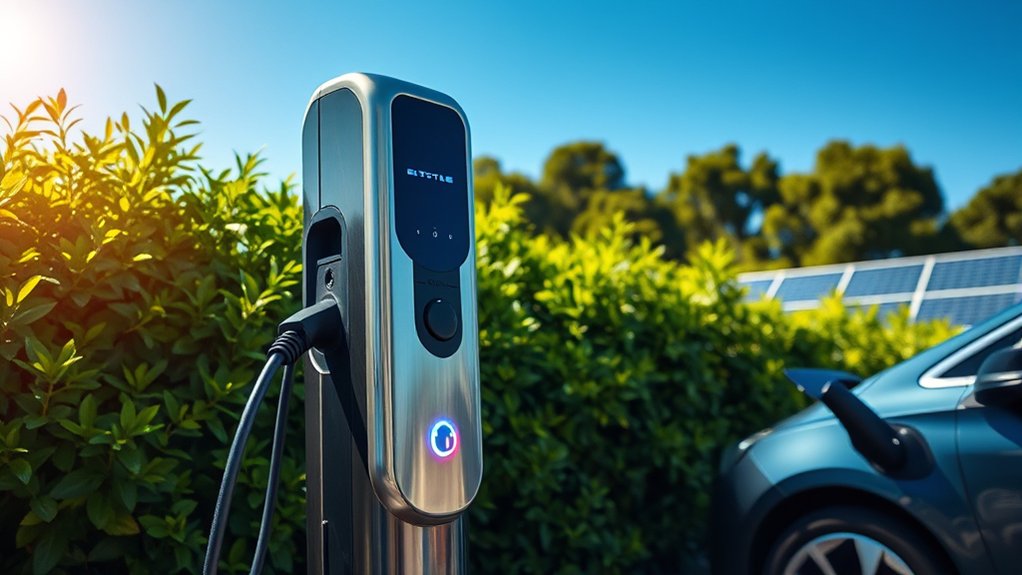
EV chargers do not all use the same amount of power. A basic Level 1 cord may draw less power than a small space heater, while a hardwired Level 2 home charger can draw power more like a large appliance. DC fast chargers use far more power, but they are usually public chargers, not home equipment.
Quick Answer
A Level 1 EV charger usually uses about 1.4 to 1.9 kW, many home Level 2 chargers use about 7.2 kW, and DC fast chargers often range from 50 kW to 350 kW, with newer units reaching up to 500 kW. Your monthly energy use depends on miles driven, EV efficiency, and your electricity rate.
Key Takeaways
- Level 1 charging is slow but useful if you drive short distances and can plug in overnight.
- Level 2 charging is the best fit for most daily home charging because it can refill most EVs overnight.
- DC fast charging is best for road trips and quick public top-ups, not regular home use.
- To estimate cost, divide miles driven by your EV’s miles per kWh, then multiply by your electricity rate.
- Solar can lower EV charging costs, but 2026 federal tax-credit rules are different from older guidance.
EV Charger Power Comparison
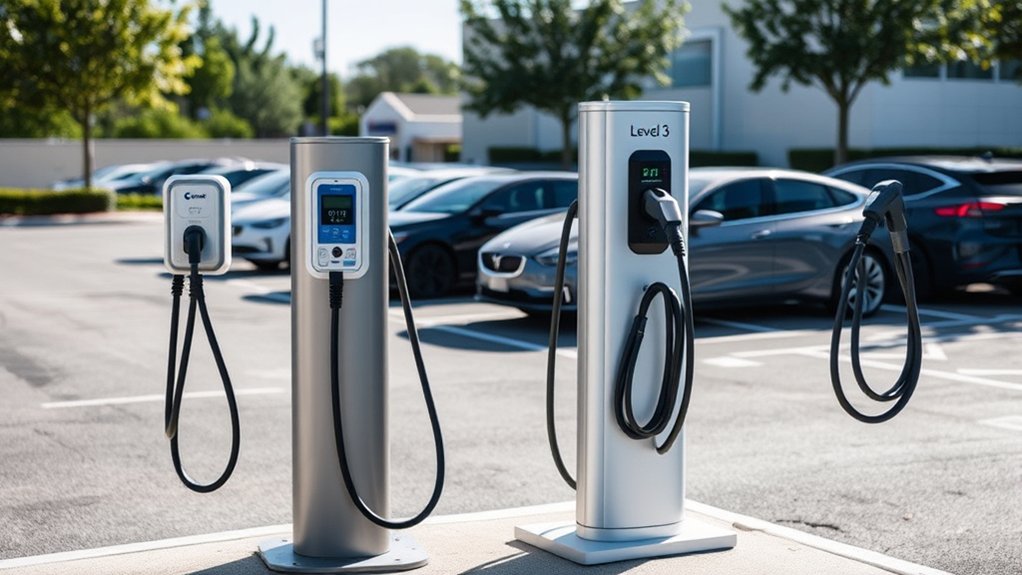
Before comparing chargers, it helps to separate two terms: kW and kWh. Kilowatts, or kW, describe charging speed. Kilowatt-hours, or kWh, describe the amount of energy added to the battery and billed by your utility.
For example, a 7.2 kW Level 2 charger running for 2 hours can use about 14.4 kWh before charging losses. The final energy shown on your bill may be slightly higher because some energy is lost as heat during charging.
EV Charger Power at a Glance
| Level 1 | Usually 1.4 to 1.9 kW on a 120 V outlet. Best for short daily driving, plug-in hybrids, and slow overnight charging. |
| Level 2 | Commonly 7.2 kW at home, with Level 2 equipment ranging from about 2.9 to 19.2 kW. Best for regular home charging. |
| DC Fast Charging | Often 50 to 350 kW at public stations, with some equipment up to 500 kW. Best for road trips and fast stops. |
| What Affects Speed | Battery size, state of charge, temperature, charger output, onboard charger limit, and the EV’s maximum DC fast-charging rate. |
The U.S. Department of Energy’s Alternative Fuels Data Center lists Level 1 charging at about 5 miles of range per charging hour, based on 1.9 kW. It lists Level 2 at about 25 miles of range per charging hour, while noting that Level 2 power can vary widely.
A charger’s kW rating tells you how fast it can deliver power, but your EV decides how much of that power it can actually accept.
Level 1 vs. Level 2 vs. DC Fast Charging
Level 1 Charging
Level 1 charging uses a standard 120 V household outlet. It is the easiest option because most EVs include a portable cordset, but it is also the slowest. A Level 1 charger may work well if you drive only a few miles each day, own a plug-in hybrid, or can leave the car plugged in for long periods.
Do not treat the “full charge” time as one fixed number. A small battery may recover enough range overnight, while a large EV battery may need more than a day if it is nearly empty. For many owners, Level 1 is better for daily top-offs than for refilling from 0% to 100%.
Level 2 Charging
Level 2 charging uses 240 V service in many homes and 208 V service in many commercial settings. Many home Level 2 units deliver about 7.2 kW, but Level 2 equipment can range from lower-power plug-in units to higher-power hardwired chargers.
Level 2 is usually the best choice if you drive daily, have a longer commute, or want your EV ready each morning. It can often refill a typical EV overnight, but the exact time depends on your battery size, how much charge is left, and your vehicle’s onboard charger.
DC Fast Charging
DC fast charging sends direct current to the battery and bypasses the vehicle’s onboard AC charger. This is why DC fast charging can add a large amount of range in a short stop. Many EVs can charge from about 10% to 80% much faster than they can charge from 80% to 100%, because charging speed often tapers as the battery fills.
DC fast charging is excellent for road trips, but it is not normally installed at a house. The equipment, electrical service, utility demand, and installation costs are far beyond a normal residential setup.
Note: Some people call DC fast charging “Level 3,” but official charging references often separate AC Level 1, AC Level 2, and DC fast charging. The key point for drivers is simple: DC fast charging is the high-power public option used when time matters.
How Much Electricity Does an EV Use Daily?
The amount of electricity your EV uses each day depends on how far you drive and how efficient your vehicle is. Many EVs use roughly 0.25 to 0.40 kWh per mile in everyday driving, but larger vehicles, cold weather, high speeds, hills, roof racks, and heavy loads can increase that number.
Use this simple formula:
- Daily kWh = miles driven per day ÷ miles per kWh
- Monthly kWh = daily kWh × number of charging days
- Monthly cost = monthly kWh × electricity price per kWh
Here is a practical example. If you drive 38 miles per day and your EV averages 3 miles per kWh, you use about 12.7 kWh per day before charging losses. Over 30 days, that is about 381 kWh. If your electricity rate is $0.1883 per kWh, the charging energy would cost about $71.77 before taxes, fixed charges, and charging losses.
If your EV averages 2.8 miles per kWh, the same 38 miles would use about 13.6 kWh per day, or about 408 kWh per month. At the April 2026 U.S. average residential electricity price of 18.83 cents per kWh reported by the U.S. Energy Information Administration, 408 kWh would cost about $76.83 before local taxes, fees, and charging losses.
Key Factors That Affect EV Charging Costs
Your EV charging cost is not based only on the charger. It is based on the energy that reaches the car, your utility rate, your driving habits, and how efficiently your EV turns electricity into miles.
1. Electricity Rate
Electricity prices vary widely by state and utility. Using the same 408 kWh monthly example, April 2026 EIA residential prices would put the energy cost at about $143.82 in California at 35.25 cents per kWh and about $69.32 in Texas at 16.99 cents per kWh. Your exact bill may differ because utilities often add delivery charges, taxes, minimum charges, and rate-plan rules.
2. Miles Driven
A driver who charges for 400 miles per month will use far less electricity than a driver who charges for 1,500 miles per month. This is why a fixed “average EV charging bill” can be misleading. Your mileage is the starting point.
3. EV Efficiency
Efficiency matters as much as the charger. A compact EV that gets 4 miles per kWh costs less to drive than a large electric truck that gets 2 miles per kWh, even if both use the same Level 2 charger.
4. Charging Losses
Not every kWh pulled from the wall becomes stored battery energy. Some energy is lost as heat in the charger, cable, onboard electronics, and battery-management system. Level 2 charging is often more efficient than slow Level 1 charging, but actual losses vary by vehicle, temperature, and equipment.
5. Time-of-Use Rates
Some utilities offer time-of-use or EV charging plans with lower rates during off-peak hours. The AFDC home charging guide notes that some utilities offer residential time-of-use rates or other incentives for charging infrastructure owners. Check your utility’s EV plan before assuming a savings percentage.
Pro Tip: If your utility offers an off-peak EV rate, set your charger or vehicle app to start after the lower-rate period begins. This can reduce cost without changing how much you drive.
Choosing the Right EV Charger for Your Routine
The best charger is the one that matches your driving pattern, parking setup, and electrical service.
- Choose Level 1 if you drive short distances, can plug in every night, or need the lowest-cost setup.
- Choose Level 2 if you drive most days, want faster overnight charging, or have a larger battery EV.
- Use DC fast charging for road trips, quick public stops, or days when you need range faster than home charging can provide.
- Use a smart charger if you want scheduled charging, app tracking, load-management features, or easier use of off-peak rates.
Warning: Do not install a 240 V Level 2 charger on an undersized circuit or old wiring. EV charging is a continuous electrical load. Follow local code, permit rules, and NEC Article 625, and have a qualified electrician confirm panel capacity, breaker size, wiring, grounding, and outdoor rating before installation.
Also check your EV’s onboard charger rating before buying a high-power home unit. If your EV can accept only 7.2 kW on AC power, a 11.5 kW or 19.2 kW Level 2 charger will not make that vehicle charge faster on AC. It may still help if you later buy an EV with a higher onboard charging rate.
How Solar Panels Can Lower EV Charging Costs
Solar panels can lower EV charging costs when your system produces electricity that offsets expensive grid power. The savings depend on your system size, installed cost, sunlight, roof direction, utility rate, net metering rules, and whether you charge during the day or use battery storage.
A 10 kW solar system is not automatically the “ideal” size for EV charging. Start with your EV energy need instead. If your EV uses 12 to 14 kWh per day, your installer can estimate how much solar capacity is needed in your area after accounting for local sun hours and system losses.
If you charge while the sun is out, your EV can use solar production more directly. If you charge mostly at night, you usually need net metering, a favorable utility billing plan, or a home battery to get similar savings. Without storage or billing credits, daytime solar production and nighttime EV charging may not line up.
There is also an important 2026 tax update. The IRS Residential Clean Energy Credit says the 30% credit applied to qualified clean energy property installed from 2022 through December 31, 2025, and is not available for property placed in service after December 31, 2025. For projects after that date, check current IRS guidance, state incentives, utility rebates, and local solar programs before estimating payback.
Note: Tax credits and utility rebates change. Treat solar and battery incentives as a current-year research item, not a permanent savings guarantee.
Tips for Getting More From EV Charging
- Schedule charging during lower-rate hours if your utility offers time-of-use pricing.
- Precondition while plugged in when your EV supports it, especially before winter driving.
- Avoid relying on DC fast charging for every charge unless your driving pattern requires it, because home charging is often cheaper and easier.
- Keep the battery in a practical daily range recommended by your vehicle manual. Many EV owners use 80% or 90% for daily charging and save 100% for long trips, but some LFP-battery models may have different guidance.
- Track miles per kWh in your vehicle app or dashboard. This gives you a better monthly cost estimate than a generic EV average.
- Compare public charging prices before plugging in. Public DC fast charging can cost much more than home electricity.
Frequently Asked Questions
Does an EV charger use a lot of electricity?
An EV charger can use a meaningful amount of electricity because it is refilling a large battery. A 7.2 kW Level 2 charger running for 4 hours can draw about 28.8 kWh before charging losses. Whether that feels like “a lot” depends on your miles driven, electricity rate, and current home energy use.
What is the 80/20 rule for EV charging?
The 80/20 rule means many drivers try to keep the battery between about 20% and 80% for routine use, then charge closer to 100% before long trips. It is not a universal rule for every EV. Always follow your vehicle manual, because battery chemistry and manufacturer guidance vary.
What drains an EV battery the most?
High speed, cold weather, aggressive acceleration, steep hills, heavy cargo, towing, roof racks, and cabin heating can all reduce range. Tire pressure and tire choice also matter. Regenerative braking helps recover energy in stop-and-go driving, but it cannot fully offset inefficient driving or harsh weather.
What stops someone from unplugging your electric car?
Many EVs lock the charging connector while the car is locked or actively charging, but behavior varies by vehicle and connector type. Public chargers may also use app or account controls. If unplugging is a concern at home, park in a visible area, use the vehicle’s connector-lock settings, and consider a cable lock if compatible.
How many amps does a Level 2 EV charger use?
Many home Level 2 chargers use 30 to 48 amps, though some are lower or higher. A common 7.2 kW charger may operate around 30 amps at 240 V and require a properly sized dedicated circuit. Your electrician should size the breaker and wiring for the charger’s continuous-load rating and local code.
Is Level 2 charging cheaper than Level 1?
The utility rate is usually the same if you charge at the same time of day, but Level 2 may waste less energy and makes it easier to schedule charging during off-peak hours. Level 2 has higher installation cost, while Level 1 may require little or no added equipment.
Can I install a DC fast charger at home?
For nearly all homeowners, no. DC fast charging requires commercial-grade equipment and electrical service far beyond normal residential needs. A properly installed Level 2 charger is the realistic fast home-charging option for most EV owners.
Conclusion
EV charger power usage is easier to understand when you separate charging speed from energy used. Level 1 is slow and simple, Level 2 is the practical home solution for most drivers, and DC fast charging is the high-power public option for quick stops and road trips. To estimate your real cost, use your own miles, your EV’s miles per kWh, and your utility’s current rate. Add solar or off-peak charging only after checking local rules, current incentives, and your home’s electrical capacity.
Sources
- U.S. Department of Energy Alternative Fuels Data Center: Electric Vehicle Charging Stations — charger levels, power ranges, connectors, and charging-speed estimates.
- U.S. Department of Energy Alternative Fuels Data Center: Charging Electric Vehicles at Home — home charging, safety, permits, cost formula, and time-of-use rate considerations.
- U.S. Energy Information Administration: Electric Power Monthly Table 5.6.A — April 2026 residential electricity prices by state.
- Internal Revenue Service: Residential Clean Energy Credit — current federal tax-credit rules for solar, battery storage, and placed-in-service dates.
- Joint Office of Energy and Transportation: Electric Vehicle Charging Stations — public charging station resources and AFDC station locator context.