
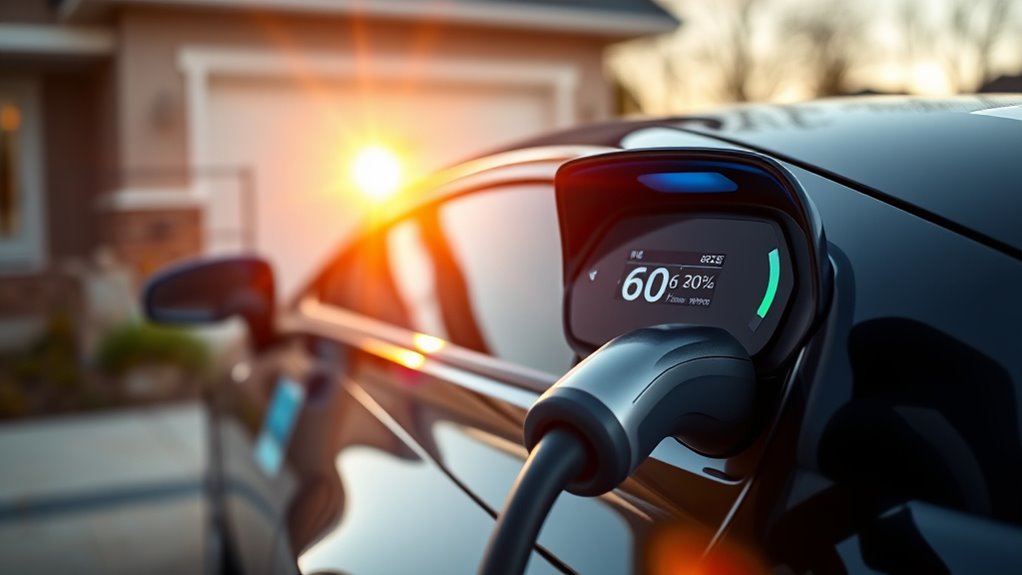
You should charge your EV when your driving pattern calls for it, not just because the car is parked. For most daily use, set a charge limit around 70% to 90%, and try to keep the battery away from very low or full states for long periods. The common 20% to 80% range is a strong battery-health guideline, but your owner’s manual and battery chemistry matter most.
Quick Answer
Charge your EV often enough to cover your next few drives, but avoid keeping it at 100% every day unless your manufacturer recommends it. A 20% to 80% range is a good default for battery health, while 100% is best saved for road trips, cold-weather range needs, or vehicle-specific calibration guidance.
Key Takeaways
- For routine driving, a daily charge cap around 80% is a safe default for many EVs, while some vehicles suggest 90% or different limits.
- Use 100% when you need the extra range, then start driving soon instead of letting the car sit full for hours or days.
- DC fast charging is fine when needed, but Level 2 home charging is gentler, cheaper, and better for routine use.
- Battery chemistry matters. Some LFP-equipped EVs may have different 100% charging guidance than nickel-based packs.
At a Glance
| Time Required | About 5 minutes to set a charge limit; charging time depends on your charger and battery size. |
| Difficulty | Easy. Most EVs let you set a target charge level in the vehicle screen or app. |
| Tools Needed | Vehicle display, mobile app, home charger, or public charger app. |
| Cost | No extra cost to set limits; electricity cost depends on your utility rate and charging location. |
How Often Should You Charge an EV?
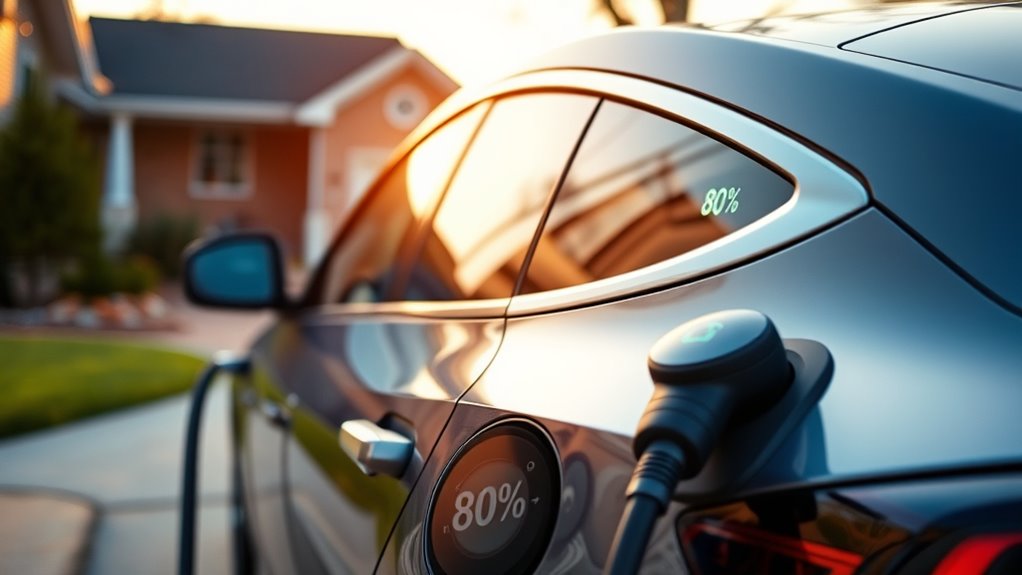
You should charge an EV based on how much range you will need before your next convenient charging window. If you drive lightly, that may mean charging every few days. If you drive a long commute, use climate control heavily, tow, climb hills, or lack home charging, you may plug in more often.
The goal is not to avoid charging. The goal is to avoid letting the battery sit near empty or full when you do not need that much range. Lithium-ion batteries age under several stress factors, including high state of charge, heat, charge current, and depth of discharge. That is why many EV owners use a daily limit instead of charging to 100% every time.
For most owners, a simple rule works well: plug in when the battery drops near 20% to 40%, then charge to the level you need for normal driving, often around 70% to 90%. If your car recommends a specific daily limit, use that setting first.
Note: Your EV may hide a small top and bottom buffer from the number shown on the screen. Even so, you should still follow the displayed charge-limit guidance from the vehicle or owner’s manual.
Why EV Charging Between 20% and 80% Helps
Keeping your EV within a 20% to 80% charge window helps reduce stress on the cells because the battery avoids the most demanding ends of its usable range. Battery research shows that lithium-ion cycle life is affected by state-of-charge range, temperature, discharge current, and charge current, so staying in the middle range is a practical way to reduce avoidable wear.
This does not mean you must panic at 81% or stop driving at 19%. Think of 20% to 80% as a daily comfort zone, not a hard wall. If you need 90% for tomorrow, use 90%. If you need 100% for a trip, use it. Battery health is about long-term habits, not one single charge.
The 20% to 80% rule is best understood as a daily-use guideline: stay near the middle when you can, and use the full battery when your route actually needs it.
Charging in a narrower band, such as 40% to 60%, is even gentler when it fits your routine. That may work for short commutes, plug-in access at home, or a second car that only runs errands. For most drivers, though, 20% to 80% gives a better balance between battery care and real-world convenience.
The same logic applies when the car is parked. If you will leave the EV unused for several days or weeks, avoid storing it near 0% or 100%. A mid-range charge is usually safer for storage, but you should use the storage level recommended by your manufacturer.
When Charging an EV to 100% Makes Sense
Charging your EV to 100% makes sense when the extra range gives you a real benefit. The most common case is a long trip, especially when the next reliable charger is far away or the route includes cold weather, mountains, high speeds, cargo, or towing.
The best practice is to time the full charge so the car reaches 100% close to departure. That gives you the full range without letting the battery sit at a high state of charge longer than necessary.
Some vehicles also recommend occasional full charges for calibration or for certain battery chemistries, especially some lithium iron phosphate, or LFP, packs. Other vehicles do not need that routine. Follow your vehicle’s manual, in-car battery tips, or app recommendation instead of applying one universal rule to every EV.
Pro Tip: Before a road trip, set the car to finish charging shortly before you leave. You get maximum range, warmer battery conditioning when supported, and less time sitting at 100%.
Does Nightly EV Charging Hurt Battery Life?
Nightly charging does not automatically hurt your EV battery. The problem is not plugging in. The problem is repeatedly charging to 100% and leaving the battery full when you only need a fraction of that range.
If you plug in every night with an 80% charge limit, the car will stop at the target and sit there. That can be a good routine if your electricity rate is cheaper overnight or you want the car ready every morning. If you charge to 100% every night for a short commute, you are using more battery stress than the drive requires.
| Charging habit | Battery impact | Best use |
|---|---|---|
| Plug in nightly with an 80% limit | Usually battery-friendly | Daily commuting and cheap overnight rates |
| Charge every few days | Also battery-friendly | Light driving and easy home charging |
| Charge to 100% every night | More stress than most drivers need | Only if your vehicle recommends it or your route requires it |
If you have a home charger, the easiest routine is to set a daily limit and leave the car plugged in when convenient. The vehicle will manage the session. If you rely on public charging, you may charge less often but in larger sessions, usually stopping around 80% unless you need more range.
How Fast Charging Affects EV Battery Health
DC fast charging is useful on road trips and for drivers without reliable home charging. It delivers high power directly to the battery, which is why it can add range quickly. The tradeoff is that aggressive charging can create more heat and electrochemical stress than slower charging if the pack is not managed well.
Modern EVs use a Battery Management System, or BMS, to control charging speed based on temperature, state of charge, and battery limits. Research on degradation-aware fast charging shows that current and thermal control are key to charging quickly without increasing wear. That means fast charging is not something you must fear, but it should not be your default if slower charging is easy for you.
Fast charging also slows as the battery fills. A 2026 study on fast and ultra-fast charging behavior found that charging beyond 80% often adds time with limited practical benefit because BMS limits and battery-protection behavior shape the charging curve. On road trips, this is why it can be faster to stop twice from 15% to 75% than to sit once from 15% to 100%.
Warning: If your EV is under a battery recall, has a manufacturer charging restriction, or shows a charging fault, follow the official repair notice first. General charging advice does not override a safety recall or owner’s manual.
What Charging Limits Do EV Makers Recommend?
Most EV makers give you a way to set a daily charge limit, but the exact number varies. Many nickel-based battery packs are happiest when daily charging stays below full. Some vehicles suggest around 80%, while others allow 90% for routine use. Some LFP-equipped EVs may recommend 100% periodically or more often than nickel-based packs.
Because of those differences, the best answer is simple: use your car’s recommended setting first. If the vehicle screen, mobile app, or owner’s manual gives a daily limit, that is the limit you should trust.
Daily Charge Caps
A daily charge cap is the target level where your EV stops charging. Set it once, and the car will usually handle the rest. A good daily cap depends on your range needs:
- Short local driving: 60% to 80% is usually plenty if you can charge at home.
- Normal commuting: 70% to 90% works well for many drivers.
- Long commute or limited chargers: Use the level that gives you a safe buffer, even if that means 90% or more.
- LFP battery guidance: Follow the manufacturer’s recommendation, since some LFP packs have different full-charge advice.
If you are unsure what battery chemistry your EV uses, do not guess. Check the owner’s manual, battery screen, mobile app, window sticker, or manufacturer support page.
Trip-Ready Full Charges
When you need extra range for a trip, 100% is useful. The key is timing. Charge to 100% close to departure, drive the car, and return to your normal daily limit afterward.
| Situation | Recommended approach |
|---|---|
| Everyday driving | Use the daily charge limit recommended by your EV, often around 80% to 90%. |
| Road trip | Charge to 100% shortly before leaving if the extra range helps. |
| Public DC fast charging | Stop near 70% to 80% unless you need more range, because charging usually slows at higher states of charge. |
| Cold weather | Allow a larger buffer and precondition the battery if your EV supports it. |
| Long-term parking | Store near the manufacturer’s recommended mid-range level instead of leaving it near empty or full. |
How Weather Changes Your Charging Plan
Hot and cold weather both matter. Heat can increase battery stress, especially if the car sits full in direct sun. Cold weather reduces range and can slow charging until the battery warms up. In winter, you may need a higher starting charge than usual because cabin heat, battery heating, dense air, and winter tires can all reduce efficiency.
If your EV supports battery preconditioning, use it before DC fast charging in cold weather. Preconditioning warms the pack so it can accept power more efficiently. At home, scheduled departure charging can also help because the car can finish charging near the time you leave.
Simple EV Charging Schedule by Driving Style
Use these patterns as a starting point, then adjust for your vehicle, charger access, and comfort level.
- Short commute with home charging: Set a 70% to 80% limit and plug in when the battery drops near 30% to 40%.
- Average commute with home charging: Set an 80% limit and plug in overnight as needed.
- Long commute: Use 80% to 90% if that gives you a safe daily buffer.
- Apartment or public-charging only: Charge less often but plan sessions around errands, work, or shopping. Stop around 80% unless you need more.
- Road trips: Start near 100% if useful, then use DC fast charging in the faster middle range whenever possible.
Frequently Asked Questions
How often should you charge an EV battery to 100%?
Charge to 100% when you need the full range for a trip, cold-weather buffer, or vehicle-specific calibration guidance. For routine driving, many EVs are better kept below full unless the manufacturer says otherwise.
What is the 80/20 rule for EV charging?
The 80/20 rule means you try to keep your EV between about 20% and 80% for daily use. It reduces time spent at very low or very high charge levels, which can help limit battery stress over time.
What is the 30/90 rule for an EV battery?
The 30/90 rule is a looser version of the 20/80 rule. It means you recharge around 30% and stop around 90%. It gives you more daily range while still avoiding deep discharge and routine full charging.
What drains an EV battery the most?
High speeds, hard acceleration, cold weather, cabin heat, towing, roof racks, hills, and low tire pressure can drain an EV battery faster. Highway speed is one of the biggest range reducers because aerodynamic drag rises quickly as speed increases.
Is it bad to leave an EV plugged in overnight?
No, not if you set a sensible charge limit. Leaving an EV plugged in overnight with an 80% or manufacturer-recommended cap is normal. Leaving it at 100% every night when you do not need the range is less ideal.
Should you fast charge an EV to 100%?
Usually, no. DC fast charging often slows after about 80%, so charging to 100% can take much longer. Use 100% at a fast charger only when the next part of your route requires the extra range.
Conclusion
You do not need to charge your EV every night unless your driving pattern requires it. For most owners, the best habit is simple: keep the battery in a comfortable middle range for daily use, set a charge limit around the level your car recommends, and save 100% for trips or vehicle-specific guidance. Use DC fast charging when it helps, but rely on slower home or Level 2 charging whenever it fits your routine. Good EV charging is not about strict rules. It is about matching the battery level to the miles you actually drive.
Sources
- Degradation-Aware Fast-Charging of Li-Ion Batteries Using Joint Electrical and Thermal Model Predictive Control — supports the guidance that aggressive fast charging needs current and thermal control to reduce degradation risk.
- Quantifying Realizable Flexibility Limits in Fast and Ultra-Fast EV Charging Using Real-World Data — supports the point that charging beyond 80% often adds time with limited practical gains due to BMS and charging-curve behavior.
- Optimal Battery Thermal Management for Electric Vehicles with Battery Degradation Minimization — supports the importance of temperature control for battery durability.
- Battery Health Reporting Fails Independent Validation Across Manufacturers — supports the caution that battery-health reporting and BMS state-of-health estimates vary by manufacturer.
- Edmunds Answers the Most Asked Questions From First-Time EV Buyers — supports consumer-facing guidance on EV charging, battery warranties, and routine 80% to 90% charging limits.