
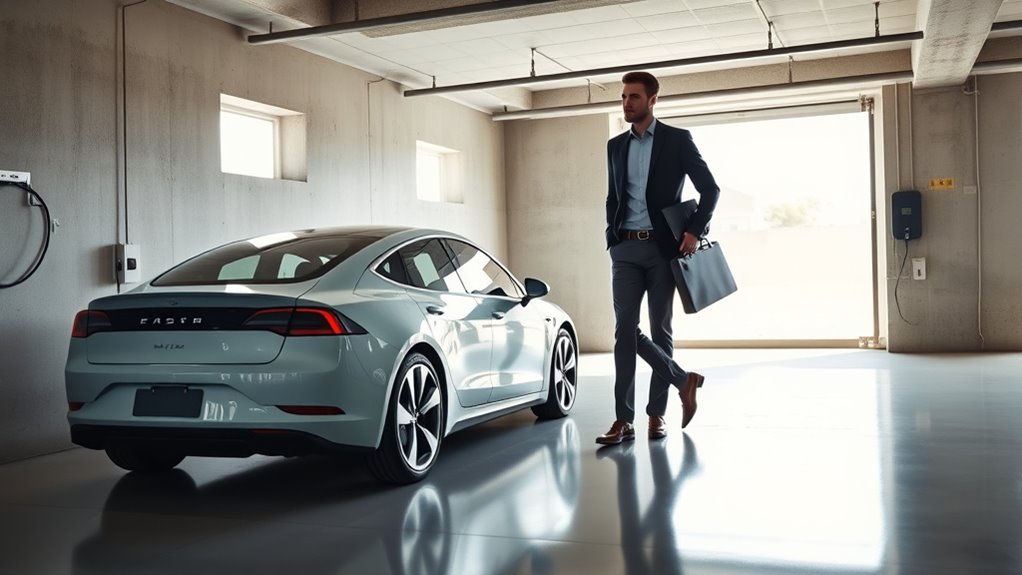
To charge your EV at work without hassle, start with permission, the right charger, and clear workplace rules. Level 1 charging can work for short commutes and long parking windows, while Level 2 charging is usually better for faster daytime top-ups. Before you plug in, check registration steps, fees, time limits, cable rules, and whether your employer allows home charging reimbursement.
Quick Answer
You can charge your EV at work by getting approval, registering for the workplace charging program, plugging into an approved Level 1 or Level 2 station, monitoring the session, and moving your car when charging ends. Level 2 is usually the better fit for shared workplace charging because it adds range faster.
Key Takeaways
- Always get approval before using a workplace outlet or charger.
- Level 1 is slow but useful for light top-offs; Level 2 is faster and better for most shared workplace charging.
- Check whether your employer charges by kWh, hour, session, parking time, or idle time.
- Move your vehicle promptly when charging ends so coworkers can use the station.
- Avoid power strips, extension cords, damaged cables, and unapproved adapters.
At a Glance
| Time Required | 5–10 minutes to start charging after registration; longer if your employer must approve access or install equipment. |
| Difficulty | Easy when chargers already exist; moderate if you need to request a new workplace charging program. |
| Tools Needed | Employer approval, charging app or access card, payment method if required, and an approved charging cable if your site allows bring-your-own cables. |
| Cost | Free, subsidized, per-kWh, per-hour, flat-session, or idle-fee pricing depending on your employer and charging network. |
How Workplace EV Charging Works
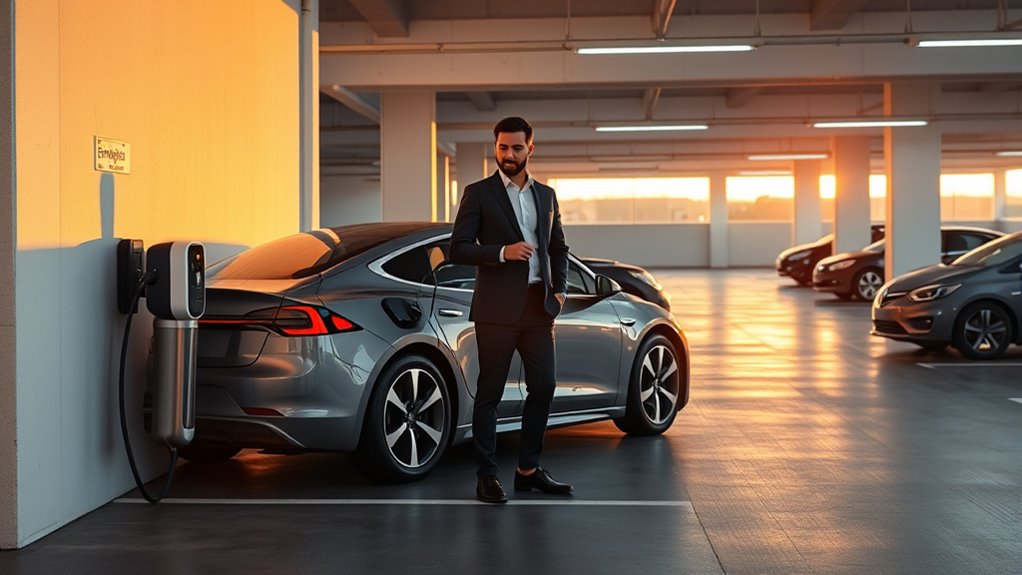
At work, you’ll usually charge from either a Level 1 connection or a Level 2 EV charging station. Level 1 uses 120V AC power and is slow. Level 2 uses 208V or 240V AC power and is much faster. The U.S. Department of Energy’s Alternative Fuels Data Center notes that charging time depends on battery state of charge, battery size, vehicle onboard charger capacity, charger output, and electrical service.
Workplace charging works best when access, pricing, time limits, safety rules, and sharing rules are clear before anyone plugs in.
Most workplace programs require employee registration before you use a port. You may need to register your vehicle, license plate, employee ID, charging account, payment method, or access card. Some employers also require a user agreement or liability waiver.
Networked charging stations can show real-time availability, manage waitlists, send charging alerts, collect fees, and track energy use. Non-networked stations can still work well, but they need clear workplace policies and good communication between EV drivers.
How to Charge Your EV at Work Step by Step
Once your employer approves workplace charging, follow this process each time you plug in:
- Review the policy. Confirm who can use the charger, when it is available, how long you can stay, and what it costs.
- Register before your first session. Set up the required app, RFID card, employee badge, payment method, or charging account.
- Park only in an approved charging space. Do not block a charger, walkway, fire lane, loading zone, or accessible path.
- Inspect the charger. Look for cracked plugs, damaged cables, water intrusion, warning lights, loose outlets, or error messages.
- Start the session. Plug in, activate the station, and confirm that both the charger and your vehicle show active charging.
- Charge only what you need. If the charger is shared, avoid using the space as all-day parking.
- Watch for alerts. Turn on app or vehicle notifications so you know when charging stops or finishes.
- Move your vehicle promptly. Unplug, return the connector neatly, and free the space for the next driver.
- Save records if needed. Keep receipts, screenshots, or session history for reimbursement, fleet reporting, or tax documentation.
Warning: Never use power strips, household extension cords, damaged cables, random wall outlets, or unapproved adapters for workplace EV charging. EV charging is a continuous high-load electrical use, so outlets and charging equipment should be approved, inspected, and code-compliant.
Choose the Right Workplace Charger
You should match the charger to your daily range needs, parking time, and workplace rules. A faster charger is not always the best choice if several employees share the same station. The goal is to recover enough range without blocking access for others.
Level 1 vs. Level 2
Level 1 charging uses a 120V AC outlet and typically adds about 3–5 miles of range per hour. It can work for short commutes, plug-in hybrids, or employees parked for a full shift. The AFDC lists Level 1 at approximately 5 miles of range per hour and notes that 8 hours of 120V charging can replenish about 40 miles of range for a mid-size EV.
Level 2 charging uses 208V or 240V AC power and is commonly used for public and workplace charging. It often adds about 20–40 miles of range per hour, although the exact result depends on your vehicle, charger output, temperature, and battery state. AFDC lists Level 2 at approximately 25 miles of range per hour, with Level 2 equipment ranging from 2.9 to 19.2 kW.
| Daily Need | Best Match | Why It Fits |
|---|---|---|
| Under 20 miles | Level 1 | A long workday may provide enough time for a light top-off. |
| 20–40 miles | Level 1 or Level 2 | Choose based on parking time, charger demand, and how much range you need before leaving. |
| Over 40 miles | Level 2 | Faster charging is usually needed to recover useful range during one shift. |
| Shared employee lot | Networked Level 2 | Access control, billing, waitlists, and alerts make sharing easier. |
Pro Tip: If your workplace has limited chargers, charge to the range you need for the day instead of treating the charging space like an all-day parking spot.
Networked Charging Access
Networked workplace chargers can make shared charging easier by showing availability, sending alerts, managing a digital waitlist, applying time limits, and tracking billing. They also give employers usage data, which helps with maintenance, policy enforcement, and future expansion.
For larger workplaces, networked charging can reduce disputes because everyone follows the same access rules. For smaller workplaces, a shared calendar, driver group, or posted charging schedule may be enough.
Ask for Permission and Access
Before you plug in, get explicit approval from your employer, facility manager, property manager, or fleet administrator. Do not assume that an outdoor outlet, warehouse outlet, or unused plug is available for EV charging.
Ask these questions before your first session:
- Which chargers, outlets, or parking spaces are approved for employee EV charging?
- Do I need an app, RFID card, employee badge, permit, account, or license plate registration?
- Are there time limits, idle fees, reserved spaces, or peak-hour rules?
- Can I bring my own cable, or must I use only the station’s cable?
- Are adapters allowed, and which ones are approved?
- Who should I contact if the charger fails, a vehicle overstays, or equipment looks unsafe?
- Can visitors, fleet vehicles, or overnight vehicles use the same charging spaces?
The AFDC workplace charging guidance recommends clear guidelines for administration, registration and liability, sharing, and pricing. That protects drivers, employers, equipment, and other employees who need access.
What Workplace EV Charging Costs
Workplace EV charging can be free, subsidized, or employee-paid. The final cost depends on electricity rates, charger type, network fees, parking rules, installation costs, maintenance, and whether the employer passes any costs to drivers.
For a driver, the simplest estimate is:
Session cost = kWh used × posted electricity rate, plus any session, parking, or idle fees.
For example, a 20 kWh top-off costs less at a free or subsidized workplace charger than at a station with per-hour pricing and idle fees. Always check the app, sign, or policy before starting a session.
For employers, the full cost includes more than the charger hardware. A workplace charging plan may include electrical upgrades, trenching, permits, installation labor, networking, software, maintenance, signage, pavement markings, and enforcement.
Who Pays for Workplace Charging?
You’ll usually see one of three models: your employer pays, you pay, or both sides share the cost under a written policy. The best model depends on charger demand, company budget, fairness, and administrative effort.
Employer-Paid Charging
With employer-paid charging, you may get free or subsidized access as an employee benefit. This can encourage EV adoption and make commuting easier, but it still needs rules. Free charging without time limits can lead to blocked stations and low turnover.
Employee Charging Fees
Employee charging fees help recover electricity, maintenance, network, or parking costs. Some employers charge per kWh, some charge by time, and some add idle fees after charging ends.
If your employer charges for workplace charging, ask for the pricing in writing. Clear pricing helps you compare work charging, home charging, and public charging.
Cost-Sharing Policies
Cost-sharing policies can balance employee access with employer costs. The employer may pay for installation and maintenance while employees pay part or all of the electricity cost.
| Option | Who Pays | Impact |
|---|---|---|
| Free charging | Employer | Strong perk, but needs time limits if demand is high. |
| Subsidized charging | Shared | Keeps costs low while reducing overuse. |
| Per-kWh fee | Employee | Fair billing based on energy used. |
| Per-hour or idle fee | Employee if plugged in or overstaying | Improves turnover at busy stations. |
| Managed billing | System-managed | Useful for larger workplaces with many EV drivers. |
Tax Credits, Grants, and Incentives
Tax credits, grants, and utility rebates can lower workplace charging costs, but they are location-specific and change over time. Do not assume an incentive applies until your employer checks the current rules.
In the United States, the IRS Alternative Fuel Vehicle Refueling Property Credit page explains eligibility for qualified refueling or recharging property, including electric vehicle charging equipment. The IRS lists conditions such as eligible location, placed-in-service timing, original use, and business or personal-use requirements.
In the United Kingdom, GOV.UK electric vehicle chargepoint grant guidance says the Workplace Charging Scheme provides up to £500 per socket for eligible workplaces, with grants for up to 40 sockets across all sites.
Note: Tax, payroll, and grant rules depend on location and employer policy. Treat incentive information as a starting point, then confirm details with your employer, installer, accountant, or tax adviser.
Follow Workplace Charging Etiquette
Workplace charging works best when you treat the station as a shared resource. Good charging etiquette keeps the system fair and helps prevent conflict between EV-driving employees.
- Move when finished. Do not stay parked at the charger after your session ends.
- Respect time limits. Follow posted rules, especially during peak hours.
- Do not unplug another vehicle unless policy allows it. If a coworker is overstaying, use the approved contact process.
- Keep cables tidy. Return the connector to the holster and avoid trip hazards.
- Use waitlists fairly. Join the queue instead of blocking traffic or hovering near a charger.
- Report problems. Tell facilities or the charging provider about broken plugs, damaged cables, app errors, or unsafe conditions.
If you expect heavy use, communicate early with other drivers. Some workplaces use charging buddies, morning and afternoon shifts, shared calendars, or digital waitlists to keep stations moving.
What to Do When All Chargers Are Busy
If every charger is taken, do not park in a charging space unless your vehicle is actively charging. Use the approved waitlist, reservation tool, driver chat, or facilities contact.
If your workplace does not have a sharing system, suggest one. Simple options include:
- A shared calendar for charging slots
- A digital waitlist in the charging app
- Morning and afternoon charging windows
- Charging buddies assigned to the same station
- Posted time limits with clear enforcement
- A driver contact list for finished sessions or urgent charging needs
If charger congestion happens often, track the date, time, number of cars waiting, and how long vehicles remain plugged in after charging ends. That data helps management decide whether to add chargers, adjust pricing, or enforce time limits.
Get Reimbursed for Home Charging
If you charge a company EV at home or use your personal EV for business driving, ask whether your employer offers home charging reimbursement. A clean reimbursement process should explain which charging sessions qualify, how rates are calculated, and what records you need.
Useful records include:
- Charging date and time
- Energy used in kWh
- Electricity rate used for the calculation
- Vehicle assigned to the session
- Business purpose, if required
- App screenshots, charger reports, utility data, or receipts
Some drivers use a connected home charger, vehicle app, fleet platform, utility submeter, or approved reimbursement tool. If your employer uses a charging app, enter your electricity price and payment details only through the official system.
Do not assume every home charging session is reimbursable. Personal use, commuting, business mileage, and fleet use may be treated differently under company policy and local tax rules.
How to Request EV Charging at Work
Start by gathering evidence that workplace charging is needed. Survey employees to measure EV ownership, plug-in hybrid ownership, expected EV purchases, commute distances, parking times, and preferred charging windows.
Then send a short proposal to management, facilities, HR, or sustainability staff. Frame workplace charging as a practical commuting and infrastructure asset, not just a perk.
A small pilot is easier to approve than a full rollout. Start with real demand, clear rules, and measurable success criteria.
Include these points in your request:
- Employee survey results and estimated demand
- Suggested number of pilot charging spaces
- Preferred charger type, usually Level 2 for shared workplace use
- Access rules, time limits, and waitlist plan
- Billing approach, such as free, subsidized, or per-kWh pricing
- Safety, inspection, and maintenance responsibilities
- Available grants, tax credits, or utility rebates to investigate
- Success metrics, such as utilization, employee satisfaction, and charger turnover
Employers should consult the utility, electrical contractor, charging equipment provider, property owner, and legal or finance teams early. This helps avoid surprises with electrical capacity, permits, leases, liability, and pricing.
Which Charging Setup Fits Your Needs?
Which charging setup fits your workplace best? Match EV charging stations to commute patterns, parking time, electrical capacity, and the number of employees who need access.
| Setup | Best For | Main Benefit |
|---|---|---|
| Level 1 | Long park times and short commutes | Lower equipment cost when outlets are approved and inspected. |
| Level 2 Charging | Most employee charging programs | Adds useful range during a normal workday. |
| Managed charging program | Shared employee lots and larger sites | Access control, billing, alerts, and usage data. |
| Fleet charging | Company-owned EVs | Centralized reporting, scheduling, and cost tracking. |
| Home plus work charging | Drivers with changing schedules | More flexibility and less dependence on one charging location. |
Always verify local electrical codes, site rules, accessibility requirements, and inspection needs before using or installing workplace charging equipment.
Frequently Asked Questions
How do you charge an EV at work?
You charge your EV at work by getting approval, registering for the workplace charging program, parking in an approved charging space, starting the session with the required app or access card, and moving your vehicle when charging ends.
Is Level 1 or Level 2 better for workplace charging?
Level 1 can work for short commutes and long parking times, but Level 2 is usually better for shared workplace charging because it adds range faster and can serve more drivers during the day.
Can you charge your electric car at work?
Yes, you can charge your electric car at work if your employer provides approved charging and allows employee use. Check the workplace policy, fees, access rules, charger type, and time limits before you plug in.
What is the 80/20 rule for EV charging?
For workplace planning, the 80/20 idea means a small share of charging spaces may cover most daily charging needs if drivers share fairly, move when finished, and use chargers only when needed. It is a rough planning concept, not a technical charging rule.
Are workplace EV chargers free?
Some workplace EV chargers are free, while others use per-kWh, per-hour, session, parking, or idle fees. Ask your employer for the pricing policy before you start charging.
Are electric cars safe for pacemakers?
Most people with pacemakers use EVs and normal charging equipment without problems, but medical-device guidance is personal. Follow your device manufacturer’s instructions, avoid leaning against high-power electrical equipment, and ask your clinician if you have concerns.
Conclusion
Charging your EV at work can be simple when you plan ahead and follow the rules. Get approval, register for access, use only approved equipment, check the pricing, and move your vehicle when charging ends. Level 1 works for light top-offs, while Level 2 charging is usually the best fit for shared workplace stations. With clear policies, safe equipment, and good etiquette, workplace EV charging can make your daily commute easier without creating problems for coworkers.
Sources
- U.S. Department of Energy Alternative Fuels Data Center — Electric Vehicle Charging Stations — supports Level 1 and Level 2 charging speeds, voltage, connector, and charging-time factors.
- U.S. Department of Energy Alternative Fuels Data Center — Workplace Charging for Electric Vehicles — supports workplace charging planning, registration, liability, sharing, pricing, and Level 1 safety guidance.
- Internal Revenue Service — Alternative Fuel Vehicle Refueling Property Credit — supports U.S. EV charger tax-credit eligibility context.
- GOV.UK — Electric Vehicle Chargepoint Grants — supports current UK chargepoint grant information for workplaces and other eligible groups.
- International Energy Agency — Global EV Outlook 2025: Electric Vehicle Charging — supports current EV charging infrastructure growth and market context.