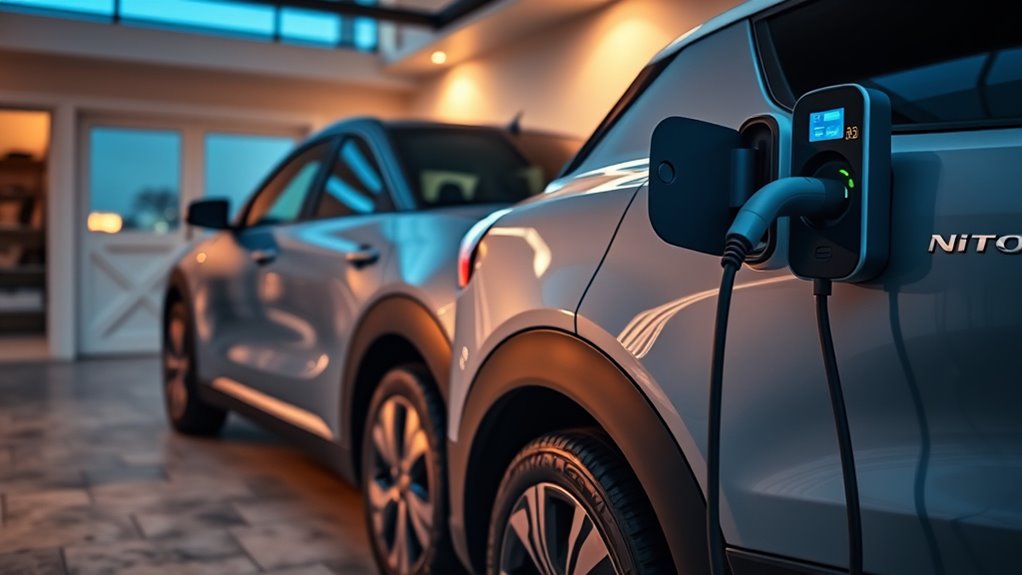
To charge your Kia Niro EV at home the right way, match the charger to your driving routine, your home’s electrical capacity, and the car’s onboard charging limit. A properly installed Level 2, 240-volt charger is the best everyday setup for most owners because it can recover the battery overnight, while a standard 120-volt outlet is better treated as a backup or low-mileage option.
Quick Answer
Use a professionally installed Level 2 charger for daily Kia Niro EV home charging. Current U.S. Kia specs list 11 kW AC charging at about 6 hours 5 minutes from empty, while 120V Level 1 charging can take about 57 hours from empty. Set an everyday charge limit near 80% to 90% and save 100% for longer trips.
Key Takeaways
- Level 2 charging is the practical home choice if you drive most days or want the car ready each morning.
- The current Kia Niro EV has an 11 kW onboard AC charger, so a higher-rated wallbox will not force the car to charge above that limit.
- Use a licensed electrician to confirm panel capacity, circuit size, outlet type, permits, and code requirements before installation.
- For routine battery care, avoid sitting at very low charge, limit daily charging to about 80% to 90%, and use 100% only when you need the extra range.
At a Glance
| Time Required | About 6 hours 5 minutes at 11 kW AC, about 9 hours 5 minutes at 7 kW AC, or about 57 hours on a 120V portable cord from empty, based on current U.S. Kia media specs. |
| Difficulty | Easy to use after installation; professional electrical work is required for a new Level 2 circuit. |
| Tools Needed | Level 1 cord or Level 2 EV charger, compatible connector, dedicated circuit, Wi-Fi or app setup if using a smart charger, and a licensed electrician for installation. |
| Cost | Varies by charger, wiring distance, panel capacity, permits, utility rates, and local rebates. Get a written quote before buying the charger. |
What You Need to Charge a Kia Niro EV at Home
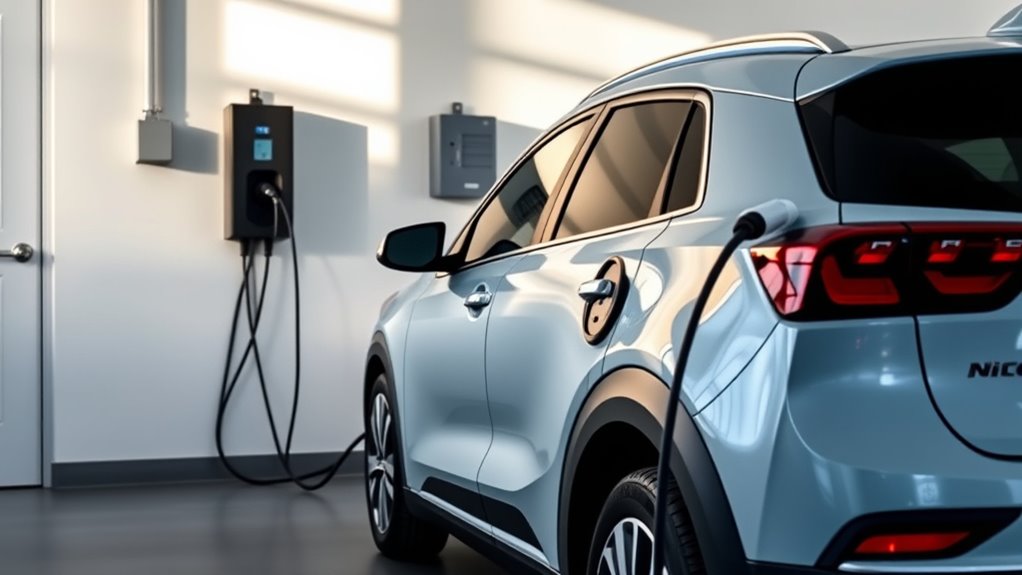
To charge a Kia Niro EV at home, you need the right power source, a compatible charging connector, and a safe installation. The simplest option is Level 1 charging from a standard 120-volt outlet. It works, but it is slow. For most owners, a dedicated Level 2 charger on a 240-volt circuit is the better choice because it can add meaningful range while the car is parked overnight.
Current U.S. Kia media specifications list the Niro EV with a 64.8 kWh battery, 11 kW onboard charger, and 253-mile all-electric range. Kia lists a full AC charge at about 6 hours 5 minutes on 11 kW equipment, about 9 hours 5 minutes on 7 kW equipment, and about 57 hours 5 minutes on the 120V in-cable control box.
Connector type depends on market. In the U.S. and Canada, the Niro EV uses a J1772-style AC connector and CCS for DC fast charging. In many UK and European markets, AC charging commonly uses Type 2. Check your owner’s manual, charge-port label, or local Kia site before buying an adapter or wallbox.
Warning: Do not run EV charging through a light-duty extension cord, damaged outlet, loose plug, or overloaded power strip. If the outlet feels hot, charging stops, or the breaker trips, unplug safely and have the circuit inspected before charging again.
Choose the Right Home Charger
The right home charger depends on three things: how far you drive each day, how long the car sits at home, and how much electrical capacity your home can safely supply. You do not need the largest wallbox on the market. You need a charger that your panel, wiring, breaker, and Kia Niro EV can use safely.
The U.S. Department of Energy’s Alternative Fuels Data Center explains that Level 1 charging uses 120V AC power, while residential Level 2 charging typically uses 240V AC power. Level 2 equipment is common for home charging because it can charge a typical EV battery overnight.
Level 1 Vs Level 2
Level 1 charging is the easiest option because it uses a standard household outlet and the portable cord that may come with the vehicle. It can be enough if you drive short distances, have plenty of parking time, or need a temporary backup.
Level 2 charging is the better everyday setup for most Kia Niro EV owners. It uses a 240-volt circuit and can recover much more range overnight. If you commute daily, make weekend trips, or do not want to think about whether the car will be ready by morning, Level 2 is usually worth the installation cost.
- Choose Level 1 if you drive very little and can leave the car plugged in for long periods.
- Choose Level 2 if you want reliable overnight recovery for daily use.
- Choose a smart Level 2 charger if you want app control, off-peak scheduling, energy tracking, or shared household charging limits.
Charger Power and Speed
Charger power matters, but only up to the vehicle’s limit. The current Kia Niro EV’s onboard AC charger is rated at 11 kW, so an 11 kW-capable setup is the practical ceiling for AC home charging. A 22 kW wallbox may be useful for another vehicle or a future upgrade, but it will not make the Niro EV charge at 22 kW on AC power.
For many homes, a 7 kW to 11 kW Level 2 charger is the sweet spot. A 7 kW charger may be easier to support on some panels and still fills the Niro EV overnight. An 11 kW setup gives the fastest AC charge the current car can accept, but it may require more panel capacity and a larger circuit.
The charger does not decide the full speed by itself. The final rate is limited by the car’s onboard charger, the wallbox output, the circuit, the battery temperature, and the battery’s state of charge.
Installation and Compatibility
Before you buy a wall charger, ask a licensed electrician to check your electrical panel, service capacity, breaker space, grounding, wiring route, outlet location, and local permit rules. EV charging is a long-duration electrical load, so the circuit must be sized correctly.
You can choose either a plug-in or hardwired Level 2 charger. A plug-in charger can be easier to replace or take with you if you move, but it needs the correct heavy-duty receptacle and weather-safe placement. A hardwired charger can be cleaner for outdoor installs and may be required by some local codes or charger ratings.
- Install the charger close enough for the cable to reach the Niro EV’s charge port without stretching.
- Use a charger with a safety certification, such as an ENERGY STAR certified EV charger when available.
- Check your utility, state, province, or local authority for rebates before installation.
- Confirm whether your market uses J1772/CCS, Type 2/CCS2, or another connector arrangement.
Pro Tip: If your utility offers time-of-use rates, choose a smart charger or use the Kia charge scheduling feature so the car starts after the lower-rate window begins.
Set Up Safe Home Charging
Safe home charging starts with a dedicated circuit and a properly rated charger. Do not assume that an existing garage outlet is ready for EV charging just because the plug fits. Older outlets, shared circuits, loose receptacles, undersized wiring, and poor outdoor weather protection can create heat and nuisance tripping.
For Level 2 installation, the electrician should confirm the correct breaker, wire gauge, charger output setting, GFCI requirements, permitting, and inspection rules for your area. If your electrical panel is near capacity, you may need a lower-amp charger setting, a load-management device, or a panel upgrade.
After installation, test one full charging session while you are home. Check that the charger starts normally, the app or vehicle screen reports the expected charging rate, the cable is not stretched, and the plug or wallbox does not become unusually hot.
How Long Kia Niro EV Charging Takes
Charging time depends on the model year, charger output, starting battery percentage, target percentage, temperature, and battery conditioning. The times below use current U.S. Kia media specifications as a practical reference point for the Niro EV.
Level 1 Charging Time
Level 1 charging is the slowest home method. Kia lists about 57 hours 5 minutes for a full charge using the 120V in-cable control box on current U.S. Niro EV specs. In daily use, you usually will not charge from empty, so Level 1 can still work for short commutes or occasional top-ups.
- Best for low-mileage drivers, backup charging, or temporary use.
- Too slow for frequent deep recharges.
- Requires a healthy, grounded outlet that is not overloaded with other devices.
Level 2 Overnight Charging
Level 2 charging is the normal home solution for a Kia Niro EV. Kia lists about 9 hours 5 minutes at 7 kW and about 6 hours 5 minutes at 11 kW for a full AC charge. For everyday use, you may only need to refill from 40% to 80%, which can take much less time.
This makes overnight charging simple: plug in when you get home, let the car charge during your scheduled off-peak window, and leave with the range you need in the morning.
Fast Charge Window
DC fast charging is mainly for road trips, not daily home charging. Kia lists DC fast charging to 80% at about 65 minutes on a 50 kW charger, 45 minutes on a 100 kW charger, and 43 minutes on a 350 kW charger for current U.S. Niro EV specs.
The small difference between 100 kW and 350 kW station times is important. It means a very high-power station does not make the Niro EV charge like an 800-volt high-performance EV. The car’s own charging curve still controls the session.
- Use DC fast charging when traveling or when you need a quick boost.
- Expect charging to slow as the battery approaches 80%.
- For road trips, it is often faster to stop near 80% and continue driving instead of waiting for 100%.
How to Cut Kia Niro EV Charging Costs
The easiest way to estimate your home charging cost is to multiply the energy added by your electricity rate. For example, adding 30 kWh at $0.15 per kWh costs about $4.50 before taxes and fees. Your exact cost depends on your utility plan, region, time of day, and charger efficiency.
To reduce costs, schedule charging during off-peak hours if your utility offers time-of-use pricing. Many EV owners save the most by charging after evening peak demand drops. If you have solar panels, battery storage, or a special EV tariff, compare when your power is cheapest before setting the schedule.
Do not rely on a fixed national average for cost. Electricity prices change by country, state, supplier, tariff, and season. Check your current bill or utility app, then use the car or charger energy history to see your real cost per session.
- Use delayed charging to avoid peak-rate windows.
- Check utility rebates before buying a charger.
- Compare public DC fast charging prices before using them for routine charging.
- Keep tires inflated and use climate preconditioning while plugged in to improve driving efficiency.
What Affects Kia Niro EV Charging Speed?
Your Kia Niro EV charging speed depends on more than the charger label. The biggest factors are the charger’s output, the car’s onboard AC charger limit, your home circuit, battery temperature, and the battery’s current state of charge.
- Charger output: A higher-output wallbox helps only if the car and circuit can use that output.
- Vehicle limit: Current U.S. Niro EV specs list an 11 kW onboard AC charger.
- Starting percentage: Charging from 20% to 80% is much quicker than charging from nearly empty to 100%.
- Temperature: Cold or hot battery conditions can reduce charging speed.
- Shared electrical load: Some smart chargers reduce output when the home is using a lot of power.
- DC fast charging curve: Fast charging slows as the battery gets closer to full.
How to Protect Your Battery
Battery care is mostly about avoiding unnecessary stress. You do not need to baby the car, but you should avoid making 0% to 100% charging a daily habit. For most daily driving, set the charge limit around 80% to 90%. Save 100% for days when you need the extra range.
Keep routine charging near 80% to 90%, avoid frequent deep discharges, and use 100% only when the extra range matters.
Try not to leave the battery sitting very low for long periods. If the charge is below about 20%, plug in when practical. In very hot or cold weather, park in a garage or shaded area when possible and precondition the cabin while the car is still plugged in.
DC fast charging is safe when needed, but repeated high-power charging can add heat and wear over time. Use it for travel, emergencies, or time-sensitive top-ups. Use Level 2 home charging for the daily routine.
When to Charge Your Kia Niro EV to 100%
Charge your Kia Niro EV to 100% when you need the full range for a long trip, a route with limited charging stops, severe weather, or a day with unusually high driving demands. For normal commuting and errands, 80% to 90% is usually enough and is easier on the battery.
- Use 100% before a long highway drive.
- Start charging to 100% close to departure instead of letting the car sit full for many hours.
- Expect charging to slow near the top of the battery.
- Return to your normal daily limit after the trip.
Current U.S. Kia media specs list a 253-mile all-electric range for the Niro EV, but real range changes with speed, weather, tires, terrain, climate control, and driving style.
Troubleshoot Kia Niro EV Home Charging Problems
If your Kia Niro EV charges slowly or does not charge at home, start with the simplest checks before assuming the car has a fault.
- Charging is slower than expected: Check whether the charger is set to a reduced amp level, whether the battery is cold or hot, and whether the car is near 80% or higher.
- Charging will not start: Confirm the connector is fully seated, the charge door is closed correctly, the schedule is not delaying the session, and the charger has power.
- Breaker trips: Stop using the charger and have an electrician inspect the circuit, outlet, breaker, and charger setting.
- Plug or outlet feels hot: Unplug safely and do not reuse that outlet until it is inspected.
- Public charger fails: Try another connector, restart the session in the app, or move to a different charger. Public charger faults are not always vehicle faults.
- Recall concern: Check your VIN at NHTSA’s recall lookup or your local Kia owner portal.
Note: Charging estimates on the dashboard can change during the session. The car adjusts the estimate as temperature, battery percentage, charger output, and charging losses change.
Frequently Asked Questions
How do you charge a Kia Niro EV at home?
Plug the car into a compatible Level 1 cord or, preferably, a professionally installed Level 2 home charger. For daily use, set a charging target around 80% to 90%, schedule off-peak charging if your utility offers cheaper rates, and make sure the circuit is properly rated for EV charging.
Should I charge my Kia Niro EV to 100% every day?
No. For most daily driving, use a target near 80% to 90%. Charging to 100% is useful before a long trip, but it is not needed for normal errands and commuting. After a trip, return to your normal daily limit.
How long does a Kia Niro EV take to charge at home?
Current U.S. Kia media specs list about 57 hours 5 minutes on the 120V portable cord, about 9 hours 5 minutes at 7 kW AC, and about 6 hours 5 minutes at 11 kW AC from empty. Real sessions are often shorter because most drivers top up from a partial charge.
What stops someone from unplugging your electric car?
Many EVs and chargers use connector latches, port locks, app alerts, or charger access controls. At home, park where the charger is visible, avoid leaving excess cable across public walkways, and use your charger’s app or physical lock features if available.
Can I use a 22 kW charger with a Kia Niro EV?
You may be able to plug into a 22 kW AC charger if the connector is compatible, but the current Niro EV’s onboard AC charger is rated at 11 kW in U.S. Kia media specs. That means the car will not charge above its own AC limit, even if the wallbox can supply more.
What are common Kia Niro EV charging problems?
Common charging complaints include slow charging, delayed charging due to a schedule, connector seating problems, public charger errors, hot or worn outlets, tripped breakers, and charge-port lock confusion. If the issue repeats, check for software updates, inspect your home charger, and run a VIN recall check.
Conclusion
To charge your Kia Niro EV at home safely and efficiently, use a properly installed Level 2 charger if your home can support it, set a daily charge target around 80% to 90%, and schedule charging during lower-cost hours when possible. Level 1 charging can work as a backup, but it is too slow for many daily drivers. The best setup is not always the biggest charger; it is the charger your home and vehicle can use safely, consistently, and affordably.
Sources
- Kia Media 2026 Niro EV Specifications — battery size, onboard charger rating, AC charge times, DC fast charge times, range, and MPGe.
- U.S. Department of Energy Alternative Fuels Data Center: Electric Vehicle Charging Stations — Level 1, Level 2, DC fast charging, connector, and home charging basics.
- ENERGY STAR Certified EV Chargers — certified residential EV charger product reference.
- NHTSA Recall Lookup — official VIN-based safety recall checks for vehicle owners.