

To claim the EV charger tax credit, first confirm that your charger was placed in service during the eligible period, installed in a qualifying location, and supported by clean records. As of July 8, 2026, the federal Alternative Fuel Vehicle Refueling Property Credit is no longer available for new property placed in service after June 30, 2026. If your eligible charger was operational by that deadline, you generally claim the credit with IRS Form 8911 when you file your federal tax return.
Quick Answer
You can claim the federal EV charger tax credit only for qualifying charging property placed in service from January 1, 2023, through June 30, 2026. Use Form 8911, complete Schedule A for each charging item, keep receipts and location proof, and confirm that the address is in an eligible census tract.
Key Takeaways
- The federal EV charger credit ended for property placed in service after June 30, 2026.
- Individuals may claim 30% of eligible costs, up to $1,000 per item, for qualifying property installed at a main home.
- Businesses generally claim 6% of eligible depreciable costs, or 30% if prevailing wage and apprenticeship rules are met, up to $100,000 per item.
- Your charger must be in a qualified low-income or non-urban census tract.
- Keep invoices, payment records, permit documents, installation dates, and census-tract proof in case the IRS asks for support.
At a Glance
| Time Required | 15–30 minutes to gather records if your receipts, invoice, and location proof are already organized |
| Difficulty | Moderate, because eligibility depends on location, placed-in-service date, and tax rules |
| Tools Needed | Form 8911, Schedule A (Form 8911), receipts, installer invoice, payment proof, installation date, and census-tract documentation |
| Cost | No separate IRS filing fee, but tax-preparation software or professional tax help may cost extra |
Warning: This article is general tax information, not personal tax advice. The 30C credit has strict location, date, use, and filing rules. Ask a qualified tax professional if your charger has mixed personal/business use, multiple ports, seller discounts, business depreciation, or tax-exempt elective pay treatment.
Who Qualifies for the EV Charger Tax Credit
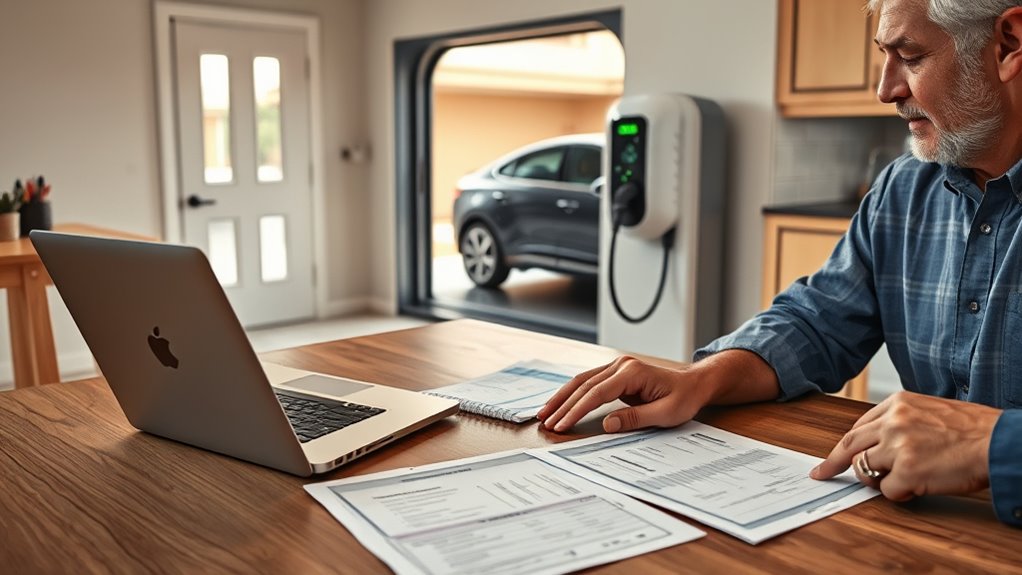
The federal EV charger tax credit is the Alternative Fuel Vehicle Refueling Property Credit under Internal Revenue Code Section 30C. You may qualify if you installed qualified property that stores or dispenses clean-burning fuel or recharges electric motor vehicles.
For EV owners, the most common qualifying property is electric vehicle charging equipment. The IRS also includes bidirectional charging equipment and charging stations for certain two- and three-wheeled electric vehicles used on public roads.
To qualify, the property generally must:
- Be placed in service during your tax year and no later than June 30, 2026.
- Have original use that began with you, which usually means the charger was new when installed.
- Be used primarily in the United States or U.S. territories.
- Be located in an eligible low-income community census tract or non-urban census tract.
- For personal use, be installed at property used as your main home.
- For business or investment use, be depreciable property.
Note: Paying for a charger before the deadline is not enough by itself. The charger must be placed in service, meaning it is installed, operational, and ready for its intended use.
How Much the EV Charger Tax Credit Is
The credit amount depends on whether the charger is personal-use property, business-use property, or property owned by a tax-exempt or government entity.
| Taxpayer / Use | Credit Amount | Maximum |
|---|---|---|
| Individual, main-home installation | 30% of eligible cost | $1,000 per item |
| Business installation | 6% of eligible depreciable cost | $100,000 per item |
| Business meeting prevailing wage and apprenticeship rules | 30% of eligible depreciable cost | $100,000 per item |
| Eligible tax-exempt or government entity | Generally follows business credit rules through elective pay | $100,000 per item |
For this credit, an item can be each charging port, fuel dispenser, or energy storage property. That matters for multi-port charging stations because each eligible charging port may have its own per-item credit limit.
Credit Percentage
For a qualifying home charger, the credit is 30% of eligible costs, up to $1,000 per item. For business property, the base credit is generally 6%, but it can rise to 30% if the project meets prevailing wage and apprenticeship requirements.
The credit does not automatically make the charger free. It reduces eligible tax liability under the rules that apply to personal credits or business credits. If your personal tax liability is too low, the personal portion may be limited.
Maximum Per Item
The maximum is based on each eligible item, not simply the total project invoice. For example, a home Level 2 charger with one charging port may be capped at a $1,000 credit. A business site with multiple qualified ports may need to allocate costs across items and complete the required Form 8911 schedule for each one.
| Item | Maximum Federal Credit |
|---|---|
| Residential EV charging item | $1,000 per item |
| Business charging station item | $100,000 per item |
Eligibility Rules
Before you claim the EV charger tax credit, run through these five checks:
- Date: The charger was placed in service from January 1, 2023, through June 30, 2026.
- New property: The original use of the equipment began with you.
- Location: The charger is in an eligible low-income or non-urban census tract.
- Use: Personal-use property is at your main home; business-use property is depreciable.
- Records: You have receipts, invoices, proof of payment, installation date, and location documentation.
If any one of these fails, your credit may be reduced or disallowed.
Check Whether Your Location Qualifies
Location is one of the most important parts of the EV charger tax credit. A charger does not qualify just because it is installed at your home or business. It must be in an eligible low-income community census tract or non-urban census tract.
The easiest place to start is the 30C Tax Credit Eligibility Locator. Enter the installation address, review the tract status, and save the result with your tax records.
Find Your Census Tract
The IRS uses different census-tract instructions depending on when the charger was placed in service:
- Before January 1, 2025: Use the 2015 Census Tract Identifier and Appendix A.
- After January 1, 2025: Use the 2020 Census Tract Identifier and Appendix B.
If your charger was placed in service in 2026, the post-2025 guidance is the relevant path. Confirm the 11-digit GEOID and save proof that the tract was eligible.
Use the Eligibility Map
When you use the locator, check three things: the exact installation address, the 11-digit GEOID, and whether the tract is listed as eligible. Do not rely only on nearby addresses because census-tract boundaries can split neighborhoods.
| Item to Check | What to Save | Why It Matters |
|---|---|---|
| Installation address | Screenshot or PDF of locator result | Shows the charger location |
| GEOID | 11-digit census tract ID | Matches your address to IRS tract lists |
| Tract status | Eligible low-income or non-urban result | Supports the credit claim |
Pro Tip: Save your eligibility-map result at the same time you save the invoice. A clean record showing the address, GEOID, and tract status can make tax filing much easier later.
Which Charger Costs Qualify
Eligible costs can include the new EV charging equipment and installation costs that are essential to making the charging item operate. For many home installations, that may include the charger, dedicated circuit work, labor, permit fees, and directly related materials.
The cleanest claim is supported by an itemized invoice that separates the charger, labor, permits, electrical materials, panel work, and any non-qualifying upgrades.
Common records to keep include:
- Charger purchase receipt.
- Electrician or installer invoice.
- Proof of payment, such as card statement or canceled check.
- Permit documents and inspection records, if applicable.
- Installation completion date.
- Photos or installer documentation showing the charger was operational.
- Census-tract eligibility proof.
If your invoice includes broader electrical upgrades, such as a service panel upgrade or garage rewiring, ask your tax preparer how to allocate costs. Some costs may be eligible only if they are essential to the qualified charging property.
How to Claim the Credit on Form 8911
To claim the EV charger tax credit, use Form 8911 with your federal tax return for the year the charger was placed in service. You also complete a separate Schedule A (Form 8911) for each item of qualified refueling property.
- Confirm the placed-in-service date. The charger must have been ready for use by June 30, 2026.
- Verify the location. Save proof that the address is in an eligible low-income or non-urban census tract.
- Gather cost records. Use receipts, invoices, payment proof, and permit records.
- Complete Schedule A (Form 8911). Prepare one schedule for each qualified item.
- Complete Form 8911. Use the schedule totals to calculate the credit.
- Attach the form to your return. File it with your federal tax return for the correct tax year.
- Keep backup records. Do not mail every receipt unless requested, but keep them with your tax file.
| Step | Action |
|---|---|
| 1 | Confirm the charger was placed in service during the eligible period. |
| 2 | Check the address with the 30C eligibility locator. |
| 3 | Complete Schedule A (Form 8911) for each qualified item. |
| 4 | Complete Form 8911 and attach it to your federal return. |
Business Rules for the EV Charger Tax Credit
For businesses, the credit generally equals 6% of eligible depreciable costs, up to $100,000 per item. If the project meets prevailing wage and apprenticeship requirements, the credit can rise to 30% with the same $100,000 per-item cap.
Business owners should also know these rules:
- The business portion of the credit is generally treated as part of the general business credit.
- Business taxpayers may need to report the credit on Form 3800, depending on the filing situation.
- The basis of the qualified property must be reduced by the amount of the credit claimed.
- The credit may be subject to recapture if the property stops qualifying within three full years after the placed-in-service date.
- Mixed-use chargers may require cost and use allocation between personal and business portions.
If your project involves multiple chargers, fleet charging, tenant use, public access, or shared charging stations, work with a tax professional before filing.
Tax-Exempt and Government Entity Rules
Eligible tax-exempt and government entities may be able to claim the credit through elective pay. This can include certain state and local governments, tribes, nonprofits, and other qualifying entities.
The IRS rules include a seller-notice issue. If a tax-exempt or government entity intends to claim the credit through elective pay, it must notify the seller in writing. If that notice is not provided, the seller may be able to claim the credit if it clearly discloses the allowable credit amount. In some projects, a seller that claims the credit may pass savings through as a lower upfront cost, but that treatment depends on the transaction and documentation.
Documents to Keep for Tax Filing
Good records are the difference between a clean claim and a stressful tax-season scramble. Keep every document that supports the cost, location, date, and use of your charger.
| Document | Purpose |
|---|---|
| Charger receipt | Shows equipment cost and purchase date |
| Installer invoice | Supports labor, materials, permit, and installation costs |
| Proof of payment | Confirms you paid the claimed amount |
| Placed-in-service proof | Shows the charger was operational by the deadline |
| Census-tract record | Supports the eligible-location requirement |
| Business-use records | Supports depreciation, business allocation, and general business credit treatment |
Store these records with a copy of your filed Form 8911 and Schedule A. For business or tax-exempt projects, also keep contracts, wage/apprenticeship documentation if used, seller notices, and any elective pay records.
State, Utility, and Local Incentives
Even though the federal 30C credit ended for property placed in service after June 30, 2026, you may still find state, city, or utility programs for EV charger installation. These programs vary by location and can change quickly.
Use the Alternative Fuels Data Center laws and incentives search to check your state, local, and utility options. Before you claim more than one incentive, review whether one rebate reduces the cost basis used to calculate another credit.
Frequently Asked Questions
Can I claim an EV charger on my taxes?
Yes, if the charger meets the federal 30C requirements. It must be qualified property, placed in service during the eligible period, installed in an eligible census tract, and supported by records. For new property placed in service after June 30, 2026, the federal credit is not available.
What is the federal tax credit for EV chargers in 2026?
For qualifying property placed in service from January 1, 2023, through June 30, 2026, individuals may claim 30% of eligible costs up to $1,000 per item. Businesses generally claim 6%, or 30% if prevailing wage and apprenticeship requirements are met, up to $100,000 per item.
Can I claim the credit for a charger installed after June 30, 2026?
No. The IRS says the Section 30C Alternative Fuel Vehicle Refueling Property Credit is not allowed for property placed in service after June 30, 2026. State, utility, or local incentives may still be available, but they are separate from the federal credit.
How does the new $6,000 EV charger tax credit work?
There is no separate universal federal $6,000 EV charger tax credit under the 30C rules. The federal personal-use limit is $1,000 per item. A higher total savings amount may come from business projects, multi-port charging property, or separate state, local, or utility incentives.
Is the EV charger tax credit refundable?
The personal portion of the credit is limited by your tax liability and may not create a refund by itself. Business credits and tax-exempt elective pay follow different rules, so review Form 8911 instructions or ask a tax professional if your project is not a simple home installation.
What disqualifies an EV charger from the federal credit?
Common disqualifiers include a charger placed in service after June 30, 2026, a non-eligible census tract, used equipment where original use did not begin with you, lack of main-home use for personal property, missing records, or business property that does not meet depreciable-property rules.
Conclusion
Claiming the EV charger tax credit comes down to four checks: date, location, qualified property, and documentation. If your charger was placed in service by June 30, 2026, installed in an eligible census tract, and supported by clear receipts and invoices, Form 8911 is the main federal filing path. Keep your records organized, complete Schedule A for each qualified item, and get tax help if your installation involves business use, elective pay, multiple ports, or mixed-use property.
Sources
- IRS: Alternative Fuel Vehicle Refueling Property Credit — eligibility, credit amounts, location rules, Form 8911, special rules, and recapture.
- IRS: About Form 8911 — Form 8911 and Schedule A filing requirements.
- IRS: OBBB Energy Credit FAQ — June 30, 2026 termination date for Section 30C property.
- U.S. Department of Energy AFDC: Alternative Fuel Infrastructure Tax Credit — federal incentive summary for individuals, businesses, and tax-exempt entities.
- 30C Tax Credit Eligibility Locator — address and census-tract eligibility lookup.