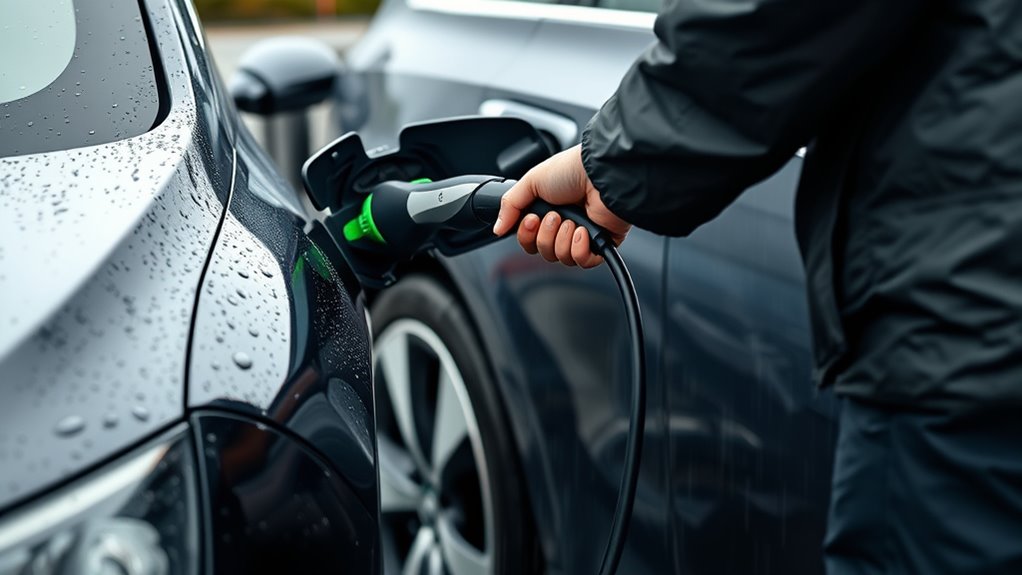
Yes, you can safely charge your EV in the rain when the charger, cable, outlet, and connector are rated for outdoor use, installed correctly, and in good condition. Normal rain is not the same as flooding, though. Before you plug in, check for standing water, damaged cable insulation, cracked connectors, corrosion, exposed metal, or a loose outlet. If anything looks wrong, stop and have the equipment inspected.
Quick Answer
You can charge an EV in normal rain if you use intact, outdoor-rated charging equipment and avoid standing water. EV connectors are designed to keep live parts protected, and ground-fault protection helps shut down unsafe current leakage. Do not charge during flooding, with damaged cables, or through household extension cords.
Key Takeaways
- Normal rain is usually safe for EV charging when the EVSE is outdoor-rated, listed, and installed to code.
- Do not charge if the connector, plug, outlet, cable, or charging port is cracked, corroded, submerged, overheated, or visibly damaged.
- Keep the outlet connection and connector face out of puddles, mud, snow buildup, and floodwater.
- Avoid household extension cords, power strips, and unapproved adapters because they can overheat or defeat the charger’s safety design.
- After floodwater or saltwater exposure, do not charge or drive the vehicle until the manufacturer, service center, or a qualified professional says it is safe.
At a Glance
| Time Required | 30 to 60 seconds for a visual check before plugging in |
| Difficulty | Easy, but stop if you see damage or water intrusion |
| Tools Needed | Dry cloth, flashlight, and access to the charger manual or app |
| Cost | $0 for routine checks; inspection or repair costs vary if equipment is damaged |
Is EV Charging Safe in the Rain?
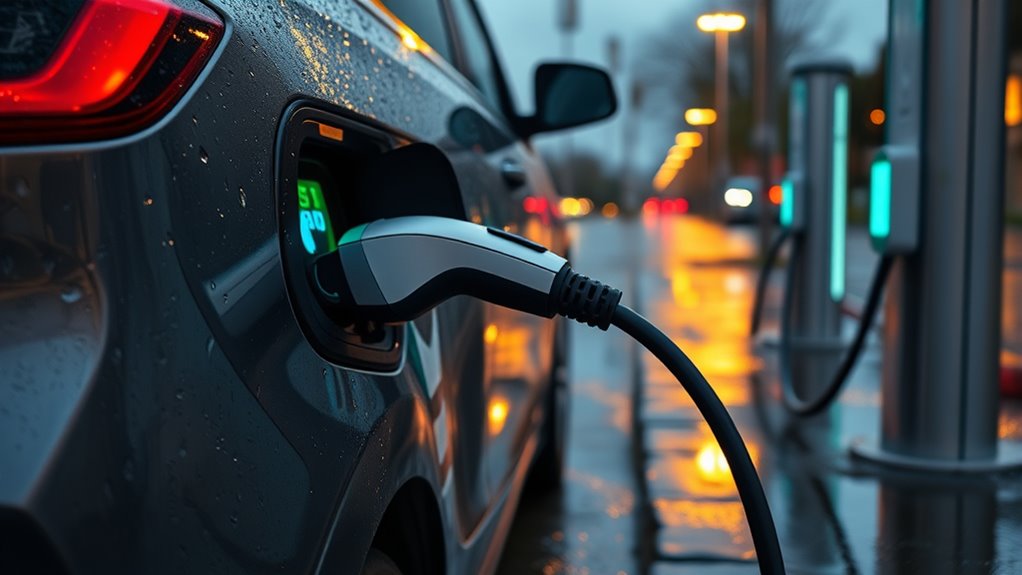
Yes, EV charging is safe in the rain when the charging equipment is built for outdoor use and installed correctly. EV supply equipment is designed to control when power flows, keep live parts protected, and stop charging if the system detects the wrong conditions.
The key phrase is normal rain. Rain falling on an intact charger, cable jacket, and vehicle port is different from a connector lying in a puddle, a flooded driveway, a cracked plug, or a damaged outlet. Those situations can defeat the safety design.
EV charging equipment in the United States is installed under the National Electrical Code, and common EV charging couplers follow standards such as SAE J1772. These systems use signaling and protection features so charging current is not treated like a simple always-live household plug.
Normal rain should not stop you from charging. Standing water, damaged equipment, and flooding should.
Why Rain Won’t Shock EV Drivers
Rain usually will not shock you while you are charging an EV because the charging system is designed to keep energized parts isolated. The connector pins are recessed, the charging session is controlled by communication between the vehicle and EVSE, and the system checks that the connection is seated before delivering power.
Ground-fault protection adds another layer. If current leaks through an unintended path, a ground-fault device can trip quickly and stop the flow of power. This is why properly installed outdoor EV charging is very different from using a damaged cord or a loose household plug in wet weather.
Still, no safety device removes every risk. A GFCI or built-in ground-fault system cannot make damaged insulation, submerged connectors, makeshift adapters, or flooded outlets safe. Your visual check matters before every wet-weather charging session.
Warning: Do not touch, plug in, unplug, or restart charging equipment if you see smoke, sparks, a burning smell, exposed metal, melted plastic, standing water around the plug connection, or repeated breaker/GFCI trips. Move away and contact the charger operator, a qualified electrician, or emergency services if needed.
How EV Chargers Stay Safe in Wet Weather
EV chargers stay safe in wet weather by combining physical barriers, electrical monitoring, and installation rules. Outdoor-rated charging stations use weather-resistant housings and sealed cable entries to reduce water intrusion. Connectors are shaped to protect contact points and help keep water away from energized parts during normal use.
Many outdoor electrical enclosures also carry an ingress protection rating, often shown as an IP code. Under the ANSI/IEC 60529 IP-code system, the first number describes solid-particle protection and the second number describes water-ingress protection. For example, IP65 and IP66 indicate strong dust protection and resistance to water jets under test conditions.
That does not mean the charger is safe to submerge. IP65 or IP66 is not the same as floodproof. A charger can be safe in rain and still unsafe if the connector, outlet, cable end, or vehicle port is sitting in water.
Note: “Weather-resistant” and “waterproof” are not the same thing. Always follow the rating and use limits in your charger manual.
Is Outdoor Home Charging Safe?
Outdoor home charging is safe when the equipment is rated for outdoor installation, installed by a qualified electrician, protected by the correct breaker, and used according to the manufacturer’s instructions. A hardwired Level 2 charger on a proper circuit is usually the cleanest outdoor setup.
If you use Level 1 charging from a 120-volt outlet, the outlet should be weather-resistant, properly grounded, GFCI-protected where required, and covered by an outdoor in-use cover when the cord is plugged in. Do not leave the plug connection exposed to direct runoff, sprinklers, snow piles, or pooling water.
Check your home charger regularly. Look for cracks in the housing, loose wall mounting, worn cable jackets, bent pins, corrosion, heat discoloration, or a connector that no longer clicks firmly into the vehicle. If the breaker trips once during a storm, reset only after you inspect the equipment. If it trips again, stop charging and call a qualified electrician.
Pro Tip: Mount the holster so the connector points downward or sits under cover when not in use. This helps keep rain, dirt, and insects out of the connector face.
Are Public EV Chargers Safe in Rain?
Public EV chargers are designed for outdoor use, so rain alone is not a reason to avoid them. The station, cable, connector, and vehicle communicate before power flows, and the system can stop the session when it detects a fault or unsafe connection.
Before you plug in at a public station, take a quick look at the equipment. Do not use a charger if the connector is cracked, the cable is split, the handle is crushed, the screen warns of a fault, the connector pins look burned, or the cord is lying in deep water. Report the station in the charging app or call the number listed on the unit.
Public chargers also need maintenance. A station can be built for rain and still become unsafe or unreliable if the cable is damaged, the connector is vandalized, or the cabinet seal is broken. Trust the design, but verify the condition.
What to Check Before Charging in Wet Weather
Even though charging systems are built for rain, you should verify a few conditions before you plug in. A fast visual check can prevent most avoidable wet-weather problems.
- Check the ground. Do not plug in if the outlet, connector, cable end, or charging port area is in standing water.
- Inspect the cable jacket. Look for cuts, crushed spots, exposed conductors, swelling, or burn marks.
- Inspect the connector face. Check for bent pins, dirt, corrosion, trapped water, or melted plastic.
- Check the vehicle port. Make sure the port is not packed with snow, mud, debris, or visible water.
- Confirm the equipment rating. Use only outdoor-rated EVSE and manufacturer-approved adapters.
- Avoid improvised power setups. Do not use household extension cords, power strips, multi-plug adapters, or damaged receptacles.
- Watch the first minute. Make sure the charger starts normally, the connector locks or seats correctly, and no error appears.
If anything seems compromised, wait until conditions improve or have the system serviced before you charge. The goal is not to fear rain. The goal is to avoid damaged equipment and water intrusion at the electrical connection.
Can You Use an Extension Cord to Charge an EV in the Rain?
No, you should not use a household extension cord, power strip, or multi-plug adapter to charge an EV in the rain. In many cases, you should not use one for EV charging at all unless the vehicle or EVSE manufacturer specifically allows it and gives exact cord requirements.
EV charging is a long, continuous electrical load. A cord that works for a lamp or small tool can overheat when used for hours at high current. Rain adds another problem because many cords are not rated for wet outdoor use, and the plug-to-cord connection can sit exposed on the ground.
If the charging cable will not reach, do not improvise. Park closer, use a different charger, install a properly located outlet, or have a qualified electrician install a dedicated outdoor EV charging circuit.
What to Do If Rain Starts While Your EV Is Charging
If rain starts after your EV is already charging, you usually do not need to stop the session. An intact outdoor-rated charger is designed for changing weather. Leave the connector seated, keep the cable where it will not sit in pooling water, and let the vehicle finish charging normally.
Stop the session if the rain turns into flooding, the cable is being pulled into standing water, the charger shows a fault, the breaker trips, or you see lightning, storm surge, or fast-moving water near the equipment. If you need to unplug during rain, follow the normal stop procedure in the app, charger screen, or vehicle. Keep your hands dry when practical and avoid touching damaged equipment.
What to Do If Your Charging Cable Gets Wet
A wet cable jacket is not automatically dangerous if the cable is outdoor-rated and undamaged. EV charging cables are expected to see rain. The concern is water inside the connector, a submerged plug, damaged insulation, corrosion, or a cable that was not designed for outdoor charging.
If the connector end drops into a puddle, the plug connection gets soaked, or you see damage, stop and treat the equipment as unsafe until it is inspected. Do not shake water out and immediately restart.
- Stop the charging session from the vehicle, app, or charger if it is safe to do so.
- Disconnect only if the connector and cable are not damaged and you can stand on dry ground.
- Let the connector dry completely in open air before reuse.
- Inspect the pins, seals, latch, cable jacket, and plug body for corrosion, cracks, or heat damage.
- Do not use the cable again if water entered the connector or if the cable trips protection repeatedly.
If you are unsure, replace the cable or have it checked by the charger manufacturer, station operator, or a qualified electrician.
When Rain Makes EV Charging Risky
Rain makes EV charging risky when water reaches the wrong place or the equipment is already compromised. The biggest red flags are standing water, flooding, storm surge, cracked housings, exposed conductors, corrosion, loose outlets, and damaged seals.
Do not charge if the charger cabinet is partly submerged, the outlet is wet inside, the connector face is full of water, or the charging port has obvious water intrusion. Do not charge during cleanup after a flood until the electrical system and vehicle have been inspected.
Saltwater deserves special caution. It conducts electricity well and can leave conductive salt behind after it dries. If your EV, home charger, or portable EVSE has been exposed to storm surge or saltwater flooding, do not charge or drive until the vehicle manufacturer, charger manufacturer, or a qualified service professional confirms it is safe.
Warning: A vehicle that has been submerged in floodwater should be treated like a damaged vehicle. Do not operate or charge it until it has been inspected according to the manufacturer’s guidance.
Frequently Asked Questions
Is it okay to charge an electric car in the rain?
Yes. You can charge an electric car in normal rain when you use outdoor-rated EV charging equipment that is installed correctly and in good condition. Do not charge if the connector, outlet, cable, charger, or vehicle port is damaged, submerged, or surrounded by standing water.
What happens if an electric car charger gets wet?
If rain gets on an outdoor-rated charger, it should continue to operate normally. If water gets inside the connector, outlet, cabinet, or plug connection, stop using it. Let it dry, inspect it for damage, and have it serviced if there is corrosion, repeated tripping, heat damage, or a fault warning.
Should you unplug your EV during a thunderstorm?
If severe lightning, flooding, storm surge, or power outages are likely, it is safer to stop charging before the storm reaches you. If ordinary rain starts during a normal charging session, you usually do not need to unplug unless the charger faults, the cable is in standing water, or the manufacturer advises otherwise.
What happens if an electric car battery gets wet?
Rain on the outside of the vehicle should not harm the high-voltage battery because EV battery packs are sealed and monitored. Floodwater is different. If the vehicle is submerged, especially in saltwater, do not drive or charge it until it has been inspected according to the manufacturer’s guidance.
Can I leave my EV plugged in overnight while it rains?
Yes, if the charger is outdoor-rated, the connector is fully seated, the cable is not sitting in pooling water, and no severe flooding is expected. Overnight rain is normal use for properly installed outdoor EV charging equipment.
Is Level 1 charging from an outdoor outlet safe in rain?
It can be safe if the outlet is weather-resistant, properly grounded, GFCI-protected where required, covered by an in-use outdoor cover, and used with the portable EVSE exactly as the manufacturer allows. Do not use a loose, cracked, ungrounded, or wet interior outlet.
Why did my EV charger trip the GFCI during rain?
A trip can happen because the device detected leakage current, moisture, a wiring problem, a damaged cable, or a compatibility issue between the charger and breaker. Inspect the equipment once. If it trips again, stop charging and call a qualified electrician or the charger manufacturer.
Conclusion
So, can you charge your EV in the rain? Yes, as long as the equipment is outdoor-rated, properly installed, intact, and kept out of standing water. Rain by itself is part of normal EV charging life. Flooding, saltwater, damaged cables, cracked connectors, loose outlets, and unapproved extension cords are not normal. Inspect before you plug in, stop if something looks compromised, and let a qualified professional handle repairs.
Sources
- NFPA 70, National Electrical Code: installation framework for electrical systems, including EV charging equipment.
- SAE J1772 Electric Vehicle Conductive Charge Coupler: connector and charging-system safety architecture for conductive EV charging.
- ANSI/IEC 60529 IP Code Reference: ingress protection rating system for dust and water resistance.
- Tesla Submerged Vehicle Guidance: manufacturer guidance for flood/submersion preparation and post-submersion handling.
- Associated Press: EV Saltwater Flooding Risk: reporting on storm-surge and saltwater submersion risks for electric vehicles.