
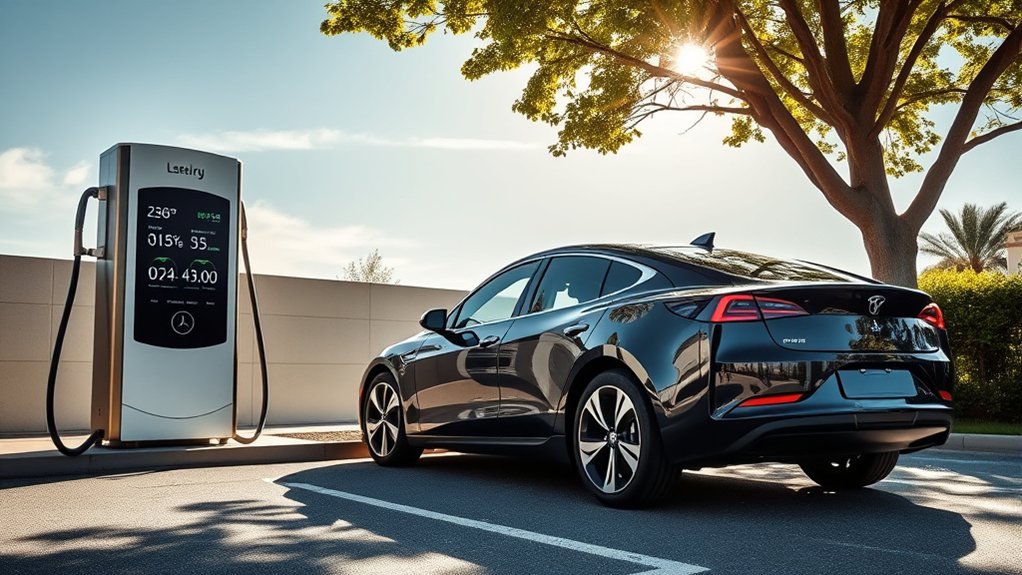
Understanding kW and kWh makes EV charging much easier to plan. kW tells you how fast power is moving, while kWh tells you how much energy your battery stores or uses. Once you know the difference, you can estimate charging time, compare chargers, understand range, and avoid expecting a charger to work faster than your EV can accept.
Quick Answer
kW tells you charging speed, while kWh tells you battery energy. A higher charger kW can reduce charging time, but actual speed depends on your EV’s limit, battery temperature, state of charge, connector type, and whether the charger can deliver its full rated power.
Key Takeaways
- kW is speed: it shows how quickly power is delivered to your EV.
- kWh is amount: it shows how much energy your battery stores or how much energy you use.
- Charging time is not fixed: your vehicle, battery state of charge, temperature, and charger output all matter.
- Range depends on efficiency: a 60 kWh battery at 4 miles per kWh can travel about 240 miles before real-world losses.
- Cost is simple to estimate: multiply the kWh added by the price per kWh, then add session or idle fees if they apply.
Understanding kWh and Its Role in EV Range
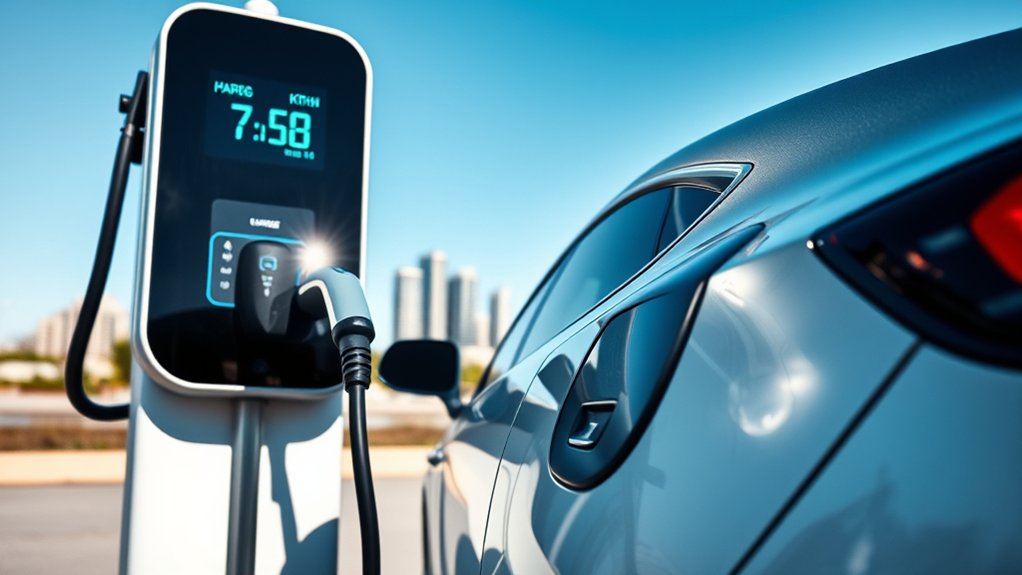
A kilowatt-hour, written as kWh, measures energy. In an EV, it tells you how much usable energy the battery can store or how much energy the vehicle consumes while driving.
Think of kWh like the size of a fuel tank. A larger kWh number usually means more potential driving range, but range is not set by battery size alone. Your EV’s efficiency, speed, weather, tire pressure, terrain, cargo weight, and HVAC use all change how far each kWh takes you.
For example, if your EV averages 4 miles per kWh, a 60 kWh battery can travel about 240 miles in simple math. If that same EV averages 3 miles per kWh in cold weather or at highway speed, the same battery provides closer to 180 miles.
Note: EPA-rated range is a useful comparison tool, but your real-world range can be higher or lower depending on driving conditions and charging habits.
What Is kW and Why It Matters for Your EV?
A kilowatt, written as kW, measures power at a moment in time. For EV charging, kW shows how quickly energy can move from the charger into your vehicle. For vehicle performance, kW can also describe motor output.
The easiest way to separate the two terms is this:
- kW = charging speed, like how fast water flows through a hose.
- kWh = energy amount, like how much water ends up in the tank.
A charger with a higher kW rating can charge faster, but only if your EV can accept that much power. If your vehicle’s AC onboard charger is limited to 11 kW, plugging into a 19.2 kW Level 2 station will not make the car charge at 19.2 kW. The car will still limit the session.
How kW Affects EV Charging Speed
The kW rating of a charger is one of the biggest factors in charging time, but it is not the only one. According to the U.S. Department of Energy’s Alternative Fuels Data Center, charging time depends on battery state of charge, battery capacity, battery type, the vehicle’s internal charger capacity, charger power output, and electrical service.
Charging Levels Explained
EV chargers are usually grouped into Level 1, Level 2, and DC fast charging. These categories help you estimate charging speed before you plug in.
| Charging Type | Typical Use | Power Range | Best For |
|---|---|---|---|
| Level 1 AC | Standard 120 V household outlet | Often about 1-2 kW | Overnight charging for short daily driving |
| Level 2 AC | 240 V home charger or public AC charger | About 2.9-19.2 kW | Daily home, workplace, and destination charging |
| DC Fast Charging | Public high-power charging station | Commonly 50 kW and higher, with some installed units up to 500 kW | Road trips and quick top-ups |
Charger Power Ratings
Charger power ratings show the maximum power a charger can deliver, not the speed you are guaranteed to receive. A 150 kW DC fast charger can only deliver 150 kW when the charger, connector, battery temperature, state of charge, and vehicle software all allow it.
AC charging and DC fast charging also work differently:
- AC charging: The station sends AC power to your EV, and your vehicle’s onboard charger converts it to DC for the battery. The onboard charger is often the limiting factor.
- DC fast charging: The station converts power to DC before it reaches the car. This bypasses the AC onboard charger, but the vehicle’s DC fast-charge limit and battery condition still control speed.
Impact on Charging Time
You can estimate charging time with this simple formula:
kWh needed ÷ charging kW = estimated charging hours, before charging losses and power taper.
For example, if you need to add 40 kWh and your EV is charging at 7.2 kW, the simple estimate is:
40 kWh ÷ 7.2 kW = about 5.6 hours
In the real world, it may take longer because charging is not 100% efficient and power may slow near a high state of charge. With DC fast charging, the slowdown is more noticeable. Many EVs charge fastest from a low battery to around 50-60%, then taper as the battery fills.
Warning: Do not assume the station’s advertised kW is the speed your EV will receive. Always check your vehicle’s AC and DC charging limits, and use a qualified electrician for Level 2 home charger installation.
Understanding the Relationship Between kW and kWh
kW and kWh are connected by time. If power flows at a certain kW for a certain number of hours, you get kWh.
Power (kW) × Time (hours) = Energy (kWh)
That means a charger delivering 10 kW for 2 hours adds about 20 kWh before losses. A charger delivering 50 kW for 30 minutes adds up to 25 kWh in simple math. A 150 kW charger running at a constant 150 kW for 30 minutes would equal 75 kWh, but many EVs will not hold peak power for that entire session.
Key Differences Explained
- kW is instant power: it tells you the rate of energy delivery right now.
- kWh is stored or consumed energy: it tells you how much electricity was added, stored, or used.
- Range depends on kWh and efficiency: a bigger battery helps, but miles per kWh matters just as much.
- Charging time depends on the weakest link: the charger, cable, connector, vehicle, battery temperature, and state of charge can all limit power.
Impact on EV Charging
If you know your battery size and your charger speed, you can plan more accurately. A driver who adds 20 kWh overnight may recover enough range for a normal commute. A driver on a road trip may only need a fast 10-80% top-up instead of a full charge.
For most daily use, Level 2 home charging is the easiest balance of speed, cost, and convenience. The ENERGY STAR EV charger guide notes that Level 2 chargers are better suited for longer daily driving and fully electric vehicles because they use a 240 V circuit and add range much faster than Level 1.
Real-World Application Examples
Here are simple examples that show how kW and kWh work together:
- Overnight home charging: Adding 50 kWh at 7.2 kW takes about 7 hours before losses.
- Short daily commute: If your EV uses 12 kWh per day, even Level 1 may recover enough range overnight.
- Road trip stop: A DC fast charger may add 100 to 200+ miles in 30 minutes when the vehicle and conditions support it.
- Cost estimate: If you add 40 kWh at $0.18 per kWh, the energy cost is about $7.20 before taxes, session fees, or idle fees.
Pro Tip: For daily driving, track your EV’s miles per kWh for a week. That number gives you a better range estimate than battery size alone.
Selecting Chargers Based on kW and kWh Needs
To choose the right charger, start with your daily mileage, your EV’s battery size, your home electrical setup, and your vehicle’s maximum AC and DC charging rates.
| Your Situation | Best Charging Choice | Why It Works |
|---|---|---|
| Short commute and easy overnight parking | Level 1 or Level 2 | You may only need to replace a small amount of kWh each night. |
| Long commute or multiple drivers | Level 2 home charger | It adds energy faster and gives more flexibility between trips. |
| Apartment, condo, or no home charging | Workplace, public Level 2, or DC fast charging | Public charging strategy matters more when you cannot plug in at home. |
| Road trips | DC fast charging | Fast chargers reduce downtime when you need a quick range boost. |
Check Your Connector Type
Power rating is only part of the decision. Your EV also needs a compatible connector. Common U.S. connector names include J1772 for many AC Level 1 and Level 2 chargers, CCS for many DC fast-charging EVs, CHAdeMO for some older Japanese EVs, and J3400/NACS, which is becoming more common in North America. The Joint Office of Energy and Transportation explains that J3400 is based on the North American Charging Standard and supports both AC and DC charging.
How to Calculate EV Charging Cost
To estimate charging cost, use this formula:
kWh added × price per kWh = charging energy cost
If you add 35 kWh and the charger costs $0.20 per kWh, the energy portion of the session costs about $7.00. Public charging can also include session fees, parking fees, idle fees, taxes, or higher rates during peak demand. Home charging may be cheaper overnight if your utility offers time-of-use pricing.
The price per kWh is not the same everywhere. It can vary by state, utility, charging network, time of day, and whether you are charging at home or at a public fast charger.
Why Your EV May Charge Slower Than the Charger Rating
If you plug into a high-kW charger and see a lower number on the screen, that does not always mean something is broken. Several normal limits can reduce charging speed:
- Vehicle maximum charge rate: your EV may not support the charger’s full kW rating.
- Battery state of charge: charging often slows as the battery gets closer to full.
- Battery temperature: very cold or very hot batteries may charge slower.
- Shared power: some charging sites split power between nearby stalls.
- Connector or adapter limits: not every cable or adapter supports every power level.
- Charger condition: a station may be derated because of heat, maintenance, or grid limits.
For the fastest road-trip stops, arrive at a DC fast charger with a lower state of charge, use battery preconditioning if your EV offers it, and unplug when the charge rate drops sharply unless you need the extra range.
Tips for Optimizing Your EV Charging Experience
- Use Level 2 at home when possible: it is usually the best mix of convenience and speed for daily EV use.
- Charge for your next trip, not always to 100%: many EVs charge faster and age better when daily charging stays below a full charge, unless your owner’s manual says otherwise.
- Plan DC fast-charging stops around 10-80%: many EVs are quickest in the lower and middle part of the battery.
- Know your EV’s limits: check the owner’s manual for maximum AC charging, maximum DC fast charging, and battery preconditioning steps.
- Watch efficiency: miles per kWh helps you estimate how much energy you need before your next drive.
- Compare total session cost: public chargers may bill by kWh, time, session, parking, or idle fees.
- Use trusted charger apps: check plug type, power rating, recent user check-ins, price, and availability before you arrive.
Frequently Asked Questions
What is the difference between kW and kWh in EV charging?
kW measures charging power, or how fast electricity is being delivered. kWh measures energy, or how much electricity is stored in the battery or used while driving. In simple terms, kW is speed and kWh is amount.
What is a good kWh rate for EV charging?
A good price per kWh depends on your local utility and charging location. Home charging is often cheaper than public DC fast charging, especially if you have off-peak rates. To compare costs, multiply the kWh you add by the price per kWh, then include any session, parking, or idle fees.
What does 150 kW mean at an EV charger?
A 150 kW charger can deliver up to 150 kilowatts under the right conditions. That does not mean every EV will charge at 150 kW. Your actual speed depends on your vehicle’s DC fast-charge limit, battery temperature, state of charge, connector, and charger condition.
What is the best kW to charge an EV at home?
For many EV owners, a Level 2 charger around 7 kW to 11 kW is enough for overnight charging. The best setup depends on your daily mileage, panel capacity, circuit size, and your EV’s onboard charger limit. A licensed electrician should confirm what your home can safely support.
Does a bigger kWh battery always mean more range?
Usually, a bigger battery helps, but it does not guarantee the longest range. Range also depends on efficiency. A smaller, lighter EV with better miles per kWh can travel farther than a larger EV with a bigger battery but lower efficiency.
Why does charging slow down after 80%?
Charging slows near the top of the battery because the battery management system protects the cells from heat and stress. This is called tapering. For road trips, it is often faster to stop charging around 80% and move to the next charger instead of waiting for 100%.
Conclusion
kW and kWh are simple once you separate speed from amount. kW tells you how fast your EV can charge, while kWh tells you how much energy your battery stores or uses. To plan charging well, match the charger to your EV’s limits, estimate time with the kWh ÷ kW formula, account for real-world taper, and compare cost by price per kWh. That gives you a clearer charging plan at home, at work, and on road trips.
Sources
- U.S. Department of Energy Alternative Fuels Data Center: Electric Vehicle Charging Stations — charging levels, charger power, connector types, and charging-time variables.
- FuelEconomy.gov: All-Electric Vehicles — EV efficiency, range, battery, and recharge-time context.
- ENERGY STAR: Electric Vehicle Chargers — EV charger buying guidance and energy-efficient charger information.
- Joint Office of Energy and Transportation: SAE J3400 Charging Connector — J3400/NACS standardization and connector compatibility context.