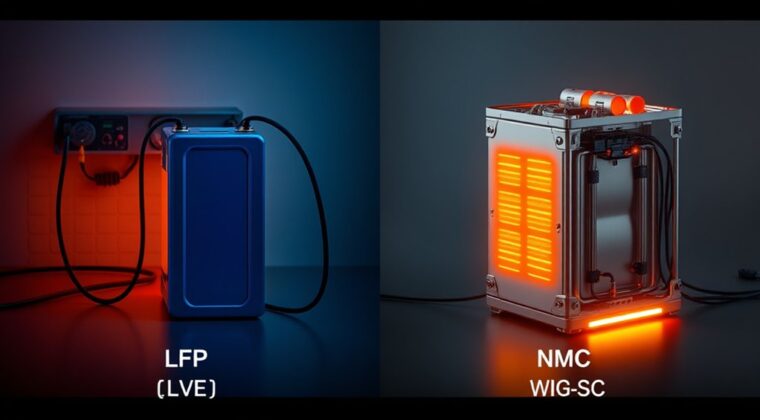
LFP and NMC batteries can both power electric vehicles well, but they behave differently when you charge them. The biggest difference is not just “slow versus fast.” Charging speed, heat, lifespan, and daily charge limits depend on the battery chemistry, pack size, cooling system, battery management system, charger power, temperature, and state of charge.
Quick Answer
LFP batteries usually offer better cycle life, lower cost, and stronger thermal stability, so they handle daily charging more forgivingly. NMC batteries usually offer higher energy density and are common in longer-range EVs, but they benefit more from staying near a moderate daily charge range and avoiding excess heat.
Key Takeaways
- LFP stands for lithium iron phosphate. It is known for long cycle life, strong thermal stability, lower cost, and lower energy density.
- NMC stands for lithium nickel manganese cobalt oxide. It is known for higher energy density, which helps range, but it is more sensitive to heat and high states of charge.
- Charging speed depends on the full EV system, not chemistry alone. Pack size, voltage, cooling, charger output, temperature, and battery software all matter.
- For daily charging, follow your owner’s manual first. Many LFP packs tolerate higher charge targets better, while many NMC or NCA packs are best kept around 80% for daily driving.
Understanding LFP and NMC Batteries
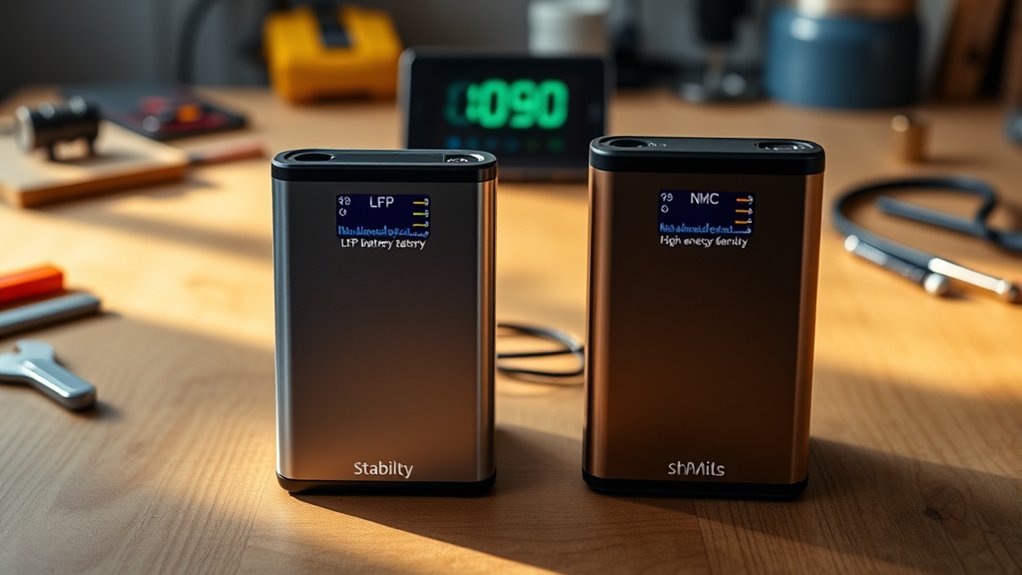
LFP and NMC are both lithium-ion battery chemistries. The U.S. Department of Energy notes that most modern all-electric vehicles and plug-in hybrids use lithium-ion batteries, although the exact chemistry varies by vehicle and battery supplier.
Lithium-ion batteries are popular because they offer high energy per unit of mass and volume, good efficiency, and long service life compared with many older battery types. The chemistry inside the pack changes how the battery handles heat, voltage, charging, cost, and long-term wear.
LFP uses lithium iron phosphate as the cathode material. It has a lower nominal cell voltage, commonly around 3.2 volts, and usually stores less energy per pound than nickel-rich lithium-ion chemistries. Its strength is durability. LFP packs are widely used where long cycle life, lower cost, and safety margin matter more than maximum range.
NMC uses lithium nickel manganese cobalt oxide as the cathode material. A Nature Communications review of lithium-ion cathode chemistry explains how nickel, manganese, and cobalt each affect NMC cathode behavior. In simple terms, NMC can store more energy in a compact pack, which is why it is common in many longer-range EVs.
The safest charging habit is not based on chemistry alone. Use your vehicle’s charge-limit settings, battery preconditioning, and owner’s manual because the BMS controls what the pack can safely accept.
LFP vs NMC at a Glance
| Category | LFP Battery | NMC Battery |
| Best strength | Cycle life, cost, and thermal stability | Energy density and driving range |
| Daily charging | Often more tolerant of higher daily charge targets, depending on the vehicle | Often happiest around a moderate daily charge target, commonly near 80% |
| Heat behavior | More thermally stable, but still not risk-free | More heat-sensitive, especially at high charge levels and high power |
| Range potential | Usually lower for the same pack weight or space | Usually higher for the same pack weight or space |
| Common use | Standard-range EVs, fleet vehicles, home storage, grid storage | Longer-range EVs and performance-focused battery packs |
Charging Speed: LFP vs NMC
NMC batteries are often found in EVs with higher peak DC fast-charging rates, but the chemistry alone does not set the charging speed. A vehicle’s maximum kW depends on pack voltage, battery size, cell design, cooling, state of charge, battery temperature, charger capability, and the limits programmed into the battery management system.
That is why two vehicles with the same battery chemistry can charge very differently. A large NMC pack with strong liquid cooling may accept high power for longer. A smaller LFP pack may show a lower peak kW but still be easy to live with because it can handle regular charging and deeper cycling well.
Charging also slows as the battery fills. Most EVs charge fastest at a lower to mid state of charge, then taper as they approach the top. Tesla’s owner guidance notes that charge rate can decrease when the battery is cold, nearly full, or affected by usage and age, and it recommends warming the battery before Supercharging when possible.
Note: A 150 kW charger does not mean your EV will receive 150 kW the whole time. The car decides how much power the battery can safely accept at that moment.
C-Rate and Why Battery Size Matters
The C-rate describes charging power compared with battery capacity. A 60 kWh battery charging at 60 kW is charging at about 1C. A 100 kWh battery charging at 100 kW is also charging at about 1C. The kW number is different, but the stress level can be similar because the larger pack has more capacity to absorb the power.
This is why bigger battery packs can often show higher peak charging numbers. They are not always using “better” chemistry; they may simply spread the charging load across more cells.
Fast charging is most stressful when the pack is very hot, very cold, already near full, or repeatedly charged at high power without enough thermal control. Recent fast-charging research shows that charging current and thermal management must be coordinated to reduce charge time while staying within voltage, temperature, and degradation limits.
How LFP and NMC Batteries Manage Heat
Heat is one of the biggest reasons charging habits matter. LFP batteries have a strong safety advantage because the phosphate cathode structure is more thermally stable than many nickel-rich cathode materials. This does not make LFP fireproof or immune to abuse, but it gives the battery more safety margin.
NMC batteries store more energy in a smaller space, which helps range but raises the importance of thermal control. When an NMC pack is fast-charged, held at a high state of charge, or used in hot weather, the battery management system must carefully control power and temperature.
Warning: Never open, modify, repair, or charge a damaged high-voltage EV battery yourself. If a battery has been flooded, crashed, punctured, overheating, smoking, or showing warnings, follow the vehicle manufacturer’s emergency guidance and contact trained service personnel.
Thermal Stability Comparison
LFP is less prone to oxygen release and thermal runaway than many layered nickel-based cathodes. That is one reason LFP is popular in standard-range EVs, stationary storage, and fleet use. It can also handle many charge-discharge cycles when managed correctly.
NMC offers higher energy density, but it benefits from stricter control of temperature and charge level. This does not mean NMC is unsafe in a modern EV. It means the pack needs a well-designed cooling system, strong software controls, and good charging habits from the driver.
Heat Management Techniques
Modern EVs use battery management systems to watch temperature, voltage, current, and state of charge. Many use liquid cooling or heating to keep the pack in a safe operating window. Research on fast charging in extreme ambient temperatures shows that active thermal management helps balance speed, energy efficiency, and battery health.
You can help the system by using route-based battery preconditioning before DC fast charging, parking in shade during extreme heat, and avoiding back-to-back fast charging when the battery is already hot unless the vehicle is designed to handle it.
Impact on Lifespan
Battery life depends on chemistry, but also on depth of discharge, temperature, C-rate, storage state of charge, cell design, and the battery management system. A DOE-supported PNNL storage report assumed higher cycle life for LFP than NMC in one grid-storage model, but it also makes clear that performance assumptions depend on operating conditions.
For everyday EV owners, the practical rule is simple: avoid deep discharge, avoid leaving the pack full for long periods unless the manual says otherwise, use Level 1 or Level 2 charging for routine needs when convenient, and save frequent DC fast charging for travel or schedule-heavy days.
Best Daily Charging Range for LFP and NMC
There is no single charge limit that fits every EV. The best setting is always the one in your owner’s manual or vehicle app. Still, the chemistry gives you a useful starting point.
| Battery Type | Daily Charging Guidance | When to Charge Higher |
| LFP | Often tolerant of higher daily targets, such as 80% to 100%, depending on the manufacturer. Some LFP vehicles use periodic full charges to help the car estimate range accurately. | Before a long trip, when the manual recommends it, or when the vehicle asks for calibration. |
| NMC or NCA | Often best kept near a moderate daily limit, commonly around 80%, to reduce time spent at high voltage. | Before a road trip or a day when you need the extra range. Try not to leave it sitting full for long periods. |
Tesla’s high-voltage battery guidance gives good general habits: charge regularly, use Level 1 or Level 2 when possible, save frequent DC fast charging for longer drives, avoid leaving the battery near 0% or 100% for long periods when possible, and store the vehicle around 50% if it will sit for a long time.
Pro Tip: Set your charge limit before you plug in at home. This keeps daily charging automatic and prevents the battery from sitting at a higher state of charge than you need.
Fast-Charging Safety Risks for LFP and NMC
Fast charging is convenient, but it creates more heat than slower AC charging. It can also increase battery stress if the pack is too cold, too hot, nearly full, or repeatedly charged at high power. This matters for both LFP and NMC batteries.
LFP usually has more thermal safety margin, but it can still degrade faster if it is fast-charged constantly under poor conditions. NMC can charge quickly in a well-designed pack, but it needs stricter temperature control because heat and high voltage can accelerate wear.
The safest approach is to let the car manage the session. Use the navigation system to precondition the battery for DC fast charging when available. Stop around 70% to 80% on road trips if that gets you to the next charger, because the last 20% usually takes much longer.
Charging in Hot and Cold Weather
Temperature can change both charging speed and battery health. Cold batteries accept less power, so charging may feel slow until the pack warms up. Hot batteries may also slow charging because the vehicle protects the cells from excess heat.
In cold weather, precondition the battery before a fast charger if your EV supports it. In hot weather, avoid plugging into a DC fast charger immediately after hard driving if you do not need to. The car may cool the pack first, which can add time.
LFP batteries can be more sensitive to cold charging performance than some nickel-based packs, even though they are very stable in heat. NMC batteries can perform well across a wide range, but they still need active thermal control to protect long-term health.
Which Battery Type Suits Your Charging Style?
Your best battery type depends on how you drive and charge.
- Choose LFP-friendly vehicles if you charge often at home, drive predictable daily routes, value long cycle life, and do not need maximum range. LFP is a strong match for commuters, fleet drivers, city drivers, and owners who want a durable pack.
- Choose NMC-friendly vehicles if you need longer range, tow, drive at highway speeds often, or want stronger performance from a smaller pack. NMC can be the better fit when energy density matters more than the lowest cost per cycle.
- If you road-trip often, compare actual charging curves, not just battery chemistry. A vehicle that holds a strong charging rate from 10% to 60% may be faster on trips than one with a high peak that drops quickly.
- If you live in a very cold climate, look closely at battery preconditioning and heat-pump performance. The thermal system can matter as much as the chemistry.
Best Charging Practices for LFP and NMC Batteries
For both LFP and NMC batteries, the best charging habits are simple and repeatable.
- Follow the owner’s manual first. The vehicle maker knows the pack chemistry, buffer, cooling system, and BMS strategy.
- Use a daily charge limit that matches your needs. Do not charge higher every day just because the setting exists.
- Save 100% for when you need it. For many NMC or NCA packs, avoid sitting at 100% for long periods. For some LFP packs, occasional or regular full charges may be recommended by the vehicle maker.
- Avoid 0%. Deep discharge can damage vehicle systems and may make the car harder to recover.
- Use Level 1 or Level 2 for routine charging when practical. Slower charging creates less heat and is easier on the pack.
- Use DC fast charging for travel, not as your only charging method if you have other options. Frequent high-power charging can increase heat and long-term wear.
- Precondition before fast charging. A warm battery usually charges faster and more safely than a cold one.
- Store the vehicle at a moderate charge. If the car will sit for weeks, many manufacturers recommend a mid-level state of charge and staying plugged in if possible.
Frequently Asked Questions
Can LFP batteries be charged with NMC chargers?
For an EV, the charger does not directly decide the battery chemistry limits. The vehicle’s onboard charger and battery management system control how much power the pack accepts. For a standalone battery pack, charger compatibility is different: the charger, voltage limits, BMS, and chemistry must match the pack specifications.
How do temperature changes affect LFP and NMC charging?
Cold temperatures slow lithium-ion charging because the battery’s internal resistance rises and the BMS limits current. Hot temperatures can also slow charging because the vehicle must protect the pack from excess heat. LFP is generally more thermally stable, while NMC often needs tighter thermal control, especially during high-power charging.
What is the real-world lifespan difference between LFP and NMC batteries?
LFP usually has a cycle-life advantage, especially in applications with frequent charging and discharging. NMC can still last many years in a well-managed EV. Real-world lifespan depends on depth of discharge, heat, fast-charging frequency, storage habits, software limits, cooling, and cell quality.
Are there specific brands that use LFP or NMC technology well?
Yes. Many automakers now use LFP in standard-range or lower-cost EVs and NMC or related nickel-based chemistries in longer-range models. Tesla, BYD, Ford, GM, Hyundai, Kia, BMW, and other brands use different chemistries depending on vehicle price, range target, supplier, and market.
How do charging costs compare between LFP and NMC batteries?
The electricity price per kWh is usually the same no matter which chemistry you use. The bigger cost difference is long-term ownership. LFP can offer lower cost per cycle because it often lasts through more charge-discharge cycles, while NMC can justify its cost when higher range or higher energy density is more important.
Should I always charge an LFP battery to 100%?
Not always. Some LFP-equipped EVs recommend regular full charges for range calibration, while others allow flexible daily targets. Follow your vehicle’s manual and app guidance. Even with LFP, it is still smart to avoid leaving the vehicle at very low charge for long periods.
Is NMC unsafe compared with LFP?
No. NMC is widely used in modern EVs and can be safe when managed by a properly designed pack, BMS, and cooling system. LFP has a thermal-stability advantage, but safety depends on the whole battery system, not just the cathode chemistry.
Conclusion
LFP and NMC batteries serve different charging needs. LFP is usually the better match if you value long cycle life, lower cost, thermal stability, and forgiving daily charging. NMC is usually the better match if you need higher energy density, longer range, or stronger performance from a compact pack.
For the best results, do not rely on chemistry labels alone. Check the owner’s manual, set a sensible daily charge limit, precondition before fast charging, avoid long periods near empty or full, and treat heat as the main enemy of long battery life. With those habits, both LFP and NMC batteries can deliver years of reliable EV use.
Sources
- U.S. Department of Energy Alternative Fuels Data Center: Batteries for Electric Vehicles — supports lithium-ion battery use in EVs and general battery characteristics.
- Tesla Model 3 Owner’s Manual: High Voltage Battery Information — supports daily charging, storage, Supercharging, and battery-care guidance.
- PNNL / U.S. DOE: 2020 Grid Energy Storage Technology Cost and Performance Assessment — supports LFP and NMC cost, cycle-life, and performance assumptions in energy-storage modeling.
- Nature Communications: A Reflection on Lithium-Ion Battery Cathode Chemistry — supports NMC cathode chemistry and lithium-ion cathode background.
- Degradation-Aware Fast-Charging of Li-Ion Batteries Using Joint Electrical and Thermal Model Predictive Control — supports the link between fast charging, degradation risk, and thermal-electrochemical control.
- Integrated Optimal Fast Charging and Active Thermal Management of Lithium-Ion Batteries in Extreme Ambient Temperatures — supports the role of active thermal management during fast charging in extreme temperatures.