
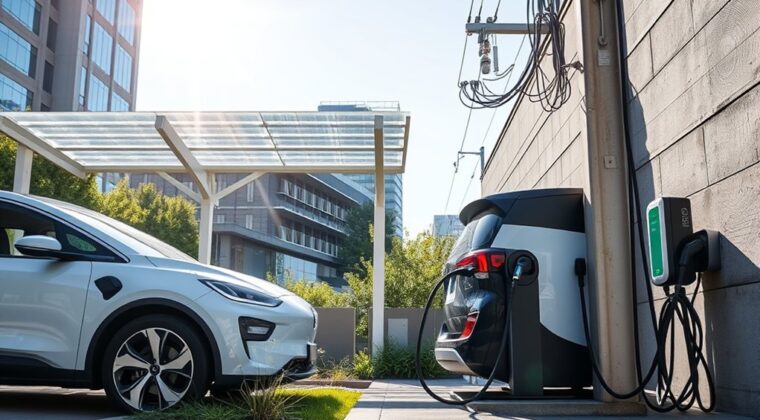
Solar EV charging and grid charging can both power an electric vehicle, but they solve different problems. Grid charging is usually simpler and more predictable. Solar charging can lower your long-term grid energy use and reduce charging-related emissions when your roof, driving schedule, utility plan, and charger are matched well.
Quick Answer
Solar EV charging is best if you already have suitable roof space, daytime charging access, or battery storage. Grid charging is best for simple, reliable overnight charging. For many homes, the strongest setup is a hybrid system that uses solar when available and the grid when sunlight is low.
Key Takeaways
- Solar EV charging can reduce the grid energy used for your car, but it does not make charging “free” once equipment, installation, financing, maintenance, and utility rules are included.
- Grid charging is usually more consistent because it does not depend on sunlight, roof output, or battery storage.
- Charging speed depends mainly on the EV charger, circuit, vehicle onboard charger, battery state of charge, and available power, not just whether the energy comes from solar or the grid.
- A solar-plus-grid setup is often more practical than solar-only charging because it lets you charge during cloudy weather, at night, or when your solar panels are powering the house.
Understanding Solar EV Charging
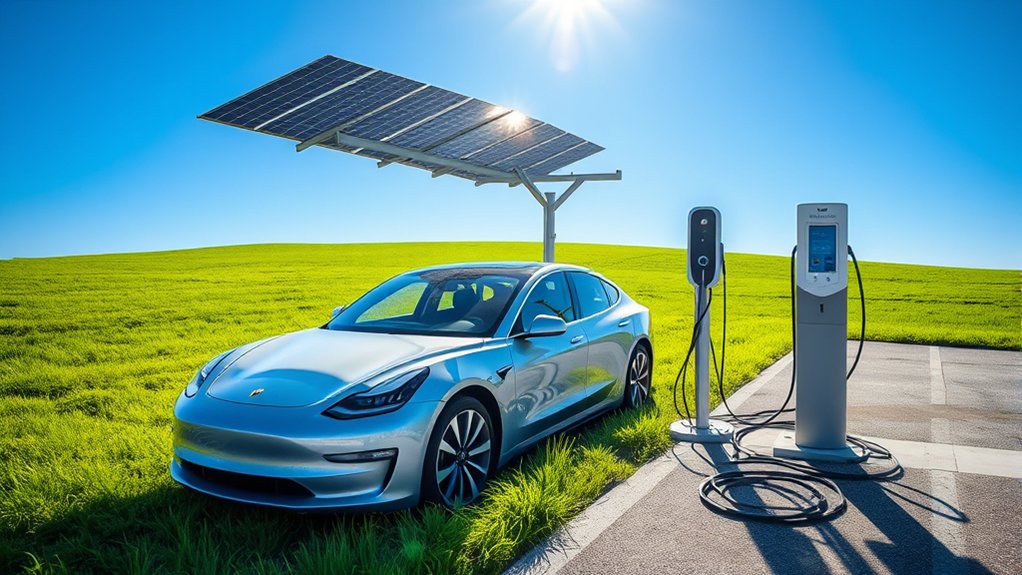
Solar EV charging means using electricity generated by solar panels to offset or supply the energy your electric vehicle needs. In most homes, the panels do not feed the car directly. Solar power flows through an inverter, into your home electrical system, and then to the EV charger. If your car needs more power than the solar array is producing at that moment, the grid or a battery can make up the difference.
A basic grid-tied solar setup can reduce your annual electricity use, but it may not charge your EV only from sunlight. A smarter setup uses an EV charger that can track solar production and adjust charging power as solar output rises and falls. A battery-backed setup stores extra solar energy so you can use it later in the evening or during limited backup situations.
Before choosing solar for EV charging, check your roof age, shade, panel space, local utility rules, daily driving needs, and whether you can plug in during sunny hours. The U.S. Department of Energy notes that roof suitability depends on factors such as tree cover, roof size, shape, slope, and orientation, and that tools like PVWatts can help estimate solar production for a specific address. DOE’s Homeowner’s Guide to Solar
Note: Solar EV charging works best when you think of it as an energy system, not just a car charger. The panels, inverter, main electrical panel, EV charger, utility rate, and optional battery all affect the final result.
The Basics of Grid Charging
Grid charging uses electricity supplied by your local utility. It is the most common and convenient home charging option because you can plug in at night, wake up with a charged battery, and avoid depending on sunlight or weather.
Home grid charging usually uses either Level 1 or Level 2 equipment. According to the U.S. Department of Energy’s Alternative Fuels Data Center, Level 1 charging through a 120-volt outlet adds about 5 miles of range per hour, while Level 2 charging commonly adds about 25 miles of range per hour and can use 240-volt residential service. AFDC electric vehicle charging guide
Grid charging has three major advantages:
- Predictable availability: You can charge day or night, regardless of solar output.
- Simple installation: Many homes can support a Level 2 charger after an electrical panel and circuit review.
- Consistent speed: Once the circuit and charger are installed, power delivery is more stable than solar-only charging.
The tradeoff is that grid electricity prices, time-of-use rates, demand charges, and your local generation mix can affect both cost and emissions.
Solar EV Charging vs Grid Charging: Main Differences
| Factor | Solar EV Charging | Grid Charging |
| Best for | Homes with good solar exposure, daytime charging, or battery storage | Drivers who want simple, reliable charging at any time |
| Cost pattern | Higher upfront cost, lower grid energy use over time | Lower upfront cost, ongoing utility charges |
| Speed | Can match Level 2 charging if enough solar, grid support, or battery power is available | Usually more consistent because power is available on demand |
| Emissions | Lower operating emissions when charging from solar generation | Depends on your local grid’s generation mix |
| Reliability | Strong with battery backup and proper system design; weaker as solar-only | Strong during normal grid operation, but affected by outages |
How Much Can You Save With Solar Charging?
You can save money with solar EV charging, but the savings depend on your local electricity rate, solar production, system cost, financing, utility export rules, and how often your EV charges during sunny hours. Solar does not automatically make EV charging free. It shifts some or all of your charging energy away from utility purchases after you have paid for the solar equipment and installation.
A simple way to estimate your EV energy need is:
Daily EV energy use = daily miles driven ÷ your EV’s miles per kWh.
For example, if you drive 30 miles per day and your EV averages 3.5 miles per kWh, your car uses about 8.6 kWh per day. Over a year, that is about 3,100 kWh before charging losses. A solar installer can compare that number with your home’s normal electricity use, your roof’s expected solar output, and your utility’s net metering or time-of-use plan.
For U.S. readers, federal incentive rules have changed. The IRS says the Residential Clean Energy Credit applied to qualified clean energy property installed from 2022 through December 31, 2025, and is not available for property placed in service after December 31, 2025. State, local, and utility incentives may still vary by location, so verify current rules before making a purchase. IRS Residential Clean Energy Credit
Pro Tip: If your utility offers time-of-use rates, compare sunny-hour solar charging with off-peak overnight grid charging. The cheapest option may be solar during the day, off-peak grid power at night, or a mix of both.
Environmental Impact: Solar vs. Grid
Solar EV charging usually has the lower operating emissions when your EV uses electricity produced by your panels. That is because solar panels generate electricity without burning fuel at the point of generation. Still, it is more accurate to say solar charging has lower operating emissions, not “zero emissions” in every sense, because solar equipment has manufacturing impacts and many home systems still import some grid electricity.
Grid charging can also be cleaner than gasoline driving, but the exact emissions depend on your local power mix. The U.S. Environmental Protection Agency’s eGRID database tracks emissions, generation, resource mix, and other attributes of electric power generated in the United States. EPA eGRID
If your utility grid uses a high share of renewable or nuclear power, grid charging may already be relatively low-carbon. If your area relies heavily on fossil fuels during peak periods, charging from solar or charging at cleaner grid times can reduce your footprint.
Reliability: How Solar Can Support Energy Independence
Solar can improve energy independence, but only if the system is designed for the way you plan to use it. A standard grid-tied solar system usually shuts down during a power outage for safety unless it has approved backup equipment. To charge an EV during an outage, you typically need battery storage, backup-capable inverter equipment, proper transfer/islanding hardware, and a charger that can work within the system’s power limits.
Battery storage can help you use solar energy when the sun is down, during cloudy periods, or during some outages. It can also help avoid peak utility rates if your local rate plan charges more during high-demand hours.
Warning: Do not assume solar panels alone will charge your EV during a blackout. EV chargers, solar inverters, batteries, transfer equipment, and electrical panels should be reviewed and installed by qualified professionals under local code.
Charging Speed: Solar vs. Grid Performance
The biggest charging-speed mistake is comparing solar and grid power as if they are chargers. They are energy sources. Your actual charging speed depends on the EV charger level, circuit amperage, vehicle onboard charger, battery temperature, state of charge, and available power.
Charging Rate Comparison
| Charging Type | Typical Use | What to Expect |
| Level 1 | Standard 120-volt outlet | Slow charging, useful for short daily driving or backup use |
| Level 2 | Most home EV charging setups | Often enough to recharge overnight; can be paired with solar-smart charging |
| DC fast charging | Public road-trip and corridor charging | Much faster, but usually not practical as a normal home solar charger |
| Solar-smart Level 2 | Home solar plus EV charger controls | Can slow down, pause, or draw grid support when solar output drops |
A solar system can support Level 2 charging under good conditions, but the car may pull extra energy from the grid if clouds pass, your house is using power, or the charger is set higher than the solar surplus available.
Efficiency of Charging Methods
Both solar and grid charging have energy losses. Solar systems lose some power through inverter conversion. EV chargers and vehicle onboard chargers also lose some energy as heat during charging. Battery storage adds another conversion step, which can reduce efficiency but improve convenience and resilience.
For most drivers, the best efficiency strategy is simple: charge when your EV is parked long enough, avoid unnecessary fast charging, use solar surplus when available, and schedule grid charging during lower-cost or cleaner periods if your utility plan supports it.
Installation and Setup Process
Grid charging is usually the easier setup. A qualified electrician checks your electrical panel, installs a dedicated circuit if needed, mounts the charger, and verifies the charger matches your EV and local code.
Solar EV charging can involve more planning because it may include solar panels, racking, inverters, utility interconnection, monitoring equipment, EV charger controls, and optional battery storage. You also need to decide whether your goal is to offset annual EV energy use, maximize daytime solar charging, or provide limited backup charging during outages.
Before installing solar for EV charging, review these items:
- Roof condition: If the roof will need replacement soon, address that before installing panels.
- Shade: Trees, chimneys, nearby buildings, and roof shape can reduce production.
- Panel space: Your system must support both home loads and EV charging goals.
- Electrical capacity: Your panel, service size, and charger circuit must be suitable.
- Utility rules: Net metering, export rates, interconnection requirements, and time-of-use pricing can change the payoff.
- Backup needs: If outage charging matters, ask for a backup-capable design, not just basic grid-tied solar.
Evaluating User Convenience: Solar vs. Grid Charging
Convenience depends on your driving routine. If your EV is parked at home during the day, solar charging can be very convenient because you can use midday solar output. If you commute during the day and only plug in after sunset, a basic solar-only approach may not match your schedule unless you have battery storage or favorable net metering.
Accessibility and Availability Factors
Grid charging is widely accessible for homeowners with parking and adequate electrical service. Renters, apartment residents, and drivers without off-street parking may depend more on workplace or public charging.
Solar charging is less accessible if you do not own the roof, have heavy shade, live under strict building rules, or lack space for panels. Community solar, workplace charging, or a renewable electricity plan may still help reduce your charging footprint if rooftop solar is not practical.
When Solar Makes More Sense
Solar EV charging is usually more attractive when:
- You own your home and have a suitable roof or ground-mount location.
- You drive enough miles to add meaningful electricity use.
- You can charge during sunny hours or store solar energy.
- Your utility rates are high or peak pricing makes daytime solar valuable.
- You want lower operating emissions and more control over energy use.
When Grid Charging Makes More Sense
Grid charging may be the better first step when:
- You need the lowest upfront cost.
- You mostly charge overnight.
- Your roof is shaded, old, small, or not yours.
- Your utility offers cheap off-peak EV rates.
- You want a simple setup with fewer components to maintain.
Essential Maintenance Tips for Solar and Grid Chargers
Good maintenance keeps your EV charging setup safer and more reliable. You do not need to overcomplicate it, but you should check the parts that handle power often.
- Inspect charging cables monthly: Look for cuts, heat damage, loose plugs, corrosion, or cracked connector housings.
- Keep connectors dry and clean: Do not force a damaged connector into the vehicle inlet.
- Clean solar panels when needed: Dust, pollen, leaves, and bird droppings can reduce output, especially in dry climates.
- Watch inverter and charger alerts: Monitoring apps can show faults, reduced solar output, or charging interruptions.
- Check battery health if you have storage: Follow the manufacturer’s maintenance and software-update guidance.
- Schedule professional service: Have a qualified technician review electrical issues, repeated breaker trips, inverter faults, or unusual heat.
Future Trends in EV Charging Technologies
EV charging is moving toward smarter, more flexible systems. The most important trend for solar EV owners is smart charging, where the charger adjusts based on solar production, home energy use, utility rates, or grid conditions.
| Trend | Why It Matters |
| Solar-smart charging | Uses solar surplus more effectively and can reduce grid imports. |
| Bidirectional charging | May allow compatible EVs to support a home or grid in limited situations. |
| Battery storage | Stores daytime solar energy for evening charging or backup loads. |
| J3400/NACS adoption | Changing connector standards may improve public fast-charger access for newer EVs. |
| Utility-managed charging | Can reduce charging costs by shifting load away from peak demand periods. |
These trends do not make grid charging obsolete. Instead, they make hybrid charging more useful. A future-ready home setup may use solar when available, grid power when cheap or necessary, and battery or bidirectional features when backup power matters.
Frequently Asked Questions
What is the 33% rule in solar panels?
The 33% rule is a rough sizing idea some people use to allow extra solar production above current household use. It is not a universal solar standard. For EV charging, size the system from your annual home electricity use, expected EV miles, local solar production, roof conditions, battery plans, and utility rate rules.
Is it better to have solar panels on-grid or off-grid?
For most EV owners, grid-tied solar is more practical than fully off-grid solar. Grid-tied systems let you use solar when available and grid power when your EV needs more energy than the panels are producing. Off-grid systems require more battery storage, careful load planning, and higher upfront design complexity.
Why are people getting rid of their solar panels?
Solar panels are usually removed for practical reasons such as roof replacement, storm damage, old equipment, poor installation, home renovation, lease or power-purchase agreement complications, or changing utility rules. That does not mean solar is a bad choice, but it does show why roof condition, installer quality, and contract terms matter.
What charger does the Hyundai Kona use?
It depends on the market and model year. Many North American Kona Electric models use a J1772-style inlet for AC charging and CCS1 for DC fast charging, while many European-market models use Type 2 AC and CCS2 DC fast charging. Always check your owner’s manual and the label near the charge port before buying adapters or home charging equipment.
How many solar panels do you need to charge an EV?
Start with your annual EV energy use. Divide your yearly driving miles by your EV’s miles per kWh, then add charging losses. A solar professional can compare that number with your roof’s expected annual production. The answer varies by driving distance, panel wattage, sunlight, shade, roof angle, and whether your home also uses the solar energy.
Can solar EV charging work during a power outage?
Only if the system is designed for backup operation. A standard grid-tied solar system usually shuts down during an outage. To charge an EV when the grid is down, you need approved backup equipment, enough battery or solar capacity, and a charger setting that does not exceed the backup system’s limits.
Conclusion
Choosing between solar EV charging and grid charging is not just a solar-versus-utility decision. It is a question of cost, convenience, reliability, roof suitability, utility rates, charging schedule, and how much control you want over your energy. Grid charging is usually the easiest and most predictable option. Solar charging can be the better long-term choice when your home has strong solar potential and your charging habits match solar production.
For many EV owners, the best answer is a hybrid setup: charge from solar when the sun is available, use the grid when needed, and consider battery storage only if backup power, time-of-use savings, or solar self-consumption justify the extra cost.
Sources
- U.S. Department of Energy Alternative Fuels Data Center — EV charging levels, charging speeds, connectors, and equipment terminology.
- U.S. Department of Energy Homeowner’s Guide to Solar — roof suitability, solar production estimates, storage, net metering, and solar buying guidance.
- U.S. EPA eGRID — electricity emissions, generation mix, and grid environmental data.
- IRS Residential Clean Energy Credit — current federal residential clean energy credit eligibility and qualified expenses.