
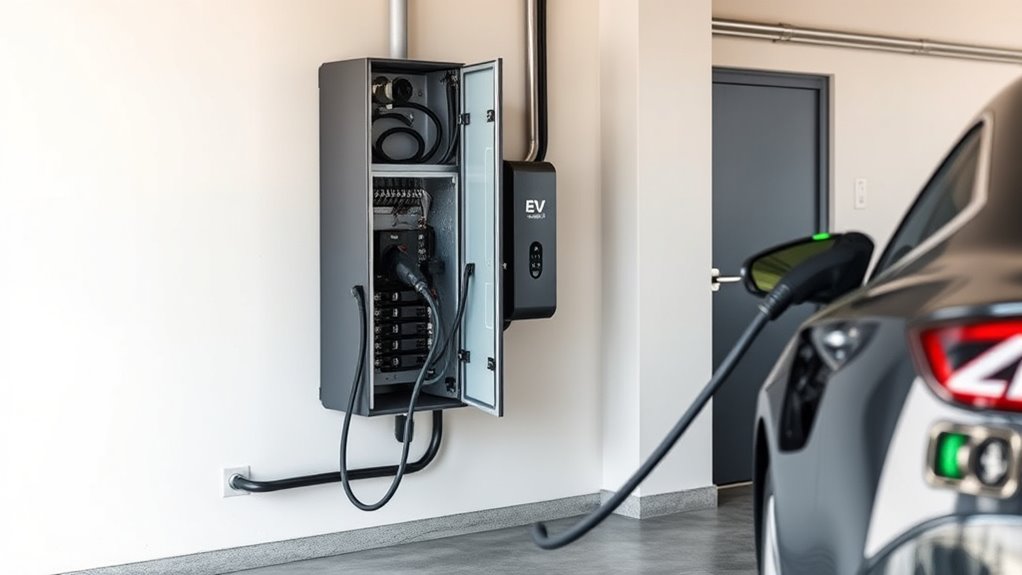
You should size a Level 2 EV charger breaker from the charger’s maximum continuous output, not from the outlet shape or the breaker size you hope to use. The simple rule is to multiply the charger output by 125%. A 32-amp charger needs a 40-amp breaker, a 40-amp charger needs a 50-amp breaker, and a 48-amp charger needs a 60-amp breaker. The final installation still depends on the EVSE manual, conductor ampacity, terminal temperature ratings, panel capacity, permits, and local code.
Quick Answer
For a Level 2 EV charger, size the breaker at 125% of the charger’s continuous output. Common matches are 24A output on a 30A breaker, 32A on 40A, 40A on 50A, and 48A on 60A. Always confirm the charger setting, wire size, panel load calculation, and local code before installation.
Key Takeaways
- EV charging is treated as a continuous load, so the breaker must be at least 125% of the charger’s maximum output.
- A breaker rating is not the same as charger output. A 50A breaker usually supports up to 40A charging, not 50A charging.
- Wire size depends on conductor material, insulation, terminal ratings, wiring method, run length, derating, and local code.
- A 100A panel may work only if the load calculation passes or the charger is set lower or managed by approved load-management equipment.
- For safety, permits, inspection, and final sizing should be handled by a licensed electrician.
At a Glance
| Time Required | 15–30 minutes to choose a target charger setting; longer if a formal load calculation, permit, or panel upgrade is needed. |
| Difficulty | Planning is simple; installation is licensed electrical work. |
| Tools Needed | EVSE manual, charger nameplate, panel schedule, load calculation, permit requirements, and a qualified electrician. |
| Cost | Varies by charger amperage, panel space, wiring distance, permit fees, load management, and whether a service upgrade is required. |
What Size Breaker Does a Level 2 EV Charger Need?
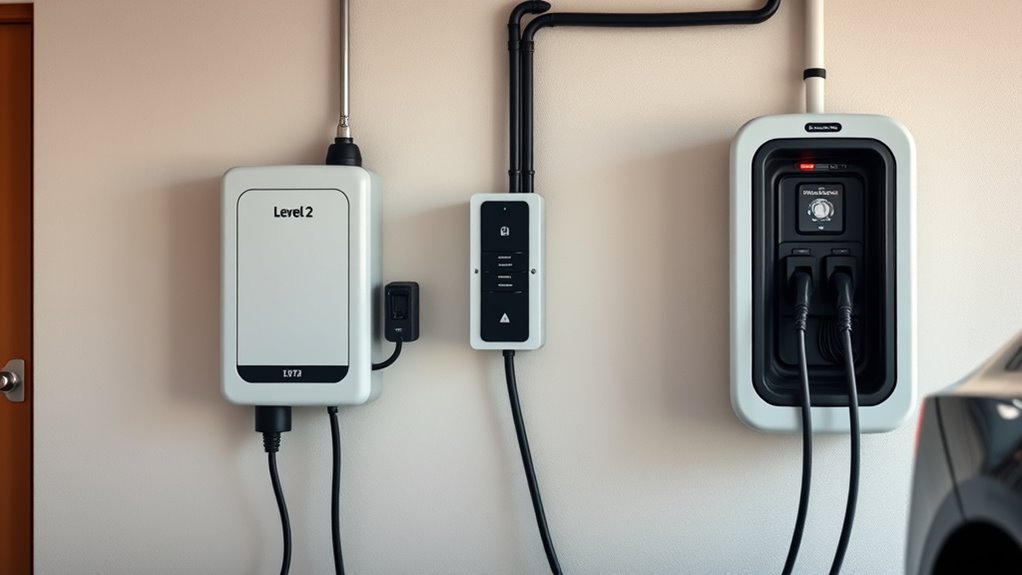
A Level 2 EV charger needs a dedicated 240-volt branch circuit sized for the charger’s maximum continuous output. In residential settings, Level 2 charging commonly uses 240V service, while commercial Level 2 installations may use 208V service, according to the U.S. Department of Energy Alternative Fuels Data Center.
The most common home EV charger breaker matches are simple:
| Charger Output Setting | Minimum Breaker Size | Approx. Power at 240V |
| 16 amps | 20 amps | 3.8 kW |
| 24 amps | 30 amps | 5.7 kW |
| 32 amps | 40 amps | 7.7 kW |
| 40 amps | 50 amps | 9.6 kW |
| 48 amps | 60 amps | 11.5 kW |
These pairings follow the same pattern shown in Tesla’s Wall Connector charging-speed table, where a 60A breaker supports 48A output, a 50A breaker supports 40A output, and a 40A breaker supports 32A output.
Warning: Do not install a larger breaker just to make charging faster. Oversizing the breaker without properly sized conductors and approved charger settings can overheat wiring and create a fire risk.
How Does the 125% Rule Set Breaker Size?
The 125% rule means the branch circuit must be sized above the charger’s continuous load. EV charging is treated as a continuous load by the National Electrical Code guidance summarized by DOE/AFDC, and NEC Article 625 contains the main EV charging requirements.
The formula is:
Charger output amps × 1.25 = minimum breaker rating.
For example, a 40A charger output needs at least a 50A breaker because 40 × 1.25 = 50. A 48A charger output needs a 60A breaker because 48 × 1.25 = 60.
125% Rule Basics
The rule applies to the EV charger’s maximum continuous output, not to the amount your vehicle happens to draw on a given night. Your car may charge below the charger’s maximum because of battery state of charge, temperature, vehicle onboard charger limits, or a lower setting in the charger app.
You still size the circuit from the configured maximum output. If the charger is set to 32A, the circuit must support that continuous load. If the charger is later raised to 40A or 48A, the breaker, conductors, and panel capacity must also support the higher setting.
Breaker Sizing Examples
Here are quick examples you can use while planning:
- A 16A Level 2 charger output needs a 20A breaker.
- A 24A Level 2 charger output needs a 30A breaker.
- A 32A Level 2 charger output needs a 40A breaker.
- A 40A Level 2 charger output needs a 50A breaker.
- A 48A Level 2 charger output needs a 60A breaker.
If the math lands between standard breaker sizes, your electrician will choose the next appropriate standard breaker size only when the wiring method, conductor ampacity, terminals, and EVSE instructions allow it.
Which Breaker Matches Each Charger Amperage?
The breaker matches the charger’s configured amperage. That matters because many Level 2 chargers are adjustable. A charger advertised as “48 amps” can often be set lower during commissioning if your panel cannot support the full load.
Think of the breaker as the protection for the circuit and the charger setting as the maximum load placed on that circuit. A 50A breaker does not mean the car should charge at 50A. It usually means the charger output is capped at 40A.
- Verify the charger’s nameplate and installation manual before selecting the breaker.
- Set the EVSE output to match the installed circuit.
- Label the breaker and charger setting after inspection.
- Have a licensed electrician confirm conductor ampacity and panel capacity.
Pro Tip: If your daily driving is modest, a 24A or 32A charger setting may still refill your EV overnight while reducing panel strain and installation cost.
Which Wire Size Goes With Each Breaker?
Wire size must match the breaker, the charger instructions, the conductor material, the insulation type, the wiring method, the number of current-carrying conductors, ambient temperature, terminal temperature ratings, and local code. Do not choose wire size from a single online chart without checking the whole installation.
As a general planning reference for copper conductors, many residential Level 2 installs use larger wire as breaker size rises:
| Breaker | Typical Charger Output | Wire Planning Note |
| 30A | 24A | Often planned around 10 AWG copper, depending on wiring method and code. |
| 40A | 32A | Often planned around 8 AWG copper, subject to conditions of use. |
| 50A | 40A | May require 6 AWG or 8 AWG copper depending on cable type, terminals, insulation rating, and local code. |
| 60A | 48A | Commonly 6 AWG copper with 75°C-rated equipment; some 60°C-rated equipment may require larger conductors. |
Tesla’s Gen 3 Wall Connector manual shows why this nuance matters. For maximum 60A-breaker output, Tesla lists minimum 6 AWG copper when using a 75°C-rated circuit breaker, but minimum 4 AWG copper when using a 60°C-rated circuit breaker. That is why the EVSE manual and local code matter as much as the breaker number.
Note: Aluminum conductors, long runs, conduit fill, hot garages, bundled conductors, and local amendments can change the required conductor size. Your electrician should calculate voltage drop and ampacity before pulling wire.
Plug-In vs Hardwired EV Chargers
A plug-in Level 2 charger usually connects to a receptacle such as a NEMA 14-50. A hardwired charger connects directly to the branch circuit. Both still need the correct breaker, wire, grounding, and code compliance.
The main practical difference is output. A 50A receptacle circuit usually supports a maximum continuous EV charging output of 40A. Many 48A chargers must be hardwired because 48A output requires a 60A circuit, and common 50A receptacles are not sized for that continuous output.
Hardwired installations can also reduce nuisance issues caused by worn receptacles, loose plugs, or weather exposure. Plug-in units can be easier to replace or take with you, but the receptacle, box, cover, GFCI protection, and installation environment must all be rated for the job.
Can a 100 Amp Panel Handle EV Charging?
A 100A panel can sometimes handle Level 2 EV charging, but only after a proper load calculation confirms enough capacity. Do not assume that open breaker spaces mean the service has enough electrical capacity.
A 100A panel may work well with a lower setting, such as 16A, 24A, or 32A output. It may also work with approved load management that reduces EV charging when other major loads are running. It may fail the calculation if the home already has electric heat, an electric range, an electric dryer, a heat pump, a hot tub, or other large loads.
- Check the EV charger output you actually need for daily driving.
- Ask for a load calculation before choosing a high-output charger.
- Consider a lower charger setting if the panel is tight.
- Consider approved dynamic load management if your jurisdiction allows it.
The DOE/AFDC home charging guide notes that electricians can determine whether a home has adequate electrical capacity and that some homes may need additional circuits for Level 2 charging.
When Do You Need a 200 Amp Panel Upgrade?
You may need a 200A panel upgrade when your existing electrical service cannot support the EV charger’s continuous load after the home’s other loads are counted. A service upgrade is more likely when you want a 40A or 48A charging output, have a 100A or older 60A service, or already run several high-demand appliances.
A panel upgrade may also make sense if you plan to add a second EV charger, electrify more appliances, install a heat pump, add a workshop, or prepare for future home energy upgrades.
However, a 200A upgrade is not always the first answer. You may be able to use:
- A lower EVSE output setting.
- A 24A or 32A charging circuit.
- Approved energy management equipment.
- Scheduled overnight charging during lower household demand.
- A charger with built-in or external load-management support.
Tesla’s Wall Connector Power Management guidance explains that dynamic power management can adjust charge rate in real time based on available panel power, helping some homes avoid expensive electrical upgrades.
What Do EV Charger Installations Require?
A Level 2 EV charger installation usually requires a dedicated 240V circuit, a correctly sized breaker, properly sized conductors, grounding, a listed EVSE, local permits, and inspection. Local rules vary, so your electrician should follow the adopted code in your city or county.
Before installation, confirm these items:
- The charger’s maximum output setting.
- The manufacturer’s breaker and conductor requirements.
- Panel capacity and available load.
- Breaker compatibility with the panel.
- GFCI and ground-fault protection requirements.
- Indoor or outdoor equipment rating.
- Conduit, cable, or raceway requirements.
- Permit and inspection requirements.
- Final charger commissioning and circuit labeling.
For shock protection, GFCI requirements depend on the installation type, location, receptacle use, and local code. The U.S. Consumer Product Safety Commission explains that GFCIs protect against severe electric shocks by interrupting power when a ground fault is detected. Many hardwired EV chargers also include built-in ground-fault protection, but that does not remove the need to follow local code and the EVSE manual.
What Size Breaker Does a Tesla Wall Connector Need?
A Tesla Wall Connector can use several breaker sizes depending on the configured output. For maximum output, Tesla lists a 60A double-pole breaker with 48A charging output. It can also be configured lower, such as 40A output on a 50A breaker or 32A output on a 40A breaker.
Tesla’s support page lists Wall Connector output up to 11.5 kW / 48 amps, and its breaker table shows these common settings:
- 60A breaker → 48A output → about 11.5 kW at 240V.
- 50A breaker → 40A output → about 9.6 kW at 240V.
- 40A breaker → 32A output → about 7.7 kW at 240V.
- 30A breaker → 24A output → about 5.7 kW at 240V.
- 20A breaker → 16A output → about 3.8 kW at 240V.
Wall Connector Breaker Size
Choose the Tesla Wall Connector breaker based on the output you want and the electrical capacity your home can safely support. If the home cannot support a 60A circuit, the Wall Connector can be commissioned at a lower breaker size and output setting.
Tesla says installers use the Tesla One app during setup to enter the breaker size and configure the Wall Connector. That step matters because the charger should not be set higher than the installed circuit can safely support.
Wiring and Load Check
For maximum output, use the Tesla installation manual and local code to choose conductors. Tesla’s manual lists copper-only terminations and gives different minimum copper conductor sizes depending on breaker terminal temperature rating. That is the correct level of detail for a real installation.
Also check your vehicle’s onboard charger limit. Some EVs cannot accept the full 48A AC output, so installing a 60A circuit may not always reduce charging time compared with a 40A or 50A circuit.
Why Does Load Calculation Matter Before Installation?
A load calculation checks whether your electrical service can support the EV charger plus the rest of the home. It looks beyond open breaker slots and asks whether the service, panel, and feeders can carry the expected load safely.
This matters because a Level 2 EV charger can run for hours at a high continuous load. If the calculation is too tight, you may see nuisance trips, hot equipment, flickering lights, voltage drop, or failed inspection.
- It shows whether the existing service can support the new charger.
- It helps choose between 16A, 24A, 32A, 40A, and 48A charging output.
- It flags when load management or a panel upgrade is needed.
- It helps the installer document the job for permits and inspection.
If the load calculation fails, the best fix may be a lower EVSE setting, energy management equipment, a subpanel, service upgrade, or a different charger location with a shorter wiring run.
Pre-Installation Checklist
Before you buy the charger or schedule the electrician, gather the information that determines the final breaker size:
- Your EV’s maximum AC charging rate.
- The charger’s installation manual.
- Your preferred charging output: 24A, 32A, 40A, or 48A.
- Your panel amperage and available breaker spaces.
- Major household loads, including HVAC, range, dryer, water heater, and hot tub.
- Whether the charger will be plug-in or hardwired.
- Indoor or outdoor mounting location.
- Distance from the panel to the charger.
- Local permit and inspection requirements.
- Whether your utility offers EV rates, rebates, or load-management programs.
Once those details are clear, your electrician can match the breaker, wire, charger setting, and load calculation instead of guessing.
Frequently Asked Questions
What amp breaker do I need for a Level 2 EV charger?
Use a breaker rated at 125% of the charger’s maximum continuous output. A 32A charger output needs a 40A breaker, a 40A output needs a 50A breaker, and a 48A output needs a 60A breaker. Always confirm the EVSE manual and local code.
Is 40 amps enough for a Level 2 charger?
Yes, 40A can be enough, but be clear about the wording. A 40A breaker usually supports 32A charger output. A 40A charger output usually needs a 50A breaker. Either setup can work well for overnight charging if it matches your driving needs.
Can I use a 60 amp breaker for a Tesla charger?
Yes, a 60A breaker is the common maximum-power setup for a Tesla Wall Connector when it is configured for 48A output and the wiring, panel capacity, permits, and local code support it. If your home cannot support 60A, the Wall Connector can be set lower.
Is a 60 amp fuse enough for an EV charger?
A 60A fuse or breaker can support up to 48A continuous EV charging if the charger is approved for that setup and the conductors, disconnecting means, panel, and local code all allow it. The overcurrent device must match the full circuit, not just the charger rating.
Can I put a 48 amp EV charger on a 50 amp breaker?
No. A 48A continuous charger output needs a 60A breaker because 48 × 1.25 = 60. A 50A breaker usually supports a maximum EV charger output of 40A.
Can I install a Level 2 EV charger myself?
Planning the breaker size is fine, but installing a new 240V EV charging circuit is licensed electrical work in many areas. Use a qualified electrician, follow the EVSE manual, pull permits when required, and get the installation inspected.
Conclusion
To size a breaker for a Level 2 EV charger, start with the charger’s maximum continuous output and multiply by 125%. That gives you the common matches: 24A output on a 30A breaker, 32A on 40A, 40A on 50A, and 48A on 60A. Then verify the conductor size, terminal ratings, grounding, GFCI requirements, permits, and panel load calculation. The right breaker is only one part of a safe EV charging circuit.
Sources
- U.S. DOE Alternative Fuels Data Center — Electric Vehicle Charging Stations — supports Level 2 voltage, charging levels, and public charging terminology.
- U.S. DOE Alternative Fuels Data Center — Charging Electric Vehicles at Home — supports home charging, continuous-load code context, permits, and electrician guidance.
- Tesla Wall Connector Support — supports Tesla breaker-to-output settings and power levels.
- Tesla Gen 3 Wall Connector Installation Manual — supports breaker, output, conductor, grounding, and installation requirements.
- Tesla Wall Connector Power Management — supports static, dynamic, and group power management options.
- U.S. Consumer Product Safety Commission — GFCI Fact Sheet — supports GFCI shock-protection guidance.