
Updated on July 8, 2026
For the best EV battery health, you should usually keep your charge between 20% and 80% for daily driving. That range helps reduce high-voltage stress, deep-discharge strain, heat buildup, and long-term capacity loss. Nightly charging is fine when you set a sensible charge limit, and you should avoid letting the battery sit below 10% often. Charge to 100% when you need the range for a long trip, cold-weather drive, or occasional battery-management calibration. For routine use, slow or Level 2 charging is usually the gentler choice.
Quick Answer
Most EV owners should charge when the battery drops near 20% to 30% and stop around 70% to 80% for daily use. Use 100% only when you need extra range or when your EV manual recommends it for your battery chemistry. If your car has an LFP battery, follow the in-car charging guidance because some LFP packs benefit from periodic full charges for range-estimate accuracy.
Key Takeaways
- Daily target: Keep most EV batteries around 20% to 80% for routine driving.
- Nightly charging: It is fine if you set a charge limit and avoid sitting at 100% for no reason.
- Full charge: Use 100% before long trips, harsh winter drives, or when your EV specifically asks for calibration.
- Fast charging: DC fast charging is useful on trips, but Level 2 charging is gentler for everyday top-ups.
- Temperature matters: Avoid charging a very hot or very cold battery when you can, and use preconditioning in winter.
Why EV Batteries Prefer 20% to 80%
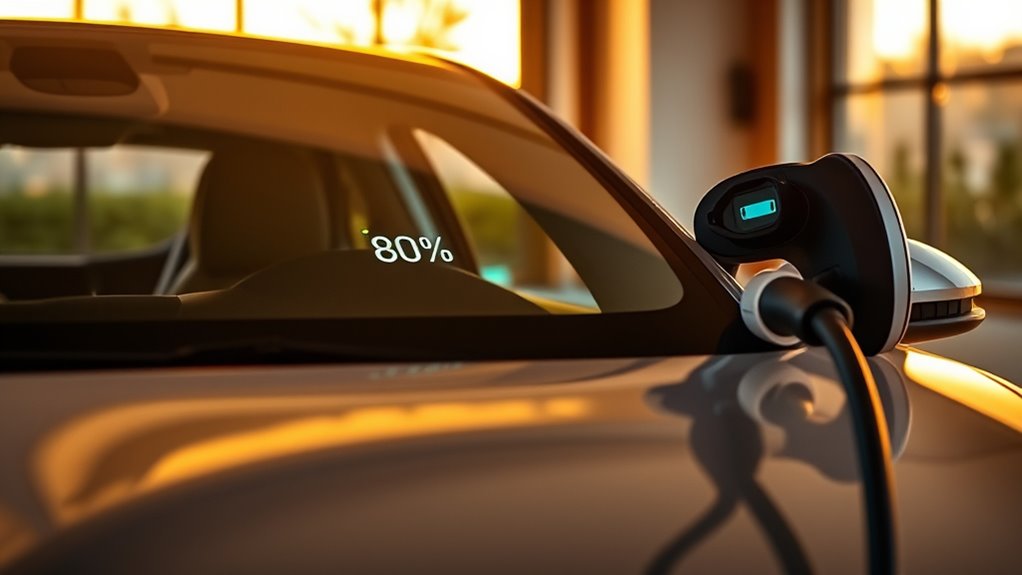
EV batteries prefer the 20% to 80% charge range because it avoids the two stressful ends of the battery’s state of charge. Very low charge can strain cells, while very high charge keeps the pack at a higher voltage for longer.
You do not need to panic if your battery sometimes goes outside this range. Modern EVs use protective buffers and a Battery Management System, often called the BMS, to prevent the most harmful extremes. Still, your daily habits matter because repeated high charge, deep discharge, and heat exposure can speed up long-term wear.
Keeping your EV battery in the middle of its charge range is one of the simplest ways to reduce unnecessary stress.
For most daily driving, 70% to 80% gives you enough usable range while leaving a healthy buffer. If your commute is short, you may even be comfortable with a lower daily limit, such as 60% to 70%. The best setting depends on your driving distance, climate, battery chemistry, and the guidance in your owner’s manual.
When Charging to 100% Makes Sense
A full charge is not automatically bad. The issue is making 100% your everyday default when you do not need the range. In the right situation, charging to 100% is practical and sometimes recommended.
Long Trip Preparation
Charge to 100% before a long trip when you need the extra range between charging stops. A full battery gives you more flexibility, especially when your route has long gaps between reliable chargers.
Try to time the full charge so the car reaches 100% close to departure. That way, the battery does not sit full for many hours before you leave. After the trip, return to your normal daily charge limit.
Cold Weather Range
Cold weather can reduce range because the battery works less efficiently and the car uses extra energy for cabin and battery heating. Charging higher before a winter trip can give you a useful safety buffer.
When possible, precondition the battery while the car is still plugged in. Preconditioning helps the pack reach a better operating temperature before you drive or fast charge. This can improve charging speed and reduce winter range anxiety.
BMS Calibration Check
Occasional full charges can help some EVs improve their state-of-charge and range estimates. This is especially relevant for some LFP battery packs, where the voltage curve can make charge estimation harder.
This does not mean every EV needs frequent 100% charging. Many NMC and NCA battery packs do better with a lower daily limit. Follow your vehicle’s manual and in-car charging recommendations because battery chemistry changes the best routine.
Should You Charge Your EV Every Night?
Yes, you can charge your EV every night if you set a reasonable charge limit. Nightly charging becomes a problem only when it pushes the battery to 100% every time or keeps the pack full for long periods without a real need.
For many drivers, plugging in at night and stopping at 70% to 80% is convenient, predictable, and battery-friendly. If you only drive a few miles per day, you may not need to plug in every night. Let your usual mileage guide the habit.
| Use Case | Suggested Charging Habit | Why It Helps |
|---|---|---|
| Daily commute | Plug in nightly with a 70% to 80% limit | Keeps range ready without sitting full |
| Short local driving | Charge every 2 to 4 nights | Reduces unnecessary time at higher charge |
| Long trip coming | Charge to 100% close to departure | Maximizes route flexibility |
| Winter travel | Charge higher and precondition while plugged in | Offsets cold-weather range loss |
| Low battery | Avoid sitting below 10% | Reduces deep-discharge stress |
Why EV Battery Chemistry Matters
Your EV’s battery chemistry affects the best charging routine. Most EVs use lithium-ion batteries, but not all lithium-ion packs behave the same way.
NMC and NCA Batteries
NMC and NCA batteries are common in many long-range EVs. These packs usually benefit from a lower daily charge limit, often around 70% to 80%, because they experience more stress when kept at a high state of charge for long periods.
You can still charge these batteries to 100% for a trip. Just avoid making a full charge your normal daily setting unless the manufacturer recommends it for your specific model.
LFP Batteries
LFP, or lithium iron phosphate, batteries often tolerate higher charge levels better than some other EV battery chemistries. Some EVs with LFP packs may recommend charging to 100% periodically to keep the range estimate accurate.
That does not mean every LFP car should sit at 100% all the time. Use the charging screen and owner’s manual as your final guide.
| Battery Type | Common Daily Approach | Best Practice |
|---|---|---|
| NMC / NCA | 70% to 80% for routine use | Use 100% mainly for longer trips |
| LFP | Often more tolerant of higher limits | Follow the car’s calibration guidance |
| Unknown chemistry | Use 70% to 80% as a safe default | Check the owner’s manual |
How the BMS Protects Your Battery
The Battery Management System protects your EV battery by monitoring cell voltage, current, temperature, and state of charge. It helps prevent overcharging, deep discharge, overheating, and uneven cell behavior.
The BMS also controls charging speed. That is why DC fast charging often slows down after the battery reaches a higher percentage. The car reduces power to protect the pack as the cells get closer to full.
You can help the BMS by using built-in tools such as charge limits, scheduled charging, departure timing, and battery preconditioning. Software updates can also improve charging behavior, range estimates, and thermal management, so keep your vehicle software current when updates are available.
Why Fast Charging Can Add Wear
DC fast charging is useful, especially on road trips. The concern is not occasional fast charging. The concern is repeated high-power charging when the battery is very hot, very cold, or already near a high state of charge.
Heat Buildup From Fast Charging
Fast charging pushes higher current into the battery. Higher current can create more heat, and heat is one of the biggest stress factors for lithium-ion batteries.
Modern EVs manage this with liquid cooling, charge curves, and battery temperature controls. Even so, Level 2 charging is usually the better everyday option when you have time.
High Current Cell Stress
High current makes the cells work harder than they do during slower home charging. Over time, frequent high-power charging can contribute to uneven aging, extra heat, and reduced usable capacity.
Use fast charging when it solves a real problem, such as a long trip, tight schedule, or emergency. For normal home or workplace charging, slower charging is usually more battery-friendly.
Use DC Fast Charging Strategically
You do not need to avoid DC fast charging completely. Instead, use it strategically. It is best for travel days, not as your only routine charging method if you have access to Level 1 or Level 2 charging.
If you must fast charge often, try to arrive with the battery warm but not overheated, and stop around 80% unless you need more range. Charging from 80% to 100% on a fast charger usually takes longer and adds more high-state-of-charge stress.
How Temperature Changes When to Charge
Temperature affects both charging speed and battery stress. EV batteries generally perform best in moderate conditions. Very hot or very cold weather can make charging less efficient and harder on the pack.
Charging in Hot Weather
In hot weather, avoid parking and charging in direct sun when you have a better option. If the battery is hot after highway driving, give it time to cool before charging unless you need the range right away.
Use shade, a garage, or scheduled charging during cooler hours when possible. These small habits reduce heat exposure without changing how you use the car.
Charging in Cold Weather
Cold batteries charge more slowly and deliver less range. If your EV offers battery preconditioning, use it before DC fast charging or before a longer winter drive.
Preconditioning while plugged in is especially helpful because the car can use grid power to warm the battery and cabin instead of pulling that energy from the battery after you leave.
- Charge in moderate temperatures when possible.
- Avoid letting the battery sit very hot at a high charge level.
- Use preconditioning before winter fast charging.
- Park in shade or a garage when weather is extreme.
Charge Limits for Different Driving Styles
Your ideal charge limit depends on how much range you need each day. A driver with a short commute does not need the same charge limit as someone who drives long highway distances.
| Driving Style | Practical Daily Limit | Best For |
|---|---|---|
| Short-trip driver | 60% to 70% | Local errands and low daily mileage |
| Average commuter | 70% to 80% | Daily work, school, and errands |
| High-mileage driver | 80% to 90% | Longer daily routes with fewer charging chances |
| Road trip day | Up to 100% | Maximum range before departure |
| LFP battery owner | Follow vehicle guidance | Chemistry-specific calibration and daily use |
These ranges are practical starting points, not universal rules. Your owner’s manual should always override general advice.
Manufacturer Charging Guidelines to Follow
Automakers tune charging limits around battery chemistry, cooling design, warranty strategy, and software controls. That is why two EVs may have different daily charging recommendations even when both use lithium-ion batteries.
Use your vehicle’s charging screen and owner’s manual as the main source of truth. If your EV recommends a daily limit, set it and let the car manage the rest. If your car recommends periodic full charges for calibration, follow that schedule without turning 100% into an unnecessary habit.
Before You Change Your Charge Limit
- Check whether your EV uses LFP, NMC, NCA, or another chemistry.
- Look for a daily charge-limit recommendation in the infotainment system.
- Use scheduled charging if the car sits plugged in overnight.
- Charge higher before long trips, then return to your normal limit.
- Do not ignore battery or charging warnings from the vehicle.
Everyday Charging Habits That Help Your Battery
Good EV battery care is mostly about consistency. You do not need complicated routines. You need simple habits that reduce avoidable stress while keeping the car ready for real life.
Manufacturer limits work best when they become daily habits, not occasional reminders.
- Set a daily limit: Use 70% to 80% for many EVs unless your manual says otherwise.
- Avoid frequent deep discharge: Try not to let the battery sit below 10%.
- Use Level 2 charging: It is usually the best balance of convenience and battery care.
- Save fast charging for trips: DC fast charging is helpful, but it does not need to be your default.
- Time your full charges: Reach 100% close to departure when you need maximum range.
- Watch temperature: Reduce heat exposure and precondition in cold weather.
These habits help preserve range, reduce charging stress, and make EV ownership easier. The goal is not to worry about every percentage point. The goal is to avoid repeated extremes when a simple charge limit can do the work for you.
Frequently Asked Questions
When should I charge my EV for the best battery life?
Charge your EV when it drops near 20% to 30%, then stop around 70% to 80% for daily use. Adjust higher when you need more range, and follow your car’s battery-chemistry guidance.
What is the 30-90 rule for an EV battery?
The 30-90 rule means keeping the battery between 30% and 90% instead of using the full range every day. It is a more flexible version of the 20-80 rule and may suit drivers who need extra daily range.
What drains an EV battery the most?
High speed, rapid acceleration, steep climbs, cold weather, strong cabin heating, and heavy loads can drain an EV battery faster. Poor tire pressure and roof cargo can also reduce range.
Should I charge my EV to 80% every night?
Yes, charging to 80% every night is usually fine if you drive often and need the range. If you drive only short distances, you may be able to charge every few nights instead.
Is it bad to charge an EV to 100%?
Charging to 100% is not bad when you need the range or when your vehicle recommends it. The better habit is to avoid leaving the battery at 100% for long periods when you do not need a full charge.
Is Level 2 charging better than DC fast charging?
Level 2 charging is usually better for routine use because it is slower, cooler, and gentler. DC fast charging is best for road trips, emergencies, or days when you need range quickly.
Conclusion
Your EV battery lasts longer when you avoid repeated extremes. For most daily driving, keep the battery around 20% to 80%, use a sensible charge limit, and avoid letting it sit very low or completely full without a reason.
Charge to 100% before long trips, winter drives, or when your EV recommends it for calibration. Use DC fast charging when it helps, but rely on Level 2 charging for your normal routine when possible. Above all, follow your owner’s manual because battery chemistry, software, and thermal management vary by model.