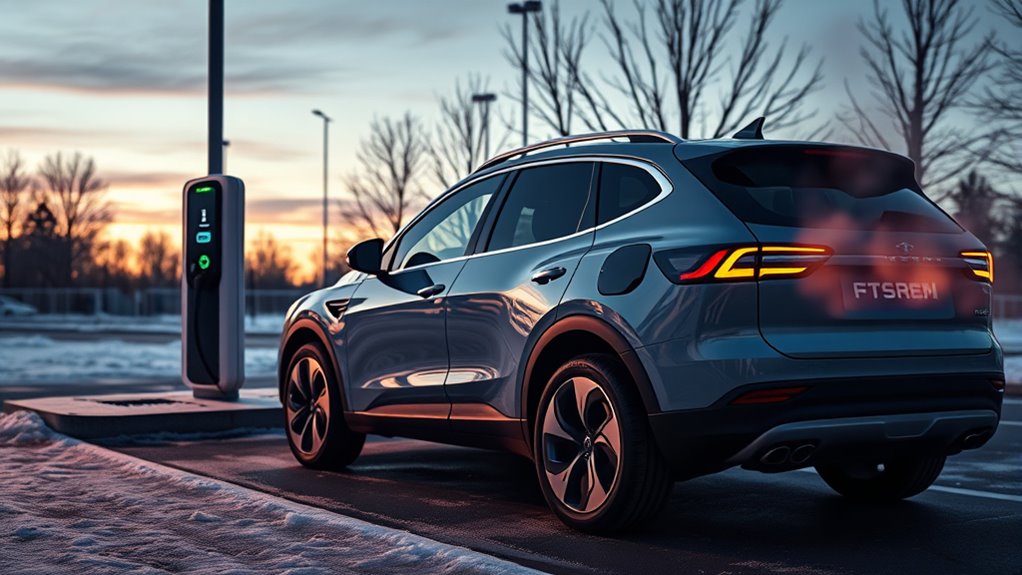
You should precondition your EV battery before DC fast charging when the pack is cold, especially in weather below about 50–60°F and whenever temperatures are near freezing. Preconditioning warms the battery into the vehicle’s preferred fast-charging range, so the pack can accept power more efficiently. It matters most before winter road-trip charging stops, after the car has been parked in the cold, or when your EV’s navigation system offers route-based battery conditioning.
Quick Answer
Precondition your EV battery 20–30 minutes before DC fast charging in cold weather, especially near or below freezing. Use the car’s navigation, departure schedule, app, or battery-conditioning mode when available. Skip it for mild weather, a warm battery, or routine overnight Level 1 or Level 2 charging.
Key Takeaways
- Preconditioning is most useful before DC fast charging in cold weather, not for normal overnight home charging.
- Cold batteries charge more slowly because low temperatures reduce battery reaction speed and increase resistance.
- Most EVs that support battery conditioning work best when you route to a fast charger in the built-in navigation system.
- Preconditioning uses energy, so it is best done while plugged in or with enough state of charge for the trip.
- Exact behavior varies by brand, model year, software version, battery chemistry, and charger power.
At a Glance
| Best Time to Use It | Before DC fast charging when the battery is cold, especially near or below freezing. |
| Time Required | Often 20–30 minutes, but longer in severe cold and shorter if the pack is already warm. |
| Best Trigger | Built-in navigation to a fast charger, scheduled departure, phone app, or battery-conditioning setting. |
| When to Skip | Mild weather, warm battery, short local trips, or routine Level 1/Level 2 home charging. |
| Cost | Usually a small amount of battery energy, or grid energy if the car is plugged in. |
What Is EV Battery Preconditioning?
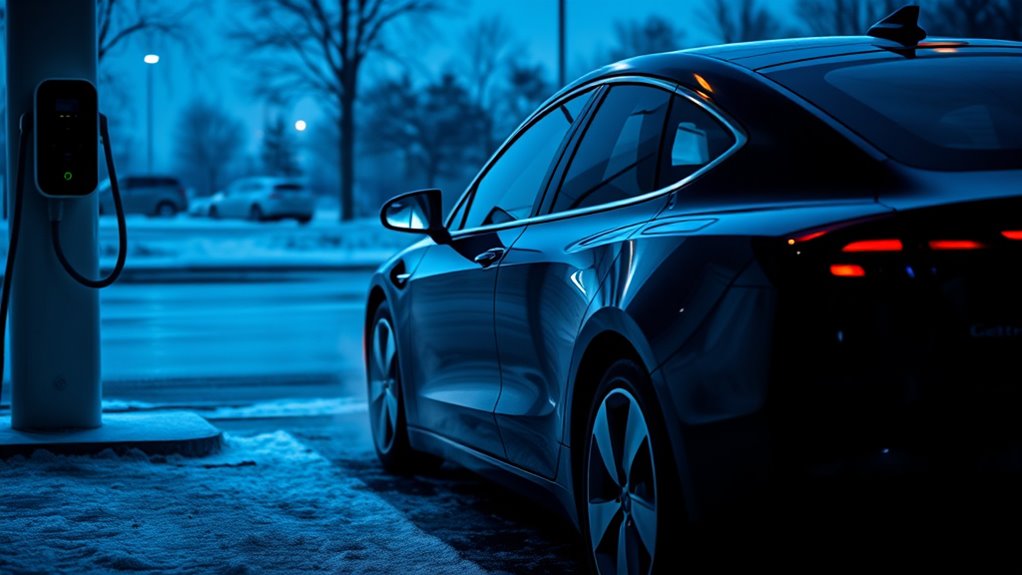
EV battery preconditioning is the process of warming or cooling the high-voltage battery before driving or charging. For winter fast charging, it usually means warming the pack before you plug into a high-power DC charger.
You do not directly heat the cells yourself. Your EV’s battery management system controls the process through coolant loops, heaters, heat pumps, or other thermal-management hardware. The goal is to bring the pack into a model-specific temperature window where charging is faster, safer, and more efficient.
Cold weather slows lithium-ion battery reactions and reduces how quickly the pack can accept energy. That is why a cold EV may sit at a fast charger showing low charging power, a “battery warming” message, or a longer-than-expected charging time. In severe cold, preconditioning can make the difference between a slow, frustrating stop and a normal road-trip charging session.
Note: Your EV decides the actual battery temperature target. The driver’s job is to trigger the feature early enough, not to force a specific battery temperature.
Why Cold Weather Slows EV Charging
Cold weather slows EV charging because lithium-ion batteries are temperature-sensitive. When the pack is cold, lithium ions move less easily inside the cells. Internal resistance rises, chemical reactions slow down, and the vehicle limits charging power to protect the battery.
The result is simple: the charger may be capable of high power, but your EV may not accept that full power until the battery warms up. This is most obvious at DC fast chargers, where the car is trying to move a large amount of energy into the pack in a short time.
Cold Battery Resistance
A cold battery has higher internal resistance. More resistance means more energy is lost as heat, and the battery cannot accept current as easily. To prevent stress on the cells, the battery management system reduces charging power until the pack warms.
This is also why cold-weather range can drop. Some of the battery’s stored energy becomes harder to access, and the car also uses energy to heat the cabin, defrost glass, warm the battery, and maintain safe operating temperatures.
Cold weather affects EVs twice: it reduces driving range and slows fast charging unless the battery is warmed before the charging stop.
Slower Chemical Reactions
At low temperatures, the movement of lithium ions through the battery slows down. During charging, that reduced movement can raise the risk of unwanted stress on the anode if the car accepted too much power too quickly.
Your EV protects itself by reducing charge rate. Preconditioning helps because it warms the pack before high-power charging begins, allowing the vehicle to accept a stronger charging curve without waiting as long at the station.
Warning: Never try to heat, modify, or bypass an EV battery system yourself. High-voltage battery temperature is managed by the vehicle’s built-in safety systems.
When to Precondition Your EV Battery
You should precondition your EV battery when battery temperature is likely to limit charging speed. That usually means cold weather, a cold-soaked vehicle, or a fast-charging stop early in a winter drive.
Cold Weather Charging
Use battery preconditioning before charging when outdoor temperatures are below about 50–60°F and the car has been sitting outside, especially overnight. It becomes more important near freezing and very important in subfreezing weather.
| Condition | Action | Why It Helps |
|---|---|---|
| Cold battery after parking | Precondition before DC fast charging | Improves charge acceptance |
| Winter road trip | Navigate to the fast charger | Lets the car start conditioning early |
| Mild weather or warm pack | Usually skip it | Little added benefit |
Fast Charging Prep
Preconditioning matters most before DC fast charging. High-power charging depends on battery temperature, state of charge, battery chemistry, and charger capability. If the pack is cold, your EV may reduce charging power until the battery warms.
For best results, start battery conditioning before you arrive at the charger. Many EVs do this automatically when you enter a compatible fast charger as the destination in the built-in navigation system. Phone maps may not trigger the same battery-prep behavior unless your EV’s software supports it.
Pro Tip: On winter road trips, put the fast charger into the car’s native navigation system, not just your phone app. In many EVs, that is what tells the battery to warm itself before arrival.
How EV Battery Preconditioning Works
EV battery preconditioning works through the vehicle’s thermal-management system. Sensors monitor battery temperature, outside temperature, state of charge, route data, and expected charging demand. The vehicle then warms or cools the pack as needed.
In cold weather, the system may use electric heaters, a heat pump, waste heat, or a coolant loop to warm the battery. In hot weather, it may cool the pack before or during charging. Either way, the goal is to keep the battery in a safe and efficient temperature range for the job you are about to ask it to do.
Modern EVs may start this process in several ways:
- Routing to a DC fast charger in the built-in navigation system
- Setting a scheduled departure time while plugged in
- Starting cabin and battery preconditioning from the phone app
- Turning on a battery-conditioning mode in the vehicle settings
- Letting the car automatically warm the pack once plugged into a fast charger
Exact controls vary by model. Check your owner’s manual because even vehicles from the same brand can differ by model year, software version, battery chemistry, and market.
Precondition Before DC Fast Charging
To get the best DC fast-charging performance in cold weather, precondition before you plug in. Aim to start 20–30 minutes before arrival when conditions are cold. In severe cold, the car may need more time. If the battery is already warm from highway driving, it may need less.
Use this simple process:
- Choose a compatible DC fast charger. Use your vehicle’s built-in navigation when possible.
- Set the charger as your destination. This often triggers automatic battery conditioning.
- Give the car time to warm the pack. A 20–30 minute lead time is a useful winter rule of thumb.
- Arrive with enough state of charge. Preconditioning uses energy, so avoid arriving with a nearly empty battery in extreme cold.
- Plug in promptly when you arrive. If you wait too long after conditioning, the pack may cool again.
- Watch the charging curve. Charging will still slow as state of charge rises, especially above about 70–80% on many EVs.
Preconditioning does not guarantee the charger’s maximum advertised power. Charging speed still depends on battery temperature, charger output, battery state of charge, vehicle limits, battery health, and whether the charging station is sharing power with other vehicles.
When You Can Skip Preconditioning
You can skip preconditioning when it will not meaningfully improve charging or range. If the weather is mild, the battery is already warm, or you are using a slow AC charger overnight, battery conditioning often adds little value.
Skip preconditioning when the battery is already warm, the weather is mild, or you are simply charging at home overnight.
You can usually skip it in these situations:
- Short local errands: You are not heading to a DC fast charger.
- Mild weather: Outdoor temperatures are comfortable and the battery is not cold-soaked.
- After a long drive: Highway driving may already have warmed the pack.
- Level 1 or Level 2 home charging: Slower charging puts less demand on the pack.
- Low state of charge: If you are not plugged in and range is tight, save energy unless battery warming is needed to charge.
The goal is not to precondition every time. The goal is to use it when temperature will limit charging speed, range, or drivability.
How Long EV Battery Preconditioning Takes
EV battery preconditioning often takes about 20–30 minutes before a winter DC fast-charging stop. That is a useful planning window, not a fixed rule.
Preconditioning can take longer when the vehicle has been parked outside in freezing weather, when the battery is large, or when the state of charge is low and the vehicle limits energy use. It can take less time when you have been driving for a while, the pack is already warm, or the outside temperature is only mildly cool.
If your EV shows a “battery warming” or “preconditioning battery” message after you plug into a fast charger, that usually means the car arrived colder than ideal. It may still charge, but the first part of the session can be slower while the pack warms.
Brand-Specific Preconditioning Features
Different EV brands use different names and controls for battery preconditioning. Some make it nearly automatic. Others require a setting or a specific navigation workflow.
Common patterns include:
- Tesla: Often starts battery preconditioning when you navigate to a Supercharger.
- Hyundai and Kia: Many newer models offer battery conditioning through EV settings or route-based logic on supported software.
- Ford: Some EVs use departure times, connected navigation, and app features to prepare the cabin and battery.
- Volkswagen and Audi: Behavior varies by model and software, with route planning and charging settings playing a role.
- Nissan: Older models may have less direct battery-conditioning control, so the car may rely more on passive warming and built-in battery protection.
Do not assume one EV works like another. Look for terms such as “battery conditioning,” “preconditioning,” “departure schedule,” “charging preparation,” “battery warming,” or “route planner” in your vehicle manual.
Common Preconditioning Mistakes to Avoid
Preconditioning is simple, but a few mistakes can reduce its benefit.
- Using only cabin heat: Warming the cabin does not always warm the battery enough for DC fast charging.
- Starting too late: Turning it on at the charger may help, but it can delay the session.
- Relying on phone navigation only: Many EVs need the charger entered in the car’s own navigation system.
- Preconditioning with very low charge: Battery warming uses energy, so keep a safe buffer in winter.
- Expecting maximum charger power: Even with a warm battery, charging speed drops as the battery fills.
- Ignoring hot weather: In very hot conditions, the vehicle may need to cool the pack before or during fast charging.
- Skipping software updates: EV charging behavior and route-based conditioning can improve through updates.
Note: If your EV charges slowly after preconditioning, the cause may be charger limits, battery state of charge, station power sharing, battery temperature, or vehicle software limits.
Troubleshooting Slow Charging After Preconditioning
If you preconditioned but charging is still slow, check these common causes before assuming something is wrong with the battery:
- Your state of charge is already high. Many EVs charge fastest at lower battery percentages and slow down as they approach 70–80% or higher.
- The charger is limited. A station may be derated, shared with another stall, or unable to deliver its advertised peak power.
- The battery was colder than expected. Severe cold can require more warming time.
- The charger was not entered in native navigation. Some EVs only precondition automatically when the built-in route planner knows you are heading to a fast charger.
- The car is protecting the pack. The battery management system may limit power due to temperature, voltage, battery age, or diagnostic conditions.
- The connector or charge port is cold-soaked. Ice, snow, or moisture around the charge port can cause connection problems in winter.
If slow charging continues in normal temperatures at several different chargers, check your owner’s manual and contact the manufacturer or dealer service department.
Frequently Asked Questions
When should I use battery preconditioning on an EV?
Use battery preconditioning before DC fast charging in cold weather, especially near or below freezing. It also helps before winter departures if you can warm the cabin and battery while plugged in. You can usually skip it in mild weather or for routine overnight Level 1 or Level 2 charging.
How long should I precondition my EV battery?
Plan on about 20–30 minutes before a cold-weather DC fast-charging stop. Severe cold can take longer, while a battery that is already warm from driving may need less time. Your EV may handle this automatically when you route to a fast charger.
What drains an EV battery the most in cold weather?
Cabin heat, battery heating, high speeds, aggressive acceleration, snow tires, low tire pressure, wind, slush, hills, and accessory use can all reduce range. Using heated seats, preheating while plugged in, keeping tires properly inflated, and driving smoothly can help preserve range.
Should I charge my EV to 80% every night?
For many EVs, 80% is a good daily charging limit because it supports long-term battery health. However, some battery chemistries and manufacturers have different guidance. For a long winter trip, charging above 80% before departure may make sense. Follow your owner’s manual first.
Does preconditioning waste battery power?
Preconditioning uses energy, but it can save time at a DC fast charger and may improve winter comfort and efficiency. When possible, precondition while plugged in so the energy comes from the grid instead of reducing driving range.
Do I need to precondition before Level 2 charging?
Usually no. Level 2 charging is much slower than DC fast charging, so the battery is under less thermal stress. Preconditioning before Level 2 charging may help in extreme cold, but it is usually more important before high-power DC fast charging.
Conclusion
Preconditioning your EV battery is most useful before DC fast charging in cold weather. If your battery is cold, start conditioning about 20–30 minutes before arrival, preferably by routing to the charger in your EV’s built-in navigation system. This helps the battery accept power more efficiently and reduces the chance of a slow winter charging stop.
Skip preconditioning when the weather is mild, the battery is already warm, or you are charging slowly at home overnight. Use it as a targeted tool, not a habit you need for every plug-in. For the best results, keep your EV updated, use the owner’s manual for model-specific instructions, and give the battery enough time to prepare before high-power charging.
Sources
- Associated Press: Frigid weather can cut EV range and make charging tough — backs cold-weather range loss, slower charging, and navigation-based battery warming.
- Associated Press / Edmunds: Wintertime driving with an electric vehicle — backs winter range reduction, fast-charging preconditioning, and winter charging habits.
- Wired: How heat pumps help EVs in the cold — backs cold-weather efficiency limits, heat-pump benefits, and preconditioning modes.
- Computationally Efficient Approach for Preheating of Battery Electric Vehicles before Fast Charging in Cold Climates — backs battery preheating before fast charging in cold climates.
- Online Electric Vehicle Charging Control with Battery Thermal Management in Cold Environments — backs the role of battery thermal management in cold-environment charging.