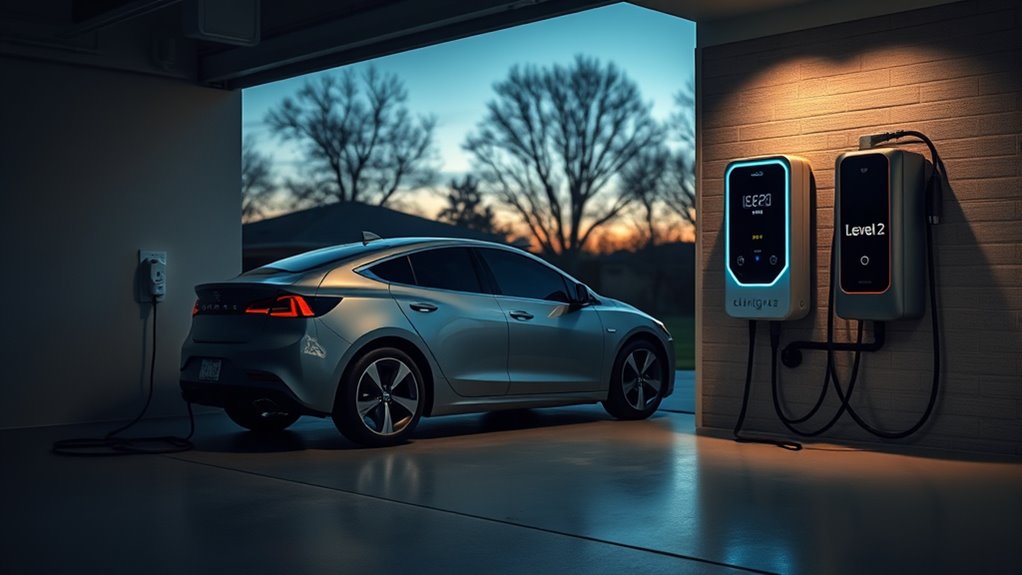
You should upgrade from Level 1 to Level 2 EV charging when your daily mileage, battery size, or schedule outgrows a standard 120V outlet. Level 1 can work for short commutes and plug-in hybrids, but a 240V Level 2 setup is usually the better home charging choice when you need reliable overnight recovery, faster turnarounds, or one charger for more than one EV.
Quick Answer
Upgrade to Level 2 charging when Level 1 cannot replace the miles you drive between plug-ins. For most drivers, that point comes around 30-40 miles per day, frequent back-to-back trips, a larger battery EV, shared household charging, or the need to charge mainly during off-peak overnight hours.
Key Takeaways
- Level 1 uses a standard 120V outlet and usually adds about 2-5 miles of range per hour.
- Level 2 uses 240V residential service and often adds about 20-30 miles per hour at home, depending on charger output and your EV.
- Level 1 is fine for short trips, plug-in hybrids, and flexible schedules. Level 2 makes more sense for long commutes, larger batteries, and multi-EV homes.
- A Level 2 charger needs the right circuit, breaker, wiring, permits, and load calculation, so have a licensed electrician check your panel before you buy.
- Before counting on rebates or tax credits, check current federal, state, local, and utility rules because eligibility changes by date and location.
At a Glance
| Time Required | 10-15 minutes to estimate your charging needs; installation timing depends on panel capacity, permits, and electrician availability. |
| Difficulty | Easy to compare; electrical installation should be handled by a licensed electrician. |
| Tools Needed | Your daily mileage, EV manual, utility rate plan, panel information, charger specs, and an electrician’s load calculation. |
| Cost | Level 1 often uses the cord that comes with the EV. Level 2 equipment often costs a few hundred to about $1,000, while installation can range from a simple circuit job to several thousand dollars if upgrades are needed. |
What Is the Difference Between Level 1 and Level 2 Charging?
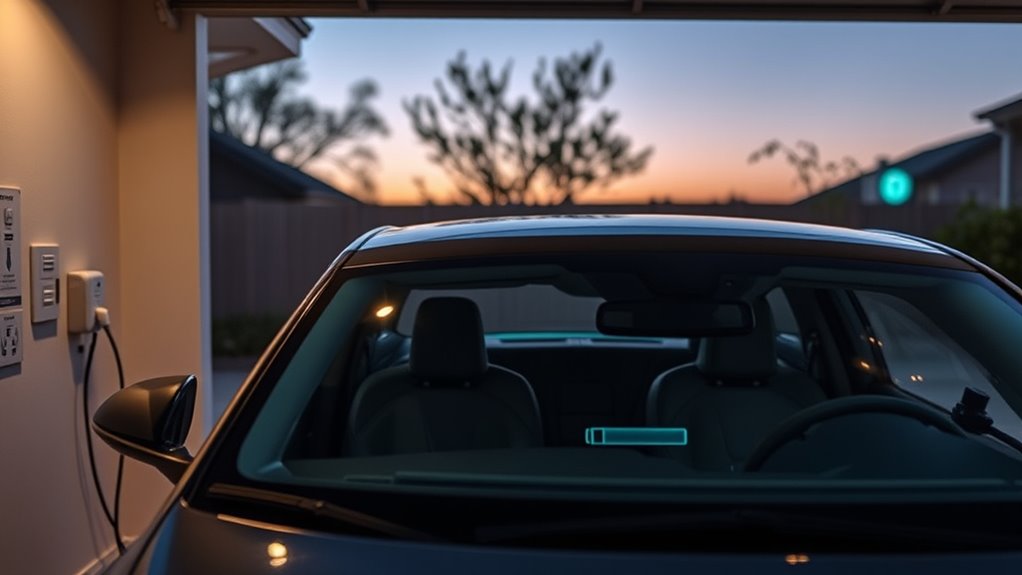
Level 1 charging uses a standard 120V household outlet. It is the simplest home charging option because most EVs include a portable cordset for it. According to the U.S. Department of Energy’s Alternative Fuels Data Center, Level 1 adds about 5 miles of range per hour under its example assumptions, though real-world range depends on your EV’s efficiency, battery size, and charging losses.
Level 2 charging uses 240V service in most homes, or 208V in many commercial settings. It is much faster because it delivers more power to the EV’s onboard charger. The same DOE guide estimates about 25 miles of range per hour for a typical Level 2 setup, with Level 2 equipment ranging from 2.9 kW to 19.2 kW.
The key difference is not just speed. Level 1 is a convenience tool. Level 2 is a daily home-fueling setup. If you only drive a few miles a day, Level 1 may be enough. If you need your EV ready every morning after a longer commute, Level 2 gives you more control.
Note: The wall unit is technically electric vehicle supply equipment, or EVSE. For AC Level 1 and Level 2 charging, the EV’s onboard charger still controls how much power the car can accept.
When Is Level 1 Charging Not Enough?
Level 1 charging is not enough when it cannot replace the miles you drive before the next time you need the car. A simple way to check is to multiply your available charging hours by your expected Level 1 range gain.
For example, if your EV adds about 4 miles of range per hour on Level 1 and you plug in for 10 hours, you may recover about 40 miles. That works for a light commute. It does not work as well if you drive 55 miles, get home late, and need the car ready again early the next morning.
Daily Range Shortfalls
Daily range shortfalls happen when you use more miles than Level 1 can replace overnight. This often shows up when:
- You drive more than 30-40 miles most weekdays.
- You run errands after work and cannot plug in for a full night.
- You live in a cold climate where range drops in winter.
- Your EV has a large battery that takes a long time to refill on 120V.
- You share one outlet or one charger with another EV.
If you regularly wake up below the range you need, Level 2 is no longer just a convenience upgrade. It becomes part of making the EV fit your routine.
Overnight Charging Limits
Level 1 can be slow enough that “overnight” does not always mean “ready.” The DOE notes that charging time depends on state of charge, battery capacity, battery type, onboard charger capacity, charging level, and power output. A large-battery EV that is deeply discharged can take 20 hours or more on Level 1.
Level 2 is better when you need dependable overnight charging. It can often refill the range used during a normal day in a few hours, leaving extra time to charge during lower-cost off-peak windows if your utility offers them.
Pro Tip: Track one normal week of driving before you buy a charger. Add your daily miles, note the shortest overnight plug-in window, and choose a Level 2 amperage that covers your real routine instead of buying only for maximum power.
How Much Faster Is Level 2 Charging?
Level 2 charging is often about 4-6 times faster than Level 1 for daily home use. A standard 120V outlet might add about 2-5 miles per hour. A common home Level 2 charger may add about 20-30 miles per hour, while higher-output units can add more if your vehicle and electrical system support it.
Here is the practical difference:
| Charging Level | Power Source | Typical Range Added | Best Fit |
| Level 1 | 120V household outlet | About 2-5 miles per hour | Short commutes, plug-in hybrids, backup charging |
| Level 2 | 240V home circuit or 208V commercial service | Often about 20-30 miles per hour at home, sometimes more | Daily drivers, larger batteries, shared charging |
The exact number depends on three things: the charger’s output, your EV’s onboard charger limit, and how efficiently your EV turns electricity into miles. A high-output wall connector will not help much if your EV can only accept a lower AC charging rate.
What Does Level 2 Charging Cost?
A Level 2 charging setup has two main costs: the charging unit and the electrical work. Many residential Level 2 chargers cost a few hundred dollars to about $1,000 before installation. The installation cost depends on your panel, distance from the panel to the parking spot, breaker and wire size, permit rules, wall repairs, outdoor weatherproofing, and whether a panel upgrade is needed.
A straightforward garage installation near the electrical panel can be much cheaper than a long outdoor run or a service upgrade. That is why a single national average can be misleading. Get a written quote before buying the charger, and ask the electrician to confirm the maximum safe amperage your home can support.
Also check incentives before you commit. The AFDC laws and incentives database can help you find state, local, and utility programs. Federal rules have also changed by date and location, so review the IRS Alternative Fuel Vehicle Refueling Property Credit page before assuming a federal tax credit applies.
Warning: Do not install a 240V EV circuit by guesswork. EV charging is a long-duration electrical load. Use a licensed electrician, follow local code, use properly rated equipment, and get permits when required.
Can Your Home Support a Level 2 Charger?
Your home can support a Level 2 charger only if the electrical system has enough capacity for the charger and the rest of the house. The electrician should perform a load calculation, inspect the panel, and match the breaker, wiring, outlet or hardwired connection, and charger setting.
A common home setup is a 30-amp Level 2 charger on a dedicated 40-amp circuit, which the DOE describes as a typical residential arrangement for 7.2 kW charging. Other chargers may run at 16, 24, 32, 40, 48, or more amps, but higher output requires the right electrical service and a vehicle that can accept that AC charging rate.
Before you install Level 2 charging, confirm:
- Your panel has enough available capacity.
- The charger will be on a dedicated circuit.
- The wiring, breaker, and outlet or hardwired connection match the charger rating.
- The charger is listed by a recognized testing lab, such as UL or ETL.
- The location keeps the cord off walkways and reaches the charge port without strain.
- Outdoor installations use weather-rated equipment.
- Local permit and inspection rules are followed.
When Does Level 2 Charging Make Sense?
Level 2 charging makes sense when it solves a real time problem. You probably should upgrade if you answer “yes” to two or more of these questions:
- Do you drive more than 30-40 miles on a normal weekday?
- Do you often need the car again less than 10 hours after plugging in?
- Do you have a larger battery EV instead of a plug-in hybrid?
- Do winter temperatures or highway driving reduce your usable range?
- Do two or more EVs share the same home charging spot?
- Do you want to charge during off-peak utility hours instead of all night and part of the next day?
- Do you rely on public fast charging because home charging is too slow?
If most answers are “no,” Level 1 may still be enough. There is no need to upgrade just because Level 2 is faster. Upgrade when the faster speed improves your daily routine.
How Do You Compare Level 1 and Level 2?
The simplest comparison is this: Level 1 is low-cost and slow, while Level 2 is faster and requires electrical work. Level 1 is useful when the car sits for long periods and daily driving is light. Level 2 is useful when the car needs to recover more range in less time.
Use this quick decision guide:
- Choose Level 1 if you drive short distances, have a plug-in hybrid, rent without installation rights, or only need a backup charging option.
- Choose Level 2 if you commute daily, drive a full battery EV, need reliable overnight charging, want off-peak scheduling, or share charging with another EV.
- Wait before upgrading if your panel needs major work and your daily mileage is already covered by Level 1.
- Get quotes first if the parking spot is far from the panel, the panel is full, or you need outdoor trenching.
A Level 2 charger is worth it when it changes your EV from “I hope it is charged” to “it is ready every morning.”
How Do You Choose the Right Level 2 Charger?
Choose a Level 2 charger by matching it to your car, your electrical system, and your parking setup. Do not start with the highest amperage. Start with the charging speed you actually need.
Look at these features first:
- Amperage: A 32-amp or 40-amp charger is enough for many home users. Higher output may require hardwiring and more panel capacity.
- Connector: Many non-Tesla EVs use J1772 for Level 1 and Level 2 charging. Tesla and newer J3400/NACS vehicles may use a different connector or adapter. The DOE notes that J3400 adoption began expanding as manufacturers announced support as early as 2025.
- Plug-in vs hardwired: Plug-in units can be easier to replace or move, but the outlet must be correctly installed and rated. Hardwired units are often preferred outdoors and for higher amperage.
- Cord length: Choose a cord that reaches the charge port without stretching across a walkway.
- Smart features: App control, scheduled charging, energy tracking, and utility rate scheduling can help if your electricity plan has lower off-peak rates.
- Safety certification: Use a charger listed by a recognized testing lab. You can also compare efficient models through the ENERGY STAR certified EV charger product finder.
What If You Rent or Live in an Apartment?
If you rent, live in a condo, or park in a shared lot, the upgrade decision includes more than speed. You may need landlord approval, HOA approval, assigned parking, shared electrical billing, cable management, or a networked charger that can track usage.
Ask these questions before buying equipment:
- Do you have a dedicated parking space?
- Who owns the electrical panel or meter serving that space?
- Can a charger be installed without creating a trip hazard?
- Who pays for electricity?
- Does the building require a specific charger brand or network?
- Are there state, city, utility, or building incentives for multifamily charging?
In some rentals, a portable Level 1 cord may be the only realistic short-term option. In others, a shared Level 2 station may make more sense than a private charger.
How Do Smart Charging and the 20-80 Rule Fit In?
Level 2 charging is not only about speed. It also gives you more control over when the car charges. If your utility offers lower overnight rates, a smart charger or your EV’s built-in scheduling can start charging after peak hours and still finish before morning.
The 20/80 rule is a battery habit many EV owners use for daily driving: avoid sitting near 0% and avoid charging to 100% unless you need the range. Many EVs let you set a daily charge limit in the vehicle or app. Follow your owner’s manual, because battery chemistry and manufacturer guidance can vary.
For road trips, charging to 100% before departure can be reasonable. For normal commuting, a lower daily limit can reduce time spent at a high state of charge.
Safe Level 2 Installation Checklist
Before installation, make the setup safe and practical:
- Check your EV’s maximum AC charge rate. This prevents paying for amperage your car cannot use.
- Choose the charger location. Keep it close to the charge port and away from areas where the cord can be damaged.
- Get a load calculation. Your electrician should confirm the panel can support the added continuous load.
- Confirm the circuit size. Breaker, wire, outlet, and charger settings must match.
- Use rated equipment. Choose a listed EVSE and weather-rated parts for outdoor use.
- Follow permits and inspections. Local rules vary, but inspection protects you and future buyers.
- Set charging schedules. Use the car or charger app to match utility rates and your departure time.
Never use a normal extension cord for EV charging unless your vehicle manufacturer specifically approves a rated solution for that use. Heat, voltage drop, and loose connections can create serious hazards.
Frequently Asked Questions
Is it cheaper to charge with a Level 1 or Level 2 charger?
Level 1 is cheaper upfront because it often uses the cord that came with the EV and a standard outlet. Level 2 costs more to install, but it may let you charge during off-peak hours, reduce public charging use, and make daily charging easier. Electricity cost per kWh is usually based on your utility rate, not the charging level itself.
Does Level 2 charging make owning an EV easier in 2026?
Yes, for many full-EV drivers. Level 2 charging makes home charging faster, supports larger batteries, and helps you rely less on public fast charging. It is most useful if you drive daily, need overnight recovery, or share a charger with another EV.
What is the 20/80 rule for EV charging?
The 20/80 rule means you try to keep the battery between about 20% and 80% for normal daily use. It is a simple battery-care habit, not a strict law. Use your EV’s charge limit settings and follow the owner’s manual for your specific model.
What stops someone from unplugging your electric car?
Many EVs lock the connector while charging, especially when the vehicle is locked. Some chargers also offer cable locks, app alerts, RFID access, or access controls. At home, good lighting and a charger location near your parking space also help.
Do you need a 40-amp circuit for Level 2 charging?
Not always. A 40-amp circuit is common for some 30-amp Level 2 charging setups, but charger ratings vary. Some EV owners use lower-amperage Level 2 charging successfully. Your electrician should size the circuit, breaker, wiring, and charger setting based on code and your home’s capacity.
Is a hardwired or plug-in Level 2 charger better?
A plug-in charger can be easier to remove or replace, but the outlet must be high quality and correctly installed. A hardwired charger is often cleaner for outdoor use and higher amperage. The better choice depends on your charger output, local code, and installation location.
Conclusion
If Level 1 charging keeps your EV ready for your real driving, you do not have to upgrade. But if you often recover too few miles overnight, drive more than 30-40 miles a day, own a larger-battery EV, or share charging with another vehicle, Level 2 charging is usually the better home setup. Before you buy, confirm your EV’s AC charging limit, check your utility rates, get an electrician’s load calculation, and choose a charger that fits your car, panel, parking space, and long-term routine.
Sources
- U.S. Department of Energy Alternative Fuels Data Center – Electric Vehicle Charging Stations – charging levels, typical range added, Level 2 power, connectors, and home charging basics.
- Alternative Fuels Data Center – Federal and State Laws and Incentives – state, local, utility, and federal incentive lookup guidance.
- Internal Revenue Service – Alternative Fuel Vehicle Refueling Property Credit – federal charger credit eligibility details and date-sensitive rules.
- ENERGY STAR Certified EV Charger Product Finder – certified residential EV charger comparison.
- U.S. Department of Energy Alternative Fuels Data Center – Electricity Basics – EV and electricity background for plug-in vehicles.