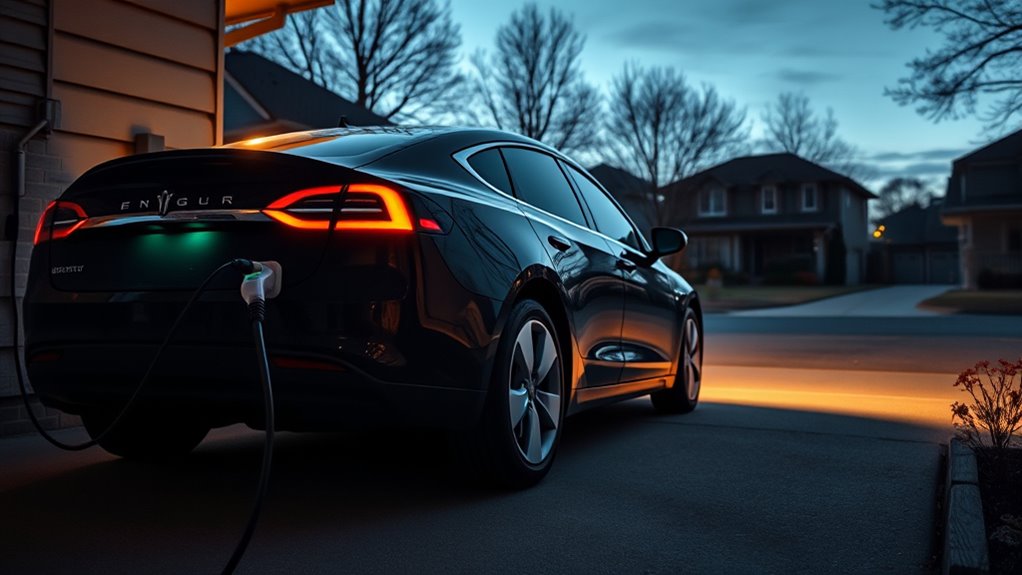
Use Level 1 charging at home when you drive modest daily miles, park for long overnight stretches, and do not need a fast refill every day. A standard 120-volt outlet can usually add about 2 to 5 miles of range per hour, which works well for many plug-in hybrids, second cars, and low-mileage EV routines. It is the simplest home charging option, but it is not the right fit for every driver.
Quick Answer
Level 1 EV charging is best if you drive about 30 to 40 miles or less per day, can plug in overnight, and have a safe, grounded 120-volt outlet near your parking spot. If you drive farther, need quick turnarounds, or own a large-battery EV, Level 2 is usually better.
Key Takeaways
- Level 1 charging uses a standard 120-volt outlet and usually adds about 2 to 5 miles of range per hour.
- It works best for plug-in hybrids, short commutes, second vehicles, and drivers who can charge overnight.
- A safe outlet matters. Use a grounded outlet in good condition, avoid extension cords, and ask an electrician if the circuit is questionable.
- Level 2 charging is the better choice for longer commutes, multiple EVs, large battery packs, or drivers who need a full charge by morning.
At a Glance
| Charging Speed | About 2 to 5 miles of range per hour from a 120-volt outlet |
| Best For | Plug-in hybrids, short commutes, low-mileage EV use, and overnight top-ups |
| Equipment Needed | Vehicle cordset or Level 1 EVSE, plus a safe grounded outlet near the parking spot |
| Cost | Often $0 if your vehicle includes a cordset and your outlet is suitable; electrical repairs or a new outlet add cost |
What Is Level 1 EV Charging?
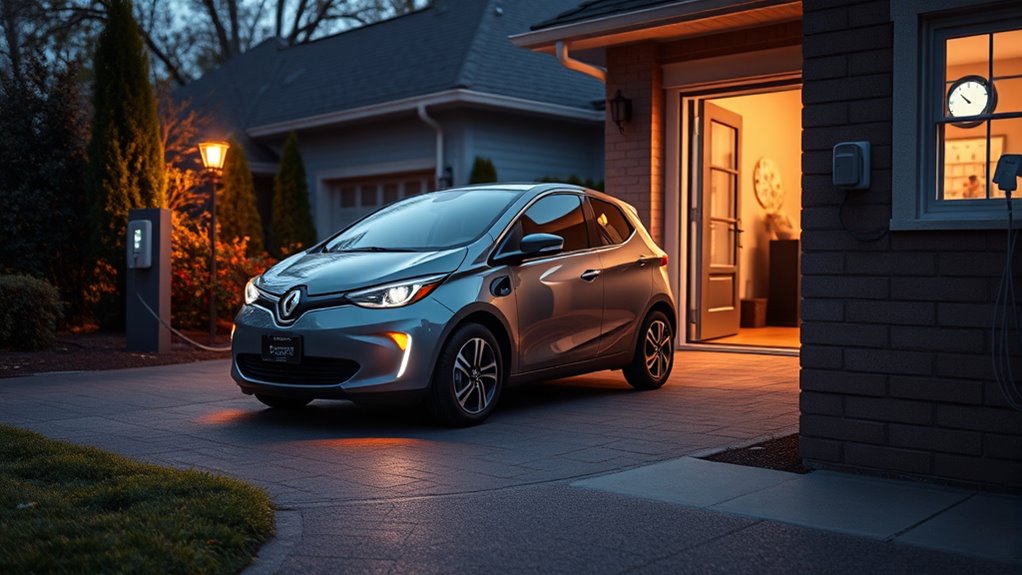
Level 1 EV charging uses a standard 120-volt household outlet. You plug a portable charging cord, also called an EVSE, into the wall outlet and connect the other end to your vehicle’s charge port.
According to the U.S. Department of Energy’s Alternative Fuels Data Center, Level 1 charging provides charging through a 120-volt AC plug and can add about 5 miles of range per hour under its example assumptions. ENERGY STAR gives a broader real-world range of about 2 to 5 miles per hour, depending on conditions and battery state.
In many home setups, Level 1 charging draws roughly 1.2 to 1.9 kW, depending on the EVSE, vehicle setting, and circuit. That is much slower than Level 2, but it can still be enough if your car sits parked for 8 to 12 hours and your daily driving is light.
A simple rule: if you recover more range overnight than you drive the next day, Level 1 charging can work.
Who Should Use Level 1 Charging?
You should consider Level 1 charging if your daily driving is predictable and usually stays below about 30 to 40 miles. ENERGY STAR says Level 1 can fit short-range driving and plug-in hybrid use, while Level 2 is better for drivers who go more than 40 miles per day or need faster charging.
Level 1 charging is most practical when you have three things: enough parked time, modest daily range needs, and a safe outlet near the vehicle.
Low Daily Mileage
For drivers who cover less than 30 miles per day, Level 1 charging can be a practical fit because it usually adds enough range during a normal overnight parking window. If your EV adds 3 miles of range per hour and you charge for 10 hours, you recover about 30 miles before morning.
This matches many real driving patterns. The AFDC trip-length data based on the 2022 National Household Travel Survey says only about 6.9% of U.S. vehicle trips are longer than 30 miles.
Overnight Top-Ups
If you park at home overnight, Level 1 charging can act like a daily top-up instead of a full refill. You plug in when you get home, let the car charge slowly, and leave with enough recovered range for the next day.
Pro Tip: Estimate your overnight recovery by multiplying charging hours by 2 to 5 miles. For example, 10 hours plugged in may add roughly 20 to 50 miles, depending on your EV and conditions.
This works best when you do not arrive home with a deeply depleted battery every night. Level 1 is less useful when you need to go from nearly empty to full by the next morning.
Plug-In Hybrids
Plug-in hybrid electric vehicles are often the strongest match for Level 1 charging because they have smaller battery packs than full battery-electric vehicles. Many PHEV drivers can refill enough electric range overnight from a standard outlet.
Level 1 also gives PHEV owners a low-cost way to use more electric miles without installing a 240-volt circuit. If you forget to charge or fall short, the gasoline engine still provides backup range.
Second Cars and Local Errand Vehicles
Level 1 can also work well for a second EV that handles school drop-offs, local errands, or a short commute. If the vehicle sits unused for long periods, slow charging is less of a problem.
The key is not the battery size alone. The key is how much range you need to replace between drives.
Is Level 1 Charging Enough for You?
Use this simple checklist before relying on Level 1 as your main home charging setup.
- Yes, Level 1 may be enough if you drive under about 30 to 40 miles most days.
- Yes, Level 1 may be enough if your EV or PHEV parks for 8 to 12 hours overnight.
- Yes, Level 1 may be enough if you have workplace charging or public charging as backup.
- No, Level 2 is likely better if you regularly drive 50+ miles per day.
- No, Level 2 is likely better if you need to refill a large battery from low to full overnight.
- No, Level 2 is likely better if more than one EV shares the same home charging setup.
How Long Level 1 Charging Takes
Level 1 charging is the slowest common EV charging method. Most drivers should think of it in miles recovered per hour, not “time to full,” because a full charge depends on battery size and how low the battery is when you plug in.
A plug-in hybrid may recover its usable electric range overnight. A battery-electric vehicle with a large pack may need 20 hours or more if it starts at a low state of charge. The Department of Energy notes that charging time depends on battery capacity, state of charge, vehicle onboard charger capacity, charging level, charger power output, and electrical service.
| Plugged-In Time | Estimated Range Added at 2 mi/hr | Estimated Range Added at 5 mi/hr |
| 8 hours | 16 miles | 40 miles |
| 10 hours | 20 miles | 50 miles |
| 12 hours | 24 miles | 60 miles |
Cold weather can reduce real-world results because the vehicle may use some energy to warm the battery or cabin. Charging may also slow when the battery is very cold, very hot, or near full.
Best EVs for Level 1 Charging
The best vehicles for Level 1 charging are not always specific models. They are vehicles with daily energy needs that match slow overnight charging.
Good Level 1 fits include:
- Plug-in hybrids with smaller battery packs.
- Compact EVs used for short daily trips.
- Second household EVs that do not need rapid daily replenishment.
- Low-mileage commuters who can charge every night.
- Drivers with backup charging access at work, public stations, or occasional Level 2 locations.
Large-battery EVs can still use Level 1 charging, but it may feel limiting if you often drain the battery. A large pack does not make Level 1 unsafe, but it does make full recharges much slower.
How Home Level 1 Charging Works
When you use Level 1 charging at home, electricity flows from the 120-volt outlet through the EVSE cord and into your vehicle’s onboard charger. The vehicle controls how much power it accepts.
Many EVs and PHEVs include a portable cordset when new, but not all do. Some newer vehicles may include a dual-voltage cord, offer the cord as an option, or rely on separate home charging equipment. Always check your owner’s manual before buying extra hardware.
Level 1 Charging Basics
- Uses a 120-volt household outlet.
- Usually adds about 2 to 5 miles of range per hour.
- Works best for overnight charging.
- Requires no 240-volt circuit if the outlet and circuit are already suitable.
- Can take 20 hours or more for a large battery-electric vehicle starting from a low charge.
Home Outlet Connection
A Level 1 cord typically plugs into a common grounded household outlet, such as a NEMA 5-15 outlet. The vehicle side may use a J1772 connector, a J3400/NACS connector, or an adapter, depending on the vehicle and charging cord.
The outlet should be close enough that the EVSE cord reaches without stretching. The plug should fit snugly, the outlet should not be cracked or discolored, and the circuit should not already be serving heavy loads.
Warning: Do not rely on a damaged, loose, ungrounded, or overheating outlet for EV charging. Avoid extension cords and stop charging if the plug, outlet, or cord becomes hot, smells burned, or shows discoloration.
Level 1 Charging Pros and Cons
Level 1 charging is simple, affordable, and easy to start, but its slow speed creates clear limits.
| Pros | Cons |
| Uses a standard 120-volt outlet | Adds range slowly |
| Often requires no new charger purchase if the cordset is included | May not refill a large EV battery overnight |
| Good for plug-in hybrids and short commutes | Can struggle in cold weather or after long trips |
| Portable and useful as a backup option | Requires a safe outlet and enough parked time |
When Level 2 Is Better
Level 2 charging uses 240-volt service in many homes and is much faster than Level 1. ENERGY STAR lists typical Level 2 charging at about 10 to 20 miles of range per hour, while the Department of Energy gives an example of about 25 miles per hour for Level 2 equipment. Actual speed depends on the charger, circuit, vehicle onboard charger, and battery state.
Choose Level 2 if you:
- Drive more than 40 miles most days.
- Need to recharge a large-battery EV overnight.
- Have unpredictable driving days.
- Share charging with another EV.
- Want to use off-peak utility rates more easily.
- Frequently arrive home with a low battery.
Level 2 usually requires a dedicated circuit and professional installation. The AFDC home charging guide recommends using qualified electrical guidance because homes may need circuit, panel, or capacity checks before installing Level 2 equipment.
Level 1 vs Level 2 Charging
| Feature | Level 1 | Level 2 |
| Power source | 120-volt outlet | 240-volt home circuit or 208-volt commercial service |
| Typical range added | About 2 to 5 miles per hour | Often about 10 to 25+ miles per hour |
| Best use | Short daily driving and PHEVs | Longer commutes and larger EV batteries |
| Installation | May need no new installation if the outlet is safe and suitable | Usually needs a dedicated circuit and electrician |
Level 1 Charging Safety Tips
Level 1 charging is simple, but it is still a continuous electrical load. Treat it more like a major appliance than a phone charger.
- Use a charging cord or EVSE that is safety certified.
- Use a grounded outlet in good condition.
- Prefer a dedicated branch circuit when possible.
- Do not use an outlet that feels loose, looks burned, or trips repeatedly.
- Keep the cord dry, uncoiled, and away from sharp edges.
- Do not run the cord through doors, windows, or areas where it can be crushed.
- Ask a licensed electrician to inspect the outlet if you are unsure.
ENERGY STAR notes that certified EV chargers are tested for safety by a nationally recognized testing laboratory. The AFDC also recommends safety-certified equipment and qualified electrical support for home charging decisions.
Common Level 1 Charging Mistakes
The most common mistake is expecting Level 1 to behave like a gas station stop. It does not. Level 1 works best as a slow daily habit, not as a rapid recovery plan after long trips.
Level 1 charging is a good overnight top-up strategy, but it is a poor substitute for Level 2 if you need fast daily recovery.
Other common mistakes include:
- Ignoring outlet condition. A worn outlet can create heat and poor contact.
- Sharing the circuit with heavy loads. A garage freezer, power tool, or space heater on the same circuit can cause trips or overloads.
- Using extension cords. Extra cord length can add resistance, heat, and damage risk.
- Forgetting cold-weather losses. Winter can reduce range and slow recovery.
- Assuming every EV includes a Level 1 cord. Some vehicles make portable cords optional.
- Waiting until the battery is very low. Level 1 works better when you top up regularly.
Troubleshooting Level 1 Charging Problems
If Level 1 charging is not working well, check the simple causes first.
| Problem | Likely Cause | What To Do |
| Outlet or plug feels warm | Loose outlet, poor contact, damaged cord, or overloaded circuit | Stop charging and have the outlet inspected |
| Breaker trips | Circuit may be shared or unable to support the load | Unplug other loads and call an electrician if it repeats |
| Range added is lower than expected | Cold weather, low amperage setting, battery conditioning, or vehicle efficiency | Charge longer, precondition while plugged in, or consider Level 2 |
| Vehicle will not start charging | Timer setting, charge limit, GFCI trip, loose plug, or EVSE fault | Check vehicle settings, reset the outlet if safe, and inspect the EVSE lights |
Using Level 1 Charging in Apartments and Rentals
Level 1 charging can be attractive for renters because it may not require new hardware. Still, you need permission before using a shared garage outlet, outdoor outlet, or common-area receptacle. The outlet may be tied to building electricity instead of your own meter.
If you rent, ask the property owner or manager about EV charging rules, assigned parking access, outlet use, and billing. For multifamily housing, Level 2 shared charging may be more practical than several residents using random 120-volt outlets.
Frequently Asked Questions
Is Level 1 charging bad for EV batteries?
No. Level 1 charging is not bad for an EV battery when you use proper equipment and follow the vehicle manufacturer’s charging guidance. It is slow, gentle charging. Battery life depends more on heat, age, state of charge habits, fast-charging frequency, and the vehicle’s battery management system.
What drains an EV battery the most?
High speeds, hard acceleration, cold weather, cabin heating, underinflated tires, heavy loads, and steep climbs can drain an EV battery faster. Regenerative braking helps recover some energy in stop-and-go driving, but it cannot fully offset inefficient driving habits.
What time should I charge my EV at home?
Charge during off-peak hours if your utility offers time-of-use rates. Late night or early morning charging is often cheaper and may reduce grid demand. Use your vehicle’s scheduled charging feature if you want the car plugged in but charging delayed until the lower-rate window.
Is it cheaper to charge an EV on Level 1 or Level 2?
The electricity price per kWh is usually the same for Level 1 and Level 2 unless your utility rate plan changes. Level 1 often costs less upfront because it may use equipment you already have. Level 2 costs more to install but is faster and can make off-peak scheduling easier.
Can I use an extension cord for Level 1 EV charging?
Avoid extension cords for Level 1 EV charging unless your vehicle and EVSE manufacturer explicitly allow a specific type. EV charging is a long, continuous load, and extra cord length can add heat, voltage drop, and damage risk. A properly located outlet is safer.
Can Level 1 charging fully charge a battery-electric vehicle?
Yes, but it may take a long time. A large battery-electric vehicle can need 20 hours or more on Level 1 if the battery starts low. For daily top-ups, that may be fine. For frequent deep recharges, Level 2 is more practical.
Conclusion
Level 1 charging can work well if you drive modest daily miles, park overnight, and have a safe 120-volt outlet near your vehicle. Expect about 2 to 5 miles of range per hour, so the best use is steady overnight top-ups, not fast recovery after long trips. Most EV owners do much of their charging at home, which makes choosing the right home setup important. If your daily driving, battery size, or schedule exceeds what Level 1 can replace, Level 2 charging is the better long-term choice.
Sources
- U.S. Department of Energy Alternative Fuels Data Center: Electric Vehicle Charging Stations — backs up Level 1, Level 2, charging speed, connector, and charging-time guidance.
- U.S. Department of Energy Alternative Fuels Data Center: Charging Electric Vehicles at Home — backs up home charging, Level 1 suitability, dedicated circuit, and electrical safety planning.
- ENERGY STAR: Electric Vehicle Chargers — backs up Level 1 and Level 2 range-per-hour guidance and safety-certified charger advice.
- AFDC Maps and Data: Share of All U.S. Vehicle Trips by Length — backs up the low-mileage use case and the share of trips over 30 miles.
- AFDC: Procurement and Installation for EV Charging Infrastructure — backs up equipment cost ranges, installation considerations, and code-compliant installation guidance.