
You should charge at home when you can, because it is usually cheaper, easier to plan, and best for routine overnight charging. Use public EV chargers when you are away from home, taking a long trip, need a fast top-up, or do not have a driveway, garage, or assigned charging space. The best setup is not always the fastest one. It is the one that fits your parking, driving habits, electricity rate, and access to reliable chargers.
Quick Answer
Home charging is best for daily EV use because it is usually cheaper and lets you wake up with enough range. Public charging is best for road trips, apartment drivers, workplace top-ups, and quick stops when you need speed. Most drivers save money by using home Level 2 charging for routine miles and public DC fast charging only when needed.
Key Takeaways
- Home charging is usually the lowest-cost choice for daily driving, especially if your utility offers off-peak rates.
- Public Level 2 charging works best when your car will sit for hours, such as at work, a parking garage, or a shopping center.
- DC fast charging is best for road trips and urgent top-ups, but it often costs more and charging speed depends on the vehicle, battery level, temperature, and charger output.
- Apartment and condo drivers should map nearby stations, check workplace options, and ask the property owner about assigned charging or shared Level 2 access.
- Level 2 home installation should be planned around panel capacity, permits, a dedicated circuit, and a qualified electrician where required.
Home Charging vs Public Charging
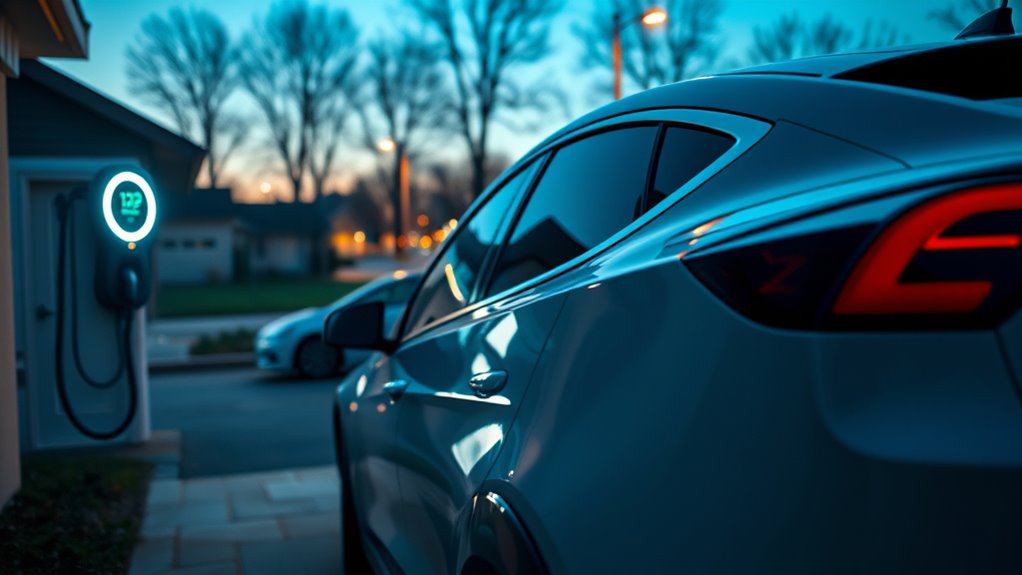
Home charging and public charging solve different problems. Home charging is the steady, low-stress option for daily miles. Public charging gives you access when you are traveling, parked away from home, or need faster charging than your home setup can provide.
The U.S. Department of Energy Alternative Fuels Data Center explains that most EV owners do the majority of their charging at home, while public and workplace chargers supplement residential charging. That pattern works because most cars sit parked for many hours overnight.
Cost usually favors home charging. Your actual price depends on your utility rate, time-of-use plan, EV efficiency, and charging losses. Public charging rates vary by network, location, speed, membership plan, idle fees, and whether the charger bills by kilowatt-hour or time.
Speed can favor public charging. A standard wall outlet is slow, a home Level 2 charger is usually enough for overnight recovery, and DC fast charging can add major road-trip range in a short stop. The right choice depends on whether you need a full battery by morning, a few hours of steady charging, or a quick highway top-up.
| Charging Option | Best For | Typical Speed | Cost Pattern |
| Home Level 1 | Short commutes, plug-in hybrids, backup charging | About 5 miles of range per hour | Usually lowest, based on home electricity rate |
| Home Level 2 | Daily EV use, overnight charging, longer commutes | About 20 to 30 miles of range per hour | Low long-term cost, but installation may add upfront expense |
| Public Level 2 | Work, errands, apartments, long parking sessions | Similar to Level 2 home charging | Usually more than home, but sometimes free or discounted |
| DC Fast Charging | Road trips, quick top-ups, travel corridors | Often 100 to 200+ miles in 30 minutes, depending on vehicle and charger | Usually highest, especially without a membership plan |
When to Charge at Home
Charge at home when you have reliable parking near an outlet or charger and your daily driving fits an overnight routine. This is the easiest setup for most EV owners because you plug in when you park and leave with enough range the next morning.
Home charging is especially useful if you drive a regular commute, park overnight, or have a utility plan with lower off-peak rates. Check your bill or utility website for your exact price per kilowatt-hour. The U.S. Energy Information Administration publishes electricity price data, but your home rate may differ by state, provider, season, and time of day.
Use this simple formula to estimate your charging cost:
Estimated charging cost = kilowatt-hours added × your electricity rate. Add a small buffer because charging is not 100% efficient.
For example, if you add 40 kWh and your home rate is $0.16 per kWh, the energy cost is about $6.40 before charging losses. If your utility offers a cheaper overnight rate, the same session may cost less.
Pro Tip: If your EV or charger has scheduling, set charging to start during off-peak hours. You can often reduce cost without changing how much you drive.
Home charging also helps you avoid detours, station wait times, and payment-app issues. If your daily driving is modest, even Level 1 may be enough. If you drive longer distances or want faster recovery, a Level 2 home charger is usually the better long-term option.
When Public Charging Makes Sense
Public charging makes sense when home charging is unavailable, too slow, or too inconvenient. It is also the right tool for road trips, long days away from home, and apartment living without assigned charging.
Use public Level 2 chargers when your car can sit for a few hours. Good examples include workplace parking, grocery stores, hotels, airport lots, downtown garages, and shopping centers. These chargers are not ideal for quick stops, but they work well when you can charge while doing something else.
Use DC fast chargers when time matters. They are built for travel corridors and quick range recovery. The DOE notes that DC fast charging can add about 100 to 200+ miles of range in 30 minutes, but the actual result depends on your EV, battery size, state of charge, charger output, battery temperature, and whether the battery is preconditioned.
Public charging also gives apartment and condo drivers more freedom. If you cannot install a home charger, a mix of workplace charging, nearby Level 2 stations, and occasional DC fast charging can make EV ownership practical.
Note: Public charger prices and reliability vary. Before relying on a station, check a charging app for live availability, connector type, recent driver comments, pricing, idle fees, and whether the charger is actually working.
How Much EV Charging Costs
How much you pay to charge an EV depends on three main things: the electricity price, how many kilowatt-hours you add, and how efficient your vehicle is. Home charging usually costs less because you pay your residential electricity rate. Public charging often costs more because the price may include network fees, site costs, maintenance, demand charges, parking fees, or faster service.
A useful way to compare costs is to think in cost per mile, not just cost per charging session. If your EV averages 3 miles per kWh and your home rate is $0.16 per kWh, your energy cost is about 5.3 cents per mile before charging losses. If a public charger costs $0.45 per kWh, the same EV costs about 15 cents per mile before losses or fees.
That difference is why home charging is usually the default for daily driving. Still, public charging may be worth the higher price when it saves time, solves a parking problem, or keeps a road trip moving.
To compare your own options, write down:
- Your home electricity rate in cents per kWh.
- Your EV’s average miles per kWh.
- The public station’s listed price per kWh or per minute.
- Any membership discount, parking fee, idle fee, or session fee.
- How much time the public stop saves you.
For a fair comparison, include charging losses and use the same driving distance for both options. A 30-mile daily commute and a 600-mile road trip should not be judged the same way.
How Fast Each Charging Option Works
Charging speed matters, but faster is not always better. For routine use, the best charger is usually the one that gives you enough range before you need the car again.
Level 1 charging uses a standard 120-volt outlet. The DOE estimates about 5 miles of range per hour of charging. This can work for plug-in hybrids, short commutes, or backup use, but it may be too slow if you drive a lot each day.
Level 2 charging uses 240-volt service at home or 208-volt service in many commercial settings. It often adds about 20 to 30 miles of range per hour, and many EV owners install Level 2 equipment because it can recharge a typical EV overnight.
DC fast charging bypasses the vehicle’s onboard AC charger and sends DC power directly to the battery. It is much faster, but it is not necessary for routine overnight charging. It is best used for road trips, time-sensitive top-ups, and days when you drove far more than planned.
Warning: Do not install a Level 2 circuit by guesswork. A home charger may require a dedicated circuit, load calculation, permit, inspection, weather-rated equipment, and a licensed electrician where local code requires it.
Also remember that charging slows as the battery fills. Many EVs charge fastest at a lower state of charge and slow down after roughly 70% to 80%. That is why DC fast charging is often most efficient for short top-ups rather than waiting for a full 100% charge.
Home Charging Setup and Installation Costs
If you install a Level 2 home charger, you usually get the best mix of cost, convenience, and speed for daily EV ownership. The setup can be simple if your panel has capacity and the charger is close to the electrical service. It can cost more if you need panel upgrades, a long wiring run, trenching, outdoor equipment, or a new dedicated circuit.
Before buying a charger, check four things:
- Panel capacity: Your electrician should confirm that your home can safely support the added load.
- Charging location: Shorter wiring runs usually cost less and reduce installation complexity.
- Charger amperage: Bigger is not always better. Match the charger to your EV, circuit, and daily mileage.
- Permits and inspections: Local rules may require both before the charger can be used.
The federal Alternative Fuel Vehicle Refueling Property Credit for eligible consumer installations is now listed by the AFDC as expired as of June 30, 2026. If you are reading this after that date, do not assume the federal credit is still available. Check current state, local, and utility programs before you buy.
Home Charger Benefits
Home charging gives you control. You decide when to charge, how full to charge, and whether to use off-peak electricity. That control is the main reason home charging is usually the most practical option for daily EV use.
A home Level 2 charger can also reduce stress. Instead of planning your week around public stations, you can treat charging like plugging in your phone at night. For many drivers, the car does not need to be full every day. It only needs enough range for the next day’s driving plus a comfortable buffer.
Home charging may also make a property more attractive to future EV owners, especially in areas with high EV adoption. The value depends on the housing market, installation quality, charger location, and whether the setup is permitted and code-compliant.
Installation Cost Factors
Installation cost depends on your home, not just the charger. The largest cost drivers are electrical panel capacity, distance from the panel to the charging location, wall or trench work, permit fees, and whether the charger is plug-in or hardwired.
A basic installation near the panel may be straightforward. A detached garage, full electrical panel, long conduit run, or service upgrade can raise the cost quickly. Ask for an itemized quote so you know whether you are paying for the charger, breaker, wiring, conduit, permit, labor, panel work, or load management equipment.
If your panel does not have enough spare capacity, ask the electrician whether a load management device is possible. In some homes, smart load management can avoid a larger service upgrade while still keeping the charger safe and compliant.
Incentives And Rebates
EV charging incentives change often. The federal 30C credit for eligible residential charging equipment was available only for qualified installations placed in service through June 30, 2026, and the AFDC now lists it as expired. State, city, county, and utility rebates may still be available.
Before you buy equipment, check:
- Your utility’s EV charger rebate page.
- Your state energy office or transportation agency.
- Local permit and inspection requirements.
- Whether the charger must be ENERGY STAR certified.
- Whether the rebate requires pre-approval before installation.
You can also review ENERGY STAR certified EV chargers if a rebate program requires certified equipment.
Best EV Charging Option for Apartment Drivers
If you live in an apartment and do not have a driveway, garage, or assigned charger, public charging may become your main charging option. That does not mean an EV is impossible. It just means you need a charging plan before you buy or lease the car.
Start by checking where the car will sit for long periods. Workplace parking, apartment garages, public parking decks, nearby Level 2 stations, and grocery lots are often more useful than a distant DC fast charger. A slower charger near your normal routine can beat a fast charger across town.
Then check reliability. Look at recent app reviews, number of plugs, connector type, pricing, access hours, and whether the station is often blocked by non-charging vehicles. If one station is your only realistic option, treat that as a risk.
Charging Without a Driveway
Without a driveway, you need dependable access near places you already go. Build your plan around these options:
- Workplace charging: Often the best substitute for home charging because the car sits for hours.
- Nearby overnight Level 2: Useful if the station is safe, available, and priced fairly.
- Grocery or gym chargers: Good for small top-ups during normal errands.
- DC fast chargers: Best for occasional catch-up charging, not always ideal as your only routine source.
- Landlord or HOA approval: Some properties may allow assigned charging, shared chargers, or a future installation request.
If you cannot charge at home or work, choose an EV with enough range to give you flexibility between sessions. Also check the charging curve and fast-charging compatibility, not just the advertised range.
Costs of Public Charging
Public charging usually costs more than home charging, but the price varies widely. A public Level 2 station may be free, discounted, billed by the hour, or billed by kWh. DC fast charging usually costs more because the equipment, site power, and demand charges are higher.
Check the app before you plug in. Look for:
- Price per kWh or per minute.
- Session fees.
- Parking fees.
- Idle fees after charging ends.
- Membership discounts.
- Peak-hour price changes.
If you rely on public charging every week, compare networks instead of judging by one station. A membership plan may lower your per-kWh cost if you fast charge often, but it may not pay off if you only use public charging a few times a month.
Finding Nearby Charging Access
Use more than one tool to find nearby charging access. The Alternative Fueling Station Locator can help you search by fuel type and location, while charging network apps can show live stall status, pricing, and user reports.
Map these charger types before you depend on public charging:
- Chargers within walking distance of home.
- Chargers near work or school.
- Chargers along your weekly errands.
- DC fast chargers near highway routes.
- Backup chargers in case your first choice is full or down.
Do not rely on a single plug. A station with several working stalls is usually safer than one charger in a small lot, especially during weekends, holidays, bad weather, or peak commute hours.
How Your Driving Habits Affect Charging
Your driving habits decide whether home charging, public charging, or a mix of both works best. A driver who travels 25 miles per day has very different charging needs than someone who drives 90 miles daily or takes frequent road trips.
Match charging to your routine first. A charger that fits your parking schedule will feel easier than a faster charger that forces extra stops.
If your daily driving is short, Level 1 may cover much of your use. If you drive moderate daily miles, Level 2 home charging is usually the most comfortable setup. If you travel long distances, public DC fast charging becomes part of your route planning.
Battery size also matters. A large battery gives you more flexibility between sessions, but it takes more energy to refill. A smaller battery may cost less to charge from empty, but you may need to plug in more often.
For routine battery care, check your owner’s manual. Many EVs let you set a daily charge limit, often around 80%, and save 100% charging for longer trips. This can reduce time spent at fast chargers because charging slows near the top of the battery.
What to Check Before Installing a Home Charger
Before you install a home EV charger, check your electrical panel, parking setup, charger location, and local rules. A Level 2 charger is convenient, but it needs to be installed safely.
- Electrical panel: Confirm spare capacity and breaker space.
- Dedicated circuit: Many Level 2 chargers need a dedicated 240-volt circuit.
- Charger output: Match amperage to your circuit, vehicle, and daily mileage.
- Indoor or outdoor rating: Use equipment rated for the location.
- Cord length: Make sure the cable reaches the charge port without stretching across walkways.
- Permits: Ask whether your city, county, or utility requires a permit or inspection.
- Rebates: Check rebate rules before installation because some programs require pre-approval.
Also check your connector needs. Most non-Tesla EVs in the U.S. have used J1772 for Level 1 and Level 2 charging, while many DC fast chargers use CCS, CHAdeMO, or J3400/NACS. The market is changing, so confirm your vehicle’s port, adapter options, and the connectors available near you before choosing a charger or relying on a public network.
Choose the Best EV Charging Setup
The best EV charging setup is the one that covers your normal driving with the fewest headaches. For many homeowners, that means Level 2 charging at home and public fast charging only on trips. For apartment drivers, it may mean workplace charging plus a reliable public backup. For low-mileage drivers, Level 1 charging may be enough.
Use this decision rule:
- Choose home Level 1 if you drive short distances and can plug in for many hours.
- Choose home Level 2 if you drive daily, want overnight recovery, and have safe electrical capacity.
- Choose public Level 2 if your car sits for hours away from home.
- Choose DC fast charging for road trips, urgent range, or occasional catch-up charging.
Home Charging Savings
Home charging savings come from paying your own electricity rate instead of a public network price. The exact savings depend on your rate, EV efficiency, charging losses, public charger price, and how many miles you drive.
To estimate savings, compare the same energy amount at home and in public. If 40 kWh costs $6.40 at home and $18 at a public fast charger, the home session saves $11.60. If you repeat that often, the savings can be meaningful. If you only use public charging on trips, the impact is smaller.
Off-peak rates can improve the math. If your utility offers cheaper overnight electricity, schedule charging during that window. Some smart chargers and EV apps can do this automatically.
Public Charging Convenience
Public charging is valuable because it expands where an EV can go. It helps when you travel, park at work, live in a multifamily building, or need range before the next home charging session.
The tradeoff is that public charging requires more planning. You may need an app, account, payment method, adapter, or backup station. You may also face broken chargers, occupied stalls, idle fees, or slower-than-expected speeds.
For best results, plan public charging around natural stops. A Level 2 charger works well while you work, eat, shop, or sleep at a hotel. A DC fast charger works best when you stop for a restroom break, meal, or coffee during a long drive.
Charger Types Compared
Charger types are not just about speed. They also affect cost, installation, connector needs, and daily convenience.
- Level 1 Charger: Uses a standard 120-volt outlet. It is slow but simple and may be enough for short daily driving.
- Level 2 Charger: Uses 240 volts at home or 208 volts in many commercial settings. It is the best fit for most daily EV charging.
- Portable Level 2 Charger: Offers flexibility, but you still need a safe, compatible outlet and circuit.
- Public Level 2 Charger: Useful for long parking sessions at work, stores, garages, hotels, and apartment communities.
- DC Fast Charger: The fastest practical option for road trips and quick top-ups, but usually more expensive and more dependent on vehicle limits.
If you are buying your first EV, do not judge charging only by maximum DC fast-charging speed. Also check where you will charge every week. Daily convenience matters more than peak charging speed for most owners.
Frequently Asked Questions
Is it better to charge an EV at home or at a public charging station?
It is usually better to charge at home for daily driving because it is cheaper, predictable, and convenient overnight. Public charging is better when you are traveling, do not have home access, need a fast top-up, or can charge while parked at work, a hotel, or a shopping center.
What is the 80/20 rule for EV charging?
The 80/20 rule is a practical habit, not a law. It usually means doing most routine charging at home or another slow Level 2 charger and using public fast charging only when needed. Some drivers also use “80%” as a daily battery limit and save 100% for road trips, but you should follow your owner’s manual.
What charger does the Hyundai Kona use?
Many Hyundai Kona Electric models use a J1772 connector for Level 1 and Level 2 AC charging and a CCS connector for DC fast charging in the U.S. Always confirm the connector on your specific model year and market, because charging hardware and adapter support can vary.
What drains an EV battery the most?
High speed, hard acceleration, cold weather, cabin heating, heavy loads, towing, underinflated tires, and steep terrain can drain an EV battery faster. You can improve range by driving smoothly, using regenerative braking, preconditioning while plugged in, and keeping tires properly inflated.
Can I own an EV without home charging?
Yes, but you need a reliable charging routine. Check workplace charging, nearby Level 2 stations, grocery or gym chargers, and backup DC fast chargers before you buy. Apartment drivers should also ask the property manager about current or planned EV charging access.
Is DC fast charging bad for an EV battery?
Occasional DC fast charging is normal and useful, especially on road trips. For routine daily charging, Level 2 is usually gentler, cheaper, and more convenient. Follow your owner’s manual for battery-care settings, charge limits, and preconditioning guidance.
Conclusion
The best EV charging setup depends on your life, not just charger speed. If you park at home and drive normal daily miles, home charging is usually the cheapest and easiest choice. If you live in an apartment, travel often, or need quick range, public charging fills the gap.
Think of home charging as your daily base and public charging as your flexibility tool. Use Level 2 when the car can sit, use DC fast charging when time matters, and always check rates, connector type, availability, and local electrical rules before committing to a setup.
Sources
- U.S. Department of Energy Alternative Fuels Data Center: Electric Vehicle Charging Stations — charging levels, range added per hour, public charging role, connector terminology, and DC fast charging guidance.
- U.S. Department of Energy Alternative Fuels Data Center: Alternative Fuel Infrastructure Tax Credit — federal 30C credit eligibility window and expiration date.
- U.S. Energy Information Administration Electric Power Monthly — electricity price data by sector and state.
- ENERGY STAR Certified EV Chargers Product Finder — certified EV charging equipment reference for rebate and efficiency checks.
- Alternative Fueling Station Locator — current public EV charging station search by location and connector type.