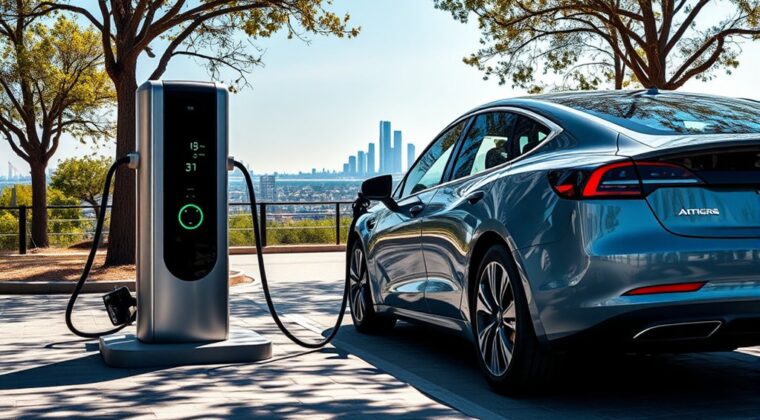
If your DC fast charger is throttling your charging speed, the charger is not always the only thing to blame. Your EV may be protecting the battery, the station may be sharing power, or the battery may be too cold, too hot, or already too full to accept peak power. The fastest fix is to check your state of charge, battery temperature, vehicle charging limit, and the charger’s real-time status before assuming something is broken.
Quick Answer
A DC fast charger throttles when your EV or the charging station lowers power for safety, battery health, heat control, or power sharing. The most common causes are high battery state of charge, cold or hot battery temperature, your EV’s maximum DC charging limit, shared charger cabinets, station faults, and heavy in-car energy use.
Key Takeaways
- Peak charging speed is usually brief. Average kW over the whole session matters more than the highest number you see for a few minutes.
- Most EVs charge fastest at a low-to-mid state of charge, then taper as the battery fills.
- Cold batteries accept less power until they warm up, while hot batteries may trigger thermal throttling.
- A 350 kW charger will not deliver 350 kW if your EV can only accept 125 kW, 150 kW, or 200 kW.
- Shared power cabinets, busy sites, overheated cables, broken modules, or connector issues can make the station the bottleneck.
At a Glance
| Time Required | 2 to 10 minutes to diagnose a slow DC fast charging session |
| Difficulty | Easy; most checks use your vehicle screen, charging app, and charger display |
| Tools Needed | Vehicle display, charging network app, route planner, and your EV owner’s manual |
| Cost | Usually $0, unless you switch to a different paid charging station |
DC Fast Charging Explained
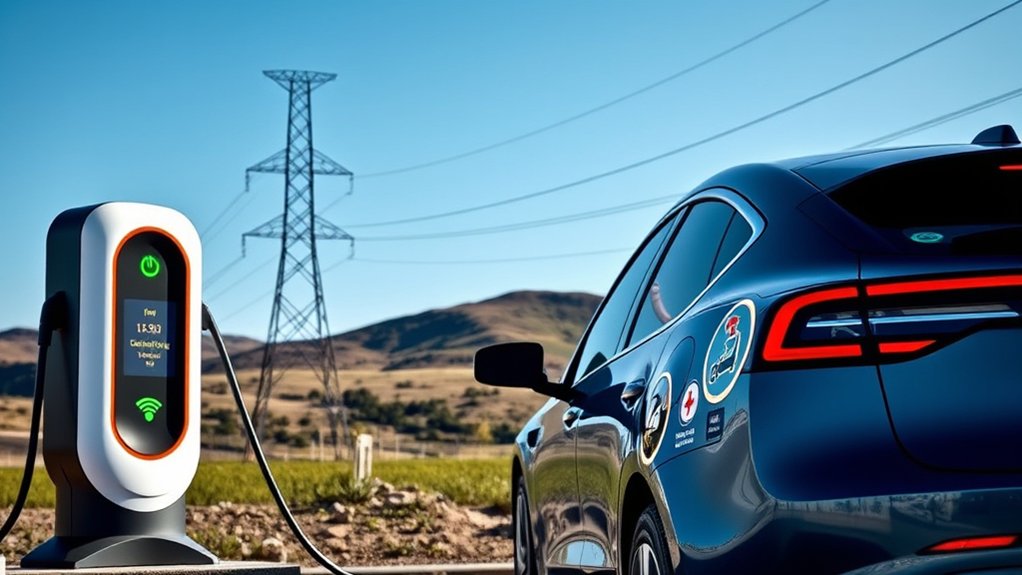
DC fast charging sends direct current from the charging station to your EV’s battery pack. That lets the station bypass the slower onboard AC charger used for Level 1 and Level 2 charging. The result is much faster charging, especially during road trips and short charging stops.
Many public DC fast chargers are rated from about 50 kW to 350 kW, and some newer high-power systems are designed to go higher. Federal charging standards for funded highway stations also helped set expectations for fast public charging by requiring at least four network-connected DC fast charging ports with strong power and uptime requirements in many funded sites. You can review those standards in the National Electric Vehicle Infrastructure Standards and Requirements.
The number on the charger is the station’s maximum output, not a promise that your EV will receive that power for the whole session.
Your real charging speed depends on four things working together: the charger’s available power, your EV’s maximum DC charging rate, battery temperature, and battery state of charge. That is why a charger labeled 150 kW or 350 kW may deliver a much lower number on your dashboard.
Note: Peak kW and average kW are not the same. A car may briefly hit a high peak, then taper. For trip planning, the average charging speed from arrival to departure is usually more useful.
Common Reasons for Slow Charging and How to Fix It
If your charging speed is lower than expected, start with the most common causes. In many cases, slow DC fast charging is normal behavior rather than a charger failure.
- High state of charge: Many EVs slow charging as the battery passes about 70% to 80% to reduce heat and protect battery health.
- Cold battery: A cold lithium-ion battery has higher internal resistance, so the car may limit charging until the pack warms up.
- Hot battery: After hard driving, repeated fast charging, or very hot weather, the battery management system may lower power to control temperature.
- Vehicle charging limit: Your EV can only accept its own maximum DC rate, even on a more powerful charger.
- Shared charger power: Some stations split power between stalls or dispensers, especially when multiple EVs are plugged in.
- Station derating: A charger can reduce output because of overheated cables, failed power modules, site load management, or grid limits.
- Connector or adapter issue: Poor communication, a damaged connector, or an incompatible adapter can cause a failed or reduced-power session.
- In-car energy use: Cabin heat, air conditioning, battery conditioning, lights, and entertainment systems can use some of the incoming power.
To fix the issue, compare your EV’s expected charging curve with the charger’s rated power and your current conditions. If you are above 80%, a lower rate is usually normal. If you are at a low state of charge and the battery is warm but power is still unusually low, the charger or stall may be the problem.
Pro Tip: If two open stalls are available, choose one that is not paired with another active charger when the station layout suggests shared cabinets. This can improve your chance of getting the full power available to your EV.
How Battery State of Charge Affects Charging Speed
Your battery’s state of charge, often shown as SoC, is one of the biggest reasons DC fast charging slows down. Most EVs accept the most power when the battery is neither very empty nor nearly full. A common fast-charging sweet spot is roughly 10% to 60% or 70%, but the exact range depends on the vehicle.
As the battery fills, the car tapers charging power. This taper helps control heat and reduce stress on the cells. Many light-duty EVs slow sharply after about 80%, although some begin tapering earlier and others hold higher power longer. Battery size, pack voltage, chemistry, cooling system, and software all affect the charging curve.
This is why charging from 10% to 80% can be much faster than charging from 80% to 100%. The last 20% may take as long as the first 60% in some vehicles, especially when the battery is hot, cold, or already balancing cells near the top of the pack.
Warning: Do not repeatedly DC fast charge to 100% unless you need the range for a trip or your manufacturer recommends it for your battery type. For daily use, follow your EV’s charge-limit guidance.
The Impact of Temperature on Charging Rates
Temperature can change charging speed as much as the charger itself. Lithium-ion batteries accept power best within a moderate temperature range. When the pack is too cold, chemical reactions slow down and internal resistance rises. When the pack is too hot, the battery management system may reduce power to prevent overheating.
- Cold weather: Charging may start slowly until the battery warms. This is common after the car sits outside in freezing weather.
- Hot weather: Charging may begin normally, then drop as the pack, cable, or charger heats up.
- Battery preconditioning: Many EVs can warm or cool the battery before a fast-charging stop, especially when you set a DC fast charger as the destination in the navigation system.
- Repeated fast charging: Multiple back-to-back DC fast charging stops can raise pack temperature and cause a later session to run slower.
- Station temperature limits: A charger can also derate if its cable, connector, cabinet, or power electronics get too hot.
Battery thermal-management research shows why fast charging must balance speed, heat, and battery health, especially in extreme ambient temperatures. If your EV has battery preconditioning, use it before a planned DC fast charging stop rather than waiting until you arrive.
Tips for Optimizing Your EV Charging Experience
To improve your DC fast charging experience, focus on arriving with the right battery condition and choosing the right charger for your vehicle.
- Arrive low, but not too low: Many EVs charge fastest when arriving around 10% to 30% SoC.
- Leave before the slowest taper: For road trips, it is often faster to stop charging around 70% to 80% and drive to the next charger.
- Use battery preconditioning: Set the charger as your navigation destination if your EV supports automatic preconditioning.
- Match charger power to your EV: If your EV peaks at 125 kW, a 150 kW charger may be just as useful as a 350 kW charger.
- Check charger status first: Use the charging network app to look for recent faults, power limits, pricing, and stall availability.
- Avoid crowded shared sites when possible: Fewer active vehicles can mean more available power.
- Reduce cabin loads when practical: Heating and air conditioning can draw power, especially in extreme weather.
- Watch the trend: If charging starts low and rises, the battery may be warming. If it starts high and suddenly drops, the battery or charger may be derating.
Public charging networks are growing quickly, but reliability still varies by site. The IEA’s Global EV Outlook charging analysis tracks the broader expansion of public charging, while field studies of public DC fast chargers show why checking live station status still matters before you rely on one stop.
How to Diagnose a Throttled DC Fast Charging Session
Use this quick process when the charger feels much slower than expected.
- Check your SoC: If you are above about 80%, slow charging is usually expected.
- Check the battery temperature clue: If it is very cold or hot outside, or you arrived after hard driving, temperature may be limiting power.
- Compare charger rating with your EV’s max DC rate: Your vehicle may be the limit, not the charger.
- Look at other stalls: If another EV is plugged into a paired stall, power may be shared.
- Read the charger screen: Some stations show reduced power, unavailable modules, or payment/communication errors.
- Check the charging app: Look for recent user reports, live power limits, or maintenance warnings.
- Unplug and retry once: A fresh handshake can fix a communication issue. Do not keep forcing repeated failed starts.
- Move stalls if power stays unusually low: If your EV is warm, below 60%, and still charging far under expected power, try another dispenser or site.
A public DC fast charger reliability study found that charger functionality can vary in real-world conditions, so a slow session is not always caused by your vehicle.
When the Charger Is the Problem, Not Your EV
The charger may be the bottleneck if your EV normally charges faster at the same SoC and temperature. This can happen when a station has a limited grid connection, an overheated cable, a failing power module, poor connector communication, or software that limits output during high demand.
Signs the charger may be the issue include very low power at a low SoC, a sudden drop shortly after plugging in, charger-screen warnings, multiple failed sessions from different vehicles, or several nearby drivers reporting the same problem in the app.
Connector transition can also matter. In North America, many EVs and charging networks are moving between CCS and the SAE J3400/NACS connector ecosystem. Adapters can work well when approved by the automaker, but the vehicle, adapter, and charger must communicate correctly for a reliable high-power session.
Frequently Asked Questions
Why is my EV charging slowly on a 350 kW fast charger?
A 350 kW charger only shows the station’s maximum possible output. Your actual speed depends on your EV’s maximum DC charging rate, state of charge, battery temperature, charger sharing, cable limits, and station health. If your EV can only accept 150 kW, it will not receive 350 kW.
Why does DC fast charging slow down after 80%?
Charging slows near the top of the battery because the EV tapers power to manage heat, voltage, and cell balance. This protects the battery and is normal. For road trips, charging to about 70% or 80% and then leaving is often faster than waiting for 100%.
Does cold weather make DC fast charging slower?
Yes. A cold battery usually accepts less power until it warms up. If your EV supports battery preconditioning, set the DC fast charger as your navigation destination before you arrive. That can help the car prepare the battery for faster charging.
Is it bad to DC fast charge to 100%?
It is not automatically bad, but it is usually slower and can add more heat and stress than stopping earlier. Use 100% when you need the range for a trip or when your EV maker recommends it for your battery type. For daily charging, follow the charge limit in your owner’s manual.
Can using heat or air conditioning slow DC fast charging?
Yes, but usually by a smaller amount than SoC or battery temperature. Cabin heat, air conditioning, seat heaters, lights, and battery conditioning use some incoming energy. In extreme weather, climate control can make the dashboard charging number look lower.
Should I move to another charger if my charging speed is low?
Move only after checking the basics. If your battery is below about 60%, already warm, and your EV usually charges much faster, try another stall. If you are above 80% or the battery is very cold, moving may not help because the vehicle is likely limiting power.
Conclusion
DC fast charger throttling is usually caused by a mix of battery protection, temperature control, vehicle limits, charger sharing, and station conditions. If your speed drops near 80%, that is usually normal tapering. If your speed is low at a low state of charge with a warm battery, check the charger rating, paired-stall sharing, app status, and connector condition. The best charging sessions usually happen when you arrive with a lower state of charge, precondition the battery, choose a reliable station, and leave before the slowest part of the charging curve.
Sources
- Federal Register: National Electric Vehicle Infrastructure Standards and Requirements — public DC fast charging standards, power expectations, and uptime framework.
- International Energy Agency: Global EV Outlook 2025, Electric Vehicle Charging — public charging infrastructure growth and charging network context.
- National Renewable Energy Laboratory: EV Charging Infrastructure Reliability and Resiliency — reliability and uptime context for public EV charging.
- Rempel et al.: Reliability of Open Public Electric Vehicle Direct Current Fast Chargers — field study on public DC fast charger functionality.
- Lu et al.: Integrated Optimal Fast Charging and Active Thermal Management of Lithium-Ion Batteries — battery temperature, fast charging, and thermal-management research.