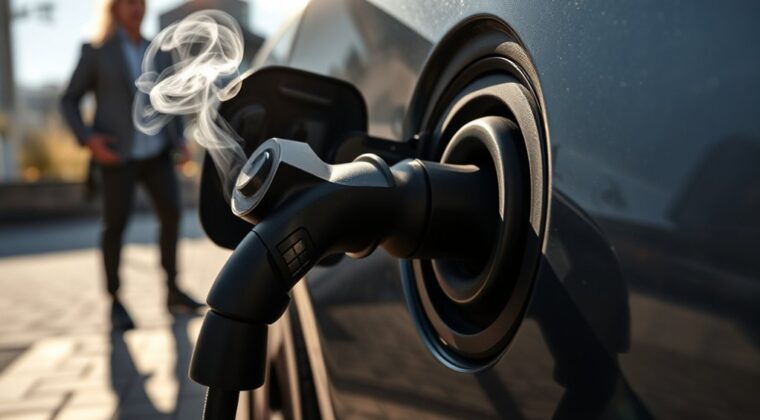
If your EV charger smells like something burning, stop the charging session and treat it as a possible electrical safety issue. A faint new-plastic smell from brand-new parts can fade after a few uses, but a sharp electrical odor, smoky smell, melting-plastic smell, hot connector, tripped breaker, or visible damage means you should stop using the charger until the cause is found.
Quick Answer
An EV charger that smells burnt may have an overheating connector, damaged cable, worn outlet, loose wiring, overloaded circuit, incompatible adapter, or vehicle charge-port problem. Stop charging, inspect only what you can see safely, and call a qualified electrician or your vehicle dealer if the smell, heat, breaker trips, or damage continues.
Key Takeaways
- Stop charging right away if you smell burning, see smoke, notice melting, or feel unusual heat at the handle, plug, outlet, or cable.
- A repeated burning smell is not normal. It often points to heat from resistance, poor contact, damaged insulation, or a circuit that is not fit for the charging load.
- Use safety-certified EV charging equipment and have Level 2 wiring, outlets, and breakers checked by a qualified electrician.
- If the smell follows the vehicle to different chargers, the issue may be in the vehicle charge port or onboard charging system, so contact the dealer or service center.
At a Glance
| Time Required | 5–10 minutes for a safe visual check; professional inspection may take longer. |
| Difficulty | Easy for basic observation; electrical testing should be handled by a qualified professional. |
| Tools Needed | Your phone camera, vehicle app, charger app, owner’s manual, and access to the breaker panel if it is safe to reach. |
| Cost | Free for basic checks; electrician or dealer diagnosis varies by location, warranty, and repair needed. |
Warning: If you see smoke, sparks, flames, melted plastic, arcing, or a connector that is too hot to touch, stop charging immediately. Do not keep testing the charger. Move away from the equipment, shut off power at the breaker only if it is safe, and call emergency services if there is fire, spreading heat, or smoke.
Common Causes of Burning Smells From EV Chargers
A burning smell from an EV charger usually comes from heat where heat should not be building up. With home AC charging, the wall unit or portable cord is technically electric vehicle supply equipment, or EVSE, because it supplies AC power to the vehicle. The vehicle’s onboard charger then manages the battery charging process.
The most common causes include loose connections, worn contacts, damaged insulation, a hot plug or outlet, an overloaded circuit, an incompatible adapter, poor installation, or a fault in the vehicle charge port. The U.S. Department of Energy’s Alternative Fuels Data Center notes that Level 2 charging equipment must be matched to the home’s electrical capacity and installed according to local codes and applicable electrical requirements.
Here are the main sources to check:
- Overheating connector: A loose or worn charging handle can create resistance. Resistance creates heat, and heat can lead to a burnt-plastic or electrical smell.
- Damaged cable insulation: Cuts, crushed areas, exposed conductors, or hardened cable jackets can allow heat and electrical faults to develop.
- Worn wall outlet: Plug-in Level 2 chargers often use a high-current receptacle. If the outlet contacts are loose, discolored, cracked, or buzzing, stop using it.
- Improper circuit sizing: EV charging is a long-duration load. A breaker, wire, outlet, or charger amperage setting that does not match the installation can overheat.
- Portable Level 1 cord on a weak outlet: A standard 120-volt outlet may not be safe if it is old, loose, shared with other loads, or not on a suitable circuit.
- Adapters or extension cords: Unapproved adapters, undersized extension cords, and makeshift charging setups can overheat quickly.
- Vehicle-side issue: Dirt, corrosion, bent pins, damaged charge-port plastic, or an onboard charging fault can make the smell seem like it is coming from the charger.
- New-part odor: A mild new-material smell can occur with new cables or plastic parts, but it should fade quickly and should not come with heat, smoke, melting, or breaker trips.
What to Do Immediately If Your EV Charger Smells Burnt
Do not keep charging to “see if it goes away.” A burning smell is a warning sign until proven otherwise.
- Stop the charging session. Use the vehicle app, charger app, vehicle screen, or charger stop button if available.
- Unplug only if it is safe. If the handle, plug, or outlet is extremely hot, smoking, sparking, or melting, do not grab it. Step back and shut off power at the breaker if you can do that safely.
- Let the equipment cool. Do not restart charging while the cable, connector, outlet, or wall unit is hot.
- Look for visible damage. Check for discoloration, melted plastic, a warped plug, dark marks, frayed cable, cracked housing, or a loose wall receptacle.
- Document the issue. Take photos, note the charger model, amperage setting, outlet type, breaker size if known, error codes, and when the smell started.
- Do not reset and retry repeatedly. A tripping breaker is a protective warning, not an inconvenience to bypass.
Note: If you use a public charger and smell burning, stop the session, move away from the station, report the charger through the network app or posted support number, and use a different station only after checking your vehicle charge port for heat or visible damage.
How to Diagnose the Source of the Odor
Once charging has stopped and everything is cool, try to narrow down where the smell came from. Keep the inspection visual and practical. Do not open the wall charger, outlet, breaker panel, or vehicle charge-port assembly unless you are qualified to do that work.
Check the Charging Handle and Vehicle Port
Start where the charger plugs into the EV. Look for melted plastic, darkened pins, bent contacts, corrosion, debris, moisture, or a connector that no longer seats firmly. If the charging handle was hot enough to be uncomfortable, that is not normal.
If the vehicle charge port looks damaged or smells burnt even when no charger is connected, contact the vehicle dealer or service center before charging again.
Check the Cable and Charger Body
Run your eyes along the cable. Look for crushed sections, cuts, swollen areas, hard kinks, exposed wiring, or a cable jacket that looks glossy, melted, or misshapen. Check the wall unit or portable control box for discoloration, buzzing, clicking, heat, or error lights.
Check the Wall Plug, Outlet, and Breaker
For a plug-in charger, inspect the outlet after power is off and the plug is cool. A loose plug fit, brown marks, black marks, cracked faceplate, buzzing outlet, or burnt smell from the receptacle points to an electrical issue that needs a qualified electrician.
If the circuit breaker trips during charging, do not keep resetting it. The circuit may be overloaded, the charger may be drawing too much current, or the breaker, outlet, wiring, or EVSE may have a fault.
Test Only After a Basic Safety Check
If there is no visible damage, no heat, no smoke, and no breaker trip, you can use a controlled comparison to identify the source. Try a different known-good charger or public Level 2 station and monitor closely for smell, heat, or error messages. If the same smell appears with multiple chargers, the vehicle may need inspection.
Pro Tip: Lowering the charger’s amperage setting can reduce heat temporarily, but it is not a repair. If a connector, outlet, or breaker still gets hot at a lower setting, stop using that setup and have it inspected.
Key Signs Your Charger Is Overheating
Overheating can show up before anything fails completely. Watch for these warning signs:
- Burning, fishy, smoky, or melting-plastic smell during or after charging.
- Charging handle feels unusually hot, especially near the pins or latch area.
- Wall plug or outlet is warm, discolored, loose, buzzing, or cracked.
- Circuit breaker trips during charging or soon after charging begins.
- Visible melting, warping, dark marks, or corrosion on the connector, inlet, plug, cable, or wall unit.
- Charging speed drops unexpectedly because the charger or vehicle is limiting current due to temperature.
- Error messages appear in the vehicle app, charger app, or dashboard.
A slightly warm cable can be normal during high-current charging. A hot connector, hot outlet, burnt smell, or visible damage is not normal.
Smart Safety Tips for Charging Your EV
Safe EV charging starts with the right equipment, correct installation, and regular inspection. The ENERGY STAR EV charger guidance notes that not all EV chargers for sale are safety certified, and ENERGY STAR certified chargers are tested by a nationally recognized testing laboratory.
Regular Equipment Checks
Before charging, make a quick habit of checking the cable, handle, wall unit, and vehicle port. Look for loose connections, damaged plastic, corrosion, water intrusion, dirt, or a cable that has been driven over or pinched.
For home chargers, check that the wall unit is firmly mounted and that the cable is not strained when it reaches the vehicle. Pulling sideways on the charging handle can wear the connector and port over time.
Monitor Charging Environment
Keep the charging area dry, clear, and ventilated. Outdoor charging can be safe when the equipment is outdoor-rated, but the charger should still be protected from standing water, heavy physical damage, and direct strain on the cord.
Do not cover the charger or cable with a blanket, mat, bag, or other material while it is operating. Trapped heat can make a small issue worse.
Use Proper Charging Equipment
Use the charger, adapter, and connector type approved by your vehicle and charger manufacturer. Avoid cheap adapters, unlisted equipment, and extension cords unless the manufacturer specifically allows them for EV charging.
For Level 2 charging, have a qualified electrician verify that the breaker, wire size, outlet or hardwired connection, grounding, GFCI requirements, and charger amperage setting match. DOE guidance notes that charging equipment installations must comply with local and state codes, and permits may be required.
Community Insights: Shared Experiences and Solutions
EV owners commonly describe three different smell patterns: a brief new-plastic smell from new equipment, a hot-electrical smell from a plug or connector, or a recurring burnt smell that appears only with one charger or one vehicle. The pattern matters because it helps you decide what to inspect next.
Common Smell Sources
- New equipment smell: Mild, plastic-like, short-lived, and not paired with heat, smoke, or error codes.
- Connector heat: Smell is strongest near the charging handle or vehicle port. This may point to worn contacts, debris, poor seating, or charge-port damage.
- Outlet or wall-unit heat: Smell is strongest near the receptacle, plug, breaker panel, or wall charger. This calls for an electrician.
- Vehicle-side issue: Smell follows the vehicle across different chargers. This calls for dealer or EV service inspection.
User Troubleshooting Tips
Use a simple comparison method. If one home charger smells burnt but a public Level 2 station does not, the home charger, outlet, or circuit is the likely suspect. If every charger creates the same smell from the vehicle port, stop charging and contact the dealer.
Check the charger app and vehicle app for temperature warnings, ground-fault warnings, interrupted sessions, reduced-current messages, or repeated charge failures. These details help the electrician or dealer diagnose the issue faster.
Safety Precautions Recommended
Do not ignore repeated odor, heat, or breaker trips. Do not sand, bend, scrape, or “adjust” connector pins yourself. Do not tape damaged insulation. Do not keep using a plug-in charger in an outlet that feels loose or smells burnt.
How to Ensure Your Charger Is Safe
The safest charging setup uses properly rated equipment, a suitable circuit, and a clean, undamaged connection between the EVSE and the vehicle.
For home charging, choose safety-certified equipment from a reputable manufacturer. If you are installing Level 2 equipment, ask a qualified electrician to confirm available panel capacity and code requirements. The Electric Vehicle Infrastructure Training Program provides training and certification for electricians who install EV supply equipment.
If your charger is plug-in rather than hardwired, the outlet becomes a key safety point. High-current plug-in outlets can wear over time, especially if the charger is plugged and unplugged often. If the plug no longer fits tightly, or if you see discoloration, stop using it until it is inspected.
Also check for recalls, service bulletins, or support notices from the charger manufacturer and vehicle manufacturer. Recent charger safety investigations show that residential charging equipment problems can involve real fire and malfunction reports, so it is worth checking your model if you notice unusual symptoms.
The Importance of Regular Charger Maintenance
Regular maintenance helps catch worn contacts, cable damage, loose mounting, and heat marks before they become serious. You do not need to disassemble the charger. A visual and smell check before plugging in can catch many early warning signs.
Routine Inspections Needed
Once a month, inspect the charger handle, cable, wall unit, plug, outlet, and vehicle charge port. Look for:
- Loose fit between plug and outlet
- Loose fit between charging handle and vehicle port
- Brown or black marks
- Cracked or warped plastic
- Exposed copper or damaged insulation
- Moisture inside caps or ports
- Unusual sounds from the wall unit or outlet
- Recurring app errors or interrupted sessions
If you use the charger outdoors, inspect more often after storms, extreme heat, freezing weather, or heavy dust exposure.
Clean Connections Regularly
Keep the charging handle and vehicle port clean and dry. Use the protective caps when the connector is not in use. If you see loose dust on the outside of the connector, wipe the exterior with a dry soft cloth.
Do not spray cleaners into the charging handle or vehicle port. Do not insert metal tools, brushes, or abrasive pads into the contacts. If corrosion, moisture, or debris is inside the connector or port, stop using it and ask a qualified technician to inspect it.
Is Off-Gassing From New Parts Causing the Smell?
Sometimes a new charger, cable, or vehicle port area may give off a light new-plastic odor during early use. This can happen as new materials warm slightly. That smell should be mild, temporary, and should fade after the first few charging sessions.
Do not assume off-gassing is the cause if any warning sign appears. Stop charging and investigate if the odor is strong, sharp, smoky, fishy, electrical, or melting-plastic-like. Also stop if the smell comes with a hot connector, hot wall plug, smoke, discoloration, tripped breaker, app warning, or visible damage.
A good rule is simple: a faint new-material smell with no heat or damage may be watched closely; a burning smell with heat, damage, smoke, or repeat behavior needs professional attention.
Next Steps: What to Do If the Smell Persists
If the burning smell comes back, stop using that charging setup. Continuing to charge can damage the EVSE, outlet, wiring, vehicle charge port, or onboard charging components.
| What You Notice | Who to Contact |
| Hot outlet, loose receptacle, breaker trips, buzzing, or smell near the wall | Qualified electrician |
| Damaged charger body, hot charging handle, cable damage, or charger error lights | Charger manufacturer support or electrician, depending on installation type |
| Burnt smell from vehicle port with multiple chargers | Vehicle dealer or EV service center |
| Smoke, flame, arcing, or spreading heat | Emergency services first, then electrician/dealer after the area is safe |
Before you call, gather useful details: charger brand and model, vehicle model, charging level, amperage setting, outlet type, breaker size if known, photos of any damage, app error messages, and whether the smell happened once or every time.
When to Contact a Professional for Help
Contact a professional if the smell persists, returns, or appears with any heat or visible damage. Electrical charging equipment carries enough current that small connection problems can become serious.
Call a qualified electrician when the issue seems related to the wall outlet, breaker, wiring, panel capacity, hardwired charger, plug-in receptacle, GFCI protection, or installation quality.
Call the vehicle dealer or EV service center when the smell seems to come from the vehicle charge port, the car shows charging-system warnings, the port looks melted or discolored, or the same smell happens at multiple chargers.
Call the charger manufacturer when the wall unit or portable EVSE shows error lights, heat, cable damage, or a known support notice for your model.
Frequently Asked Questions
Why does my EV charger smell like something is burning?
Your EV charger may smell burnt because a connector, outlet, cable, plug, breaker, or internal charger component is overheating. Heat often comes from loose contact, damaged insulation, worn outlet contacts, improper installation, an overloaded circuit, or a vehicle charge-port fault. Stop charging and inspect for heat or damage before using it again.
How do I fix an overheated EV charger?
First, stop charging and let the equipment cool. Check for visible damage, loose plugs, hot connectors, or error messages. Do not keep resetting a tripped breaker. If the heat comes from the outlet, wiring, plug, breaker, or wall unit, contact a qualified electrician. If it follows the vehicle to multiple chargers, contact the dealer.
Why does my EV smell like burning plastic while charging?
A burning-plastic smell can come from hot insulation, a melting connector, a worn receptacle, debris in the charge port, or overheated plastic near the charging handle. A faint new-plastic smell from new equipment may fade, but any strong, repeated, smoky, or heat-related odor should be treated as a fault.
Can an overheated EV charger cause a fire?
Yes. Overheated connectors, damaged wiring, loose outlet contacts, overloaded circuits, and melting insulation can become fire hazards. The U.S. Fire Administration reported 23,700 residential building fires from electrical malfunction in 2023, so repeated burning smells, heat, smoke, or breaker trips should never be ignored.
Is it safe to keep charging if the smell is faint?
Only a very mild new-material smell with no heat, smoke, melting, discoloration, or breaker trips may be watched closely. If the smell is sharp, smoky, electrical, repeated, or coming from a hot connector or outlet, stop charging and have the charger, circuit, or vehicle inspected.
Should I call an electrician or my EV dealer?
Call an electrician if the smell is strongest near the outlet, breaker, wall unit, plug, or home wiring. Call the dealer or EV service center if the smell comes from the vehicle charge port, the car shows charging errors, or the odor happens with multiple chargers.
Conclusion
A burning smell from an EV charger is a safety warning, not a normal part of charging. Stop the session, check for heat or damage, and do not restart charging if the smell returns. Many causes are simple to identify, such as a hot plug, loose outlet, damaged cable, or dirty charge port, but the repair should match the source. Use safety-certified charging equipment, keep connections clean, and have wiring or Level 2 installations checked by a qualified electrician. Acting early protects your charger, your EV, and your home.
Sources
- U.S. Department of Energy Alternative Fuels Data Center: Charging Electric Vehicles at Home — backs home charging levels, outdoor-rated equipment, code compliance, permits, NEC Article 625, and electrician guidance.
- ENERGY STAR: Electric Vehicle Chargers — backs Level 1 and Level 2 charging rates, 240-volt Level 2 guidance, safety certification, and nationally recognized testing laboratory information.
- U.S. Fire Administration: Residential Building Fire Causes — backs current electrical malfunction residential fire estimates.
- Electric Vehicle Infrastructure Training Program: Find a Contractor — backs EVSE electrician training and certification context.