
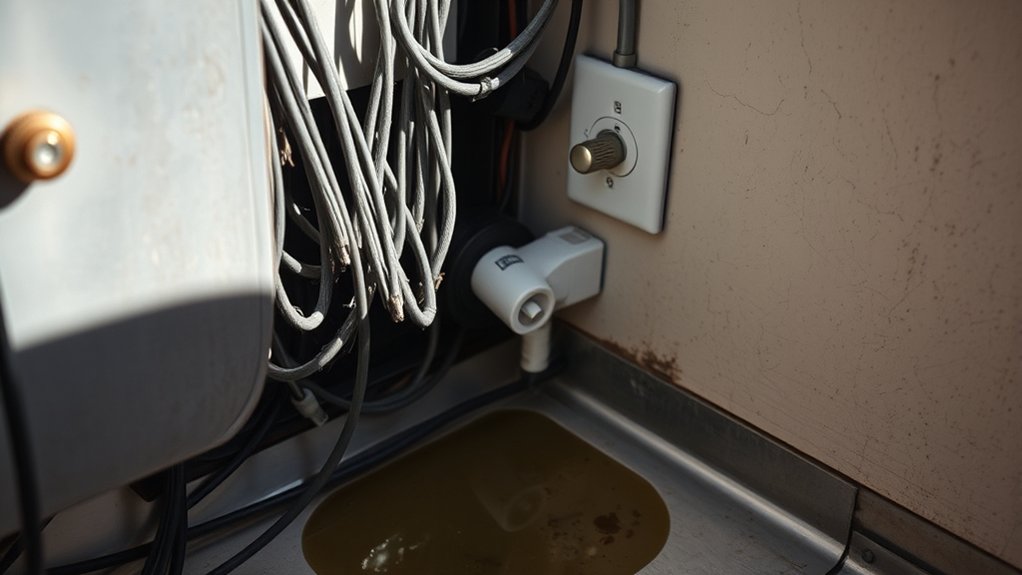
If your EV charger keeps tripping the breaker, stop treating it like a random annoyance. A breaker trip can come from a simple charger setting mismatch, but it can also point to an overloaded circuit, a loose connection, a worn receptacle, water in the connector, a ground fault, or an electrical panel that cannot safely carry the load.
Quick Answer
Your EV charger usually trips the breaker because the charging current is too high for the circuit, the charger is sharing load with other appliances, the breaker or outlet is overheating, or GFCI protection is detecting leakage current. Lower the charge rate, stop using damaged equipment, and call an electrician if it trips again.
Key Takeaways
- Do not keep resetting a breaker that trips during EV charging. Repeated trips can signal heat, overload, or a ground fault.
- The charger’s output must be set lower than the breaker rating. For example, a 40 amp breaker commonly supports up to 32 amps of charging output.
- A dedicated, correctly sized circuit is usually the safest setup for Level 2 EV charging.
- Hot plugs, buzzing, burning smells, melted plastic, discoloration, or trips after rain mean you should stop charging and get professional help.
At a Glance
| Time Required | 10–20 minutes for safe homeowner checks; longer if an electrician needs to test the circuit, receptacle, breaker, or panel. |
| Difficulty | Beginner for app settings and visual checks; professional-only for breaker, panel, wiring, grounding, or receptacle repairs. |
| Tools Needed | Charger app, vehicle app, charger manual, flashlight, phone camera; electricians may use a clamp meter, multimeter, torque screwdriver, and thermal camera. |
| Cost | Free for settings checks; professional diagnosis, receptacle replacement, dedicated circuit work, or panel upgrades vary by home and local labor rates. |
Warning: Do not keep resetting the breaker, remove the panel cover, bypass a GFCI, replace the breaker with a larger one, or use adapters or extension cords to “make it work.” If the plug, outlet, breaker, or charger feels hot, smells burned, buzzes, melts, or shows discoloration, stop charging and call a licensed electrician.
Understanding Why an EV Charger Trips a Breaker
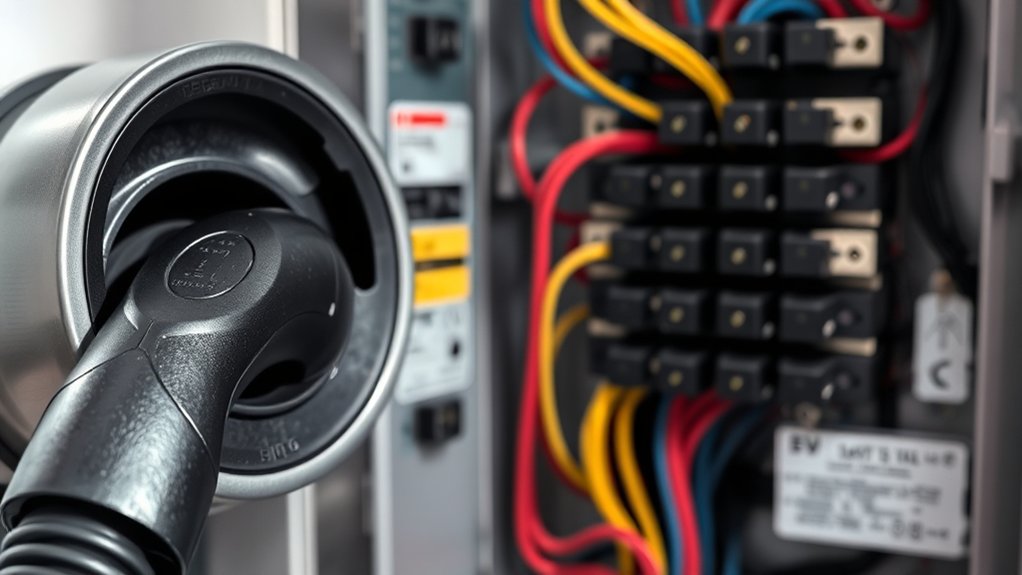
A circuit breaker is designed to open the circuit when current, heat, or fault conditions become unsafe. When that happens during EV charging, the breaker is doing its job. The goal is not to defeat the breaker. The goal is to find out why the circuit is being pushed beyond safe limits.
EV charging is a high-current, long-duration load. A heater, dryer, or oven may cycle on and off, but an EV can pull steady current for hours. That makes small problems more serious. A slightly loose terminal, weak receptacle grip, undersized circuit, or wrong amperage setting may not show up right away, but it can heat up during a long charge.
The wall unit is often called a charger, but for AC home charging it is technically EV supply equipment, or EVSE. It tells the vehicle how much current is available. The vehicle’s onboard charger then draws power up to that allowed limit. If that limit is set too high for the breaker and wiring, the breaker may trip.
Most Common Causes of EV Charger Breaker Trips
Your breaker may trip for one cause or a combination of small problems. Start with these common reasons.
- Charge rate set too high: The charger may be configured for more amps than the circuit can safely supply.
- Shared circuit load: Another appliance on the same circuit can push the total load over the breaker rating.
- Loose wiring or terminals: Loose connections add resistance, create heat, and can trip the breaker.
- Worn outlet or plug: A tired NEMA receptacle can grip poorly and overheat under EV charging load.
- Faulty breaker: Breakers can wear out, run hot, or trip below their rating.
- Ground fault or leakage current: GFCI protection may trip because current is leaking through water, damaged insulation, or a wiring fault.
- Moisture: Rain, snow, condensation, or water in the connector can cause a fault.
- Damaged charger cable or connector: Cracks, crushed cable, bent pins, or burn marks can trigger faults.
- Panel capacity problem: The home’s service panel may not have enough spare capacity for the charger and household loads.
Pro Tip: Write down exactly when the breaker trips. “Immediately,” “after 10 minutes,” “after two hours,” “only when the dryer runs,” and “only after rain” point to different causes.
Check the Breaker Size Against Charger Output
One of the biggest mistakes is assuming a 40 amp breaker means you can charge at 40 amps. EV charging is treated as a continuous load, so the charger output is normally set below the breaker rating. Many chargers also require setup or commissioning so the output matches the installed circuit.
A 40 amp EV charging circuit usually means up to 32 amps of charging output, not 40 amps.
The table below uses common home EV charging examples. Always follow your charger manual, vehicle limits, local code, and the actual circuit installed in your home. For example, the Tesla Gen 3 Wall Connector manual lists breaker/output pairings from 15 amps through 60 amps and also states that breaker size is programmed during commissioning.
| Breaker Rating | Common Maximum Charger Output | Typical Use |
| 15A | 12A | Level 1 charging on a standard household circuit, if allowed by the vehicle and circuit. |
| 20A | 16A | Higher-output Level 1 or low-output Level 2 setups. |
| 30A | 24A | Smaller Level 2 circuit when panel capacity is limited. |
| 40A | 32A | Common home Level 2 charging setup. |
| 50A | 40A | Common for NEMA 14-50 or hardwired Level 2 chargers, depending on the charger manual. |
| 60A | 48A | Higher-output hardwired chargers when the panel, wiring, breaker, and charger are designed for it. |
If your charger lets you choose the charge current in an app, lower it one step and try again only if there are no signs of heat, smell, buzzing, water, or damage. If lowering the amperage stops the tripping, the circuit may be overloaded or the charger may have been commissioned incorrectly. That still deserves a proper check if the problem is new.
Why Shared Circuits Cause Charging Problems
A Level 2 charger should usually be on a dedicated circuit. If the charger shares a breaker with other loads, the total current can rise above the breaker rating. The breaker may trip when another appliance starts, even if the charger worked fine by itself.
Common load conflicts include:
- Electric dryer
- Water heater
- Air conditioner
- Space heater
- Garage freezer or refrigerator
- Power tools
- Other EV chargers
Shared circuits can also create confusion. You may think the EV charger is failing, but the real trigger is a second load starting while the car is charging. If trips happen at the same time every evening or when a specific appliance runs, the circuit needs a load review.
The U.S. Department of Energy’s Alternative Fuels Data Center recommends planning EV charging installations around electrical service capacity, permitting, utility coordination, codes, and qualified electrical contractors.
Recognizing GFCI and Ground-Fault Trips
A standard breaker trips from overload or short-circuit conditions. A GFCI breaker can also trip when it detects current leaking from the intended path. That protection matters because leakage current can create shock and fire risks.
According to OSHA’s GFCI guidance, a GFCI compares current going out and current returning. If the difference is about 5 milliamps, it interrupts the circuit quickly.
For EV charging, a GFCI or charger ground-fault fault code may point to:
- Water in the plug, outlet, cable, or vehicle charge port
- Damaged cable insulation
- A cracked connector
- Grounding or neutral wiring errors
- A faulty receptacle
- A charger internal fault
- A vehicle-side charging fault
Note: Do not “fix” a GFCI trip by removing required GFCI protection. An electrician should find the cause and install a code-compliant solution, which may involve hardwiring, replacing damaged parts, correcting wiring, or using compatible equipment.
How Trip Timing Points to the Cause
The moment when the breaker trips gives you useful clues.
Breaker Trips Immediately
An immediate trip can mean a short circuit, ground fault, incorrect wiring, bad breaker, failed charger, water intrusion, or a vehicle-side charging fault. Stop charging and check the charger or vehicle app for an error code. If the breaker trips again right away, do not keep resetting it.
Breaker Trips After a Few Minutes
A trip after a few minutes often points to heat buildup, loose connections, a weak outlet, a charger set too high, or a breaker that cannot hold the load. This is common when a receptacle looks normal at first but heats up under sustained EV charging current.
Breaker Trips After an Hour or More
A later trip can happen when the panel, breaker, plug, or wire warms during a long charging session. It can also happen when household loads increase while the EV is still charging.
Breaker Trips Only After Rain or Washing the Car
Rain-related trips often point to moisture in the outdoor receptacle, charger handle, cable, vehicle charge port, or wall connector. Do not keep charging until the equipment is dry and inspected. Outdoor charging equipment must be rated and installed for the environment.
Breaker Trips Only When Other Appliances Run
This usually points to overload or panel capacity issues. A dedicated circuit, lower charge rate, load-management system, or electrical upgrade may be needed.
Safe Checks You Can Do Before Calling an Electrician
You can do a few checks without opening the electrical panel or touching conductors.
- Stop the charging session. Unplug only if the plug and handle are not hot or damaged.
- Check the charger app and vehicle app. Look for messages such as ground fault, overtemperature, reduced power, vehicle fault, or charging interrupted.
- Lower the charging current. If your charger or vehicle allows it, reduce the amps to match the installed circuit.
- Inspect the visible plug and outlet. Look for melting, dark marks, cracks, looseness, arcing marks, or a burnt smell.
- Inspect the cable and handle. Look for crushed cable, cuts, water, bent pins, or damaged plastic.
- Check what else was running. Note whether the dryer, heater, air conditioner, or another large load was on.
- Take photos. Photos help an electrician see the breaker label, charger label, receptacle type, and any visible damage.
Do not remove the panel cover, tighten terminals inside the panel, replace the breaker, install a larger breaker, or modify the outlet yourself unless you are qualified and the work is legal where you live.
Inspect the Plug, Outlet, and Wiring for Heat Damage
Plug-in Level 2 chargers often use receptacles such as NEMA 14-50 or similar high-power outlets. These outlets must be correctly installed and in good condition. EV charging can expose weak receptacles because the load is steady for hours.
Stop using the charger and call an electrician if you see:
- Brown or black marks on the outlet face
- Melted plastic
- A plug that feels loose in the receptacle
- A plug or outlet that is too hot to comfortably touch
- Buzzing or crackling
- A burning smell
- A breaker that will not reset
- A breaker that trips with no vehicle connected
Hardwired chargers can avoid some plug and receptacle problems, but they still require correct breaker sizing, conductor sizing, grounding, torque, commissioning, and permitting. The right answer depends on your home, charger, vehicle, and local code.
How to Ensure Your Charger Is Compatible With Your EV and Circuit
Compatibility is not only about whether the connector fits your car. The charger must also match your electrical system.
Check these items:
- Voltage: Level 1 charging commonly uses 120 volts. Level 2 charging commonly uses 208 or 240 volts.
- Breaker rating: The breaker must match the installed wiring and charger setup.
- Charger output setting: The charger must be configured for the circuit, not just the charger’s maximum rating.
- Plug type: The charger plug must match the receptacle type, and the receptacle must be rated for the load.
- Vehicle onboard charger limit: Some vehicles cannot accept the full output of a high-power wall connector.
- Installation type: Some chargers are plug-in; others must be hardwired.
- Listing and certification: Use equipment tested by a recognized certification body and installed according to the manual.
Never assume a bigger breaker is the solution. A breaker protects the wire. Installing a larger breaker on wiring that is not sized for it can create a fire hazard.
What a Licensed Electrician Should Check
If the breaker trips more than once, or if the cause is not obvious, a licensed electrician should inspect the circuit. EV charging installations should comply with local and state codes and be completed by a qualified electrical contractor.
An electrician may check:
- Panel capacity and load calculation
- Breaker type, rating, age, and condition
- Correct wire size and insulation type for the installed circuit
- Terminal torque at the breaker, charger, receptacle, and disconnect if present
- Grounding and bonding
- Neutral connections where applicable
- Voltage drop under load
- GFCI operation and fault history
- Heat at the breaker, receptacle, plug, or charger
- Receptacle wear or poor contact pressure
- Charger commissioning and current limit
- Permit and inspection requirements
The electrician may recommend lowering the charger output, replacing a worn receptacle, hardwiring the EVSE, installing a dedicated circuit, correcting grounding, replacing a faulty breaker, adding load management, or upgrading the electrical panel.
Preventing Future Breaker Trips
Once the problem is fixed, prevention is mostly about matching the charger, circuit, panel, and vehicle.
- Use a dedicated EV charging circuit. This avoids surprise overloads from other appliances.
- Set the correct amperage. Match the charger output to the installed breaker and wiring.
- Use the charger manual. Follow the manufacturer’s breaker, wiring, mounting, and commissioning instructions.
- Avoid extension cords and random adapters. Many EVSE manuals prohibit them, and they can add heat and resistance.
- Keep outdoor equipment dry and protected. Use weather-rated equipment and covers where required.
- Check for heat early. After a new installation, inspect visible parts during the first few sessions without touching anything unsafe.
- Schedule charging during lower household load. Charging overnight may reduce overlap with dryers, ovens, and air conditioners.
- Use load management if needed. Some homes need a smart load-management device instead of a full panel upgrade.
Pro Tip: Keep a photo of your charger label, breaker label, and app amperage setting. If the breaker trips again, that information helps an electrician diagnose the issue faster.
When to Call an Electrician
Call an electrician if the breaker trips repeatedly, trips immediately, trips after the charger was recently installed, or trips after you lower the charge rate. Also call if the breaker, outlet, plug, cable, or charger gets hot, smells burned, buzzes, sparks, or shows discoloration.
You should also get professional help if:
- Your home has an older electrical panel
- The charger shares a circuit with other appliances
- You are using a plug-in charger on a worn or old receptacle
- The trip happens after rain or snow
- The charger reports a ground fault
- The breaker will not reset
- You want to move from Level 1 to Level 2 charging
- You are not sure what breaker size, wire size, or outlet type you have
Electrical troubleshooting is not the place to guess. A safe EV charging setup should let the car charge for hours without overheating, tripping, or depending on repeated resets.
Frequently Asked Questions
Why does my electric car charger keep tripping the breaker?
Your EV charger may be pulling more current than the circuit can handle, sharing load with other appliances, heating a loose connection, using a worn outlet, or triggering GFCI protection because of leakage current, water, damaged cable, or a wiring fault.
How do I stop my EV charger from tripping the breaker?
Start by lowering the charger’s amperage setting to match the circuit. Check the charger app for fault codes and inspect the visible plug, outlet, cable, and handle for heat or damage. If the breaker trips again, stop charging and have a licensed electrician inspect the circuit.
Can I just replace the breaker with a bigger one?
No. A breaker is sized to protect the wire and circuit. Replacing it with a larger breaker without upgrading the wiring and verifying the full installation can create a fire hazard. Have an electrician evaluate the circuit before any breaker change.
Why does my EV charger trip the GFCI breaker?
A GFCI breaker trips when it detects current leaking from the normal path. With EV charging, that can come from moisture, damaged insulation, a faulty cable, a bad receptacle, incorrect wiring, or a charger or vehicle fault. Do not bypass required GFCI protection.
Why does the breaker trip only after charging for a while?
A delayed trip often points to heat buildup. Loose terminals, worn receptacles, weak breakers, overloaded circuits, or a charger set too high can heat up over time and trip after several minutes or hours.
Why do EV chargers fail so often?
The charger is not always the part that failed. Many charging interruptions come from the circuit, breaker, receptacle, grounding, moisture, vehicle settings, or charger commissioning. Check error codes first, then have the electrical circuit inspected if trips repeat.
How many times can a breaker trip before it needs replacement?
There is no useful safe reset count for EV charging. If a breaker trips repeatedly, treat it as a warning, not as something to count. Repeated trips, heat, buzzing, or failure to reset mean the breaker and circuit need professional diagnosis.
Conclusion
An EV charger that keeps tripping the breaker is usually telling you the circuit needs attention. The fix may be as simple as lowering the charge rate, but it may also require a dedicated circuit, a new receptacle, corrected wiring, GFCI troubleshooting, load management, or an electrical panel upgrade.
Start with safe checks: read the charger error code, lower the amperage, look for visible heat damage, and note when the trip happens. Then stop guessing if the breaker trips again. A properly installed EV charger should run for hours without hot plugs, nuisance resets, burning smells, or repeated breaker trips.
Sources
- U.S. Department of Energy Alternative Fuels Data Center — EV charging infrastructure planning, permitting, codes, certified contractors, and installation considerations.
- OSHA Ground-Fault Circuit Interrupters — how GFCI protection detects leakage current and interrupts power.
- Tesla Gen 3 Wall Connector Installation Manual — breaker/output examples, commissioning, grounding, ground-fault codes, and adapter/extension-cord safety guidance.