If your EV is charging slower than usual, start by checking the basics before blaming the battery. Slow charging is often normal when the battery is cold, hot, nearly full, or plugged into a lower-power charger. It can also happen because of charger sharing, damaged equipment, app settings, vehicle charge limits, or a weak home circuit. The fastest fix is to compare the charger’s rated power with the actual kW shown on your car or charging app, then work through the likely causes one by one.
Quick Answer
Your EV charging speed is usually slower because the battery is too full, too cold, too hot, or connected to a charger that cannot deliver the power your car can accept. Public chargers may also share power, derate, or have connector problems. At home, amperage limits, weak outlets, timers, or vehicle settings can slow charging.
Key Takeaways
- Fast charging normally tapers as the battery fills, especially above about 80% state of charge.
- Battery temperature matters. A cold or overheated pack may charge slowly until the battery management system brings it into a safe range.
- A charger’s advertised kW is only its peak rating. Your EV, the cable, the adapter, the battery state, and the station can all limit real charging speed.
- If charging suddenly becomes much slower, check charge-limit settings, scheduled charging, the cable, the connector, and whether another EV is sharing the same station.
- Stop charging if a plug, outlet, cable, or adapter feels hot, smells burnt, looks damaged, or repeatedly trips a breaker.
At a Glance
| Time Required | 5–15 minutes for basic checks; longer if you test another charger or contact support |
| Difficulty | Easy for basic diagnosis; call a professional for electrical faults |
| Tools Needed | Vehicle charging screen, EV app, charger network app, and a known-good cable or adapter if available |
| Cost | Usually $0 for diagnosis; cable, adapter, charger repair, or electrician costs vary |
Warning: Stop charging if you notice a hot plug, melted plastic, a burning smell, a scorched outlet, exposed wiring, a cracked connector, or repeated breaker trips. Do not modify charging equipment. Use another charger and call a qualified electrician or the charging network operator.
Key Principles of EV Charging
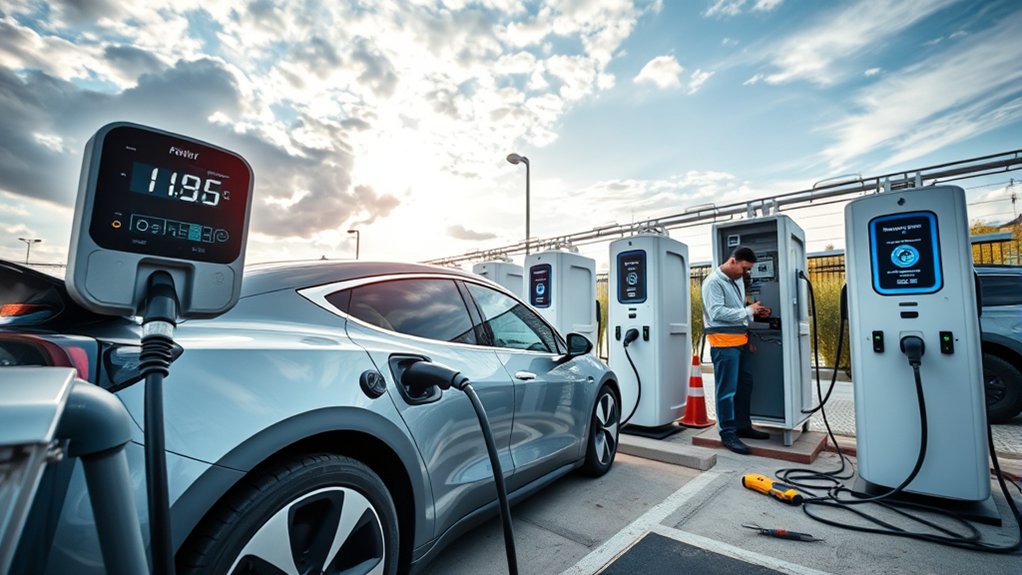
EV charging speed is not controlled by the charger alone. Your car, the charger, the cable, the battery management system, and the electrical supply all negotiate how much power can flow safely.
The U.S. Department of Energy’s Alternative Fuels Data Center explains that charging time depends on several factors, including the battery’s state of charge, battery capacity, battery type, the vehicle’s internal charger capacity, charging level, charger power output, and the electrical service feeding the charger.
That means a 250 kW or 350 kW charger does not guarantee your EV will receive 250 kW or 350 kW. The charger may be capable of that peak output, but your vehicle may request less because the battery is nearly full, cold, hot, older, software-limited, or using a connector or adapter with a lower rating.
As a rule, charging is fastest when the battery is in a lower-to-middle state of charge and within its preferred temperature range. It slows when the battery approaches full because the car protects the cells from heat, overvoltage, and excessive stress.
Normal Slowdown vs. a Real Charging Problem
Some charging slowdown is normal. It is not a fault if your EV charges quickly at first and then tapers as the battery fills. It is also normal to see slower charging in very cold or very hot weather, especially before the battery has been preconditioned.
A charging problem is more likely if the speed is suddenly much lower than usual under the same conditions. For example, if the same charger, same battery percentage, and same weather normally deliver 120 kW but now deliver 35 kW, check for station faults, vehicle settings, cable issues, software updates, or battery warnings.
Note: Always compare charging sessions at a similar battery percentage. A 20% battery and an 85% battery can charge at very different speeds even on the same charger.
How Battery State of Charge Affects Charging Speed
Your battery’s state of charge, often shown as a percentage, has one of the biggest effects on EV charging speed. Most EVs can accept higher power when the battery is low or in the middle of its charge range. As the battery fills, the charging curve tapers.
This is why charging from 10% to 80% on a DC fast charger is usually much faster than charging from 80% to 100%. Tesla’s Supercharging guidance notes that charging speeds slow as the battery charges and that reaching 100% typically takes significantly longer than reaching 80%.
The slowdown happens because the battery management system reduces current as the pack nears full. This helps control heat, cell voltage, and battery stress. It may feel frustrating on a road trip, but it is normal battery protection.
For daily use, follow your owner’s manual or in-car recommendation for charge limits. Many EVs are happiest when they are not held at 100% every day, but the right limit depends on your battery chemistry and manufacturer guidance. Use 100% when you need the range, then drive soon after charging.
How Temperature Affects Charging Performance
Temperature can make a healthy EV charge slowly. A cold battery has slower chemical reactions and higher resistance, so the car may limit charging power until the pack warms up. A hot battery can also charge slowly because the car may reduce power to prevent overheating.
The exact temperature window varies by vehicle, battery chemistry, and thermal management system. Instead of relying on one universal “ideal” temperature, watch what your car reports. Many EVs show battery preconditioning messages, reduced fast-charging messages, or charge-rate limits in the app or instrument cluster.
If your EV has battery preconditioning, use it before fast charging. On many models, entering a DC fast charger as the navigation destination tells the car to warm or cool the battery before you arrive. This can make a major difference in winter and can also help in very hot weather.
Pro Tip: On a road trip, route to the fast charger through your EV’s built-in navigation when possible. This often triggers battery preconditioning better than simply driving to the charger manually.
How Charging Station Power Output Affects You
The charger’s power rating sets the upper limit, but your EV decides how much it can safely accept. A Level 1 charger is slow and usually uses a 120 V household outlet. Level 2 charging is faster and often uses 240 V service at home, work, or public locations. DC fast charging bypasses the onboard AC charger and sends DC power directly to the battery through compatible hardware.
Current DOE guidance lists Level 1 charging at about 1.9 kW, Level 2 units from 2.9 to 19.2 kW, and DC fast charging equipment up to 500 kW. Your actual charging speed can still be much lower because charging power varies by the vehicle and battery state of charge.
If your car can accept 75 kW maximum, plugging into a 350 kW station will not make it charge at 350 kW. If your car can accept 235 kW but the station is a 50 kW DC fast charger, the charger becomes the limit. Always compare three numbers: the charger’s rating, your EV’s maximum acceptance rate, and the live kW shown during the session.
How Simultaneous Charging Affects Your EV Speed
Public charging can slow down when several EVs are plugged in at the same site. Some charging cabinets share power between paired stalls. Others dynamically limit output across multiple ports to stay below a site power limit. This is often called power sharing or automated load management.
The drop is not always a simple 50/50 split. A charger rated at 150 kW may give one car most of the available power when it is alone, then reduce power when another EV connects. Another site may have enough electrical capacity to keep several ports fast at once. The station design matters.
The FHWA’s National Electric Vehicle Infrastructure standards define power sharing as dynamically limiting charging power at individual ports based on the total demand of EVs charging at the same station. The same rule also sets specific requirements for some federally funded corridor DC fast chargers, but those requirements do not apply to every charger you use.
If your session is slow and the site is busy, try a different stall, especially one that is not paired with another occupied charger. If the charger app shows live power or port status, use it before plugging in.
Does In-Car Power Usage Slow Charging?
Yes, in-car power use can slow charging, especially on Level 1 and Level 2 chargers. Climate control, seat heaters, defrosters, lights, infotainment, and battery heating or cooling can draw power that would otherwise go into the battery.
On a high-power DC fast charger, cabin electronics are usually a smaller part of the total power flow, but they can still matter when the battery is being heated or cooled. If your EV is already charging slowly, turn off non-essential loads and check whether the kW display improves.
In-Car Electronics Impact
Infotainment, phone charging, lights, and accessory power do not usually cause a huge charging loss by themselves. They matter more when you are using a low-power charger or when the car is already limiting power because of temperature or high state of charge.
If you are trying to measure whether a charger is underperforming, keep the cabin settings the same during each test. That gives you a cleaner comparison between chargers, stalls, and battery percentages.
Climate Control Draw
Heating and air conditioning can use enough power to make charging look slower, especially during winter or summer extremes. In cold weather, some of that power may go toward warming the battery, not just the cabin.
If you want the fastest charge, precondition the cabin while still plugged in at home, then reduce heavy climate use once the public charging session starts. Comfort matters, but leaving maximum heat or air conditioning on during a low-power charge can lengthen the session.
Power Consumption Management
To manage power during charging, turn off anything you do not need, check the live kW number, and watch whether the car reports battery heating or cooling. If the number does not change, the limiting factor is probably the charger, the battery state, the battery temperature, the cable, or a vehicle setting.
How Battery Health and Degradation Slow Charging
As an EV battery ages, its maximum charging power may decrease. The battery management system may limit current to protect older cells, reduce heat, or manage cell balance. This does not always mean the battery is failing, but a sudden large drop in charging speed deserves attention.
Battery health is not the first thing to blame. Rule out easier causes first: high state of charge, cold battery, hot battery, a lower-power charger, power sharing, charge-limit settings, scheduled charging, and cable or adapter problems.
If your EV consistently charges much slower than it used to on multiple known-good chargers, check the vehicle app for battery alerts, install any available software updates, and contact the dealer or manufacturer. Keep screenshots of the charger rating, actual kW, battery percentage, temperature, and warning messages.
Common Problems With EV Charging Equipment
Charging equipment problems can reduce speed or stop charging entirely. Public chargers deal with weather, heavy use, payment systems, network connections, damaged connectors, and cable wear. Home chargers can have outlet problems, undersized circuits, loose connections, heat buildup, or incorrect amperage settings.
A public charger may also look available in an app but fail when you arrive. If the first attempt is unusually slow, try another port at the same site before assuming your EV is the problem.
Faulty Charging Stations
Faulty charging stations can cause slow charging, failed starts, sudden session stops, or error messages. Common signs include a damaged connector, broken screen, payment failure, network timeout, charger unavailable message, or a station that never ramps up after a few minutes.
If the charger starts but stays far below the expected speed, check whether another EV is sharing the charger, whether your battery is already above 80%, and whether the charger app reports limited power. If none of those explains it, move to another stall and report the issue in the charging app.
Cable Damage Issues
Charging cables and connectors carry high current, so damage matters. A worn, cracked, loose, overheated, or poorly seated connector can reduce performance or create a safety risk. At home, a weak outlet or loose wiring can also create heat and voltage drop.
Inspect the cable before you charge. Look for cracks, exposed conductors, bent pins, melted plastic, scorch marks, corrosion, or a latch that does not seat firmly. If you use an adapter, make sure it is rated for the charging power and approved for your vehicle.
If a home outlet, plug, or breaker gets hot, stop using that circuit and call a qualified electrician. Do not keep reducing the charging limit to work around a damaged outlet unless an electrician has confirmed the setup is safe.
Home Charging Reasons Your EV May Charge Slowly
At home, slow charging is usually caused by the electrical supply or a vehicle setting. Level 1 charging from a 120 V outlet is expected to be slow. Level 2 charging should be faster, but the speed depends on the circuit amperage, EVSE setting, onboard charger limit, and vehicle charge-current setting.
Check these common home charging issues:
- Charge-current limit: Your car may be set to a lower amperage for that location.
- Scheduled charging: The car may be waiting for off-peak hours or utility timing.
- Shared load: Some smart chargers reduce power when other large appliances are running.
- Undersized circuit: A 16 A setup will charge slower than a 32 A or 48 A setup.
- Outlet or plug heat: Heat can signal resistance, loose contacts, or wiring problems.
- Breaker or GFCI trips: Repeated trips are a safety issue, not a normal inconvenience.
If a Level 2 charger that used to work well suddenly charges slowly, check the charger app, vehicle app, breaker, Wi-Fi connection, and software status. If you see heat, buzzing, burning smell, discoloration, or repeated trips, stop using it and call an electrician.
Connector, Adapter, and Vehicle Compatibility Issues
Connector compatibility can affect whether your EV charges at all and how fast it charges. In North America, many EVs use J1772 for Level 1 and Level 2 AC charging. Many non-Tesla EVs use CCS for DC fast charging. Some older EVs use CHAdeMO. Many newer vehicles and charging networks are shifting toward J3400, also known as NACS.
An adapter may let you plug in, but it still has a power rating. If the adapter, cable, or vehicle port supports less power than the station can provide, the lower-rated component becomes the limit.
Before using a new charging network, confirm three things: the connector fits your vehicle, the network supports your vehicle or adapter, and the charger can deliver a power level your EV can actually accept.
Software Settings and Charge Limits to Check
Sometimes slow charging is caused by a setting, not a hardware fault. Open your vehicle’s charging screen and check the charge limit, current limit, scheduled departure time, scheduled charging window, battery conditioning status, and any warning message.
Also check the charging network app. Some chargers display reduced-power notices, maintenance alerts, pricing tiers, live availability, or station faults. If your EV recently received a software update, review the release notes or owner forum reports only after checking official app messages and the owner’s manual.
How to Diagnose Slow EV Charging in Order
Use this order to find the cause faster:
- Check battery percentage: If you are above about 80%, slower DC fast charging is usually normal.
- Check battery temperature: Look for cold battery, hot battery, or preconditioning messages.
- Read the live kW: Compare the actual kW to the charger’s rating and your EV’s maximum charging rate.
- Look for power sharing: If the site is busy, try a different stall or an unpaired charger.
- Inspect the connector: Do not use damaged, hot, loose, or scorched equipment.
- Check settings: Review charge limits, current limits, scheduled charging, and departure settings.
- Test another charger: If another charger works normally, the first charger was likely the issue.
- Check for alerts: Battery, charging-system, or thermal-management warnings need professional diagnosis.
If the problem follows your car across several known-good chargers, contact your dealer or manufacturer. If the problem only happens at home, contact a qualified electrician or the charger installer.
How to Improve Your EV Charging Speed
To improve EV charging speed, match your charging plan to the battery, charger, and trip. You do not need to chase peak power every time. You need the right charger for the situation and a battery that is ready to accept power.
- Fast charge at a lower state of charge: On road trips, arrive at DC fast chargers with a lower battery percentage when practical and safe.
- Avoid waiting for 100% on road trips: Charging to 80% and leaving is often faster than waiting through the slow final stretch.
- Use battery preconditioning: Navigate to the charger through the car’s system when your EV supports it.
- Choose the right charger: Use a charger that matches your EV’s capability instead of blocking an ultra-high-power stall your car cannot use.
- Try another stall: If one port is slow, another port at the same site may work better.
- Reduce cabin power draw: Heavy heating or cooling can slow low-power charging sessions.
- Keep software current: Charging behavior can change through vehicle or charger software updates.
- Maintain your home setup: Have outlets, breakers, hardwired EVSE, and panels inspected if anything gets hot or trips.
The fastest public charging sessions usually happen when the battery is warm, the state of charge is low-to-middle, the station is working properly, and your EV can accept the charger’s available power.
Frequently Asked Questions
Why is my EV charging slower than normal?
Your EV may be charging slower because the battery is above 80%, too cold, too hot, or connected to a charger with lower available power. It can also slow down because of power sharing, a damaged connector, a weak home circuit, a charge-current limit, scheduled charging, or a battery-management limit.
Why is my charger charging slowly all of a sudden?
A sudden slowdown usually points to a changed setting, a station issue, battery temperature, or equipment trouble. Check the vehicle’s charge limit, scheduled charging, live kW, battery temperature message, connector condition, and charger app. If another charger works normally, the first charger or cable was likely the problem.
Why is my EV charger not charging at full speed?
A charger’s full speed is only its maximum rating. Your car may request less power because of state of charge, battery temperature, battery health, vehicle software, connector type, adapter rating, or onboard charger limits. The station may also be sharing power, derated, busy, or faulty.
Why is my car charging at half speed?
Half-speed charging can happen when a public charger shares power between two stalls, a home charger is set to a lower amperage, the vehicle has a current limit, or the battery is cold, hot, or nearly full. Try another stall, check your charge-current setting, and compare the actual kW with your EV’s expected rate.
Is slow EV charging bad for the battery?
Slow charging is usually not bad for the battery. In many cases, Level 1 or Level 2 charging is gentler than repeated high-power DC fast charging. The concern is not slow charging itself. The concern is damaged equipment, overheating plugs, repeated electrical trips, or ignoring vehicle battery warnings.
Should I charge to 100% if my EV is charging slowly?
Charge to 100% when you need the range, but expect the final stretch to take longer. For road trips, it is often faster to charge to about 80%, drive to the next stop, and charge again. For daily charging, follow your vehicle’s owner’s manual or in-car recommendation.
Conclusion
Slow EV charging is usually caused by one of a few things: high state of charge, battery temperature, charger power limits, station sharing, cable or connector issues, home electrical limits, or software settings. Start with the live kW number and the battery percentage, then check temperature, charger rating, power sharing, cables, adapters, and charge limits. If the issue follows your car across several reliable chargers, get the vehicle checked. If it only happens at home, have the charging circuit inspected.
Sources
- U.S. Department of Energy Alternative Fuels Data Center — Electric Vehicle Charging Stations — charging levels, power ranges, charging-time factors, and connector information
- Tesla Support — Supercharging — charging-rate factors, state of charge, battery temperature, and charging taper guidance
- Federal Register — National Electric Vehicle Infrastructure Standards and Requirements — DC fast-charger power, uptime, and power-sharing standards
- Reliability of Open Public Electric Vehicle Direct Current Fast Chargers — public DC fast-charger functionality and common failure modes