
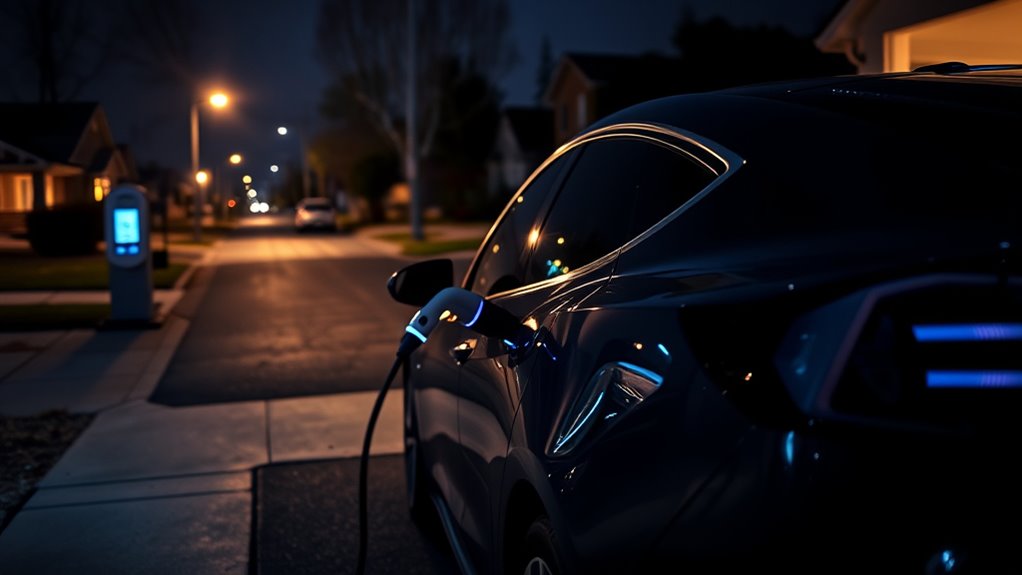
Off-peak EV charging can lower your home charging cost by moving most of your charging to the hours when your utility or energy supplier charges less. The exact savings depend on your rate plan, location, charger speed, battery size, and how many kilowatt-hours you use each year. For many drivers, the best move is simple: check your off-peak window, schedule the car or charger, and avoid expensive evening peak hours whenever possible.
Quick Answer
Off-peak EV charging saves money when your electricity plan charges less at night, early morning, or other low-demand periods. Many drivers schedule charging through their EV app or smart charger so the car charges after peak hours. Savings vary, but the formula is simple: annual EV kWh multiplied by the difference between your peak and off-peak rate.
Key Takeaways
- The cheapest home EV charging time is usually your utility’s off-peak window, often overnight, but the exact hours vary by plan.
- A driver using 3,000 kWh per year would save $420 if they moved that charging from $0.20/kWh to $0.06/kWh.
- Use your EV app, charger app, or utility program to schedule charging automatically.
- Compare the full plan, not just the off-peak rate, because standing charges, day rates, demand charges, and eligibility rules can change the real savings.
- Use a safety-certified charger and a licensed electrician for Level 2 installation.
At a Glance
| Time Required | 10–20 minutes to check your tariff and set a charging schedule |
| Difficulty | Easy if your EV or charger supports scheduled charging |
| Tools Needed | Utility bill, rate-plan details, EV app, charger app, or smart charger |
| Cost | No extra cost if your car or charger already supports scheduling; Level 2 installation costs vary by home |
What Are Off-Peak EV Charging Rates?
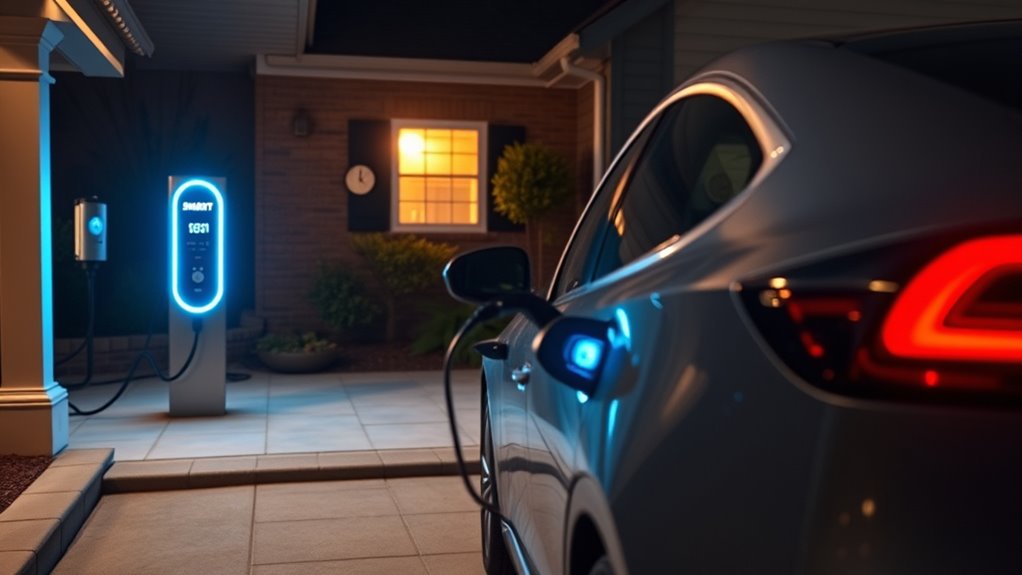
Off-peak EV charging rates are lower electricity prices offered during times when demand on the grid is lower. These hours are often late at night, early in the morning, or sometimes midday in areas with high solar generation.
Instead of paying one flat price all day, a time-of-use plan charges different prices based on when you use electricity. Some utilities also offer EV-specific tariffs, dynamic pricing, or rebates for connected chargers. The U.S. Department of Energy’s Alternative Fuels Data Center notes that actual EV charging cost depends on the electricity rate, equipment, time of day, and how long the charger runs.
That is why you should not rely on a generic national number. In the U.S., electricity prices vary sharply by state and utility. The U.S. Energy Information Administration reported a U.S. average residential electricity price of 18.83 cents per kWh in April 2026, while California averaged 35.25 cents per kWh.
In the UK, EV tariffs can use pence per kWh instead of cents. For example, Intelligent Octopus Go lists smart charging from 8p/kWh and compares it with a higher standard variable unit-rate context. Your exact day rate, standing charge, and cheap window still depend on your postcode, meter, eligibility, and supplier terms.
Note: Do not mix U.S. cents and UK pence when comparing EV charging costs. Always compare plans in your own currency, with the same battery size, annual kWh use, and local fees.
Why Peak EV Charging Costs More
Peak EV charging costs more because you are using power when many homes and businesses are also drawing electricity. In many areas, the most expensive window is late afternoon through evening, when people get home, cook, cool or heat their homes, and plug in devices.
Utilities use higher peak prices to discourage extra load during busy hours. These prices can also reflect the higher cost of generation, transmission, and distribution capacity needed to serve short demand spikes.
For EV owners, the difference can be large. A flat-rate plan may be simple, but it does not reward you for charging at low-demand times. A time-of-use or EV tariff can reward you for shifting charging away from the grid’s busiest periods.
The main risk is that a plan with a cheap overnight price may also have a higher daytime or evening price. If your household uses a lot of electricity during peak hours, the EV tariff may not save as much as it looks at first.
How Off-Peak Charging Cuts Your Bill
Off-peak charging cuts your bill by lowering the price you pay for each kilowatt-hour used by your EV. The car uses the same amount of energy either way, but the timing changes the cost.
Use this simple formula:
Annual savings = EV kWh charged off-peak × (peak or standard rate − off-peak rate)
For example, if you charge 3,000 kWh per year and move that charging from $0.20/kWh to $0.06/kWh, the savings are:
- 3,000 kWh × $0.20 = $600
- 3,000 kWh × $0.06 = $180
- $600 − $180 = $420 saved per year
That $420 number is an example, not a promise. Your result may be lower or higher depending on your EV efficiency, miles driven, rate plan, charging losses, local fees, and how often you charge outside the cheap window.
How Much Off-Peak Charging Saves You
The easiest way to estimate your savings is to find your annual EV energy use. Many EVs use about 25–35 kWh per 100 miles, but your number depends on the vehicle, speed, weather, tires, and driving style.
Here is a practical way to estimate it:
- Find your annual miles.
- Divide by 100.
- Multiply by your EV’s kWh per 100 miles.
- Multiply that annual kWh by your off-peak rate.
- Compare it with your current rate or peak rate.
Example: if you drive 10,000 miles per year and your EV uses 30 kWh per 100 miles, you use about 3,000 kWh per year before charging losses. If your charger and battery add about 10% losses, your wall energy may be closer to 3,300 kWh.
That is why a small rate difference can matter. A 10-cent difference on 3,300 kWh is $330 per year. A 14-cent difference is $462 per year. If your EV tariff also raises your daytime rate, compare your whole household bill before switching.
Best Times to Charge Your EV at Home
The best time to charge your EV at home is the cheapest window listed in your electricity plan. For many drivers, that means overnight charging, such as late evening through early morning. Some plans also include super off-peak windows during very low-demand hours.
Your plan may label these windows as off-peak, super off-peak, overnight, EV rate, smart charging, or time-of-use. The wording changes, but the goal is the same: move flexible EV load away from expensive periods.
Peak Vs. Off-Peak Hours
Peak hours are the higher-cost windows on a time-of-use plan. Off-peak hours are the lower-cost windows. Some plans also include a middle “shoulder” rate.
A common pattern looks like this:
- Peak: late afternoon and evening
- Off-peak: late night and early morning
- Super off-peak: the lowest-demand hours, often overnight
- Shoulder: medium-cost hours between peak and off-peak
Do not assume your neighbor’s off-peak hours match yours. They can vary by utility, supplier, season, meter type, and tariff.
Overnight Charging Windows
Overnight charging is popular because most cars sit parked for several hours. That makes EV charging one of the easiest home loads to shift.
Level 1 charging can work if you drive short distances or have a plug-in hybrid. Level 2 charging is faster and better for longer commutes or larger batteries. The DOE’s home charging guidance says many EV owners can meet daily driving needs with overnight Level 1 charging, while Level 2 is useful for longer commutes, larger batteries, or shorter dwell times.
With Level 2, you can often add enough range during a cheap overnight window without staying plugged into expensive peak hours. With Level 1, you may need more time, so check whether your car can finish before the off-peak period ends.
Smart Scheduling Benefits
Smart scheduling means your car starts and stops charging automatically based on the schedule you set. You can usually do this through the EV’s app, the charger’s app, or a utility smart-charging program.
Smart chargers can also help utilities manage demand. ENERGY STAR notes that some connected EV chargers allow remote monitoring and control and may qualify customers for special utility programs.
Pro Tip: Set a departure time instead of only a start time when your app allows it. This lets the car finish charging before you leave while still using the cheapest available hours.
How to Find Your Off-Peak EV Charging Hours
Before you change your charging routine, confirm the exact rate window. A cheap overnight plan only works if you know when that cheaper rate starts and ends.
- Check your bill. Look for terms like time-of-use, TOU, off-peak, super off-peak, EV rate, or dynamic tariff.
- Open your utility or supplier account. Many providers list rate windows in the app or online dashboard.
- Read the tariff sheet. Confirm the season, weekdays, weekends, holidays, and any peak-event rules.
- Check the whole plan. Compare off-peak price, peak price, standing charge, monthly fee, demand charge, and eligibility rules.
- Set the schedule. Use either the vehicle app or charger app, but avoid setting conflicting schedules in both.
- Review the next bill. Make sure the EV load actually moved into the cheaper window.
Which EV Tariffs Save the Most?
The EV tariff that saves the most is the one that matches your real charging pattern and household use. The lowest off-peak rate is not always the lowest total bill.
| Plan Type | Best For | Watch Out For |
| Flat rate | Simple billing and unpredictable charging times | No reward for charging at low-demand times |
| Time-of-use plan | Drivers who can charge overnight | Higher peak prices for household use |
| EV-specific tariff | Regular home charging with a compatible car, charger, or smart meter | Eligibility rules, shorter cheap windows, or higher day rates |
| Dynamic tariff | Flexible users who can respond to changing prices | Prices can change often and may require closer monitoring |
| Demand-charge plan | Some commercial, fleet, or special-use customers | A short high-power charging spike can raise the bill |
For UK readers, remember that the Ofgem energy price cap limits unit rates and standing charges for certain tariffs, but it does not cap your total bill. Your total cost still rises with usage.
How to Automate Off-Peak Charging
Automating off-peak charging keeps you from watching the clock. Once the schedule is set, your EV charges during the lower-rate window whenever it is plugged in.
Use Your EV App
Most modern EVs let you schedule charging from the vehicle screen or mobile app. Set the allowed charging window to match your off-peak hours. Then set a charge limit, such as 80% for normal daily use if your vehicle manual recommends it.
Use Your Smart Charger App
A smart Level 2 charger can schedule charging even if your EV app is limited. It may also show session energy use, cost estimates, and charging history. Some utility programs require a connected charger or vehicle enrollment to verify when charging happens.
Avoid Conflicting Schedules
Do not create one schedule in the car and a different schedule in the charger unless the manufacturer tells you to. Conflicting schedules can stop charging, delay charging, or leave the battery below your target by morning.
Test One Session
After you set the schedule, test it for one night. In the morning, check whether the car reached the target charge and whether the session started during the off-peak window.
Warning: For Level 2 home charging, use a licensed electrician, follow local code, and choose safety-certified equipment. Avoid damaged cords, loose outlets, and routine extension-cord charging. EV charging is a long continuous load, so weak wiring can overheat.
How Off-Peak Charging Helps the Grid
Off-peak charging helps the grid because it moves flexible demand away from the busiest hours. Your EV is basically a large battery on wheels, and most home charging does not need to happen the second you plug in.
Reduced Peak Demand
When many drivers plug in right after work, EV charging can add to the evening peak. If those sessions are delayed until later, utilities can serve the same driving need with less pressure on local transformers, feeders, and generation resources.
That does not mean one EV changes the whole grid. The benefit comes when many drivers use smart schedules, TOU plans, or managed charging programs together.
Lower Grid Strain
Lower peak load can reduce stress on local grid equipment. It can also help utilities delay or reduce some upgrades that are only needed for short peak periods.
For you, the practical benefit is simpler: the grid rewards flexible charging with lower rates when your plan is designed that way.
Cleaner Power When Available
Off-peak power is not automatically cleaner everywhere. In some regions, overnight wind or low-demand periods can make charging cleaner. In other regions, the cleanest time may be midday when solar output is strong.
Some smart charging programs schedule charging when energy is expected to be cheaper and often greener. If emissions matter to you, check your utility’s green-power options, your supplier’s smart tariff, or a local electricity emissions tool.
Using Solar or a Home Battery With Off-Peak Charging
If you have solar panels, the cheapest charging time may not always be overnight. It may be better to charge during midday solar production if your export credit is low and your car is home during the day.
If you have a home battery, compare three options:
- Charge the EV directly from low-cost overnight grid power.
- Charge the home battery off-peak and use it during peak household hours.
- Use excess solar for the EV when the car is parked at home.
The best option depends on your solar export rate, battery capacity, EV battery size, and whether your plan has peak pricing. Do the math before assuming overnight charging is always best.
Common Off-Peak Charging Mistakes
Off-peak charging is simple once it is set up, but these mistakes can reduce your savings:
- Only checking the cheap rate: A plan with a very low overnight rate may have a high daytime rate.
- Ignoring standing charges or monthly fees: Fixed charges can eat into savings, especially if you drive fewer miles.
- Charging beyond the cheap window: Large batteries on slow charging may continue into higher-cost hours.
- Using public fast charging too often: Public DC fast charging is convenient, but usually costs more than home charging.
- Forgetting seasonal schedules: Some utilities change peak windows by season.
- Setting two conflicting schedules: Use either the car or charger as the main schedule controller.
Frequently Asked Questions
What is the cheapest time to charge your electric vehicle?
The cheapest time is the off-peak or super off-peak window listed in your electricity plan. For many home EV owners, that is overnight or early morning. Check your utility bill, supplier app, or tariff sheet because the exact hours vary by location, season, and plan.
How much can off-peak EV charging save?
Multiply your annual EV charging kWh by the difference between your current rate and off-peak rate. For example, moving 3,000 kWh from $0.20/kWh to $0.06/kWh saves $420 per year. Your actual savings depend on your rate plan, miles driven, charger losses, and how often you stay inside the cheaper window.
What drains an EV battery the most?
High speed, hard acceleration, cold weather, heating, air conditioning, low tire pressure, and heavy loads can all reduce range. Climate control can matter a lot in extreme weather, but the biggest drain depends on your car, route, temperature, and driving style.
What is the 80/20 rule for EV charging?
The common EV 80/20 rule means keeping the battery roughly between 20% and 80% for daily use when your owner’s manual recommends it. It is mainly about battery health, not off-peak pricing. You can combine both ideas by scheduling off-peak charging to stop at your daily charge limit.
How do I reduce EV charging cost?
Charge at home when possible, switch to a suitable off-peak or EV tariff, schedule charging automatically, avoid unnecessary public fast charging, and compare the full plan before switching. Also check for utility rebates on smart chargers or managed charging programs.
Can I use off-peak charging with a normal wall outlet?
Yes, if your EV or plug-in hybrid can get enough charge from Level 1 charging during the off-peak window. If you drive more miles or have a larger battery, a Level 2 charger may be more practical because it adds range faster.
Is off-peak EV charging always greener?
Not always. Off-peak charging can be greener in places with strong overnight wind or smart tariffs that choose cleaner periods. In areas with lots of solar, midday may be cleaner. Check your utility’s emissions data, green-power options, or smart charging program if carbon impact matters to you.
Conclusion
Off-peak EV charging can be one of the easiest ways to lower your driving cost without changing your car or mileage. The key is to use real numbers from your own electricity plan. Find your off-peak window, compare the full tariff, set a reliable schedule, and review your next bill. When the plan fits your routine, charging at lower-cost hours can save money, reduce evening grid strain, and make home EV ownership simpler.
Sources
- U.S. Department of Energy Alternative Fuels Data Center: Charging Electric Vehicles at Home — home charging, Level 1/Level 2 use, TOU rate considerations, and installation guidance.
- U.S. Energy Information Administration: Average Price of Electricity to Ultimate Customers — current U.S. and state residential electricity price context.
- ENERGY STAR: Electric Vehicle Chargers — safety-certified chargers, connected charger features, and utility program guidance.
- Octopus Energy: Intelligent Octopus Go — current UK EV smart charging tariff example and smart scheduling explanation.
- Ofgem: Energy Price Cap and Standing Charges Explained — UK unit-rate, standing-charge, and price-cap context.