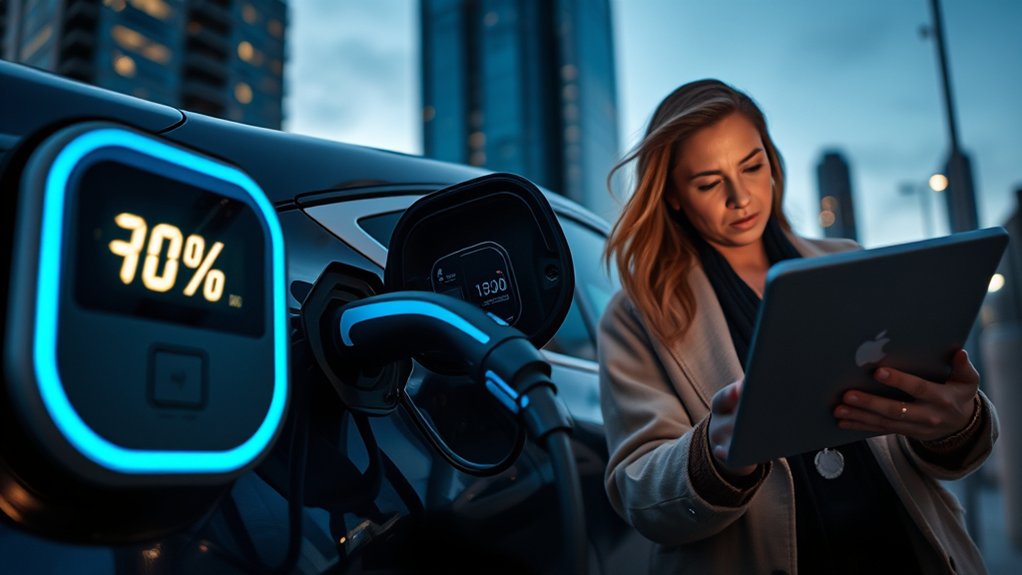
If your EV stops charging at 90%, it is usually not broken. In many cases, the car, app, or Battery Management System is following a charge limit meant to protect battery health. It can also happen because of scheduled charging, cold or hot battery temperature, a public charger communication problem, or a damaged plug or cable. The fix starts with checking your charge target before assuming there is a battery fault.
Quick Answer
Your EV usually stops at 90% because a charge limit is turned on in the vehicle or mobile app. This is common for daily driving because high states of charge can add battery stress. If the limit is not set by you, check scheduled charging, charger compatibility, temperature warnings, software updates, and damaged charging hardware.
Key Takeaways
- A 90% stop is often a normal daily charge limit, not a battery failure.
- Most EVs let you change the target charge level from the touchscreen, mobile app, or charging menu.
- DC fast charging often slows above about 80% because the car reduces current to manage heat and battery stress.
- Cold batteries, hot weather, poor plug contact, damaged cables, and charger communication errors can stop charging early.
- North America is shifting to NACS (SAE J3400) for DC fast charging, so connector type and adapters can also affect whether a session reaches your target.
- Do not open EV battery packs, charger cabinets, or high-voltage parts yourself. Use a qualified EV technician for persistent faults.
At a Glance
| Time Required | 5–20 minutes for basic checks; longer if you need a different charger or service visit |
| Difficulty | Easy for settings and plug checks; professional-only for high-voltage or charger hardware faults |
| Tools Needed | Vehicle touchscreen, EV mobile app, owner’s manual, flashlight, dry microfiber cloth, and access to a known working charger |
| Cost | Usually $0; possible cost if a cable, adapter, charge port, EVSE, or software/service issue needs repair |
Why Your EV Stops Charging at 90% and How to Fix It
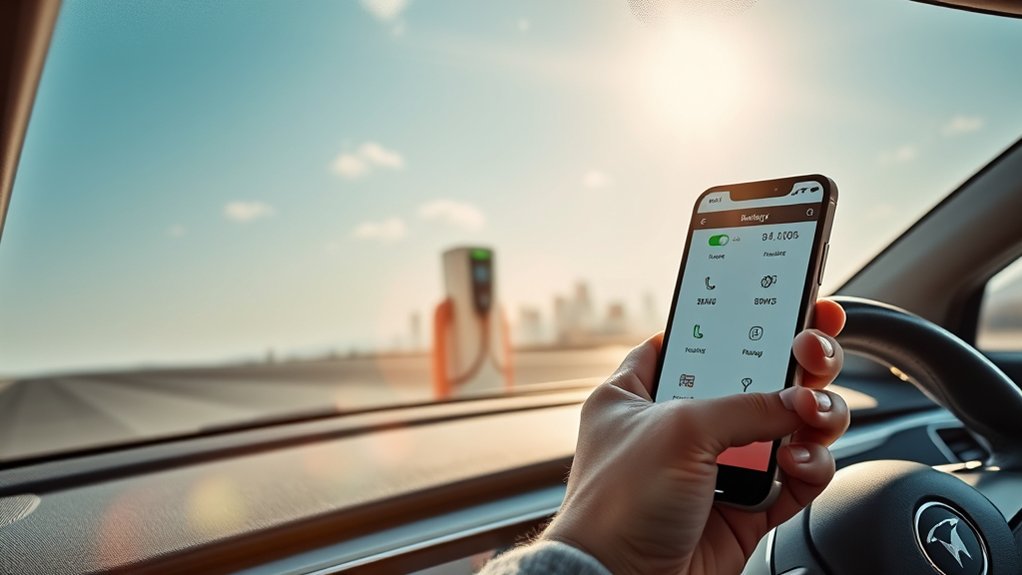
Your EV may stop charging at 90% because the charge target is set there. Many EVs have a daily charging limit that you can adjust in the vehicle settings or app. This helps reduce time spent at a high state of charge, which can be harder on many lithium-ion batteries, especially in heat.
That does not mean 90% is always the best number for every car. Some drivers use 70–80% for short daily trips, 90% for extra range, and 100% before a long drive. Some EVs with lithium iron phosphate, or LFP, battery packs may also recommend occasional 100% charges for range calibration. Always follow your owner’s manual for your specific model.
Note: A displayed 100% is not always the battery’s true chemical maximum. Many EVs keep a hidden buffer above or below the displayed range to protect the pack.
Is a 90% Charge Limit Normal or a Problem?
A 90% charging stop is usually normal if you see a charge limit, target charge, battery care mode, scheduled charging setting, or daily charging setting turned on. It becomes more suspicious when the car refuses to go past 90% even after you raise the target, try another charger, and confirm there are no timers or temperature warnings.
| Likely Normal | The app or touchscreen shows a target charge of 90%, battery care mode is on, or the car resumes charging when you move the slider higher. |
| Needs Troubleshooting | The target is set above 90%, but charging still stops at the same point with no clear message. |
| Call for Service | You see battery, charge port, isolation, overheating, coolant, or high-voltage warnings, or the cable, plug, or port looks damaged. |
How to Change Your EV Charge Limit
The exact menu names vary by brand, but the process is similar on most EVs. Start with the easiest setting check before assuming the charger or battery has failed.
- Open the charging screen in your vehicle or mobile app.
- Look for “charge limit,” “target charge,” “maximum charge,” “battery care,” or “departure charging.”
- Move the target above 90% if you need more range for a trip.
- Check scheduled charging. A timer may pause charging before the car reaches the new limit.
- Save the setting for the right location. Some EVs remember separate charge limits for home, work, and public chargers.
- Unplug and reconnect if the car does not restart charging after the limit changes.
- Check for software updates if the setting will not save or keeps reverting.
Where to Find the Charge Limit, by Automaker
If you are not sure where to look, these are the general locations most drivers find the setting. Exact labels and steps change with software updates, so treat this as a starting point rather than an exact script for your model year.
| Automaker / Platform | Typical Location |
| Tesla | Touchscreen “Charging” tab or the Tesla app, using a single charge-limit slider. |
| Ford (Mustang Mach-E, F-150 Lightning) | FordPass app or the vehicle’s charging/charge-schedule screen. |
| GM EVs (Chevrolet, GMC, Cadillac) | myChevrolet, myGMC, or myCadillac app, or the in-car charging menu. |
| Hyundai / Kia | Bluelink or Kia Connect app, or the vehicle’s charge/climate menu with a target state-of-charge slider. |
| Rivian | Rivian app “Charging” tab with a target charge percentage. |
| Other brands (VW, Nissan, Volvo, etc.) | Check the vehicle’s charging or EV menu, or the automaker’s companion app; if you can’t find it, search your exact model and model year plus “charge limit,” or check the owner’s manual. |
Pro Tip: For daily local driving, set the limit based on your actual range needs, not habit. A lower daily target may be fine if you plug in regularly, while 90–100% can make sense before a longer trip.
How the BMS Limits Your EV’s Charging Capacity
The Battery Management System, or BMS, monitors pack voltage, cell balance, current, temperature, and state of charge. Its job is to let the battery charge quickly when conditions are safe and slow or stop charging when the pack needs protection.
High state of charge and heat can add battery stress. In battery aging research, cells stored at 100% state of charge and 40°C aged much faster than cells operated in a lower, cooler range, which is why many EVs encourage a lower daily target instead of sitting full every night. Battery aging research supports the idea that temperature and state of charge both matter for long-term health.
BMS Charging Thresholds Explained
When your EV approaches a high charge level, the car often tapers the charging current. This is especially noticeable on DC fast chargers. The first part of the session may be quick, but the last 10–20% can take much longer because the car is protecting the cells from excess heat, voltage stress, and lithium plating risk. Extreme fast-charging research identifies thermal control as a major challenge for very fast EV charging.
- Below about 80%: charging is usually faster when the battery is warm and the charger can supply enough power.
- Around 80–90%: the car may slow charging to reduce heat and cell stress.
- Near 100%: charging often slows the most, and the car may spend extra time balancing cells.
Impact on Battery Longevity
| Charge Level | Best Use | Battery Health Impact |
| 70–80% | Short daily driving when you can charge often | Usually the lowest stress option for many lithium-ion packs |
| 90% | Daily driving with extra buffer | A practical balance between range and battery care |
| 100% | Road trips, long driving days, or model-specific calibration guidance | Fine when needed, but avoid leaving many non-LFP packs full for long periods in heat |
Manufacturer Recommendations Overview
Manufacturer recommendations vary by model year, battery chemistry, software version, and market. That is why a universal rule such as “always stop at 90%” is too simple. Use these general guidelines:
- Check the owner’s manual first. It overrides general advice.
- Use a daily limit if your car provides one and you do not need full range.
- Charge to 100% when the trip requires it, then drive soon rather than letting the car sit full for days.
- Follow LFP-specific guidance. Some LFP models need occasional full charges so the car can estimate range accurately.
- Keep the car updated. Battery and charging behavior can change after software updates.
When 90% Means a Charging Equipment Problem
If your charge target is set above 90% but the session still stops early, inspect the charging setup. Public DC fast chargers can fail because of payment systems, network problems, broken connectors, short cables, or charge initiation errors. An earlier field study of Bay Area public DC fast chargers found that roughly a quarter of tested connectors were not functional on-site, which is part of why trying another stall or network can quickly separate a car issue from a station issue. Public DC fast-charger reliability research supports this troubleshooting step. Reliability has improved considerably since that study: the JD Power 2026 U.S. EVX Public Charging Study found that failed-charging visits fell to a record low as newer, automaker-backed fast-charging networks expanded — but if a stall repeatedly stops your session early, it’s still reasonable to suspect the station rather than your car.
Quick Charger Checklist
- Check the plug fit. The connector should fully seat and lock without wobbling.
- Look for dirt, moisture, or debris. Use only a dry cloth around the outside of the port. Do not insert tools into the contacts.
- Inspect the cable. Do not use it if you see cracks, melted plastic, exposed wire, or a burned smell.
- Try another stall. If the next stall works, the first charger was likely the issue.
- Try a slower Level 2 charger. If Level 2 works but DC fast charging fails, the problem may involve the fast-charging station, adapter, or DC charge path.
- Check the app or charger screen. Payment, network, and authorization errors can stop charging before the car reaches the target.
Warning: Never open a charger cabinet, EV battery pack, charge port assembly, or high-voltage cable yourself. If you see heat damage, repeated fault messages, smoke, arcing, a burning smell, or liquid near charging equipment, stop using it and contact the charging network, an electrician, or an EV-certified technician.
Charger Compatibility, Plugs, and Adapters
Compatibility can also explain why your EV stops charging early or refuses to continue. In North America, nearly all EVs use the J1772 plug for AC (Level 1/Level 2) charging. For DC fast charging, the market has shifted decisively toward NACS (SAE J3400) — the connector Tesla originally developed and opened up in 2022. By 2026, most major automakers, including the last major holdout, Stellantis, have committed to adding native NACS charging ports, and the industry-wide shift toward NACS is accelerating adoption. CCS is still common on many EVs already on the road, and CHAdeMO is now largely a legacy standard — even the redesigned 2026 Nissan Leaf, one of the last CHAdeMO-equipped EVs sold in the U.S., switched to a built-in NACS fast-charge port. The SAE J1772 standard covers the conductive charging coupler used for AC charging.
If you are using an adapter — including NACS-to-CCS or CCS-to-NACS adapters during this transition — make sure it is approved for your specific vehicle and the charger type. A poor adapter fit, unsupported charging protocol, old station firmware, or incompatible network authorization can interrupt the session even when the plug appears to fit.
How Environmental Factors Affect Your EV Charging
Temperature has a major effect on EV charging. The car may slow charging when the battery is very cold, very hot, or outside its preferred temperature range. This is normal protection, not always a defect.
Temperature Impact on Charging
Cold batteries often charge more slowly because the pack must warm before it can safely accept high current. In cold-weather reports, drivers have seen EVs pause or slow charging while the vehicle warms the battery before charging at higher power. Cold-weather EV charging guidance also points to preconditioning as a practical fix.
Heat can cause the opposite problem. If the battery pack, charger, cable, or connector is too hot, the system may reduce charging speed or stop the session. Parking in shade, charging during cooler parts of the day, and avoiding repeated back-to-back DC fast charging can help.
Direct Sunlight Exposure
Direct sunlight can heat the cabin, battery area, cable, and charge port, especially when charging in an exposed parking lot. The car’s thermal management system may respond by slowing the session. If your EV repeatedly stops near 90% on hot afternoons but charges normally in the evening, heat is a likely factor.
Weather-Related Performance Variations
- Cold weather: precondition the battery before DC fast charging when your EV offers that feature.
- Hot weather: charge in shade or during cooler hours when possible.
- Rain or snow: make sure the plug seats fully and the latch locks. Do not use damaged equipment.
- Windblown dust or road salt: inspect the outside of the charge port and connector for visible buildup.
Tips for Optimizing Your EV Charging Habits
Good charging habits help you get enough range without adding unnecessary stress to the battery.
- Use a daily charge target that matches your commute. Many owners do not need 100% every night.
- Charge to 100% before long trips only when needed. Start driving soon after the car reaches full charge.
- Use Level 2 charging for routine charging. It is usually gentler and more convenient than relying on DC fast charging every day.
- Precondition before fast charging. Use navigation to a fast charger if your EV warms the pack automatically.
- Keep software current. Updates can improve charging behavior, station compatibility, and range estimates.
- Check location-based limits. Your car may remember a 90% limit at home even if you changed it somewhere else.
- Confirm adapter compatibility. As NACS becomes the standard DC connector, verify any adapter is approved for your model before relying on it for a trip.
The best charge limit is the one that gives you enough range for the next drive while avoiding long, unnecessary time at a high state of charge.
When to Call the Pros for EV Charging Issues
Call a professional if your EV still stops at 90% after you raise the charge limit, turn off timers, try a known working charger, and check for software updates. You should also get help right away if you see repeated charging faults, battery warnings, high-voltage warnings, coolant warnings, heat damage, or a charge port that will not lock or release correctly.
For home charging issues, contact a licensed electrician or the EVSE manufacturer. For vehicle-side warnings, contact your dealer or an EV-certified repair shop. For public charger problems, report the station through the charging network’s app and move to another stall if it is safe to do so.
Frequently Asked Questions
Why does my electric car only charge to 90 percent?
Your electric car most likely has a charge limit set to 90% in the touchscreen or mobile app. It may also stop there because of battery care mode, scheduled charging, hot or cold battery temperature, charger communication errors, or a software setting tied to that charging location.
Is it okay to charge an EV to 90%?
Yes, charging to 90% is okay for many EVs and is a common daily-driving target when you want extra range. If you do not need that much range every day, a lower limit may reduce battery stress. If your owner’s manual gives different guidance, follow the manual.
Should I turn on stop charging around 90%?
Turn on a 90% limit if it gives you enough daily range and your vehicle does not recommend a different routine. It is a practical middle ground for many drivers. For long trips, you can raise the limit to 100% and start driving soon after charging finishes.
Why is my car battery only charging to 90% after I changed the limit?
Check for scheduled charging, departure-time settings, location-based limits, battery care mode, and software updates. Then try another charger. If the car still stops at 90% and shows a warning message, the issue may involve the charge port, charger communication, battery temperature, or vehicle hardware.
Why does fast charging slow down after 80%?
Fast charging slows after higher states of charge because the EV reduces current to manage voltage, heat, and cell stress. This taper is normal. On a road trip, it is often faster to unplug around 70–80% and drive to the next charger instead of waiting for 100%.
Can cold weather make my EV stop charging early?
Yes. A very cold battery may need to warm before it can accept full charging power. Use battery preconditioning if your EV offers it, especially before DC fast charging. Charging at home while the car is plugged in can also help keep the battery ready.
Does my charging connector (NACS, CCS, or CHAdeMO) affect why my EV stops at 90%?
Not usually — the 90% stop is almost always a software target rather than a connector issue. But if you rely on an adapter, such as a NACS-to-CCS adapter during North America’s shift toward NACS, a poor connection or unsupported protocol can end a session early or keep it from reaching your target at all. Confirm any adapter is approved for your specific vehicle and charger.
Conclusion
If your EV stops charging at 90%, treat it as a setting check first and a repair issue second. Look for a charge target in the app or touchscreen, review scheduled charging, and try a known working charger. A 90% limit is often a smart daily habit because it gives useful range while reducing time spent at a high state of charge. Keep in mind that charging standards are still evolving — as North America shifts toward NACS, double-check that any adapter you rely on is approved for your vehicle, and keep your car’s software updated so charge-limit settings behave consistently. If the car ignores your new target, shows warnings, overheats, or fails on multiple chargers, stop guessing and have the charging system inspected by a qualified EV professional.
Sources
- A Comprehensive Electric Vehicle Model for Vehicle-to-Grid Strategy Development — supports high state-of-charge and temperature aging concerns.
- Extreme Fast Charging of Batteries Using Thermal Switching and Self-Heating — supports fast-charging taper and thermal control concerns.
- AP: Frigid Weather Can Cut EV Range and Make Charging Tough — supports cold-weather charging and preconditioning guidance.
- Reliability of Open Public Electric Vehicle Direct Current Fast Chargers — 2022 baseline study supporting charger-station troubleshooting steps.
- SAE J1772 Electric Vehicle Conductive Charge Coupler — supports EV charging connector and coupler standards context.
- JD Power 2026 U.S. EVX Public Charging Study — supports the 2026 improvement in public charging reliability and reduced failed-charging visits.