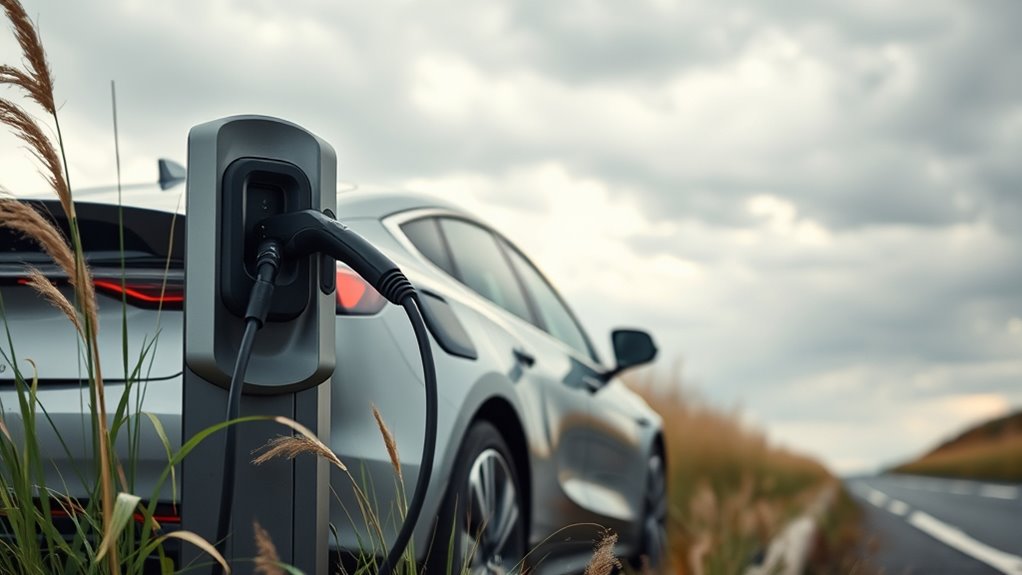
Yes, you can usually charge your EV in wind and rain, but only when the charger, outlet, cable, and connector are rated for outdoor use, installed correctly, and in good condition. Normal rain is very different from flooding, standing water, nearby lightning, storm surge, or damaged equipment. Before you plug in, check the charger label, inspect the cable and connector, keep the connector off the ground, and stop if water is pooling around the vehicle or charging station.
Last updated: September 8, 2026
Quick Answer
Outdoor-rated EV chargers can handle normal wind and rain when they are installed correctly, undamaged, and used as directed. Do not charge during flooding, standing water, nearby lightning, storm surge, or after the charger, outlet, vehicle, or connector has been submerged or visibly damaged.
Key Takeaways
- Rain is usually safe for EV charging when you use outdoor-rated charging equipment with intact seals, a sound connector, and proper electrical protection.
- Wind does not usually affect the charging process, but strong wind can damage cables, blow debris into the area, or reduce driving range once you are on the road.
- Ratings such as IP54, IP65, NEMA 3R, NEMA 4, and NEMA 4X describe different levels of environmental protection. Match the rating to the actual installation and exposure.
- Do not charge in standing water, floodwater, storm surge, or nearby lightning. If the vehicle or charger was submerged, get it inspected before use.
- For home charging, use safety-certified equipment, a code-compliant installation, and a qualified electrician where electrical work is required.
At a Glance
| Normal Rain | Usually safe. Use outdoor-rated, undamaged equipment and stay out of pooling water. |
| Strong Wind | Use caution. Stop if debris, falling branches, cable movement, or physical damage makes the charging area unsafe. |
| Nearby Lightning | Wait. Avoid handling outdoor charging equipment while lightning is active nearby. |
| Flooding or Standing Water | Do not charge. Flooded or submerged charging equipment and vehicles need inspection before reuse. |
Can EV Chargers Handle Wind and Rain?
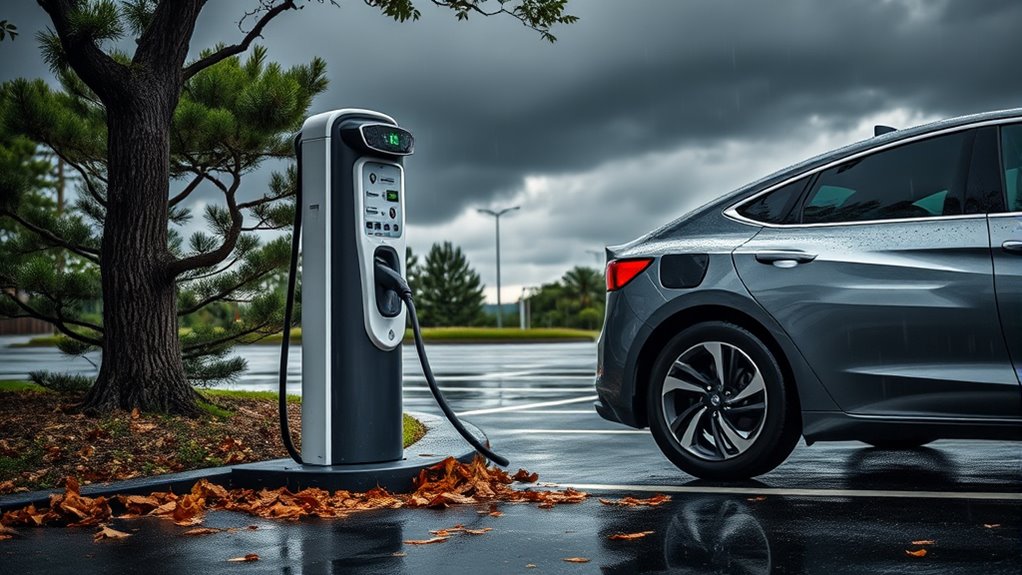
Yes. Home and public EV chargers designed for outdoor use can handle normal rain, wind, and road spray. The key phrase is designed for outdoor use. The U.S. Department of Energy’s Alternative Fuels Data Center states that outdoor home charging is safe even when the vehicle is being charged in rain, provided outdoor-rated equipment is used. You can review that guidance from the Alternative Fuels Data Center.
A proper EV charging system does not simply energize exposed contacts as soon as you pick up the connector. Certified equipment uses multiple safety layers, including grounding, insulation, protected contacts, enclosure protection, communication between the vehicle and charger, and fault detection. The exact protections depend on the equipment and installation, which is why safety-certified equipment and manufacturer-approved installation matter.
Weather resistance is not unlimited protection. Equipment that is safe in normal rain may no longer be safe after flooding, impact damage, missing covers, cracked insulation, corrosion, a loose outlet, or a connector left in mud or standing water.
Rain resistance also does not mean immersion resistance. An IP or NEMA outdoor rating protects against the conditions covered by that rating; it does not automatically make equipment safe after flooding or submersion.
Warning: Do not charge if the vehicle, charger, plug, outlet, connector, or cable has been submerged. Avoid charging in standing water, storm surge, floodwater, or while lightning is active nearby. If an EV has been flooded, especially in saltwater, follow the vehicle maker’s instructions and contact the manufacturer, emergency services, or a qualified service professional before moving or charging it.
Is It Safe to Charge an EV in Rain?
Charging an EV in light, moderate, or steady rain is generally safe when the charging station is intact, properly installed, and rated for outdoor exposure. DOE guidance specifically says outdoor EV charging can be safe in rain when outdoor-rated equipment is used.
Before you plug in, do a quick inspection:
- Check that the connector is not cracked, loose, burned, or packed with dirt.
- Make sure the cable jacket is not cut, crushed, frayed, or swollen.
- Look for missing covers, broken holsters, exposed wiring, or a damaged outlet.
- Keep the connector off the ground before plugging it into the vehicle.
- Avoid standing in puddles or pooling water while handling charging equipment.
- Confirm the charger screen or indicator lights do not show a fault.
If the connector or charge port is only wet from normal rain, that is generally an expected condition for equipment designed for outdoor charging. If water is pooling inside damaged equipment, the plug feels unusually hot, the breaker trips, the station shows a fault, or the outlet looks burned, stop and use another charger.
If a station shows a warning or fault, see why an EV charger light is red before repeatedly trying to restart the session.
Pro Tip: At home, keep the charging handle in its holster when not in use. That simple habit protects the connector from mud, standing water, lawn chemicals, road salt, and accidental cable damage.
What EV Charger Ratings Mean
EV charger enclosure ratings describe how well equipment resists environmental exposure such as water and dust. They do not make damaged equipment safe, and they do not replace correct installation.
IP ratings use the ingress-protection classification defined by IEC 60529. The first digit describes protection against solid objects and dust, while the second describes water protection. For example, IP54 provides dust protection plus protection against splashing water. IP65 is dust-tight and provides protection against water jets. You can review the rating framework through the International Electrotechnical Commission.
NEMA enclosure ratings are widely used in North America. NEMA ratings are not simple one-to-one equivalents of IP ratings because they cover different test requirements and environmental conditions. In general:
- NEMA 3R provides outdoor protection against rain, snow, and sleet.
- NEMA 4 adds protection against windblown dust, splashing water, and hose-directed water.
- NEMA 4X adds an additional level of corrosion protection, which may matter in coastal, salty, or corrosive environments.
You can review the enclosure distinctions in NEMA enclosure guidance.
The right rating depends on the installation. A covered carport in a mild climate does not have the same exposure as an open driveway near salt air or a flood-prone site. For a permanent home charger, match the equipment to the location and have a qualified electrician confirm the circuit, breaker, connection method, mounting, grounding, and applicable local code requirements.
Home Charging Safety in Bad Weather
Outdoor home charging needs the entire electrical setup to be suitable for the location. The Alternative Fuels Data Center recommends safety-certified equipment and states that charging installations must comply with applicable local and state rules. It also identifies NEC Article 625 as containing much of the National Electrical Code information applicable to EV charging equipment.
Use these rules for home charging in wet weather:
- Use only charging equipment approved for outdoor use when the EVSE is installed outside.
- Do not run a charging cable through standing water, across sharp edges, or under a garage door that can crush it.
- Do not use an ordinary extension cord or multiplug adapter for EV charging. The U.S. Fire Administration advises plugging Level 1 charging equipment directly into an outlet designed to handle its amperage. Always follow the vehicle and charger manuals.
- Do not use a loose, cracked, scorched, or damaged household receptacle.
- Do not open the charger housing or attempt electrical repairs yourself.
- Have repeated breaker trips, heat marks, buzzing, or burning smells checked by a qualified electrician.
The U.S. Fire Administration also recommends certified charging equipment, following manufacturer instructions, and never using a charger that shows obvious damage or excessive wear.
Level 1 charging generally uses a 120-volt household supply. Level 2 home charging typically uses 240 volts and may require a dedicated circuit and electrical work. DOE notes that many drivers can meet daily needs with overnight Level 1 charging, while Level 2 is useful for larger batteries, longer commutes, or schedules that require faster replenishment.
Note: A charger can be outdoor-rated while the outlet or circuit feeding it is not suitable for outdoor EV charging. The whole setup matters: charger, receptacle or hardwired connection, breaker, wiring, weather protection, grounding, and installation quality.
How Wind Affects EV Charging and Range
Wind usually does not change the electrical charging process itself. If the charging station is securely mounted, the cable is not being pulled or whipped around, and debris is not striking the equipment, charging should operate normally.
High wind can still create a physical hazard. Stop using a station if strong gusts are moving the cable dangerously, branches or debris are falling nearby, the charger has shifted on its mount, or any part of the equipment has been struck.
Wind matters more once you start driving. A headwind raises the relative air speed the vehicle must push through, increasing aerodynamic drag. At highway speeds, aerodynamic drag is a major energy demand, so strong winds can materially affect EV efficiency and remaining range.
A 2026 study published in the International Journal of Automotive Technology found that wind can make a significant contribution to aerodynamic drag and that the effect depends strongly on wind direction. That is why there is no reliable universal percentage for wind-related EV range loss. Vehicle shape, road speed, wind speed and direction, terrain, temperature, tire pressure, cargo, and HVAC use all change the result. See the 2026 wind and EV energy-consumption study.
On windy highway trips, plan your next charging stop earlier than usual and keep a larger battery reserve than you would in calm weather.
Use these range tips in windy weather:
- Reduce highway speed when traffic and road conditions allow.
- Use cruise control only when roads are clear and traction is good.
- Remove unnecessary roof boxes or racks before long trips.
- Keep tires inflated to the vehicle maker’s recommended pressure.
- Precondition the cabin while plugged in when your vehicle supports it.
- Choose charging stops with extra battery margin rather than stretching the remaining range.
Do not draft closely behind trucks to reduce drag. Any efficiency benefit is outweighed by reduced visibility and reaction time.
Practical Charging Tips for Bad Weather
Bad-weather EV charging is mainly about separating normal outdoor exposure from conditions that exceed the equipment’s design limits. Rain alone is usually not the problem. Floodwater, electrical faults, impact damage, nearby lightning, and visibly compromised equipment are reasons to stop.
It is usually okay to charge when:
- Rain is light, moderate, or steady and there is no flooding.
- The charging station is outdoor-rated and firmly mounted.
- The connector, cable, outlet, and charge port look clean and undamaged.
- The charger starts normally and shows no warning or fault.
- You can safely reach and operate the charger without standing in pooling water.
Do not charge when:
- There is standing water around the vehicle, charger, cable, or outlet.
- The vehicle, charger, outlet, or connector has been flooded or submerged.
- Lightning is active nearby and handling outdoor electrical equipment would expose you to the storm.
- The cord is cut, crushed, hot, melted, or sparking.
- The breaker or fault protection trips repeatedly.
- The connector will not latch securely.
- The charger has been hit by debris, a vehicle, or a falling branch.
After a storm, inspect before you plug in again. Look for loose mounts, cracked plastic, broken holsters, pulled conduit, standing water, mud, corrosion, and exposed wiring. The AFDC says charging-infrastructure maintenance includes storing cables securely, checking parts periodically, and keeping equipment clean. See the AFDC’s operation and maintenance guidance.
If the connector becomes dirty after severe weather, follow the manufacturer’s instructions rather than putting tools or liquids into the contacts. This site also has a separate guide on how to clean an EV charging connector.
What to Do if Your Charger Gets Wet or Flooded
If an outdoor-rated charger is merely wet from ordinary rain and shows no damage or fault, that is a normal exposure the equipment was designed to handle. Flooding is different.
If the charger or outlet was flooded:
- Do not touch the charger, outlet, cable, connector, or standing water if you suspect electrical damage.
- Do not plug in the vehicle.
- If it is safe to do so and you know which breaker feeds the charger, disconnect power at the electrical panel.
- Contact a qualified electrician or the charging-equipment provider.
- If the vehicle was submerged, follow the vehicle manufacturer’s flood guidance before driving or charging it.
Floodwater can contain salt, dirt, sewage, chemicals, and conductive debris. Even after the surface looks dry, contamination and corrosion may remain inside connectors, outlets, enclosures, or vehicle systems. Flooded electrical equipment therefore needs professional evaluation before reuse.
The National Highway Traffic Safety Administration warns that flooded EVs can create high-voltage shock and fire hazards. If you suspect the lithium-ion battery has been damaged, NHTSA says not to park the damaged vehicle in a garage or within 50 feet of a house, another structure, another vehicle, or combustible materials. Contact the vehicle dealer and, when there is an immediate safety hazard, emergency services.
When the charging session itself needs to be ended because conditions are deteriorating, follow the station or vehicle’s normal stop procedure. See how to stop an EV charging session safely.
Frequently Asked Questions
Can I charge my EV while it is raining?
Yes. You can usually charge an EV in rain when the charger is outdoor-rated, properly installed, undamaged, and being used as directed. Do not charge in flooding or standing water, and stop using equipment that is cracked, burned, loose, or showing a fault.
Can wind damage an EV charger?
Normal wind should not affect a securely mounted outdoor charger. Severe wind can still create hazards by blowing debris, dropping branches, pulling loose cables, or physically damaging the station. Inspect the charger after severe weather before using it.
Is it safe to charge an EV during a thunderstorm?
Normal rain is generally safe with outdoor-rated equipment, but active nearby lightning is a different hazard. ChargePoint advises that drivers may want to avoid charging during thunderstorms with lightning. Waiting until nearby lightning passes is the conservative choice, especially before plugging in or unplugging outdoors.
What happens if an EV charger gets wet?
Normal rain on an outdoor-rated charger is usually expected. Flooding or submersion is different. Do not use a charger, outlet, connector, or cable that has been underwater until the equipment has been inspected and declared safe for reuse.
Can I use a portable EV charger outside?
Only use a portable EV charger outside when its manufacturer says the equipment is suitable for outdoor use. The outlet and plug connection also need to be appropriate for the location, correctly grounded, protected from weather as required, undamaged, and kept out of standing water.
Can I charge an EV after it has been flooded?
Do not charge a flood-submerged EV until you have followed the vehicle manufacturer’s flood instructions and the vehicle has been evaluated as appropriate. Flood-damaged high-voltage batteries can create shock and fire hazards, so contact the dealer or manufacturer and emergency services if there is an immediate safety risk.
Conclusion
You can usually charge an EV in wind and rain when the charging equipment is outdoor-rated, correctly installed, undamaged, and used as directed. Ordinary rain is not the main danger. The conditions that should make you stop are flooding, submersion, nearby lightning, electrical faults, damaged cables or connectors, loose or burned outlets, and equipment struck by debris.
Wind usually matters more to driving range than to the charging process. A strong headwind increases aerodynamic demand, so leave more battery margin and plan your next charging stop earlier when conditions are poor. Before every bad-weather session, check the charger, cable, connector, outlet, ground conditions, and fault indicators. If anything has been flooded or visibly damaged, do not charge until it has been inspected.
Sources
- Alternative Fuels Data Center: Charging Electric Vehicles at Home — supports outdoor-rated equipment, rain safety, safety-certified equipment, Level 1/Level 2 context, and code-compliant installation guidance.
- Alternative Fuels Data Center: Electric Vehicle Charging Stations — supports charging-level and charging-infrastructure context.
- Alternative Fuels Data Center: Operation and Maintenance for EV Charging Infrastructure — supports cable storage, periodic checks, equipment cleaning, and maintenance planning.
- National Highway Traffic Safety Administration: Electric and Hybrid Vehicle Safety — supports rain charging guidance and flood-damaged EV shock and fire precautions.
- NHTSA: Hurricane- and Flood-Damaged Vehicles — supports post-flood battery and vehicle safety precautions.
- U.S. Fire Administration: Electric Vehicle Fire Safety — supports certified charging equipment, direct Level 1 outlet use, avoiding extension cords, wet-condition manufacturer guidance, and damaged-equipment precautions.
- International Electrotechnical Commission: IP Ratings — supports the ingress-protection framework for solids and water.
- National Electrical Manufacturers Association: Enclosure Guidance — supports NEMA enclosure-rating distinctions.
- ChargePoint: Can I Charge My Electric Vehicle in Any Weather? — supports wet-weather charging and the recommendation to use caution during thunderstorms with lightning.
- International Journal of Automotive Technology: Estimation of the Impact of Wind on Vehicle Energy Consumption in Battery Electric Vehicles — supports the effect of wind speed and direction on EV aerodynamic losses and energy consumption.